

TL;DR:
Choose supplements backed by human clinical trials, proper dosing, bioavailability, and third-party testing.
Vitamin D and magnesium are key supplements with strong evidence supporting bone, muscle, and metabolic health.
Personalized testing and lifestyle integration are essential for effective, individualized longevity strategies.
Supplement shelves are overflowing with promises, and sorting genuine science from marketing noise is harder than ever. If you are over 40 and serious about extending your healthspan (the years you actually feel well and vital, not just alive), you deserve a clear-eyed guide grounded in real evidence. The right supplements can restore energy, protect aging tissues, and support the cellular systems that slow down with each decade. But not every bottle delivers what it claims. This article walks you through a practical, evidence-based framework so you can make smarter choices, faster.
Key Takeaways
| Point | Details |
|---|---|
| Evidence matters most | Supplements with solid clinical backing offer real benefits for healthy aging. |
| Personalization enhances results | Tailoring supplements to your health profile and deficiencies leads to better outcomes. |
| Vitamin D and magnesium are vital | These top nutrients have proven impacts on bone, muscle, and metabolic health over age 40. |
| NAD+ offers promise | Emerging supplements like NMN and NR show potential for energy and cellular support, but more research is needed. |
| Holistic approaches work | Combining supplements with lifestyle and testing brings optimal longevity results. |
How to evaluate longevity supplements: Criteria you should know
Now that you know why evidence matters, let us break down how to evaluate supplement options for longevity. Not all supplements are created equal, and learning to read between the labels will save you money, protect your health, and get you real results.
Start with clinical evidence. A supplement worth taking should have ingredients tested in human clinical trials, not just animal studies or test-tube experiments. Look for randomized controlled trials, systematic reviews, or meta-analyses. These study designs carry the most weight when it comes to confirming that a supplement actually does what it claims.
Here are the core criteria to apply before adding anything new to your regimen:
-
Clinical backing: Ingredients should appear in peer-reviewed studies on human subjects, ideally in people your age group
-
Appropriate dosage: The dose in the product should align with amounts used in successful trials, not just token quantities added for label appeal
-
Bioavailability: How well your body absorbs the ingredient matters as much as the ingredient itself. Forms like glycinate, citrate, or liposomal delivery tend to absorb far better than cheaper oxide or sulfate versions
-
Safety profile: Check for potential interactions with medications or health conditions you manage. Upper tolerable limits exist for most nutrients, and exceeding them carries real risk
-
Third-party testing: Independent verification from organizations like USP, NSF International, or Informed Sport confirms that what is on the label is actually in the bottle, in the right amounts, without harmful contaminants
Dosage is a nuanced issue. Recommended Dietary Allowances (RDAs) reflect the minimum needed to prevent deficiency in healthy people. For longevity goals, optimal levels are often higher, but not unlimited. Working from a personalized supplementation guide helps you match doses to your actual biology rather than population averages.
Pro Tip: Always check the “supplement facts” panel for the form of each ingredient, not just its name. Magnesium oxide and magnesium glycinate are both “magnesium,” but their absorption rates differ dramatically.
Understanding a holistic health overview also reminds us that supplements work best inside a broader framework that includes sleep, nutrition, movement, and stress management. No pill replaces those foundations.
Vitamin D: Essential for bone strength and healthy aging
With reliable evaluation criteria in mind, let us dive into the most impactful supplements, starting with vitamin D.
Vitamin D is one of the most studied and most deficient nutrients in adults over 40. It functions more like a hormone than a classic vitamin, influencing hundreds of biological processes, from calcium absorption and bone formation to immune regulation and muscle performance. Despite its importance, roughly 40% of American adults do not meet optimal levels, and that number rises sharply after midlife due to reduced sun exposure, less efficient skin synthesis, and dietary gaps.
The evidence for bone health is compelling. Vitamin D supplementation reduces fracture risk and improves muscle strength in deficient older adults, making it one of the highest-priority supplements for anyone over 40 who cares about staying mobile and independent.
| Vitamin D form | Source | Absorption rate | Best for |
|---|---|---|---|
| D2 (ergocalciferol) | Plant-based/yeast | Moderate | Vegans/vegetarians |
| D3 (cholecalciferol) | Animal-based/lichen | High | Most adults |
| Liposomal D3 | Enhanced delivery | Very high | Absorption issues |
Key points to know about vitamin D for longevity:
-
The standard RDA is 600 IU for adults up to age 70 and 800 IU for those older. Many integrative practitioners recommend 1,500 to 2,000 IU daily for optimal blood levels, especially in northern climates
-
Vitamin D3 raises blood levels more effectively than D2 and is the preferred form for most adults
-
Pair vitamin D with vitamin K2 (specifically MK-7) to direct calcium into bones rather than arteries. This pairing is especially relevant if you are supplementing at higher doses
-
Blood testing is essential. The 25(OH)D test reveals your actual status. Optimal levels are generally considered to be between 40 and 60 ng/mL
-
Very high doses above 4,000 IU daily can cause toxicity over time. Never supplement without knowing your baseline
Pro Tip: Have your vitamin D levels tested before starting supplementation. A result below 30 ng/mL is considered deficient and may require a physician-supervised loading protocol before you move to maintenance dosing.
Exploring popular supplement choices can help you identify well-formulated vitamin D products that pair D3 with K2 for optimal bone support.
Magnesium: A cornerstone mineral for energy and healthy aging
Another mineral shown to make a difference as we age is magnesium, which offers wide-reaching benefits for longevity.
Magnesium is quietly one of the most powerful minerals in your body, involved in over 300 enzymatic reactions, from DNA synthesis to energy production to blood pressure regulation. Think of it as the spark plug that keeps your metabolic engine running smoothly. Yet most adults over 40 fall short, largely because modern soil depletion has reduced magnesium content in food, and absorption declines naturally with age.
Magnesium supports muscle and nerve function, sleep quality, and glucose control, with deficiency becoming increasingly common in aging populations. Low magnesium is linked to poor sleep, muscle cramps, heightened anxiety, elevated blood pressure, and increased diabetes risk, all conditions that accelerate biological aging.
“Magnesium is not just a mineral. It is the quiet conductor behind your body’s most vital systems, and when levels drop, everything from your sleep to your heart rhythm feels the consequence.” – Healthspan Holistic
Different forms of magnesium serve different purposes. This distinction matters when choosing the right product:
| Magnesium form | Primary benefit | Absorption | Best for |
|---|---|---|---|
| Glycinate | Calm and sleep | Excellent | Anxiety, insomnia |
| Citrate | Bowel regularity | Very good | Constipation, general use |
| L-threonate | Brain and cognition | Excellent | Memory, focus |
| Oxide | Cheap filler | Poor | Avoid for longevity goals |
Here is how to supplement magnesium safely and effectively:
-
Target 300 to 420 mg of elemental magnesium daily from food and supplements combined. Leafy greens, nuts, seeds, and legumes are rich food sources
-
Choose the right form for your goals. For sleep and relaxation, magnesium glycinate powder or magnesium glycinate capsules are excellent choices. For digestive regularity, magnesium citrate capsules work well. For cognitive support, magnesium l-threonate is the most studied option for crossing the blood-brain barrier
-
Time your dose strategically. Taking magnesium glycinate or l-threonate in the evening supports deeper, more restorative sleep
-
Watch for medication interactions. Magnesium can reduce absorption of some antibiotics, diabetes medications, and diuretics. Spacing doses appropriately and consulting your doctor is important if you are on prescription medications
Pro Tip: If you are experiencing frequent muscle cramps, poor sleep, or unexplained fatigue, ask your doctor for an RBC (red blood cell) magnesium test. Serum magnesium alone misses intracellular deficiency, which is where most problems originate.
NAD+ precursors: Exploring promising advances for cellular longevity
For those looking beyond the basics, cellular-level support is gaining serious attention. NAD+ supplements represent a major trend in longevity science right now.
NAD+ (nicotinamide adenine dinucleotide) is a molecule found in every cell of your body. It plays a central role in energy production, DNA repair, and regulation of proteins called sirtuins, which help control inflammation and cellular aging. The problem is that NAD+ levels decline significantly with age, dropping by roughly 50% between your 20s and 60s. This decline is thought to contribute to reduced mitochondrial function, slower recovery, cognitive dulling, and increased susceptibility to age-related disease.
NMN (nicotinamide mononucleotide) and NR (nicotinamide riboside) are the two primary NAD+ precursors (building blocks the body converts into NAD+) generating the most research interest. NAD+ precursors reliably raise NAD+ levels in humans, but large randomized controlled trials confirming longevity endpoints are still lacking, with current evidence pointing to promising benefits for energy and metabolic function.
“The NAD+ story is one of the most exciting in longevity science, but it is still being written. What we know is that replenishing these levels is biologically meaningful. What the full picture looks like will take more time and bigger trials to confirm.” – Healthspan Holistic
What the current evidence does support:
-
Improved energy metabolism: Multiple human trials show NMN and NR significantly raise circulating NAD+ levels, which correlates with better mitochondrial efficiency
-
Muscle function and aerobic capacity: Some trials in older adults show modest improvements in physical performance and muscle endurance after NMN supplementation
-
Metabolic health: Early data suggests NR may improve insulin sensitivity in certain populations, though results remain mixed
-
Safety: Both NMN and NR appear safe in short-term human studies at commonly used doses (250 to 500 mg per day), with no major adverse effects reported
Practical tips for integrating NAD+ precursors:
-
Start with NR or NMN at 250 to 300 mg per day, taken in the morning, since NAD+ is closely tied to circadian rhythm and energy cycles
-
Look for products with clean ingredient panels and third-party verification
-
Consider stacking with lifestyle strategies known to also boost NAD+, including regular exercise, fasting, and heat exposure
-
People with cancer history should discuss NAD+ precursors with their oncologist before supplementing, as theoretical concerns exist around NAD+ and cell proliferation
Pro Tip: Explore metabolic nutrition capsules if you are looking for a professionally formulated product that supports mitochondrial and metabolic function with targeted ingredients.
NAD+ precursors are best viewed as an advanced support layer, not a first line. Get your foundational nutrients right first, then consider adding cellular-level support.
Why the future of longevity is personalized and holistic
Here is something worth sitting with: a fixed supplement list, even a well-researched one, will only take you so far. The future of longevity is not about finding the single best pill. It is about understanding your unique biology and building a strategy around it.
Two people over 40 can have nearly identical lifestyles and yet vastly different vitamin D levels, magnesium status, and NAD+ metabolism. Generic recommendations average across a population that does not include you specifically. That gap between general advice and personal need is where real healthspan gains are lost.
We believe the smartest approach combines functional lab testing, targeted supplementation, and lifestyle optimization into one integrated plan. Personalized supplementation rooted in your actual blood markers, genetics, and health goals produces results that no shelf-bought supplement stack can replicate on its own.
The supplements covered in this article are among the most robustly supported options available. But knowing your baseline, monitoring your response, and adjusting over time is what separates a hopeful guess from a genuine longevity strategy.
Ready for a tailored approach? Explore holistic testing and coaching
The knowledge you have built in this article is a powerful starting point. The next step is making it personal.
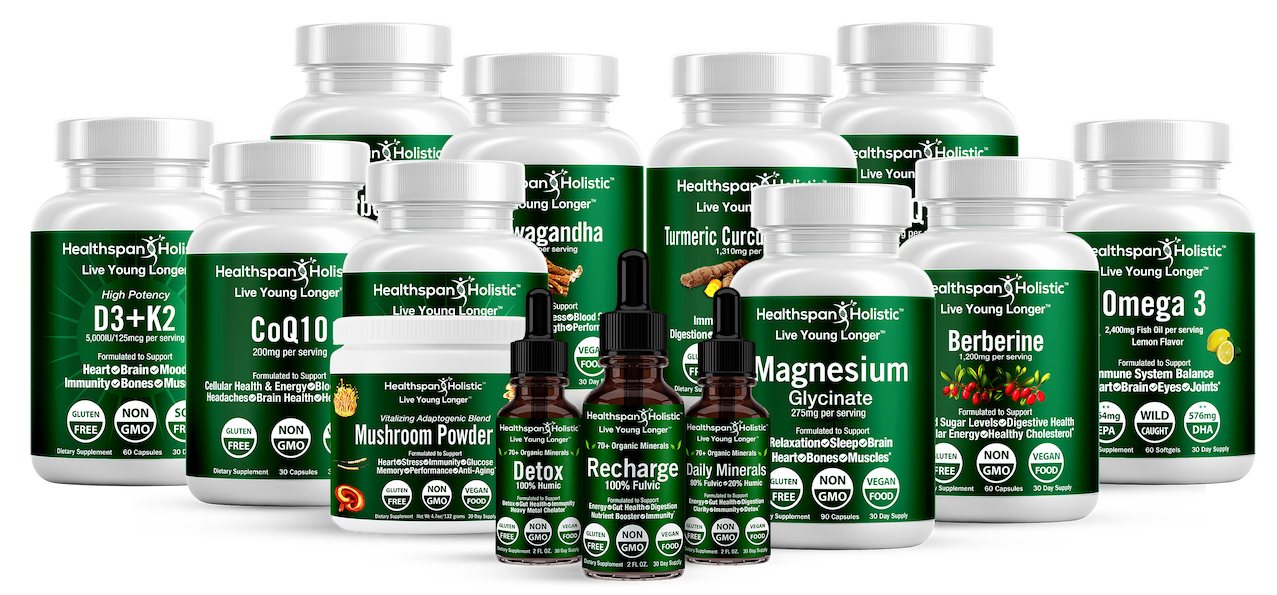
At Healthspan Holistic, we connect the dots between your lab results, supplement needs, and lifestyle goals. Start with our Daily Essentials Lab Test to uncover hidden deficiencies. You can also browse our curated top supplements collection for professional-grade options that meet the evidence standards discussed in this guide. Your healthspan journey deserves more than guesswork.
Frequently asked questions
What is the most evidence-based supplement for longevity?
Vitamin D and magnesium have the most robust evidence for supporting healthy aging and longevity, particularly in adults who are deficient in either nutrient. Both have well-documented roles in bone health, muscle function, metabolic regulation, and more.
Are NAD+ supplements proven to extend lifespan?
NAD+ precursors reliably raise NAD+ levels in humans, but large, long-term randomized controlled trials confirming significant lifespan extension have not yet been completed. Current evidence is encouraging but not yet conclusive for longevity endpoints.
How much vitamin D should adults over 40 take?
The standard RDA is 600 to 800 IU, but many adults require higher doses to reach optimal blood levels. Vitamin D supplementation should ideally be guided by a 25(OH)D blood test, as individual needs vary considerably based on baseline status, sun exposure, and absorption.
What is the best form of magnesium for longevity?
The best form depends on your specific health goals. Magnesium glycinate excels for sleep and anxiety, citrate supports digestive health, and L-threonate is the top choice for cognitive support and brain-specific benefits.
Should I consult a professional before taking new supplements?
Yes, especially if you have existing medical conditions or take prescription medications. Some supplements interact with common drugs, and testing your baseline levels before starting helps ensure your protocol is safe and targeted.
Leave a comment: