

TL;DR:
- Holistic health considers the interconnected body, mind, emotions, relationships, and environment.
- Prioritize balance across six pillars: physical, mental, emotional, spiritual, social, and environmental health.
- Combining holistic, integrative, and conventional medicine offers the most effective approach for healthy aging.
Most people assume that if they aren’t sick, they must be healthy. It’s a reasonable assumption, but it leaves out a whole dimension of well-being that truly determines how well you age, how much energy you carry, and how deeply you enjoy life. Holistic health looks far beyond the absence of disease. It considers your body, mind, emotions, relationships, and even your surroundings as one interconnected system. If you’re over 40 and searching for something more meaningful than reactive doctor visits, this guide will walk you through the core principles, the science behind them, and practical steps you can take right now to build a more vibrant, personalized approach to your health.
Key Takeaways
| Point | Details |
|---|---|
| Whole-person focus | Holistic health emphasizes harmony between body, mind, spirit, social, and environmental wellbeing. |
| Foundation pillars | True wellness relies on reinforcing all six holistic health pillars for lasting impact. |
| Evidence is key | Prioritize proven approaches like nutrition, exercise, and mindfulness for the best outcomes. |
| Prevention over reaction | Holistic medicine helps you proactively age with vitality, not just react to symptoms. |
What is holistic health?
Holistic health is not about swapping your doctor for a herbalist or choosing crystals over medication. It’s a philosophy grounded in one core idea: every part of you is connected, and true wellness requires balance across all of those parts.
"Holistic health is a philosophy and approach to wellness that considers the whole person—body, mind, spirit, emotions, social connections, and environment—aiming for balance and optimal vitality rather than just absence of disease."
Conventional medicine is extraordinary at treating acute problems. A broken bone, a bacterial infection, a cardiac event—these require the precision and power of modern medicine. But when it comes to preventing chronic disease, restoring energy, and helping you feel genuinely well over the long term, a purely symptom-focused approach often falls short.
Holistic health fills that gap. Instead of asking “What’s wrong?” it asks “What does this person need to thrive?” That shift in framing changes everything. It means looking at your sleep quality, your stress load, your sense of purpose, and your social connections alongside your blood work and physical health.
Think of it like a six-legged stool. Remove or weaken any one leg, and the whole structure becomes unstable. The domains of holistic health include:
- Body: nutrition, movement, sleep, and physical care
- Mind: mental clarity, stress management, and cognitive health
- Emotions: resilience, emotional expression, and mental balance
- Spirit: purpose, values, and a sense of meaning in life
- Social: relationships, community, and connection
- Environment: your home, workplace, and exposure to toxins or nature
These holistic care principles apply across every area of wellness, from dental health to cardiovascular function. When you start seeing your health this way, everything becomes an opportunity to optimize rather than just manage.

Six pillars of holistic health
Understanding the pillars of holistic health helps you see exactly where your attention may be overdue. Key pillars include physical, mental, emotional, spiritual, social, and environmental health, and each one influences the others in surprising ways.
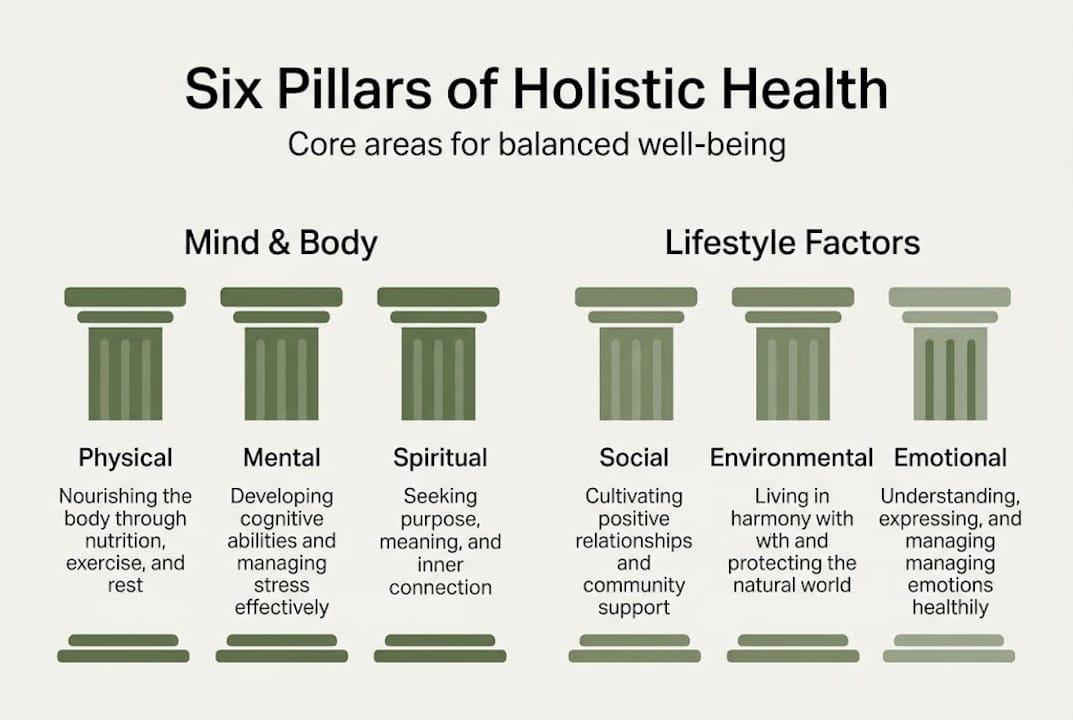
| Pillar | Examples |
|---|---|
| Physical | Nutrition, exercise, sleep, hydration |
| Mental | Stress management, mindfulness, learning |
| Emotional | Resilience, journaling, therapy |
| Spiritual | Purpose, gratitude, meditation |
| Social | Friendships, volunteering, community |
| Environmental | Clean air, reduced toxins, nature exposure |
For example, chronic stress (a mental pillar issue) directly disrupts your sleep (physical), which then depletes your emotional resilience, which can pull you away from social activities. One weak pillar rarely stays contained. This is exactly why single-fix solutions so often disappoint people over 40.
Here’s how to evaluate your own pillar balance:
- Rate each pillar from 1 to 10 based on your current satisfaction.
- Identify your two lowest-scoring areas.
- Ask yourself what one realistic change could raise each score by two points.
- Write down your answers and revisit them in 30 days.
- Celebrate small wins—they compound into lasting change.
Pro Tip: Don’t try to overhaul everything at once. Pick the single pillar that feels most neglected and make one small, manageable change this week. Progress in one area tends to create positive ripple effects in others. You can also explore evidence-backed holistic interventions to find approaches supported by real research.
Holistic vs. conventional and integrative medicine
Many people use these terms interchangeably, but they represent genuinely different philosophies. Knowing the distinction helps you make smarter decisions about your own care.
| Approach | Focus | Strengths | Best Use Case |
|---|---|---|---|
| Holistic | Whole person, root causes, prevention | Personalized, sustainable, proactive | Chronic conditions, aging well, energy |
| Integrative | Combines conventional and holistic | Broad toolkit, balanced | Complex conditions needing dual approach |
| Conventional | Symptoms, diagnosis, treatment | Precise, evidence-based, fast-acting | Acute illness, emergencies, surgery |
As holistic medicine contrasts with conventional care by focusing on root causes and prevention rather than symptom treatment, integrative medicine blends both, while conventional medicine excels in acute and emergency settings.
“The most resilient health strategy isn’t choosing one model over another—it’s knowing which tool fits the moment.”
Here’s a simple guide for when to lean on each:
- Choose conventional medicine when you’re dealing with acute illness, infections, trauma, or urgent symptoms that need immediate diagnosis.
- Choose holistic approaches when you want to prevent disease, boost energy, improve sleep, manage stress, or address chronic low-grade symptoms.
- Choose integrative care when you’re managing a chronic condition and want to combine treatments for better outcomes.
For those over 40 focused on proactive aging, the holistic and integrative models offer significant advantages. Personalized interventions that account for your specific biology, lifestyle, and goals will always outperform generic advice.
Evidence, controversies, and best practices
Holistic health is not a free pass for every alternative claim on the internet. Evidence matters—and the strength of that evidence varies considerably across practices.
Practices with strong scientific backing include:
- Nutrition: anti-inflammatory diets reduce chronic disease risk significantly
- Exercise: regular movement is among the most powerful longevity tools available
- Mindfulness and meditation: reduce cortisol, improve emotional regulation
- Tai chi: proven to reduce falls risk in older adults and improve balance
- Social connection: linked to lower rates of cognitive decline and depression
The strongest evidence supports multimodal lifestyle programs combining nutrition, exercise, and mind-body practices for reducing inflammation, improving mental health, and supporting healthy aging. These are not soft recommendations—they are foundational strategies backed by robust science.
That said, controversies exist. Some practitioners overclaim results, use unvalidated diagnostic tests, or discourage patients from seeking conventional care when they genuinely need it. This is where critical thinking becomes your best asset.
Pro Tip: When evaluating any holistic practice, ask two questions: “What does the research say?” and “Does this replace or complement my current care?” If someone promises a miracle or insists you abandon proven treatments, that’s a red flag worth taking seriously. Explore scientific support for holistic health to stay grounded in what actually works.
The goal is integration, not substitution. The people who age best are typically those who combine the precision of conventional medicine with the preventive depth of holistic practices.
How to personalize holistic health for proactive aging
Building your own holistic wellness plan doesn’t require a radical lifestyle overhaul. It requires clarity, consistency, and the right support. A personalized approach via lifestyle assessment complements conventional care especially well for adults between 40 and 75 who want to emphasize prevention over reaction.
Here are six steps to get started:
- Assess your current baseline. Note your energy levels, sleep quality, stress, mood, and physical activity across a full week.
- Identify your priority pillars. Use the six-pillar rating exercise from earlier to find your weakest areas.
- Set specific, realistic goals. Instead of “eat better,” try “add one serving of vegetables to lunch five days a week.”
- Choose evidence-backed tools. Consider supplements that support healthy aging, professional lab panels, or guided coaching.
- Track your progress weekly. Use a journal, a wearable, or a simple notes app to observe patterns over time.
- Review and adjust every 30 days. What’s working? What needs a tweak? Flexibility is part of the process.
When working with health providers, ask these key questions:
- What is the evidence for this intervention?
- Does it interact with any medications I take?
- How will we measure whether it’s working?
- Can this practice complement my current conventional care?
Also consider your oral health as part of your holistic routine. Reviewing holistic gum health tips is a practical reminder that whole-body wellness includes areas that are easy to overlook.
Pro Tip: Start with one change per week and note how your energy, sleep, or mood responds. Small shifts, tracked consistently, give you real data about what your body actually responds to. That’s more valuable than any trend diet.
A fresh perspective on holistic health for lifelong vitality
After working with adults over 40 for years, one pattern stands out clearly: the people who make the biggest health leaps are rarely the ones chasing the latest supplement stack or extreme protocol. They are the ones who commit to consistent, modest upgrades across multiple pillars simultaneously.
Here’s what most mainstream advice misses. The social, emotional, and spiritual dimensions of health are frequently the highest-leverage areas for people in midlife and beyond. A person who feels purposeful, connected, and emotionally regulated will almost always outperform someone with a perfect diet but deep loneliness or unprocessed stress. Yet these pillars get the least attention in popular wellness media.
“Consistent, balanced self-care compounded over months and years outperforms any short-term fix. The body keeps the score—and so does time.”
Don’t underestimate the power of your real-world healthy aging toolkit. It doesn’t have to be complicated. What it has to be is personalized, sustained, and grounded in honest evidence rather than health dogma. The goal isn’t perfection. It’s progress that you can actually feel.
Find your holistic wellness solutions
If today’s guide has inspired you to take a more intentional approach to your health, we want to make that next step easy.
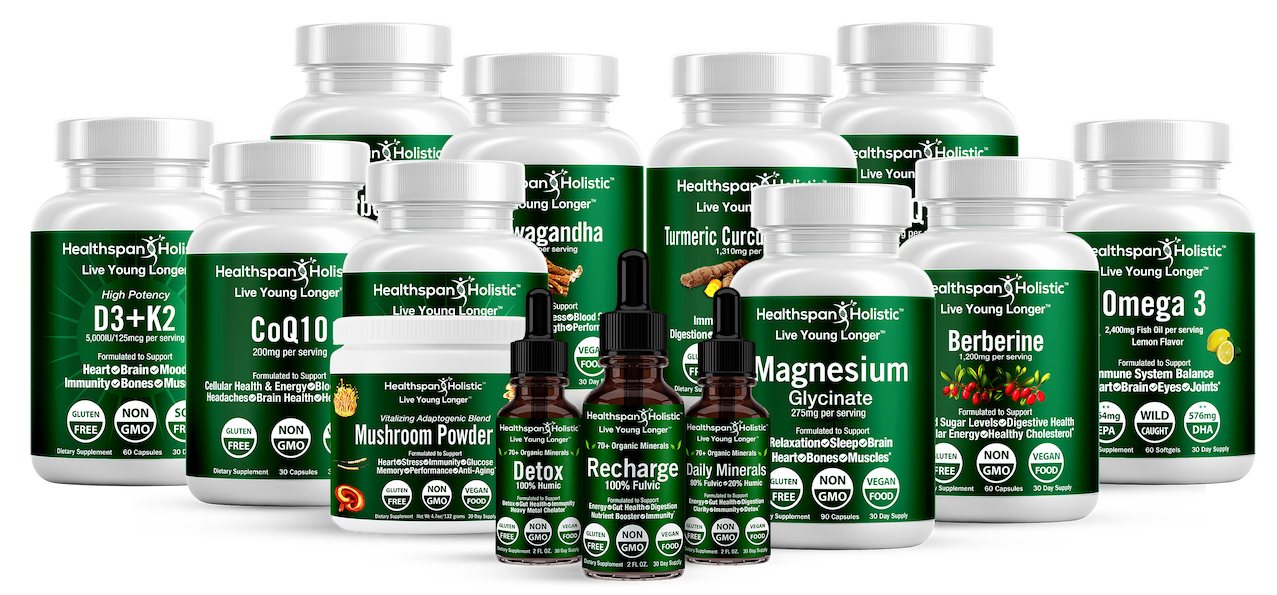
At Healthspan Holistic, our curated selection of professional-grade supplements is designed specifically to fill the nutritional gaps that show up most commonly in adults over 40. From daily mineral support that restores foundational cellular energy to our premium multivitamin built for active aging, every product is chosen to align with evidence-based holistic principles. Browse our full range of all holistic supplements and find what fits your unique wellness plan. Education is the first step—quality tools are the second.
Frequently asked questions
What is the difference between holistic health and conventional medicine?
Holistic health addresses the whole person, targeting root causes and prevention, while conventional medicine focuses on diagnosing and treating symptoms or acute conditions. Both have important roles, and combining them often produces the strongest outcomes.
Which holistic health practices have the strongest scientific support?
Multimodal lifestyle programs combining nutrition, regular exercise, and mind-body practices like mindfulness have the most robust evidence for reducing inflammation and supporting healthy aging. These are the practices worth prioritizing first.
Are there risks to holistic health approaches?
Yes. Evidence varies significantly across practices, and risks include relying on unproven treatments, using unvalidated tests, or delaying necessary conventional care. Always apply critical thinking and prioritize approaches with solid research behind them.
How do I start a holistic health routine if I’m over 40?
Begin with a personalized lifestyle assessment, identify your weakest wellness pillars, and set one practical goal per area. Working with a qualified health coach or provider can help you build a safe and effective plan tailored to your needs.
Recommended
- High Potency Vitamin D3 + K2 Supplement 60 | Healthspan Holistic
- News
- 2oz Detox Humic and Fulvic Acid Supplements | Healthspan Holistic
- 2oz Daily Minerals Fulvic Humic Concentrate for Fulvic Acid Benefits
- Holistic Oral Care: Natural Solutions for Optimal Health – Stop Oral Care
- Holistic senior care for Florida families: A 2026 guide
Leave a comment: