

TL;DR:
Lifestyle factors like resistance training and proper sleep significantly boost testosterone levels naturally.
Combining lab testing with holistic habits addresses root causes of hormone imbalance effectively.
Men can improve hormone health through consistent, evidence-based habits without immediate need for medication.
A 10% reduction in body fat can raise testosterone by 10 to 15%, and three to four resistance training sessions per week can boost it by another 15 to 20%. Those numbers tell a powerful story: the lifestyle choices you make every day have a direct, measurable impact on your hormone health. Many men over 40 assume that declining energy, stubborn weight gain, and low libido are just part of getting older. They’re not. With the right information, targeted lab testing, and a holistic plan, you can restore your vitality and feel like yourself again without automatically reaching for a prescription.
Key Takeaways
| Point | Details |
|---|---|
| Natural lifestyle impact | Holistic changes in exercise, nutrition, and sleep can raise testosterone up to 25%. |
| Not all low testosterone needs meds | Lifestyle fixes first—TRT is only for confirmed deficiencies with symptoms. |
| Personalization is key | Lab testing empowers tailored hormone health strategies for optimal results. |
| Micronutrients matter | Zinc, vitamin D, and healthy fats are essential to sustaining balanced hormones. |
| Sustainable vitality requires holistic care | Addressing sleep, stress, and nutrition delivers lasting improvements beyond quick fixes. |
Understanding men’s hormone health: Why it matters after 40
Hormone health refers to the balance and function of the chemical messengers that regulate nearly every system in your body. For men between 40 and 65, three hormones deserve the most attention: testosterone, cortisol, and thyroid hormones.
Testosterone drives muscle mass, libido, bone density, mood, and mental sharpness. Cortisol is your primary stress hormone, and when it stays elevated too long, it actively suppresses testosterone production. Thyroid hormones control your metabolic rate, energy levels, and body temperature. When any one of these falls out of balance, you feel it.
Common signs of hormone imbalance in men over 40 include:
-
Persistent fatigue that sleep doesn’t fix
-
Unexplained weight gain, especially around the belly
-
Low sex drive or erectile dysfunction
-
Brain fog and difficulty concentrating
-
Mood changes, irritability, or mild depression
-
Loss of muscle mass despite regular exercise
-
Poor sleep quality or difficulty staying asleep
After 40, testosterone naturally declines at roughly 1 to 2% per year. Cortisol patterns shift, and thyroid function can slow. But aging alone rarely explains the full picture. Lifestyle factors like poor sleep, chronic stress, excess body fat, and nutritional gaps accelerate these changes dramatically.
“The goal isn’t just to chase a number on a lab report. It’s to understand what’s driving the imbalance and address it at the root.” This is the foundation of holistic health balance that we champion at Healthspan Holistic.
This is exactly why testing matters. A comprehensive hormone panel gives you a precise snapshot of where your levels stand, so you’re not guessing. Evidence shows that resistance training and sleep can boost testosterone by 15 to 20% and that poor sleep alone drops it by 10 to 15%. Knowing your baseline transforms these statistics into a personal action plan.
Building on this foundational understanding, we’ll now explore the holistic methods proven to support men’s hormone health naturally.
Holistic lifestyle strategies for hormone health
The good news is that lifestyle changes can improve testosterone levels by up to 25% when applied consistently and correctly. This isn’t wishful thinking. It’s backed by solid evidence, and the strategies are practical enough to start this week.
Here’s a numbered framework to build your holistic hormone plan:
-
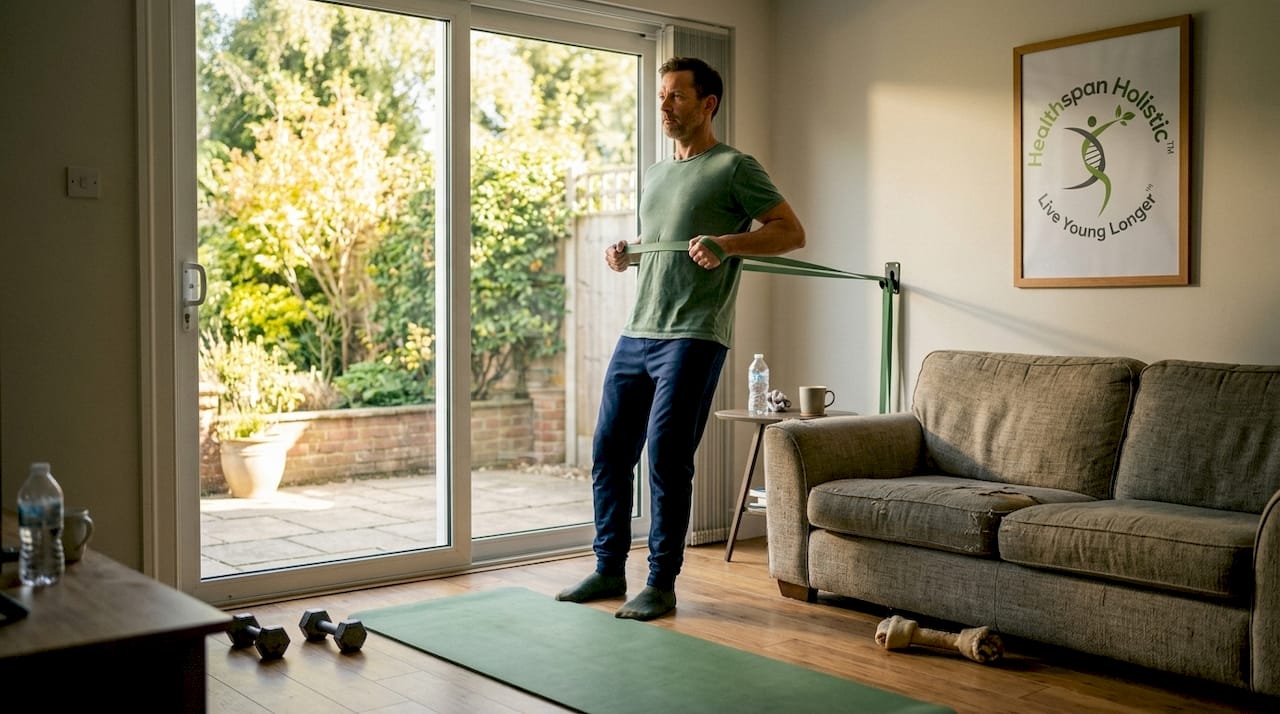
Prioritize resistance training. Aim for three to four sessions per week. Compound movements like squats, deadlifts, and bench press generate the strongest hormonal response. Resistance training boosts T by 15 to 20% in men who train consistently.
-
Protect your sleep. Seven to nine hours of quality sleep is non-negotiable. Your body produces the majority of its daily testosterone during deep sleep. Poor sleep can drop testosterone 10 to 15% in just one week of disruption.
-
Reduce body fat strategically. A 10% reduction in body fat raises testosterone by 10 to 15%. Focus on a moderate caloric deficit with adequate protein, not crash dieting, which spikes cortisol and backfires.
-
Optimize your nutrition. Zinc (25 to 45 mg daily) and vitamin D (targeting 50 to 70 ng/mL serum levels) are essential for testosterone synthesis. Healthy fats from sources like olive oil, avocado, and fatty fish support hormone production at the cellular level.
-
Manage stress actively. Chronic high cortisol is one of the fastest ways to suppress testosterone. Practices like breathwork, meditation, and even regular outdoor walks lower cortisol and create space for hormonal recovery.
| Strategy | Hormone impact | Timeline |
|---|---|---|
| Resistance training (3 to 4x/week) | Testosterone up 15 to 20% | 8 to 12 weeks |
| Quality sleep (7 to 9 hours) | Prevents 10 to 15% T drop | Immediate |
| 10% body fat reduction | Testosterone up 10 to 15% | 3 to 6 months |
| Zinc and vitamin D optimization | Supports T synthesis | 4 to 8 weeks |
| Stress reduction practices | Lowers cortisol | 2 to 4 weeks |
Research confirms that holistic fixes address root causes like sleep deprivation, chronic stress, and obesity before considering medical interventions. Resistance training combined with improved diet and sleep can normalize hormone levels in many men without medication.
Supporting your immune system with holistic steps also plays a role here. Chronic low-grade inflammation, common in men over 40, drives cortisol up and testosterone down. Reducing inflammation through diet and lifestyle creates a hormonal environment where your body can thrive.
It’s also worth noting that thyroid health insights are often overlooked in men’s hormone conversations. An underactive thyroid slows metabolism, raises body fat, and compounds testosterone decline. Getting your thyroid checked alongside testosterone is smart, proactive care.
For men dealing with prostate concerns alongside hormone changes, a quality prostate health supplement can be a supportive addition to your overall plan.
Pro Tip: Before you change your supplements or training program, test your micronutrient levels and track your sleep metrics with a wearable device for two weeks. You’ll know exactly where to focus your energy for the fastest results.
Now that you know what works naturally, let’s see how these approaches compare to medical treatments and how to decide what’s right for you.
Lifestyle changes vs. testosterone replacement therapy (TRT)
This is where men often feel confused, and understandably so. TRT is a legitimate medical treatment, but it’s not the right starting point for everyone. Understanding the difference helps you make a confident, informed decision.
What lifestyle changes can achieve:
-
A natural testosterone increase of 15 to 25% over three to six months
-
Improved body composition, energy, and mood with no side effects
-
Sustainable results that address the actual cause of the imbalance
-
No monitoring requirements or medical supervision needed
What TRT offers:
-
Faster and larger testosterone increases, especially for confirmed deficiency
-
Significant improvements in muscle mass, bone density, and sexual function
-
Requires regular monitoring of hematocrit, PSA, and cardiovascular markers
-
Carries risks including polycythemia (thickened blood), fertility suppression, and potential cardiovascular effects
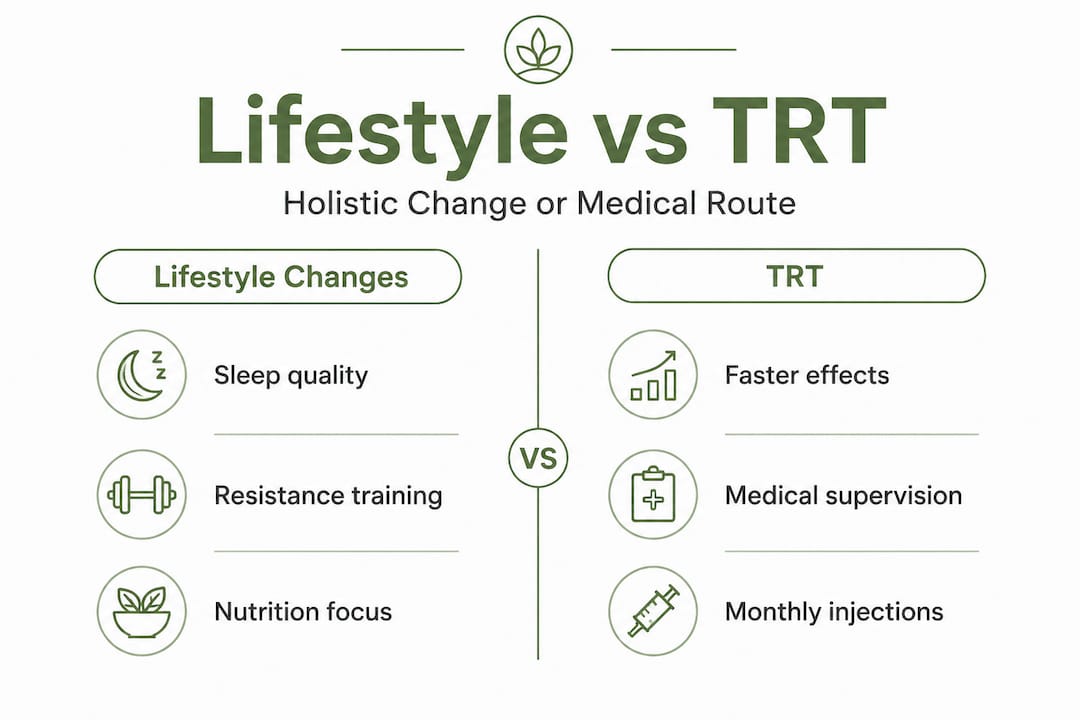
| Factor | Lifestyle changes | TRT |
|---|---|---|
| Speed of results | 8 to 16 weeks | 4 to 8 weeks |
| Testosterone increase | 15 to 25% | Varies widely |
| Side effects | Minimal | Requires monitoring |
| Sustainability | High | Ongoing treatment |
| Best for | Reversible causes | Confirmed deficiency with symptoms |
Evidence is clear that TRT is recommended for confirmed testosterone deficiency (below 300 ng/dL) combined with clinical symptoms. But here’s the critical point: not all low testosterone requires treatment if you have no symptoms. Many men with borderline levels feel completely fine and respond well to lifestyle optimization alone.
The holistic approach addresses root causes first. If your low testosterone is driven by poor sleep, excess body fat, or chronic stress, correcting those factors may normalize your levels entirely. TRT without addressing these issues is like patching a leak without fixing the pipe.
Some men benefit from targeted supplements that support healthy estrogen metabolism alongside testosterone. Products like estrogen metabolism support can help maintain the right testosterone to estrogen ratio, which matters as much as raw testosterone levels. When you’re ready to get your numbers, ordering a hormone panel is the logical first step before any treatment decision.
Pro Tip: Always pursue at least three months of consistent lifestyle changes before considering TRT. You may be surprised how much ground you can recover naturally, and you’ll have a much cleaner baseline if medication becomes appropriate later.
With the pros and cons clarified, let’s look at how you can personalize your plan using lab testing and holistic monitoring.
Lab testing and personalized approaches for men’s hormone health
Lab testing transforms hormone health from guesswork into precision. Without data, you’re making lifestyle changes in the dark. With it, every adjustment you make is targeted and measurable.
Here’s what a comprehensive testing approach looks like for men over 40:
-
Total and free testosterone: Total testosterone gives the big picture; free testosterone (the active form) tells you what your cells are actually using.
-
Cortisol (morning and evening): Reveals your stress hormone pattern and whether chronic stress is suppressing testosterone.
-
Thyroid panel (TSH, free T3, free T4): Identifies metabolic slowdown that compounds hormone imbalance.
-
Micronutrients (zinc, vitamin D, magnesium): Deficiencies in these directly impair hormone production.
-
Body composition tracking: Body fat percentage matters more than scale weight for hormone health.
-
Sleep metrics: Wearable devices that track deep sleep and REM cycles show you exactly how recovery is affecting your hormones.
The data from a three-month lifestyle intervention is striking. Research shows that structured lifestyle changes in men aged 40 to 65 raised testosterone from an average of 270 to 500 ng/dL, a gain of 85%, while also reducing weight by 7% and lowering HbA1c (a blood sugar marker) by 14%. These aren’t marginal improvements. They’re transformative.
Understanding how nutrition shapes mental health also matters here. Mood, cognitive function, and motivation are deeply tied to hormone levels and nutritional status. When you fix the nutritional gaps that impair testosterone, you often notice mental clarity and emotional stability improve alongside physical energy.
Personalized supplementation takes this further. Rather than taking a generic multivitamin, you identify your specific deficiencies through testing and fill those gaps precisely. This is far more effective than guessing.
Pro Tip: Retest your hormone panel and key micronutrients every three to six months. Hormone health is dynamic, not static. What worked at month three may need adjusting by month six as your body composition and lifestyle evolve.
With each step, you gain clarity on what works for your own body. Now let’s share why a holistic mindset is essential for sustainable men’s hormone health.
A holistic mindset: What conventional advice misses about men’s hormone health
Here’s an uncomfortable truth we see repeatedly: most men who come to us frustrated with their hormone health have been chasing the wrong target. They’ve been told their testosterone is “a little low” and offered a prescription, or they’ve been told their levels are “normal” and sent home without answers. Both outcomes miss the point entirely.
Conventional advice tends to reduce hormone health to a single number on a lab report. But testosterone doesn’t exist in isolation. It’s influenced by cortisol, thyroid function, insulin sensitivity, sleep architecture, body composition, and nutritional status. Treating one marker while ignoring the others is like tuning one string on a guitar and wondering why the music still sounds off.
The men who see lasting results are the ones who adopt a systems-level view. They address sleep quality before they address testosterone directly. They reduce visceral fat not just for aesthetics but because fat tissue converts testosterone to estrogen. They manage stress not as a soft lifestyle suggestion but as a hard hormonal intervention. This is the balanced path to wellness that creates real, durable change.
There’s also a myth worth dismantling: that symptoms don’t matter if your numbers look acceptable. If you feel exhausted, mentally foggy, and physically depleted, those symptoms are data. They tell you something is off, even if your total testosterone sits in the “normal” range. Free testosterone, cortisol patterns, and thyroid function may tell a very different story.
Sustainable vitality doesn’t come from a single intervention. It comes from stacking consistent, evidence-based habits that reinforce each other over time. Exercise improves sleep. Better sleep lowers cortisol. Lower cortisol raises testosterone. Higher testosterone supports muscle mass. More muscle burns fat. Less fat means more testosterone. This is a positive feedback loop, and once you set it in motion, momentum builds.
Pro Tip: Sustainable vitality comes from holistic, proactive self-care. Think of your hormone health as an ecosystem, not a single dial to turn up. Nurture the whole system and every part improves.
Take your next step: Holistic resources for men’s hormone health
You now have a clear, evidence-based roadmap for restoring your hormone health naturally. The next step is turning that knowledge into action with the right tools and support.
At Healthspan Holistic, we make it straightforward to get started. Begin with a comprehensive hormone panel test to establish your baseline across testosterone, cortisol, and thyroid markers. Pair it with a cellular micronutrient test to identify the nutritional gaps that may be quietly undermining your hormone production. Then, if you want personalized guidance to interpret your results and build a tailored plan, book a health coaching call with our team. We’ll help you connect the dots between your lab data, lifestyle habits, and long-term vitality goals.
Frequently asked questions
What are the most common symptoms of hormone imbalance in men after 40?
Fatigue, low libido, weight gain, mood changes, and poor sleep are the most frequent signs, and they often appear together rather than in isolation.
Do I need testosterone replacement therapy if my levels are low?
Not necessarily. TRT is recommended only for confirmed deficiency below 300 ng/dL combined with clinical symptoms. Men with borderline levels and no symptoms often respond fully to lifestyle changes alone.
How quickly can lifestyle changes improve hormone health?
Consistent changes to exercise, sleep, and nutrition can produce measurable results within three to four months. One study showed testosterone rising from 270 to 500 ng/dL over three months alongside significant improvements in weight and blood sugar.
What labs should I order to assess hormone health?
Start with total and free testosterone, cortisol, a full thyroid panel, and a micronutrient screen covering zinc, vitamin D, and magnesium for a complete, actionable picture.
Can micronutrient deficiencies impact hormone levels?
Yes, significantly. Insufficient zinc and vitamin D directly impair testosterone synthesis, and correcting these deficiencies is often one of the fastest ways to support natural hormone recovery.
Leave a comment: