

Aim for a protein intake higher than the standard RDA if you’re healthy, or even more if managing illness, recovering from surgery, or losing muscle mass. Distribute protein intake evenly across meals with a target amount per meal sufficient to trigger muscle protein synthesis, focusing on leucine-rich sources. The single biggest lever isn’t the number on the label. It’s pairing that protein with resistance training and consulting your doctor first if you have kidney disease.
TL;DR:
Older adults need roughly 1.0 to 1.5 grams of protein per kilogram daily, spread across meals of 30 to 40 grams each, to counter anabolic resistance.
Most people over 50 fail to distribute enough protein evenly, often consuming less than 30 grams at breakfast or lunch, risking insufficient muscle stimulation.
Combining whey, plant-based blends, or eggs with resistance training twice weekly maximizes muscle maintenance and functional strength.
Lab testing of kidney function, hormones, and micronutrients can personalize protein targets, especially if managing health conditions or medications.
The focus should be on hitting total daily protein goals and consistent resistance exercise rather than obsessing over precise timing or leucine thresholds.
Why Older Adults Need More Protein Than the Standard RDA
Your muscles at 55 don’t respond to protein the way they did at 30. Feed a 25-year-old 15 grams of protein and their muscle protein synthesis (the process that builds and repairs muscle tissue) fires up efficiently. Feed a 65-year-old the same 15 grams, and the response is blunted. Researchers call this anabolic resistance, and it’s the biological reason the standard Recommended Dietary Allowance of 0.8 g/kg falls short for anyone past 50.
The mechanism comes down to how muscle cells sense and use amino acids. Aging muscle needs a bigger dose to cross the threshold that triggers protein synthesis. Breakpoint studies comparing older and younger adults found that older muscle reaches its synthesis plateau at closer to 0.4 grams per kilogram per meal, compared to a lower threshold in younger adults. Eat the same modest breakfast at 60 that worked fine at 30, and you’re likely leaving muscle-building potential on the table.
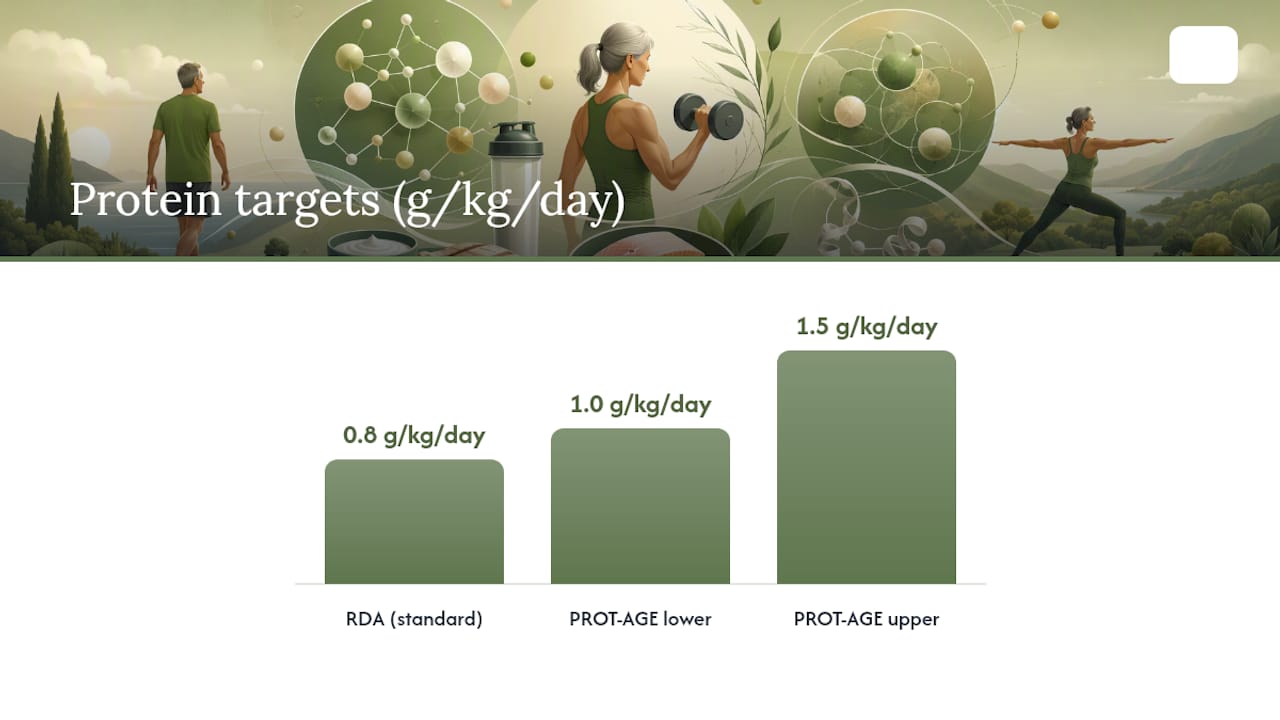
This isn’t a fringe theory. The PROT-AGE and ESPEN clinical guidance now recommends adults over 65 target 1.0 to 1.5 g/kg per day, spread across meals at 30 to 40 grams each, specifically to counter this resistance. Harvard Health Publishing echoes the same point, noting the RDA was calculated to prevent deficiency, not to preserve muscle mass or function into your 70s and 80s.
A few facts worth holding onto as you read the rest of this guide:
-
Anabolic resistance means older muscle needs a larger per-meal protein dose to trigger the same building response younger muscle gets from less.
-
Systematic reviews and RCT meta-analyses show whey protein paired with resistance training measurably improves muscle mass, gait speed, and strength in older adults with sarcopenia.
-
National nutrition data reviewed by the Administration for Community Living shows many older adults fall short of even the higher recommended targets, often because protein gets concentrated at dinner and skipped at breakfast.
-
Sarcopenia, the age-related loss of muscle mass and strength, doesn’t announce itself with a single dramatic symptom. It shows up as harder-to-open jars, slower stair climbs, and a growing hesitance to carry groceries in one trip.
None of this means you need to obsess over grams at every meal. It means the target moved, and the old rule of thumb quietly became outdated.
What Are the Best Protein Targets for Adults Over 50?
The right number depends on your health status, not just your age. A healthy, active 58-year-old and a 72-year-old recovering from hip surgery have different needs, even though both fall into “older adult” territory.
Pro Tip: Convert your weight to kilograms once and keep the number handy. Divide your weight in pounds by 2.2, then multiply by your target range to get your daily gram goal in seconds.
Here’s what that looks like in practice, using the healthy-adult range of 1.0 to 1.2 g/kg/day:
-
A 130 lb adult (59 kg) needs roughly 59 to 71 grams of protein daily, or about 20 to 24 grams per meal across three meals.
-
A 150 lb adult (68 kg) needs roughly 68 to 82 grams daily.
-
A 170 lb adult (77 kg) needs roughly 77 to 92 grams daily.
-
A 190 lb adult (86 kg) needs roughly 86 to 103 grams daily.
-
A 210 lb adult (95 kg) needs roughly 95 to 114 grams daily.
Notice something in those numbers: even at the higher end, most of these totals divide out to less than the 30 to 40 gram per-meal target if you’re only eating three meals. That’s the actual math problem most people over 50 are quietly failing to solve. It usually takes three solid meals plus a snack, or three protein-forward meals of 30+ grams each, to hit the daily number without stacking everything into dinner.
On the safety side, the concern about protein damaging kidneys in healthy older adults doesn’t hold up well under scrutiny. Meta-analyses reviewed in the PROT-AGE and ESPEN update found no consistent evidence that higher protein intake, in the 1.2 to 1.5 g/kg range, harms renal function in community-dwelling adults without pre-existing advanced chronic kidney disease. If you have diagnosed kidney disease, though, that finding does not apply to you. Protein targets in that case need to be set with a nephrologist or your prescribing physician, since restricted intake is often appropriate depending on your stage of disease.
Which Foods Get You to 30 to 40 Grams Per Meal?
Whole foods should do most of the work. Supplements fill gaps; they shouldn’t be your primary strategy.
Here’s roughly what common protein sources deliver per typical serving:
-
Chicken breast (4 oz cooked): about 35 grams
-
Salmon or other fatty fish (4 oz cooked): about 28 to 30 grams
-
Greek yogurt (1 cup, plain): about 20 to 23 grams
-
Eggs (2 large): about 12 grams
-
Cottage cheese (1 cup): about 25 grams
-
Lentils or black beans (1 cup cooked): about 15 to 18 grams
-
Tofu (1 cup, firm): about 20 grams
-
Almonds or peanuts (1/4 cup): about 8 grams
Stacking a few of these gets you to target fast without needing a calculator at every meal. Two eggs plus a cup of Greek yogurt plus a small handful of almonds lands around 43 grams, easily clearing the 30 to 40 gram bar for breakfast. A 4 ounce chicken breast with a cup of quinoa and roasted vegetables gets you close to 43 grams for lunch or dinner, with the quinoa adding a few extra grams on top of the chicken.
For plant-based eaters, the concern that plants can’t match animal protein for muscle maintenance doesn’t hold up as strongly as it used to. Reviews of protein quality in adults over 60 found that plant-based blends perform comparably to animal protein when they supply enough total protein and essential amino acids, particularly leucine. That usually means combining legumes, tofu, and a fortified plant protein powder rather than relying on any single plant source alone.
If chewing is difficult or appetite runs low, which is common with dental issues, medication side effects, or after illness, softer high-protein options matter more than perfect variety. Cottage cheese, Greek yogurt, scrambled eggs, smooth nut butters, and protein-fortified smoothies all deliver a real dose without requiring much chewing effort. A caregiver-focused resource on meal prep strategies for older adults offers practical batch-cooking ideas that make hitting these targets easier on low-energy days.
Do You Need Protein Powder After 50, and Which Kind?
Supplements earn their place when whole food falls short, not as a replacement for it. Three scenarios come up constantly: a rushed breakfast that tops out at 10 to 15 grams, a post workout window where solid food feels unappealing, and stretches of low appetite where eating enough volume is genuinely hard.
A common mistake worth naming directly: a 20 gram scoop of protein powder is not a meal. It’s a supplement to a meal. Mixing it into oatmeal with milk, or blending it with fruit and Greek yogurt, closes the gap to the 30 to 40 gram target far more reliably than drinking a shake alone and calling it breakfast.
On choosing a type:
-
Whey concentrate or isolate offers the highest leucine density per gram and digests quickly, making it a strong default if you tolerate dairy.
-
Casein digests slowly, which makes it a reasonable choice before bed, though it’s a less urgent pick than whey for most daily needs.
-
Plant protein blends (pea, rice, hemp combinations) work well for those avoiding dairy, provided the blend lists at least 20 to 25 grams of protein per serving and combines multiple plant sources for a fuller amino acid profile.
-
Collagen powder is not a substitute for complete protein. It’s missing key essential amino acids and shouldn’t be counted toward your daily muscle-building total, even though it has other uses for joint or skin support.
When reading labels, check grams of protein per serving first, then scan for leucine or total essential amino acid content if it’s listed. Watch added sugar in flavored products, and favor brands with third-party testing verification. If you’re managing multiple medications or have kidney disease, run any new supplement by your physician or pharmacist before adding it, the same caution that applies to raising whole-food protein intake in those situations.
How Should You Pair Protein With Exercise After 50?
Protein alone doesn’t build or preserve muscle. It supplies the raw material, but resistance training is what tells your body to actually use it. Research on muscle needs after 50 is consistent on this point: resistance exercise drives the adaptive remodeling process, and protein intake amplifies that training response rather than replacing it. Skip the training and even a well-optimized diet won’t do much to reverse sarcopenia.

Aim for two to three resistance sessions per week, with at least one rest day between sessions targeting the same muscle groups. Progressive overload, gradually increasing weight, reps, or resistance over weeks, is what keeps driving adaptation instead of plateauing. Start with lighter loads and proper form, warm up with five to ten minutes of mobility work, and consider a supervised session or two with a trainer if you’re new to lifting or returning after a long break.
Two simple templates to start with:
-
Beginner (2 days/week): Bodyweight squats, wall or countertop push-ups, seated rows with a resistance band, and standing calf raises. Two to three sets of 10 to 12 reps each, with a five-minute walk to warm up.
-
Intermediate (3 days/week): Goblet squats or leg press, dumbbell chest press, lat pulldown or assisted pull-ups, dumbbell rows, and planks. Three sets of 8 to 12 reps, rotating muscle groups across the week.
Pro Tip: Have a protein-containing meal or snack within roughly two hours of your workout, whether before or after. The exact minute-by-minute timing matters less than simply making sure a 20 to 30 gram dose lands somewhere near your training session.
What Should a Day of Eating Look Like After 50?
Three sample days show how the math actually plays out once you stop treating protein as an afterthought.
Day 1 (omnivore, ~95 g total): Breakfast: 2 eggs + 1 cup Greek yogurt (32 g). Lunch: 4 oz grilled chicken + quinoa salad (38 g). Dinner: 3 oz salmon + lentils (25 g).
Day 2 (plant-based, ~88 g total): Breakfast: plant protein smoothie with berries and almond butter (30 g). Lunch: tofu stir-fry with edamame (28 g). Dinner: black bean and quinoa bowl (30 g).
Day 3 (lower appetite day, ~80 g total): Breakfast: cottage cheese with fruit (25 g). Lunch: protein-fortified soup with a hard-boiled egg (22 g). Dinner: small portion baked fish with mashed potatoes (33 g).
For eating out, scan menus for grilled proteins over fried, ask for a double portion of the protein side, and don’t hesitate to request cottage cheese or Greek yogurt as a substitute side dish. A useful grocery checklist to keep on repeat: eggs, Greek yogurt, cottage cheese, canned salmon or tuna, chicken thighs, a quality protein powder, tofu or tempeh, and a bag of lentils or black beans. A caregiver-oriented meal prep guide offers batch-cooking shortcuts that make weekday protein targets far easier to hit consistently.
Can Lab Testing Personalize Your Protein and Supplement Plan?
A generic target of 1.0 to 1.5 g/kg/day is a solid starting point, but it’s still an average. Your actual optimal number depends on variables a food journal can’t reveal, like kidney function, inflammation levels, hormone status, and micronutrient stores.
Certain lab markers change the picture meaningfully:
-
A Cellular Micronutrient Test can reveal deficiencies in nutrients tied to muscle recovery and energy metabolism, which sometimes matter more than protein grams alone.
-
A Metabolic Panel flags kidney function markers, which determines whether you’re a good candidate for the higher end of the protein range or need a more conservative target.
-
A Comprehensive Hormone Panel can uncover hormonal shifts that accelerate muscle loss independent of diet, which changes how aggressively you need to train and eat.
-
An Inflammation Panel helps identify chronic low-grade inflammation that can blunt the muscle-building response to both protein and exercise.
-
A Toxic & Essential Minerals Test checks mineral status that influences energy, recovery, and how efficiently your body uses the protein you’re eating.
-
A Basic Heart Health Test matters before ramping up resistance training intensity, especially if it’s been years since your last cardiovascular screening.
A typical personalized lab testing pathway starts with baseline labs, moves into a tailored nutrition and supplement plan built around what those results actually show, and continues with follow-up testing to confirm the plan is working rather than guessing indefinitely.
Combining diagnostic testing with tailored coaching allows a nutrition plan to reflect what your body is actually doing, not just what a general age-based formula assumes it’s doing.
This is the core difference between reading a protein target off a chart and knowing your own number.
What Actually Matters Most After 50
Here’s where I land after going through the evidence: most people over 50 spend far too much energy optimizing meal timing and protein source before they’ve nailed the basics. Get your daily total into range and add resistance training twice a week. That combination does more for muscle preservation than any amount of fine-tuning around leucine thresholds or post-workout windows.
If you’re on multiple medications or have a health concern that makes you nervous about raising protein intake, start with one relevant lab test rather than guessing. It’s a faster path to a number you can trust. For everyone else, the practical move is boring but effective: batch-cook two or three protein-forward breakfasts, track your intake honestly for two weeks, then reassess. Most people discover they’re closer to their target than they feared, or further than they realized. Either way, you’ll actually know.
— Chris
How Healthspan Holistic Supports Your Protein Strategy After 50
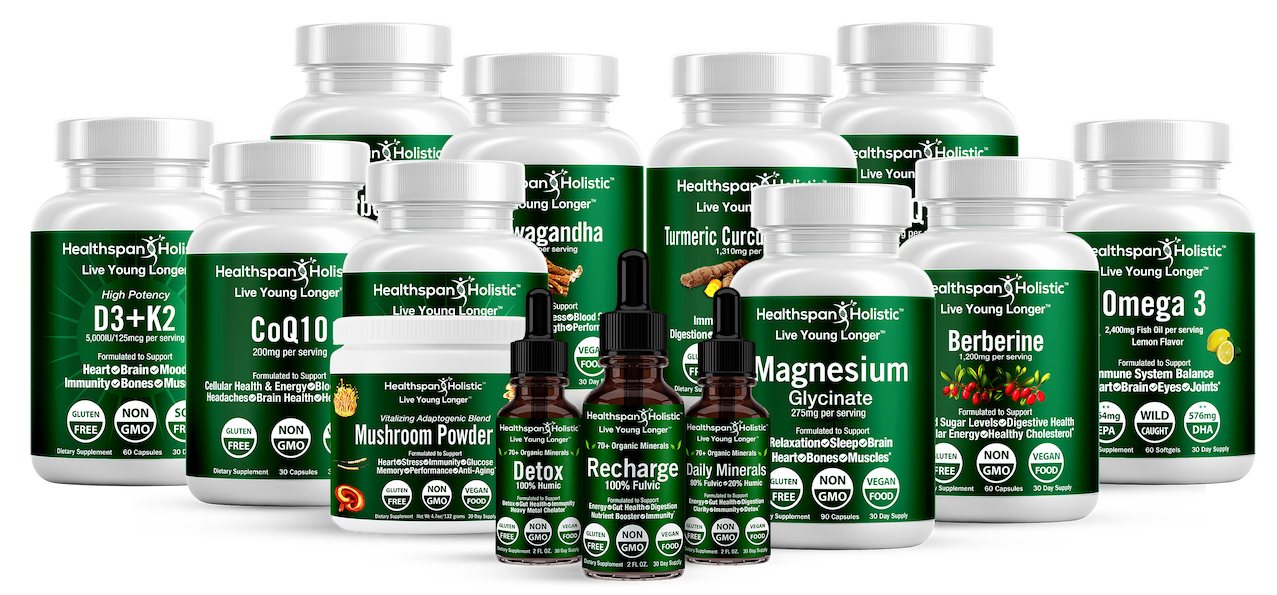
Generic protein targets get you most of the way there, but your kidney function, hormone status, and micronutrient levels are yours alone, and a chart can’t account for them. Healthspan Holistic built its diagnostic panels to close that exact gap, giving you lab-confirmed numbers instead of population averages.
Start with the Metabolic Panel to confirm your kidney function supports a higher protein range, or the Comprehensive Hormone Panel if muscle loss has felt disproportionate to your effort in the gym. The Cellular Micronutrient Test, Inflammation Panel, and Toxic & Essential Minerals Test round out the picture for readers managing fatigue, slow recovery, or unexplained plateaus. If you’re increasing training intensity, a Basic Heart Health Test is worth booking first.
1st Time Customers can take advantage of our BUY 1 GET 1 50% OFF special offer on all supplements.
Sources
FAQ
What is the best protein supplement for people over 50?
Whey protein isolate or concentrate is generally the strongest default because of its high leucine content and fast digestion, though quality plant-based blends work comparably well when they supply enough total protein and essential amino acids.
What are five signs you need more protein?
Watch for slower recovery after activity, difficulty opening jars or carrying groceries, unintentional weight loss with a shrinking waistline elsewhere, frequent muscle soreness, and a general sense of weakening grip strength or balance.
How much protein should a woman going through menopause eat to support weight loss?
Aim for the higher end of the range, roughly 1.2 to 1.5 g/kg/day based on adjusted body weight, since preserving muscle during weight loss becomes harder with hormonal shifts and requires more protein per meal to protect against lean mass loss.
What is the best protein snack for seniors?
Greek yogurt, cottage cheese, hard-boiled eggs, and ready-to-drink protein shakes are the easiest options because they require little preparation and deliver 15 to 30 grams without needing much chewing effort.
Does taking GLP-1 medication change protein needs?
Yes, people on GLP-1 medications typically need to prioritize the higher end of the protein range, since appetite suppression and rapid weight loss raise the risk of losing lean muscle mass alongside fat, a concern also noted in research on GLP-1 therapies and muscle loss.
Leave a comment: