

TL;DR:
- Turmeric’s active compound, curcumin, mainly relieves chronic pain by reducing inflammation over time. Clinical evidence shows it works similarly to NSAIDs for osteoarthritis, but only with enhanced formulations and ongoing use. It does not reverse joint damage and should be used alongside other health strategies under medical guidance.
Turmeric for pain relief is defined by its active compound, curcumin, a potent anti-inflammatory agent that modulates key inflammatory pathways in the body. Clinical reviews recognize curcumin’s moderate efficacy for chronic pain conditions, particularly osteoarthritis, where it performs comparably to short-term NSAID use. Unlike ibuprofen, which targets acute inflammation fast, curcumin works more like a dimmer switch on chronic, low-grade inflammation. It dials down inflammatory signals including CRP, TNF-alpha, and IL-6 over weeks of consistent use. For anyone over 40 managing joint pain or looking for natural pain relief options that complement rather than replace conventional care, turmeric is one of the most studied plant-based tools available.
What does the science say about turmeric for pain relief?
The clinical evidence for curcumin is strongest in knee osteoarthritis. Meta-analyses show significant improvements in both pain scores measured by the Visual Analog Scale (VAS) and joint function measured by the WOMAC scale over 12-week study periods. That means people in these trials reported less pain and moved better after three months of curcumin supplementation.

What makes this finding meaningful is the comparison group. Several of these trials measured curcumin against ibuprofen directly, and the results were roughly equivalent for symptom relief. That is a notable outcome for a plant compound with a very different safety profile than a pharmaceutical drug.
The evidence does have real limits you should know about:
-
Symptom relief only. Curcumin treats pain and stiffness but does not reverse arthritis. A Wang et al. (2020) trial showed symptomatic improvement with no structural MRI changes in knee cartilage over 12 weeks. The joint damage stays; the pain eases.
-
Short study windows. Most trials run 4–12 weeks. Long-term data beyond three months is limited.
-
Narrow condition focus. Evidence is concentrated in knee osteoarthritis. Data for acute pain, back pain, or fibromyalgia is much weaker.
-
Formulation variability. Clinical trials use specialized extracts, not the turmeric powder in your spice cabinet. Results from trials do not automatically apply to retail products.
A systematic umbrella review confirmed that different curcumin formulations all show efficacy comparable to NSAIDs with better tolerability. The same review flagged significant heterogeneity across studies, meaning the field still lacks the standardized trials needed for definitive clinical guidelines. The science is promising and growing, but it is not yet complete.
How does turmeric compare with ibuprofen for inflammation?
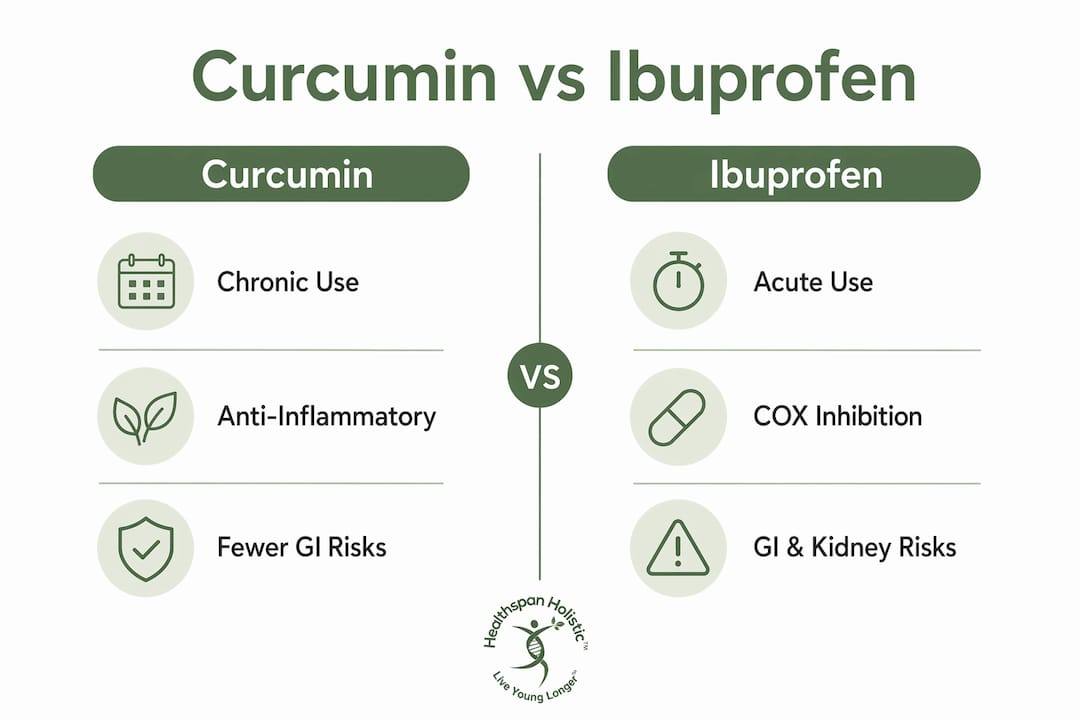
Turmeric and ibuprofen work through different mechanisms, and that difference determines when each one is the right choice. Ibuprofen is more effective for acute pain because it blocks COX enzymes quickly, reducing inflammation within hours. Curcumin, by contrast, modulates upstream inflammatory signals like TNF-alpha and IL-6 over weeks. Think of ibuprofen as a fire extinguisher and curcumin as fireproofing the walls.
For chronic, low-grade inflammation, curcumin’s approach is actually well-suited. It acts as a master switch for inflammation, gradually shifting the body’s inflammatory environment rather than suppressing a single acute response. This is why consistent daily use over several weeks is required before most people notice a meaningful difference.
The safety profiles differ in important ways too. NSAIDs like ibuprofen carry well-documented risks for the GI tract, kidneys, and cardiovascular system with long-term use. Curcumin generally causes fewer GI side effects at standard doses. That said, turmeric is not risk-free at high supplemental doses, which the safety section covers in detail.
Pro Tip: Never substitute turmeric for a prescribed analgesic without talking to your doctor first. Curcumin is a complement to care, not a replacement for it. If you are managing joint pain after 45, a combined approach tends to work better than any single strategy.
What formulations of curcumin actually work?
Raw culinary turmeric is therapeutically ineffective for pain relief at normal dietary amounts. Standard turmeric powder contains roughly 2–5% curcumin by weight, and curcumin itself is poorly absorbed in the gut due to low water solubility and rapid metabolism. Eating turmeric in food is great for general wellness, but it will not deliver the doses used in clinical trials.
Effective supplements use bioavailability-enhancing technologies. The most studied include:
-
Piperine combinations. Adding piperine from black pepper increases curcumin absorption by up to 2,000%. This is the most common enhancement method and appears in many retail products.
-
BCM-95. A patented extract combining curcumin with turmeric essential oils, shown in trials to improve absorption significantly compared to standard curcumin.
-
Meriva. A phytosome formulation that binds curcumin to phospholipids, improving uptake through the intestinal wall.
-
Theracurmin. A nanoparticle formulation that reduces particle size to improve solubility and absorption.
Clinical trials use these enhanced bioavailability formulations, not raw powder. That distinction matters enormously when you are choosing a supplement. A product that lists “turmeric root powder” without specifying a standardized extract or enhancement method is unlikely to replicate trial results.
Supplement quality is also a real concern. Heterogeneity in manufacturing means that two products with identical labels can deliver very different amounts of active curcumin. Look for third-party tested products that specify the curcumin percentage and the bioavailability method used. Adulteration with synthetic colorants has been reported in low-quality turmeric products, so sourcing from trusted suppliers matters.
Pro Tip: When reading a supplement label, look for the words “standardized to X% curcuminoids” and a named bioavailability technology. If neither appears, the product likely will not deliver clinical-level results. A smart supplement buyer’s guide can help you evaluate what to look for before purchasing.
What are the safety risks of high-dose turmeric supplements?
Turmeric is safe in food amounts for virtually everyone. High-dose supplementation is a different matter and carries risks worth understanding before you start.
US health agencies have invested significantly in curcumin research, and that research has documented cases of rare but serious liver injury from high-dose supplements. Symptoms include jaundice, nausea, and fatigue. The good news is that these effects are typically reversible once supplementation stops. Still, anyone with existing liver conditions should consult a physician before using curcumin supplements.
Common side effects at high doses include:
-
Mild GI upset, including nausea, bloating, or loose stools
-
Allergic skin reactions in people sensitive to the ginger family
-
Potential worsening of gallbladder conditions due to increased bile production
Drug interactions are the most underappreciated risk. Turmeric supplements can interfere with blood thinners like warfarin and with NSAIDs like aspirin and ibuprofen by altering absorption or metabolism. If you take any prescription medication, a conversation with your doctor before adding a curcumin supplement is not optional. It is the responsible step. You can also explore alternative treatments for joint pain that may complement turmeric safely within a broader plan.
Stop using a turmeric supplement and contact your doctor if you notice yellowing of the skin or eyes, persistent nausea, or unusual fatigue. These are signals that warrant medical attention.
Key Takeaways
Curcumin, the active compound in turmeric, relieves chronic pain symptoms comparably to short-term NSAIDs, but only when taken as a bioavailability-enhanced formulation and with realistic expectations about what it can and cannot do.
| Point | Details |
|---|---|
| Curcumin vs. NSAIDs | Curcumin matches short-term ibuprofen for osteoarthritis pain relief but works slowly over weeks, not hours. |
| No structural repair | Curcumin eases pain and stiffness but does not regrow cartilage or reverse joint damage. |
| Formulation matters | Raw turmeric powder is ineffective therapeutically; choose BCM-95, Meriva, Theracurmin, or piperine-enhanced extracts. |
| Safety is dose-dependent | Food amounts are safe; high-dose supplements carry GI risks, rare liver injury, and drug interaction risks. |
| Consult before combining | Curcumin interacts with blood thinners and NSAIDs, making physician consultation necessary before use. |
Why I think most people are using turmeric wrong
After working with adults over 40 on natural pain management, the pattern I see most often is this: someone buys a cheap turmeric capsule from a big-box store, takes it for two weeks, feels nothing, and concludes that turmeric does not work. The problem is almost never the compound. It is the product and the timeline.
Turmeric is not a miracle cure, and I think the wellness industry has done real damage by marketing it as one. The honest picture is that curcumin is a genuinely useful tool for chronic inflammation when you use the right formulation, give it 8–12 weeks, and pair it with other supportive habits. Physical therapy, an anti-inflammatory diet, quality sleep, and stress management all work alongside curcumin. None of them work as well alone.
What I tell people at Healthspan Holistic is this: treat curcumin as one spoke in a wheel, not the whole wheel. A step-by-step pain management plan that includes professional guidance, lifestyle changes, and targeted supplementation will always outperform any single supplement taken in isolation. The people who get the best results are the ones who approach their pain with patience and a full plan, not a quick fix.
— Chris
Healthspan Holistic’s turmeric support for natural pain management
If you are ready to try curcumin the right way, product quality is the starting point.
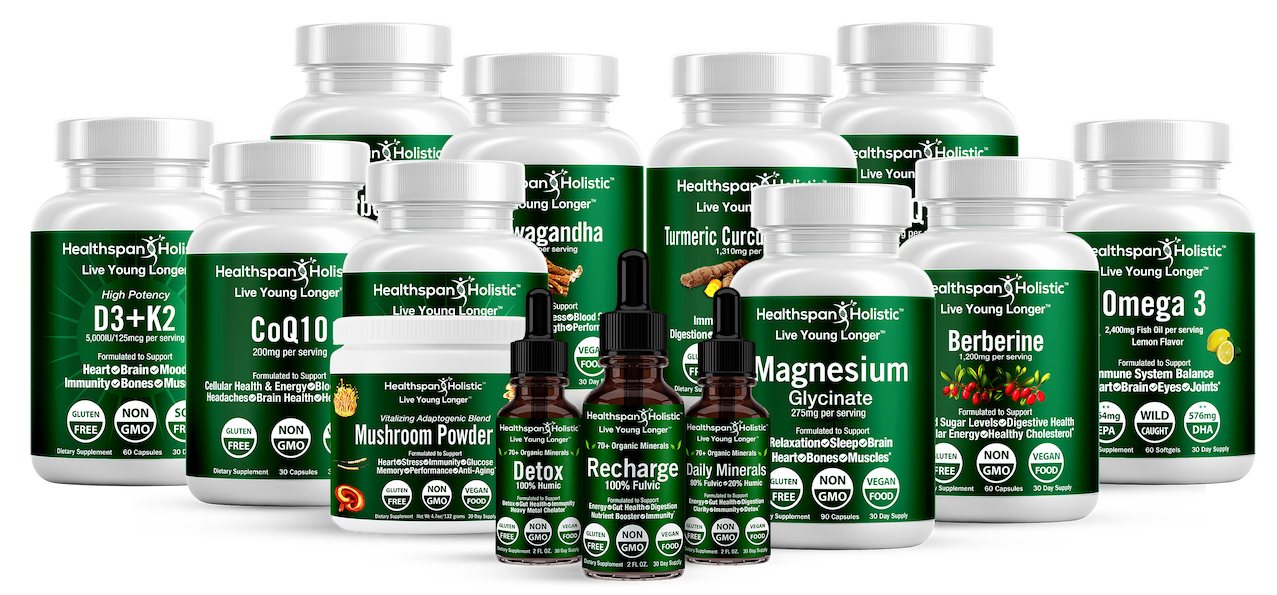
Healthspan Holistic’s Turmeric Curcumin + Ginger uses a bioavailability-enhanced formulation designed to deliver the curcumin levels that clinical trials actually use. For those looking at a broader approach to pain and longevity, the 90 Day Journey to Longevity program combines targeted supplementation with coaching and diagnostics to address the root causes of chronic pain and low energy.
1st Time Customers can take advantage of our BUY 1 GET 1 50% OFF special offer on all supplements.
FAQ
What is the best form of turmeric for pain relief?
Bioavailability-enhanced curcumin formulations, including BCM-95, Meriva, Theracurmin, and piperine-combined extracts, are the most effective. Raw turmeric powder does not deliver therapeutic curcumin levels.
How long does turmeric take to reduce pain?
Most clinical trials show meaningful pain relief after 4–12 weeks of consistent daily use. Curcumin modifies chronic inflammation gradually, so short trials of one to two weeks rarely show results.
Can turmeric replace ibuprofen for joint pain?
Curcumin performs comparably to ibuprofen for chronic osteoarthritis pain in clinical trials, but ibuprofen is faster and more effective for acute pain. Never substitute turmeric for a prescribed medication without physician guidance.
Is turmeric safe to take every day?
Turmeric is safe in food amounts daily. High-dose supplements can cause GI upset and, rarely, liver injury. Anyone on blood thinners or NSAIDs should consult a doctor before starting curcumin supplementation.
Does turmeric repair damaged joints or cartilage?
No. Curcumin relieves pain and improves function but does not regenerate cartilage or reverse structural joint damage, as confirmed by MRI studies in knee osteoarthritis trials.
Leave a comment: