

TL;DR:
- Most people regain weight rapidly after stopping weight loss medication, reversing health improvements within about 1.5 years. Building sustainable habits during treatment helps maintain progress and mitigates biomarker and cardiovascular risks after discontinuation. A comprehensive approach combining gradual tapering, resistance training, and behavioral support optimizes long-term weight and health management.
Stopping weight loss medication leads to weight regain and reversal of related health improvements in most people. Drugs like semaglutide, tirzepatide, and retatrutide have reshaped obesity treatment, but they work only as long as you take them. Research shows people regain weight at 0.4 kg per month after stopping, returning to their starting weight within roughly 1.5 to 1.7 years. Understanding what happens after you stop weight loss medication gives you the knowledge to plan a smarter exit and protect the progress you worked hard to build.
What happens after you stop weight loss medication?
Weight regain is the most predictable consequence of discontinuing GLP-1 receptor agonists. Semaglutide (Ozempic, Wegovy), tirzepatide (Mounjaro, Zepbound), and retatrutide each produce meaningful weight loss during treatment, but that loss is not permanent once the drug is gone.
Average weight loss on each medication
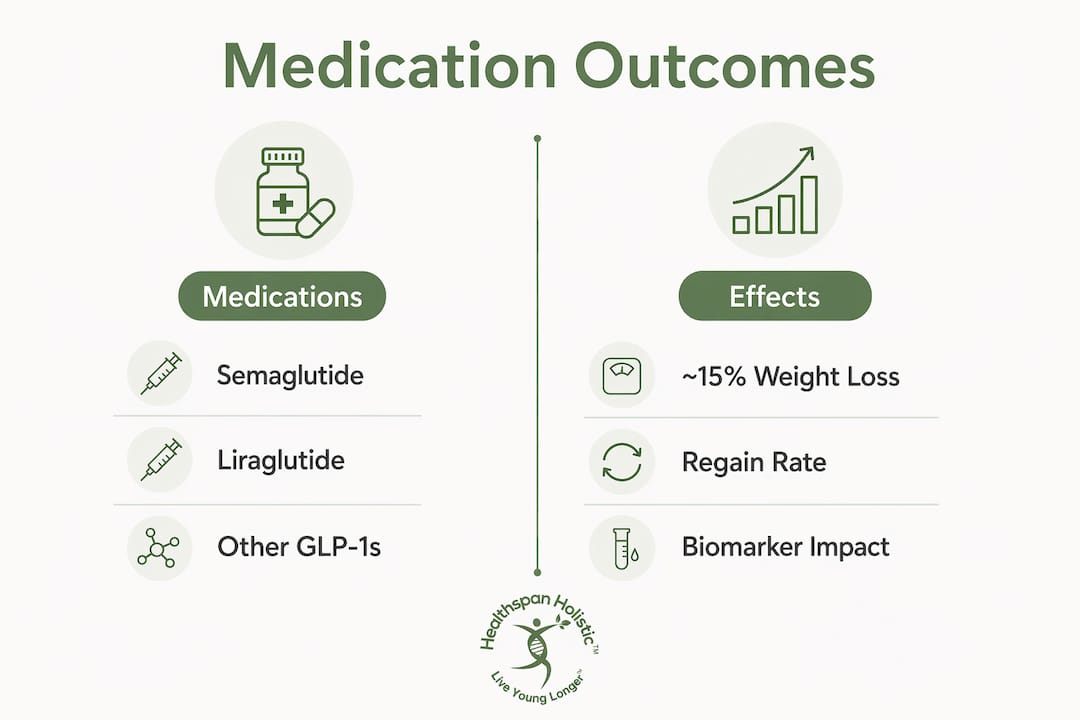
During active treatment, these drugs produce significant results. Semaglutide produces roughly 15% body weight loss over 68 weeks in clinical trials. Tirzepatide produces up to 20% body weight loss at the highest dose. Retatrutide, a triple receptor agonist still in late-stage trials, has shown weight loss exceeding 24% in early data. These are impressive numbers, but they come with a critical caveat: the biology that drove the weight loss reverses when the medication stops.
How fast does the weight come back?
Regain after medication averages 0.4 kg per month, compared to just 0.1 kg per month after behavioral programs alone. That four-fold difference matters. A University of Cambridge model found that patients regain about 60% of lost weight within 52 weeks. Regain then slows and plateaus, with roughly 25% of total weight loss maintained long-term.
| Medication | Typical Weight Loss | Regain Rate (post-stop) | Long-Term Retention |
|---|---|---|---|
| Semaglutide | ~15% body weight | 0.4 kg/month | ~25% of loss |
| Tirzepatide | ~20% body weight | 0.4 kg/month | ~25% of loss |
| Retatrutide | ~24%+ body weight | Not yet fully established | Data pending |
Pro Tip: If you know you plan to stop your medication, use the final 3–6 months on the drug to lock in behavioral habits. The medication window is your best opportunity to build the routines that will carry you forward.
What happens to blood glucose, blood pressure, and other biomarkers?
Weight loss on GLP-1 medications improves a wide range of cardiometabolic markers. Stopping the drug reverses most of those gains. Cardiometabolic markers revert to baseline within about 1.4 years after discontinuation. That timeline is faster than most people expect.
The markers most affected include:
-
HbA1c: Blood sugar control worsens as insulin sensitivity declines and body weight climbs back.
-
Fasting glucose: Returns toward pre-treatment levels as the drug’s direct glucose-lowering effect disappears.
-
Blood pressure: Systolic and diastolic readings rise again as weight returns and vascular stress increases.
-
Triglycerides: Rebound as dietary habits and body fat levels shift back toward baseline.
-
LDL and total cholesterol: Improvements in lipid panels fade without the drug’s metabolic support.
The cardiovascular risk picture is equally serious. Stopping GLP-1 drugs for two years increases the risk of major cardiovascular events by 22%. That statistic reflects how much of the cardiac benefit was tied to the drug itself, not just the weight lost. Early interruption compounds this risk, with cumulative effects building over a two-year window.
Monitoring these markers after stopping is not optional. A metabolic panel and a basic heart health test give you a clear picture of where your numbers stand and how quickly they are shifting.
Why does weight come back so fast? The biology behind the rebound
The return of weight after stopping these medications is not a willpower failure. It is a predictable biological response. GLP-1 drugs suppress hormonal signals driving obesity, including ghrelin, peptide YY, and GIP. When the drug leaves your system, those signals re-emerge at full strength.
Several overlapping mechanisms drive the rebound:
-
Faster gastric emptying returns: GLP-1 medications slow digestion, which extends fullness. Without the drug, food moves through your stomach faster, and hunger returns sooner after meals.
-
Food noise resurfaces: After stopping GLP-1 medications, persistent food-related thoughts called “food noise” return. For many people, the psychological burden of food noise is harder to manage than physical hunger.
-
Metabolic rate slows: Weight loss on these drugs includes significant lean muscle loss, estimated at 40–60% of total weight lost. Less muscle means a lower resting metabolic rate. When weight returns, it comes back primarily as fat, leaving body composition worse than before treatment.
-
Behavioral habits were incomplete: Oxford University research found that people who rely on the medication’s biological effect without building behavioral habits during treatment regain weight faster after stopping.
Pro Tip: Treat obesity the way you would treat high blood pressure. You would not stop blood pressure medication without a plan to manage the condition through other means. The same logic applies here.
Viewing obesity as a chronic condition requiring long-term management changes how you approach discontinuation. The goal is not to “cure” obesity with a drug and then walk away. The goal is to use the drug as a tool while building the systems that sustain your health independently. Resources like practical daily health habits can help you build those systems during and after treatment.
How to keep the weight off and protect your biomarkers after stopping
Maintaining weight loss after discontinuation requires a deliberate strategy built during treatment, not improvised afterward. Gradual tapering and habit formation within the treatment window improve outcomes significantly. Here is a practical framework:
-
Taper gradually, not abruptly. Work with your prescriber to reduce your dose over several weeks. Abrupt stops accelerate rebound by removing appetite suppression all at once.
-
Prioritize protein at every meal. Protein preserves lean muscle mass, which protects your metabolic rate. Aim for nutrient-dense sources like eggs, legumes, fish, and lean poultry at each sitting.
-
Build a resistance training habit. Muscle is the metabolic engine that keeps your resting calorie burn elevated. Two to three sessions per week of strength training directly counters the lean mass loss that occurred during medication use. Light therapy devices designed for muscle recovery can support your training between sessions.
-
Monitor your biomarkers on a schedule. Check HbA1c, fasting glucose, blood pressure, and lipids at 3, 6, and 12 months post-discontinuation. Early detection of rising numbers lets you intervene before they reach pre-treatment levels.
-
Reframe your success metric. Shifting your mindset from “maintain every pound lost” to “minimize regain” reduces discouragement and keeps you engaged with healthy behaviors long-term.
-
Address food noise proactively. Mindfulness-based eating practices, structured meal timing, and working with a behavioral health counselor can reduce the grip of food-related intrusive thoughts after stopping.
-
Follow a sustainable dietary pattern. A Mediterranean-style or low-glycemic diet supports blood glucose control, lipid health, and satiety without requiring medication.
Pro Tip: The behavioral support you receive during medication use is the single biggest predictor of how well you maintain results afterward. If your current treatment plan does not include nutrition coaching or behavioral support, ask your care team to add it before you taper off.
Understanding GLP-1 benefits and risks in full helps you make a more informed decision about when and how to stop. A multidisciplinary approach, combining medical supervision, nutrition, exercise, and behavioral support, produces the best long-term outcomes.
Key Takeaways
Stopping weight loss medication without a lifestyle plan leads to rapid weight regain and reversal of cardiometabolic improvements within one to two years.
| Point | Details |
|---|---|
| Weight regain is fast | People regain an average of 0.4 kg per month after stopping, returning to baseline in 1.5–1.7 years. |
| Biomarkers revert quickly | HbA1c, blood pressure, glucose, and triglycerides return to pre-treatment levels within about 1.4 years. |
| Cardiovascular risk rises | Stopping GLP-1 drugs for two years raises major cardiovascular event risk by 22%. |
| Muscle loss worsens the rebound | 40–60% of weight lost on these drugs is lean mass; regained weight returns mostly as fat. |
| Lifestyle habits are the real anchor | Building nutrition, exercise, and behavioral habits during treatment is the most effective protection after stopping. |
What I have learned from watching people navigate this transition
The hardest part of stopping weight loss medication is not the hunger. It is the surprise. People expect the weight to stay off because they feel so different on the drug. They do not realize that the drug was doing most of the metabolic heavy lifting.
What I have seen work, time and again, is treating the medication period as a training window. The drug quiets the biological noise long enough for you to build real habits. The people who use that window well, who establish consistent meals, start lifting weights, and work with a coach, are the ones who retain the most after stopping. The people who coast on the drug’s effect and make no structural changes are the ones who regain everything within a year.
The other thing I want to say plainly: weight regain after stopping is not a personal failure. The biology is working against you. GLP-1 receptors in your gut and brain were suppressed for months. When that suppression lifts, your body responds exactly as evolution designed it to. Knowing that does not make the regain easier emotionally, but it does point you toward the right response. You need a plan, not more willpower.
The most underrated strategy is muscle. People focus on cardio and calorie restriction, but muscle mass is what keeps your metabolism from collapsing after weight loss. If you built muscle during your medication period, your post-stop trajectory looks very different from someone who only lost fat and lean tissue together.
— Chris
Healthspan Holistic can help you protect your progress
If you are approaching the end of your medication or have already stopped, the next step is knowing exactly where your biomarkers stand. Healthspan Holistic offers lab testing and structured programs designed for people who want to maintain their results with data, not guesswork.

The 90 Day Journey to Longevity program gives you a structured framework for sustaining weight and metabolic health through lifestyle transformation. Pair it with a metabolic panel to track glucose, lipids, and other key markers, and a Vitamin D, Omega-3, and Magnesium test to identify nutrient gaps that affect metabolism and muscle function. 1st Time Customers can take advantage of our BUY 1 GET 1 50% OFF special offer on all supplements. Real progress after medication starts with real data.
FAQ
How much weight do people regain after stopping semaglutide?
Most people regain about 60% of their lost weight within 52 weeks of stopping semaglutide. Regain then slows, with roughly 25% of total weight loss maintained long-term.
How long does it take for blood sugar to rise after stopping GLP-1 medication?
Cardiometabolic markers including HbA1c and fasting glucose typically return to pre-treatment levels within about 1.4 years after stopping GLP-1 drugs.
What are the side effects of stopping weight loss pills or injections?
The most common effects after stopping weight loss medication include increased appetite, faster return of hunger, resurgence of food noise, and gradual weight regain. Cardiometabolic markers like blood pressure and triglycerides also rise over time.
Can lifestyle changes prevent weight regain after stopping medication?
Lifestyle changes significantly slow regain but rarely prevent it entirely. Building protein-rich eating habits, resistance training, and behavioral support during medication use produces the best post-discontinuation outcomes.
Does stopping weight loss medication increase heart disease risk?
Yes. Stopping GLP-1 medications for two years is associated with a 22% increase in the risk of major cardiovascular events, largely because the cardiometabolic benefits of the drug reverse as weight and biomarkers return to baseline.
Leave a comment: