

An advanced lipid panel is worth ordering when it will change what you or your clinician does next. If you have established heart disease, a family history of early heart attacks, diabetes with stubborn triglycerides, or lab results that don’t quite add up, the added markers can reshape your treatment plan. If you’re a healthy adult getting routine screening, a standard cholesterol blood test still does the job for most decisions, and the ACC/AHA and ESC/EAS guidelines do not recommend advanced lipoprotein testing across the board.
Here’s the quick version before we go deeper:
- What gets added: apolipoprotein B (ApoB), LDL particle number (LDL‑P), Lp(a), and sometimes hs‑CRP or Lp‑PLA2.
- Who it usually helps: people with existing cardiovascular disease, diabetes or metabolic syndrome, a strong family history, or lipid numbers that don’t match their apparent risk.
- Where it falls short: results vary by lab method, and there’s no strong evidence that routine advanced testing improves outcomes for average-risk adults.
- Next step: talk with a clinician about your risk profile, or order testing through a lab experienced in advanced lipid testing if you fit one of the higher-risk categories above.
Key Takeaways
Advanced lipid panels change cardiovascular care most reliably in high-risk or discordant cases, not in routine average-risk screening.
| Point | Details |
|---|---|
| Know your added markers | ApoB, LDL‑P, and Lp(a) reveal particle-level risk that standard LDL‑C can miss. |
| Watch for discordance | Normal LDL‑C with high ApoB or LDL‑P signals higher risk than the standard panel suggests. |
| Method consistency matters | Stick with one lab and one assay method (NMR, ion mobility) for reliable tracking over time. |
| Test selectively, not routinely | Guidelines support Lp(a) once for most adults, but reserve full advanced panels for higher-risk cases. |
| Get testing that acts on results | Healthspan Holistic’s 90 Day Journey to Longevity pairs advanced lab testing with coaching that responds to what the numbers show. |
This article is general information, not a substitute for advice from a qualified doctor. Consult a qualified healthcare professional about your own circumstances before acting on anything here.
Table of Contents
- What Does an Advanced Lipid Panel Measure?
- Who Actually Benefits From Advanced Testing?
- How Labs Actually Measure These Particles
- How Do You Interpret Your Results?
- What Do Cardiology Guidelines Actually Recommend?
- What Does It Cost, and How Do You Get Tested?
- How Healthspan Holistic Uses Advanced Lipid Testing
- When We Recommend Advanced Testing, and When We Don’t
- Ready to Find Out What Your Numbers Are Missing?
- Sources
- FAQ
What Does an Advanced Lipid Panel Measure?
A standard cholesterol test reports total cholesterol, LDL‑C, HDL‑C, and triglycerides. An advanced lipid panel adds markers that describe the particles carrying that cholesterol through your bloodstream, not just how much cholesterol is present.
ApoB counts the number of atherogenic particles (LDL, VLDL, and Lp(a) particles each carry one ApoB molecule), so it’s essentially a headcount of the particles capable of lodging in artery walls. Because it counts particles rather than the cholesterol packed inside them, advanced lipid testing research shows ApoB can flag risk that a normal LDL‑C number misses entirely. LDL particle number (LDL‑P) measures a very similar thing through a different assay, counting LDL particles directly rather than inferring them. Lp(a) is a genetically determined particle that behaves like LDL but carries extra inflammatory and clot-promoting baggage. hs‑CRP and Lp‑PLA2 aren’t lipid particles at all. They’re inflammatory markers that some advanced panels bundle in because inflammation accelerates plaque formation alongside cholesterol deposits.
| Marker | What it measures | Clinical significance |
|---|---|---|
| ApoB | Total count of atherogenic particles (LDL, VLDL, Lp(a)) | Often a stronger predictor of heart disease risk than LDL‑C alone |
| LDL‑P | Direct count of LDL particles | Flags risk when small, dense particles are numerous but LDL‑C looks normal |
| Lp(a) | Genetically set particle with clot-promoting properties | High levels warrant one-time testing and can prompt closer monitoring or family screening |
| hs‑CRP | General inflammation in the bloodstream | Adds context to plaque risk, though it’s not lipid-specific |
| Lp‑PLA2 | Vascular-specific inflammatory enzyme | Sometimes used to refine risk in borderline cases |
The concentration-versus-particle-count distinction matters most when someone has high triglycerides. In that situation, a person can carry many small, cholesterol-poor LDL particles. Their LDL‑C might look acceptable on paper while their actual particle count, and their real risk, runs high. That’s the entire reason particle testing exists.
Pro Tip: Check the units on your lab report before comparing results over time. LDL‑P and ApoB usually report in nmol/L or mg/dL, while Lp(a) can appear in either nmol/L or mg/dL depending on the lab, and those two Lp(a) units are not interchangeable.
Who Actually Benefits From Advanced Testing?
Guidelines don’t recommend advanced lipid testing for everyone, and that’s by design. The Harvard Health review on advanced cholesterol testing puts it plainly: for most people, the extra detail doesn’t change the advice they’d get anyway, which is usually to eat better, move more, and take a statin if their standard risk score calls for one.
A smaller group of patients tends to benefit meaningfully:
- People with established atherosclerotic cardiovascular disease (ASCVD), especially if it appeared before age 55 in men or 65 in women.
- Anyone with a family history of early heart attacks or strokes, which raises suspicion for elevated Lp(a) or familial hypercholesterolemia.
- People with diabetes, metabolic syndrome, or persistently high triglycerides, since these conditions commonly produce the LDL‑C versus LDL‑P mismatch described above.
- Patients whose standard lipid results seem inconsistent with their overall risk picture, sometimes called risk discordance.
Consider two brief examples. A 52-year-old with type 2 diabetes has an LDL‑C of 95 mg/dL, technically at goal, but his ApoB comes back elevated. That discordance suggests more atherogenic particles than the LDL‑C number implies, which is often reason enough for a clinician to intensify statin therapy. In a second case, a 45-year-old whose father had a heart attack at 50 gets Lp(a) checked once, per the current guideline recommendation, and finds it markedly elevated. That single result can shift the whole family’s screening plan and prompt a referral to a lipid specialist.
How Labs Actually Measure These Particles
Not all advanced lipid panels use the same technology, and the method behind your results matters more than most people realize.
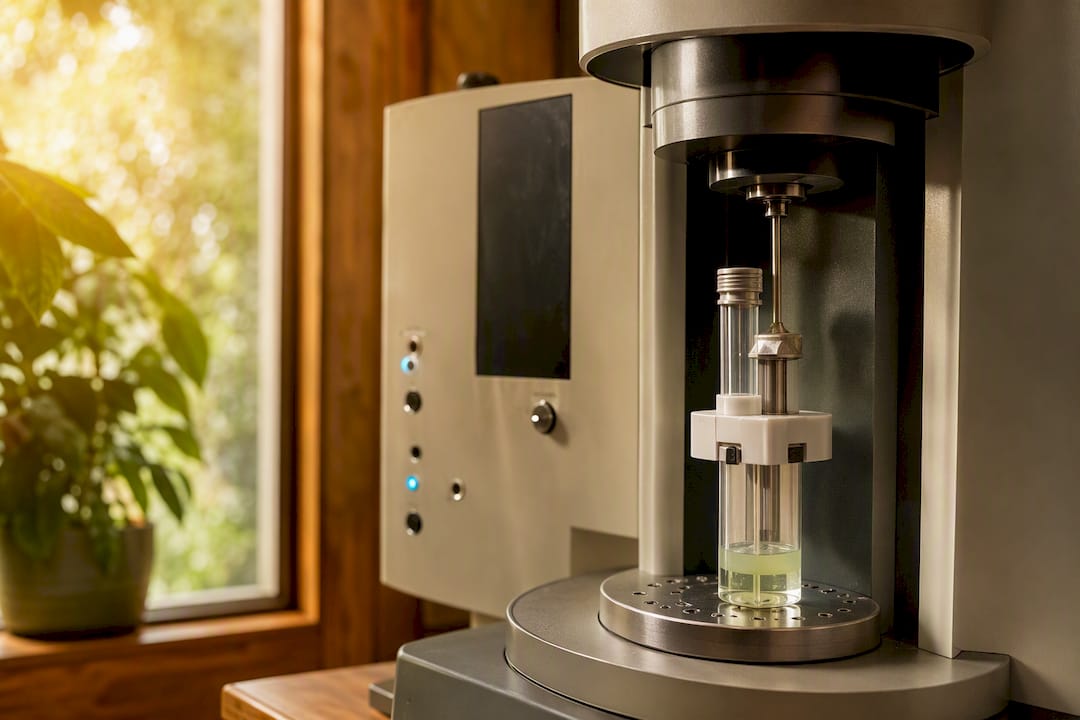
NMR spectroscopy reads the particle spectrum through nuclear magnetic resonance, estimating particle number and size from signal patterns. Ion mobility separates particles physically by size as they pass through an electric field, offering a direct count. Older ultracentrifugation methods, once marketed as VAP testing, spin samples to separate lipoprotein classes by density and have largely given way to the newer techniques. Immunoassays are used specifically for ApoB and Lp(a), detecting the proteins directly rather than inferring particle counts.
| Method | What it reports | Typical use and limitations |
|---|---|---|
| NMR spectroscopy | LDL‑P, particle size distribution | Widely available; results can shift slightly between lab platforms |
| Ion mobility | Direct particle count and size | Precise, but fewer labs offer it |
| Ultracentrifugation (legacy VAP) | Lipoprotein density fractions | Mostly phased out in routine clinical use |
| Immunoassay | ApoB, Lp(a) concentration | Standard for these two markers; Lp(a) units vary by assay |
Standardization remains an unresolved issue across advanced lipid testing. Two labs running the same blood sample through different methods can report meaningfully different LDL‑P numbers, which is one reason the guideline literature on advanced lipoprotein testing urges caution about over-interpreting small changes between tests.
Pro Tip: If you’re tracking your numbers over months or years, stick with the same lab and the same method every time. Switching between an NMR-based test and an ion mobility test can make your particle count look like it changed when the shift is really just assay variation.
Sample handling affects accuracy too. Most particle-count assays call for a 12 hour fast and a plain red top serum tube; gel separator tubes and non-fasting draws can interfere with the reading and get your sample rejected outright.
How Do You Interpret Your Results?
Reading an advanced lipid panel means looking for agreement or disagreement between your cholesterol concentration and your particle count, not just checking whether each number falls in range.
Discordance is the pattern clinicians watch for most closely. Research comparing LDL‑C to LDL particle number shows that people with normal LDL‑C but high LDL‑P carry higher cardiovascular risk than their cholesterol number would suggest, because the particle count, not the cholesterol concentration, tracks more closely with actual arterial damage. This is precisely the scenario where a standard cholesterol blood test can offer false reassurance.
Lp(a) deserves a specific note on units. Older assays reported mass in mg/dL, which can be skewed by a person’s Lp(a) isoform size. Newer, isoform-independent assays report particle number in nmol/L, which most labs now consider the more reliable unit. Elevated Lp(a) is not rare. Population studies consistently find it meaningfully elevated in a notable share of adults, which is exactly why the ACC/AHA and ESC/EAS guidelines now call for checking it at least once in a lifetime.
In practice, here’s what these patterns tend to trigger:
- Elevated ApoB or LDL‑P despite normal LDL‑C often leads a clinician to intensify statin dosing or add a nonstatin agent like ezetimibe.
- Markedly high Lp(a) usually prompts a referral to a lipid specialist and screening for close relatives.
- Elevated hs‑CRP alongside borderline lipid numbers can tip a borderline statin decision toward starting therapy.
- Persistent triglyceride elevation with LDL‑P discordance often points toward metabolic syndrome workup, which is where a metabolic panel adds useful context alongside the lipid results.
What Do Cardiology Guidelines Actually Recommend?
The ACC/AHA and ESC/EAS guidelines draw a clear line: measure Lp(a) once for essentially everyone, but reserve ApoB and particle testing for situations where the result is likely to change treatment. That’s a narrower endorsement than most marketing for advanced lipid testing implies.
Major reviews back this selective approach. The PMC review on advanced lipid testing and cardiovascular disease concludes these markers add genuine value in predicting residual risk, particularly in patients with diabetes or metabolic syndrome, but stops short of recommending them as a population-wide screening tool. Harvard Health’s commentary echoes that a small subset of patients benefits substantially while the average patient sees little practical change.
| Consideration | In favor of advanced testing | Against routine use |
|---|---|---|
| Risk discrimination | Catches discordant risk that LDL‑C misses | Adds complexity most patients don’t need |
| Standardization | Improving with NMR and ion mobility adoption | Results still vary meaningfully between labs and methods |
| Outcome evidence | Strong association data for ApoB and Lp(a) | Limited proof that routine testing improves long-term outcomes |
| Guideline support | Recommended in select high-risk groups | Not endorsed for average-risk screening |
The honest summary: advanced testing is a secondary tool for refining decisions already on the table, not a replacement for the standard lipid panel and risk calculators most clinicians already use.
What Does It Cost, and How Do You Get Tested?
You can access an advanced lipid panel two ways: through a clinician’s order or via direct-to-consumer lab services that let you request the test yourself. Either route works, but the steps matter for getting a reliable result.
Before you test:
- Confirm which method the lab uses (NMR, ion mobility, or immunoassay) so future comparisons stay consistent.
- Ask whether a 12 hour fast is required, since most particle-count assays depend on it.
- Request that the report include both the method used and the units for Lp(a), so you can interpret changes correctly later.
If you decide to move forward, the process generally looks like this:
- Review your personal and family cardiovascular history to see if you fit a higher-benefit category.
- Ask your clinician whether ApoB or Lp(a) testing would plausibly change your treatment plan, or choose a lab testing service built to guide that decision.
- Schedule the fasting draw and confirm tube type with the lab beforehand.
- Review results with a clinician who can place discordant numbers in the context of your full risk profile.
Costs vary widely by lab and location, and insurance coverage depends heavily on whether the test is billed as targeted, medically indicated testing versus general screening. Many insurers cover advanced lipid testing when a clinician documents a specific indication like established heart disease or strong family history, but coverage for screening in average-risk patients is inconsistent. Check with your insurer and the ordering lab before you schedule.
How Healthspan Holistic Uses Advanced Lipid Testing
We don’t order advanced lipid panels as a default add-on. A recent case involved a client in his late fifties with borderline LDL‑C but a family history of early heart disease; his ApoB came back elevated enough to justify adding a nonstatin therapy alongside lifestyle coaching, something his standard panel alone wouldn’t have flagged.
Our approach in practice:
- We start with a foundational lab panel and reserve advanced markers for clients whose history or results suggest discordant risk.
- Results feed directly into personalized coaching plans covering nutrition, movement, and supplementation, not just a number on a page.
- We track markers longitudinally using consistent lab methods, so changes reflect biology rather than assay variation.
When We Recommend Advanced Testing, and When We Don’t
Advanced lipid testing earns its cost when it’s likely to move a treatment decision, not because more data feels reassuring. We favor shared decision-making: if your standard panel and risk calculator already point clearly toward a plan, adding ApoB or LDL‑P rarely changes anything. Where family history, diabetes, or a genuinely confusing standard result muddies the picture, that’s when we push for it, and where a lipid specialist referral often makes sense too.
Ready to Find Out What Your Numbers Are Missing?
If your family history, blood sugar, or gut feeling says your standard cholesterol numbers aren’t telling the whole story, Healthspan Holistic can help you find out through targeted lab testing paired with coaching that actually acts on the results, not just files them away.

Our 90 Day Journey to Longevity program combines diagnostic testing, personalized coaching, and supplement support built around what your labs actually show, including advanced cardiovascular markers when your history calls for them. If you’re managing metabolic changes from GLP‑1 therapy, our team also considers how those shifts affect lipid patterns, drawing on resources like this GLP-1 glossary to keep terminology clear as we build your plan.
Start by booking a consultation through the 90 Day Journey to Longevity page to see whether advanced lipid testing fits your risk profile.
Sources
- The Role of Advanced Lipid Testing in the Prediction of Cardiovascular Disease - PMC
- Utility of Advanced Lipoprotein Testing in Clinical Practice - NCBI Bookshelf
- Should you seek advanced cholesterol testing? - Harvard Health
- ARUP Laboratories test information (sample handling)
FAQ
Is Advanced Lipid Testing Worth It?
It’s worth it for people with established heart disease, strong family history, diabetes, or lipid results that don’t match their apparent risk; for average-risk adults with a clear standard panel, it usually doesn’t change the plan.
What Is the Difference Between a Lipid Profile and an Advanced Lipid Profile?
A standard lipid profile measures total cholesterol, LDL‑C, HDL‑C, and triglycerides, while an advanced lipid panel adds particle-based and apolipoprotein markers like ApoB, LDL‑P, and Lp(a) to reveal atherogenic risk that concentration alone can miss.
What Is Included in an Advanced Lipid Panel?
Most advanced panels include ApoB, LDL particle number, Lp(a), and sometimes inflammatory markers like hs‑CRP or Lp‑PLA2, depending on the lab and the method it uses.
How Much Does an Advanced Lipid Panel Cost?
Cost varies by lab, method, and whether insurance classifies the test as medically indicated versus screening, so check directly with your insurer and the ordering lab; a service like Healthspan Holistic’s lab testing can help you understand pricing before you commit.
Leave a comment: