

TL;DR:
- Alpha lipoic acid is a versatile antioxidant that functions in both fat- and water-based cellular environments, enhancing cellular protection and energy metabolism. It offers benefits for nerve health, insulin sensitivity, and modest weight loss, especially when combined with lifestyle and biomarker guidance. Proper formulation, dosing, and integration into a holistic health plan maximize its effectiveness for adults aged 45 to 75.
If you’ve been researching ways to support your energy, protect against cellular aging, or manage blood sugar more naturally, you’ve likely come across the alpha lipoic acid supplement. What makes it stand out from the crowded antioxidant category isn’t just what it does. It’s where it works. ALA operates in both water and fat environments inside your cells, something vitamins C and E simply cannot do. For adults between 45 and 75, that dual action has real implications for energy metabolism, nerve health, and long-term vitality. This article breaks down the science, the smart dosing, and how ALA fits into a bigger health picture.
Key takeaways
| Point | Details |
|---|---|
| ALA is a universal antioxidant | It works in both fat- and water-based cellular environments, giving it broader protection than most antioxidants. |
| R-form is more effective | The R-isomer is biologically active and better absorbed; choose R-ALA supplements for greater potency at lower doses. |
| Dosing timing matters | Take ALA on an empty stomach for best absorption, though food can reduce mild side effects if needed. |
| Best evidence targets neuropathy | Clinical trials show the strongest results for diabetic nerve pain; blood sugar and weight benefits are real but modest. |
| Supplements work best in context | ALA is most effective paired with biomarker testing, solid nutrition, and a consistent lifestyle routine. |
What is alpha lipoic acid and how it works
Alpha lipoic acid is a sulfur-containing compound your body produces naturally. It plays a direct role as a cofactor in mitochondrial energy production, specifically inside the enzyme complexes that convert food into usable cellular fuel. Think of it as part of the engine room of your metabolism.
Here’s what separates ALA from other antioxidants: it’s both fat- and water-soluble, which means it can protect cell membranes, cytoplasm, and mitochondria simultaneously. Vitamins C and E each cover one environment. ALA covers both. It also increases intracellular glutathione, your body’s most powerful internal antioxidant, amplifying your defenses well beyond what ALA does on its own.
Your body does make small amounts of ALA, and you get trace amounts from foods like spinach, broccoli, and organ meats. But these amounts are nowhere near pharmacological doses. To achieve the therapeutic effects studied in clinical trials, you need a supplement.
Here’s what you should know about the forms:
-
R-ALA: The naturally occurring isomer. Better absorbed, more biologically active, and produces higher plasma concentrations than the synthetic counterpart.
-
S-ALA: The synthetic isomer present in most standard supplements. Not entirely useless, but significantly less potent.
-
Racemic ALA: A 50/50 blend of R and S forms. Most products on the market use this mix. It works, but lower doses of pure R-ALA may achieve comparable results.
Pro Tip: When reading supplement labels, look for “R-ALA” or “R-alpha lipoic acid” specifically. If the label just says “alpha lipoic acid” without specifying the isomer, you are almost certainly getting the racemic mixture.
Alpha lipoic acid benefits backed by research
The alpha lipoic acid benefits that matter most to adults in the 45 to 75 range fall into four broad categories. Each has its own level of clinical evidence, and being honest about that distinction helps you set realistic expectations.
Antioxidant protection and cellular defense
As you age, your internal antioxidant production naturally declines while oxidative stress tends to rise. ALA addresses this directly. By recycling vitamins C and E and raising glutathione levels, it helps restore the antioxidant capacity your cells had in your younger years. This has downstream effects on inflammation, cellular aging, and mitochondrial health.

Blood sugar and insulin sensitivity
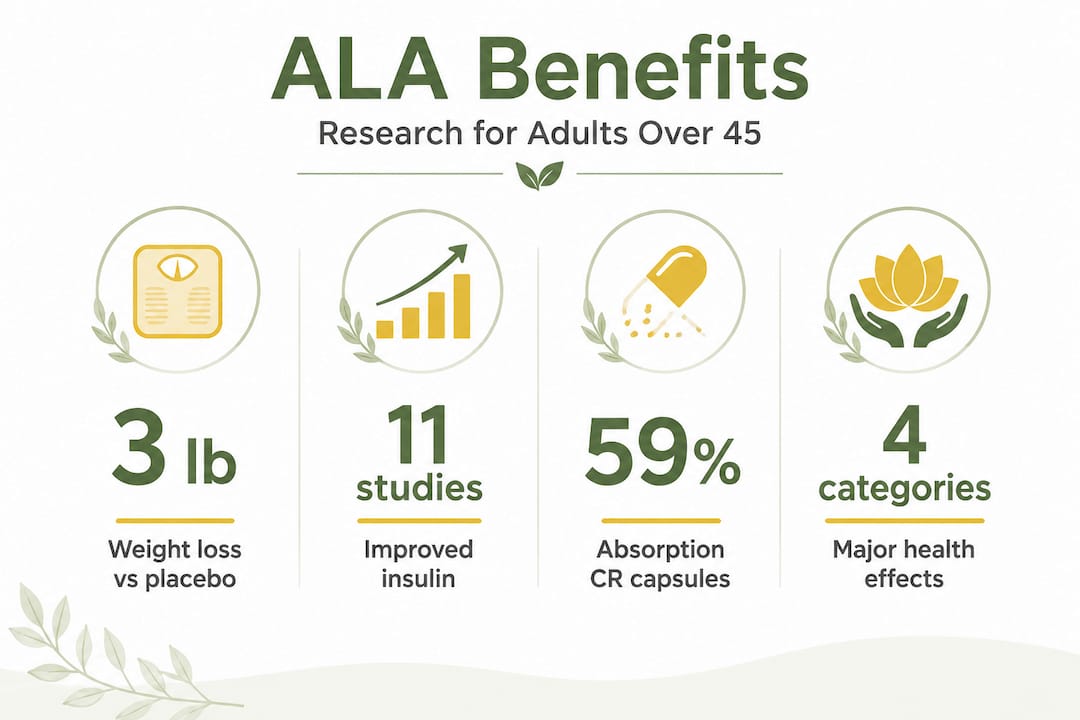
Multiple studies show ALA improves how your cells respond to insulin. A 2023 review of 11 studies found that ALA supplementation reduces both systolic and diastolic blood pressure at doses under 800 mg daily taken for up to 12 weeks. This matters because poor insulin sensitivity and elevated blood pressure often travel together in midlife and beyond.
Nerve health and diabetic neuropathy
Diabetic peripheral neuropathy is the most extensively studied application for ALA, and the results are among the most compelling in supplement research. Intravenous ALA at 600 mg daily for three weeks significantly reduces neuropathy pain. Oral dosing shows more modest benefits, but for adults dealing with tingling, numbness, or nerve discomfort in the extremities, even modest oral improvements are meaningful.
Alpha lipoic acid and weight loss
Modest. That’s the honest word here. A 2017 meta-analysis found about 3 pounds greater weight loss versus placebo when ALA was combined with caloric restriction. That’s not a transformation, but it’s a real and measurable effect. For adults working on metabolic health, ALA’s support for insulin sensitivity likely drives whatever weight effects it produces.
The bottom line on alpha lipoic acid benefits is this: it works best when you use it for specific, targeted goals rather than expecting it to do everything at once.
How to dose and choose your ALA supplement
Practical guidance here matters more than most supplement articles let on. The best alpha lipoic acid dosage for you depends on your formulation, your goals, and your tolerance.
| Form | Typical Dose | Bioavailability | Best For |
|---|---|---|---|
| Racemic ALA (standard) | 300 to 600 mg daily | Moderate | General antioxidant support |
| R-ALA (pure R-isomer) | 100 to 300 mg daily | Higher | Potency seekers, sensitive stomachs |
| Controlled-release ALA | 300 to 600 mg daily | Lower (59% vs. standard) | Not recommended as primary choice |
| IV ALA (clinical only) | 600 mg daily | Highest | Diabetic neuropathy under medical supervision |
Controlled-release formulations consistently underperform standard capsules in studies, delivering only about 59% of the plasma exposure. Unless your doctor has a specific reason to recommend sustained-release, a standard capsule or R-ALA is a smarter choice.
Timing and absorption
Taking ALA with food reduces absorption by roughly 25%. Optimal timing is 30 minutes before a meal or two hours after eating. That said, if you experience nausea or heartburn, a small amount of food can help without eliminating the benefit entirely.
Alpha lipoic acid side effects
ALA is generally well tolerated, but higher doses increase the likelihood of nausea, heartburn, and headache. Starting at a lower dose and building gradually helps most people find their personal sweet spot. People taking diabetes medications should consult their doctor first, since ALA can lower blood sugar and may require medication adjustments. Pregnant women and anyone on thyroid medication should also check with their healthcare provider before starting.
Pro Tip: If standard ALA causes stomach discomfort, try switching to pure R-ALA at half the dose. You get comparable or better absorption with fewer gastrointestinal side effects.
Integrating ALA into a holistic aging strategy
An alpha lipoic acid supplement works best as one well-placed piece of a larger system, not as a standalone fix. Supplements serve as targeted interventions for specific deficiencies or goals, not replacements for healthy lifestyle foundations. The research on aging consistently reinforces that nutrition, movement, sleep quality, and social connection provide the base that makes any supplement more effective.
Within that framework, here is how ALA fits strategically:
-
Pair with other antioxidants: ALA recycles vitamins C and E, so taking them together creates a synergistic effect greater than any one alone.
-
Use biomarker data to guide decisions: A 2026 study of over 20,000 individuals found ALA among the top supplements selected based on blood biomarker profiles, particularly for insulin sensitivity and inflammation markers.
-
Monitor your response over time: Track energy levels, blood sugar trends, and any nerve symptoms across 8 to 12 weeks to assess real-world effect.
-
Complement with lifestyle: ALA’s metabolic effects are amplified by regular exercise, particularly resistance training, which also improves insulin sensitivity independently.
-
Consider complementary supplements: Vitamin D3 and K2 support bone density and cardiovascular health, areas that often need attention alongside metabolic function in adults over 45.
If you want to understand how personalized supplementation works using your actual biomarkers rather than general population averages, that’s the direction health optimization is moving. It takes the guesswork out of choosing between dozens of options and gives you a specific, testable rationale for what you take and why.
My honest take on ALA after years in practice
I’ve worked with a lot of adults in the 45 to 75 range who come in convinced that a single supplement is going to turn things around. Alpha lipoic acid is one of the better candidates for that expectation. It has genuine, reproducible effects on several things that matter most in midlife. But I’ve also seen it fail people who treated it like a substitute for the basics.
What I’ve learned is that ALA works best when someone already has their nutrition reasonably dialed in, is moving their body consistently, and has done at least some biomarker testing to confirm that insulin sensitivity or oxidative stress is actually a concern for them. Without that context, you’re supplementing blind.
The formulation question trips people up more than almost anything else. Most people buy the cheapest racemic product and dose it incorrectly, taking it right before a meal or in a sustained-release format that barely clears the gut. Exact dosing and formulation for different individuals is genuinely debated even among researchers. My clinical observation is that switching to pure R-ALA at a lower dose resolves most side effect complaints and often produces better results.
The other thing I’d encourage you to consider: ALA’s effect on energy is real, but it’s subtle. It’s not a caffeine jolt. It’s more like restoring a baseline you didn’t realize you’d lost. Clients often notice it most in their mental clarity and physical endurance during the second month of consistent use, not the first week. Give it time, track your symptoms, and use it as part of a broader longevity strategy rather than a quick fix.
— Chris
Ready to add ALA to your supplement routine?
At Healthspanholistic, we believe you deserve supplements that are matched to your actual health picture, not just pulled off a shelf based on a trend. Our curated store carries professional-grade formulations selected for bioavailability, purity, and real-world effectiveness.
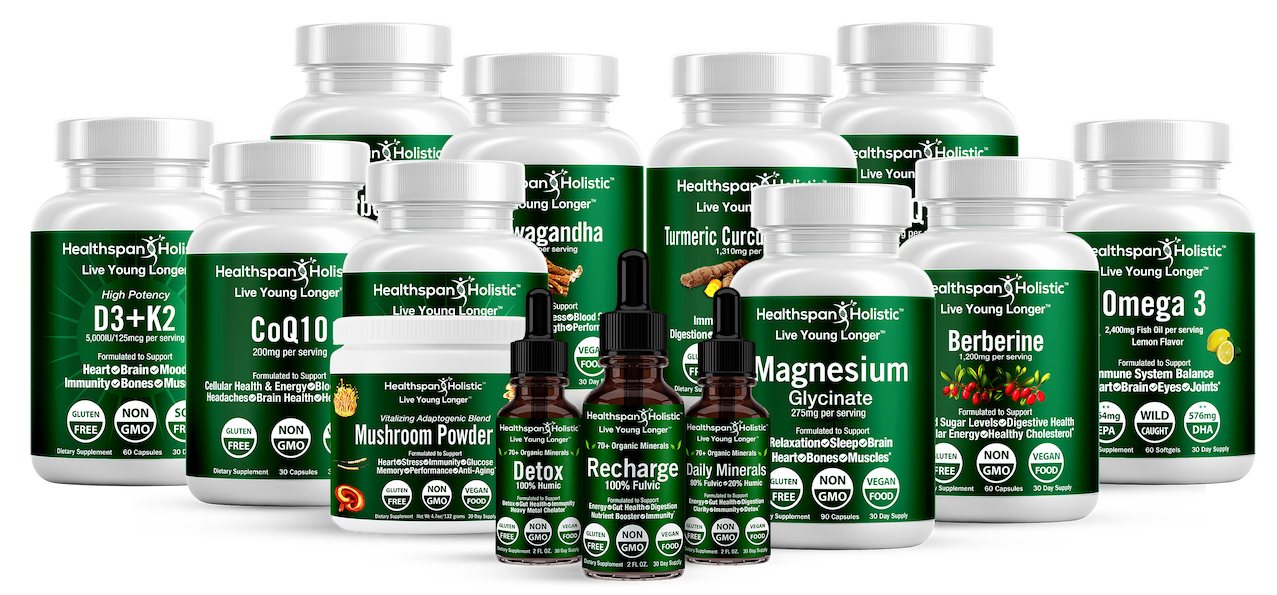
Right now, 1st time customers can take advantage of our BUY 1 GET 1 50% OFF special offer across all supplements. That’s a genuine opportunity to try ALA alongside a complementary product like our High Potency Vitamin D3 + K2, which supports bone health and cardiovascular function in the same age group that benefits most from ALA. If you want to go deeper and find out which supplements your bloodwork actually calls for, explore our functional lab testing resources to get a personalized picture before you buy.
FAQ
What is alpha lipoic acid used for?
Alpha lipoic acid is used primarily for antioxidant support, improving insulin sensitivity, and reducing diabetic peripheral neuropathy symptoms. It also shows modest benefits for blood pressure and weight management when combined with caloric restriction.
What is the best alpha lipoic acid dosage for adults?
Standard dosing ranges from 300 to 600 mg daily for racemic ALA, or 100 to 300 mg daily for pure R-ALA. Starting lower and adjusting based on tolerance is a sound approach for most adults.
Can alpha lipoic acid cause side effects?
Yes, though they are generally mild. Nausea, heartburn, and headache are the most commonly reported alpha lipoic acid side effects, particularly at higher doses. Taking it with a small amount of food or switching to R-ALA can reduce discomfort.
Does alpha lipoic acid support weight loss?
Research shows a modest effect. A meta-analysis found roughly 3 pounds greater weight loss compared to placebo when ALA was combined with caloric restriction. It works best as a metabolic support tool, not a primary weight loss strategy.
Who should avoid taking an alpha lipoic acid supplement?
People on diabetes medications, thyroid medications, or those who are pregnant should consult their doctor before starting ALA. Because it lowers blood sugar, it can interact with medications that do the same.
Leave a comment: