

Walnuts deliver measurable heart, brain, gut, and metabolic benefits when eaten regularly as part of a balanced diet. A standard 1-ounce serving (about 12–14 halves) supplies roughly 2.5 grams of ALA, the plant-based omega-3 that drives many of walnut’s most studied effects. Clinical trials and meta-analyses consistently show small but real improvements in cholesterol, triglycerides, gut bacteria diversity, and select inflammation markers. Here’s the bottom line before we go deeper:
- Heart health: Walnut-enriched diets produce reductions in total cholesterol (~3%) and LDL (~4%), with triglycerides falling roughly 4–5% versus control diets.
- Brain health: Promising signals for memory and processing speed in older adults, though longer human trials are still needed.
- Gut health: Human crossover trials using 1.5 oz daily reported favorable shifts in beneficial gut bacteria over 8 weeks.
- Metabolic effects: Modest improvements in blood sugar, blood pressure, and blood fats when walnuts replace less-healthy snacks or fats.
- Serving size: 1–1.5 oz per day (12–14 halves) covers the range used in most trials.
- Safety note: Walnuts contain roughly 185 calories per ounce, so portion control matters. Tree-nut allergy is a real risk for some people.
1. Walnuts and your heart: what the trials actually show
Walnuts have been shown in RCTs and meta-analyses to produce small but meaningful improvements in total cholesterol, LDL, and triglycerides when added to habitual diets. Pooled analyses report modest reductions in these blood lipids compared to control diets. Those numbers may sound modest, but sustained LDL reductions at that scale translate to real cardiovascular risk reduction over years.
The biological mechanisms behind these changes are well-characterized:
- ALA (alpha-linolenic acid): Walnuts are the only commonly eaten nut specifically high in ALA, providing a notable amount per serving. ALA intake is linked to lower cardiovascular mortality across meta-analyses.
- Polyphenols: Compounds like pedunculagin reduce oxidative modification of LDL particles, making them less atherogenic.
- Arginine: This amino acid supports endothelial nitric oxide production, helping blood vessels stay flexible.
- Improved lipoprotein profiles: Beyond total LDL, walnut consumption tends to shift LDL toward larger, less-dense particles, which carry lower cardiovascular risk.
Practically, the most effective approach is to swap walnuts in for saturated-fat snacks rather than simply adding them on top of your current diet. Replace a handful of chips or a slice of cheese with an ounce of walnuts and you’re simultaneously reducing saturated fat and adding ALA. Most lipid improvements in trials appear within 6–12 weeks of consistent daily intake.
2. Can walnuts protect your brain as you age?
Walnuts show promising benefits for cognitive performance in at-risk older adults, though long-term human trials are still limited. Reviews of available studies note signals of improved memory and processing speed in older adult populations, particularly those with mild cognitive risk. The effect is not universal across all age groups, and it’s strongest where baseline cognitive vulnerability exists.
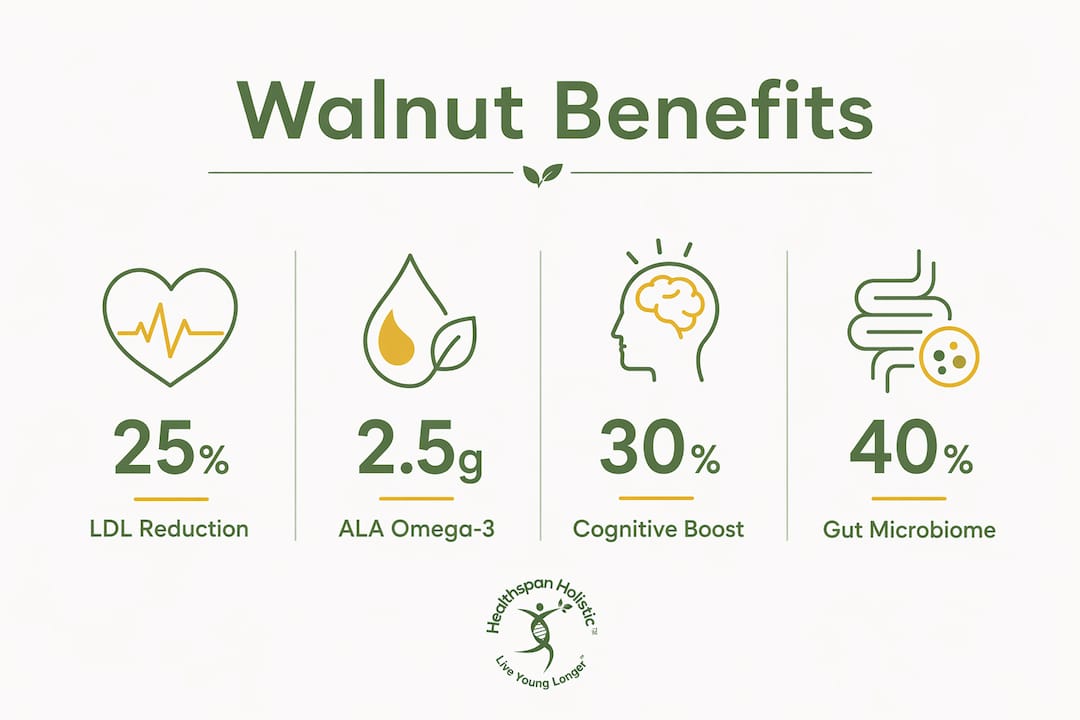
The plausible mechanisms overlap significantly with the heart-health story. ALA and polyphenols reduce neuroinflammation and oxidative stress in brain tissue. Improved vascular function from regular walnut intake also supports cerebral blood flow, which is a key driver of cognitive aging. Some researchers point to walnut polyphenols’ ability to cross the blood-brain barrier and directly modulate neural signaling pathways.
That said, experts caution that brain health benefits appear strongest in at-risk older adults, and researchers still need longer human clinical trials to confirm mechanisms like improved neural signaling. Most existing human studies are relatively short in duration. If you’re over 45 and thinking about walnuts as part of a longevity-focused nutrition plan, the evidence is encouraging enough to act on, but it’s not yet the same caliber as the cardiovascular data.
3. How walnuts feed your gut microbiome
Eating walnuts regularly increases beneficial gut bacteria and changes microbial metabolites in human trials. Human crossover trials using 1.5 oz daily over 8 weeks reported favorable shifts in beneficial gut bacteria compared to no-walnut periods. Participants showed increases in bacteria associated with gut barrier integrity and reduced populations of bacteria linked to inflammation.
The mechanisms driving these shifts are worth understanding:
- Fiber: Walnuts provide prebiotic fiber that feeds beneficial bacterial strains like Lactobacillus and Bifidobacterium.
- Ellagitannins: These polyphenols are converted by gut bacteria into urolithins, compounds with anti-inflammatory and potentially anti-aging properties.
- Prebiotic effects: The combination of fiber and polyphenols creates a gut environment that selectively favors health-promoting microbes.
- Downstream effects: Microbiome shifts from walnut consumption correlate with improvements in lipid metabolism and reduced systemic inflammation markers.
One practical note: walnuts work best as part of a fiber-rich diet overall. Pairing them with vegetables, legumes, and whole grains amplifies the prebiotic effect. Using them purely as a calorie-dense snack without broader dietary balance limits what the microbiome can do with them.

4. Walnuts’ antioxidant and anti-inflammatory power
Walnuts contain a mix of ALA, polyphenols, arginine, magnesium, and vitamin E that collectively exert antioxidant and anti-inflammatory effects in trials and lab studies. Walnuts rank among the top nuts for antioxidant activity, largely due to polyphenols including pedunculagin and gamma-tocopherol (a form of vitamin E more potent than the alpha form found in most supplements). Human studies show reductions in oxidative stress markers and, in some trials, modest decreases in hs-CRP, a key marker of systemic inflammation. Results vary across studies depending on baseline inflammation levels and dietary context.
At the cellular level, walnut polyphenols inhibit pro-inflammatory signaling pathways (notably NF-κB), while ALA competes with arachidonic acid to reduce the production of inflammatory eicosanoids. Magnesium supports enzymatic antioxidant defenses. These mechanisms don’t operate in isolation; it’s the synergy of bioactives that makes walnuts more effective than any single compound in isolation.
Registered dietitians highlight this synergy of walnut bioactives as the reason walnuts are most effective as part of a data-driven wellness plan that tracks inflammation markers over time.
Pro Tip: Store walnuts in an airtight container in the refrigerator or freezer. Their high polyunsaturated fat content makes them prone to oxidation at room temperature, which can actually generate pro-inflammatory compounds. Avoid prolonged high-heat roasting for the same reason — raw or lightly toasted is best for preserving ALA and polyphenol integrity.
5. Walnuts and cancer risk: what the evidence actually supports
Preclinical studies and some observational human data suggest walnuts contain compounds that could reduce risk for certain cancers, but human randomized evidence is limited. This is an area where it’s worth being precise about what kind of evidence exists, because the strength of the claim varies significantly by evidence tier.
Cell and animal studies show walnut polyphenols and ALA can inhibit tumor cell proliferation and induce apoptosis in breast, colon, and prostate cancer models. Observational cohort studies in humans show associations between higher nut consumption and modestly lower risk for some cancers, but these studies can’t establish causation. Randomized interventional data in humans specifically for cancer endpoints is sparse.
The cancer types with the most signals in the literature are breast, colorectal, and prostate, with biological plausibility grounded in walnut’s anti-inflammatory and antioxidant mechanisms. A 2025 Springer review broadened this picture further, highlighting emerging research on walnut bioactives and their possible anti-diabetic and anticancer activity, including novel interest in walnut shells for therapeutic applications.
The practical framing here is straightforward: walnuts fit well within a dietary pattern associated with lower cancer risk, such as a Mediterranean-style diet rich in plants, healthy fats, and fiber. They are not a standalone preventive treatment, and no one should interpret the preclinical data as license to skip evidence-based cancer screening or treatment.
6. Metabolic benefits: weight, blood sugar, blood pressure, and blood fats
Walnuts can support weight management and modestly improve blood sugar, blood pressure, and blood lipids when used in place of less-healthy snacks or fats. The key word is replace, not add. Here’s what the evidence shows for each metabolic outcome:
- Weight and appetite: Short-term controlled trials and neuroimaging studies show walnuts reduce hunger and increase activity in brain regions linked to resisting food cues. Their protein, fiber, and fat combination promotes satiety.
- Blood sugar: Some trials show modest short-term improvements in fasting glucose and insulin sensitivity, particularly when walnuts replace refined carbohydrate snacks.
- Blood pressure: Small studies show modest reductions in systolic blood pressure, likely mediated by ALA and arginine’s effects on vascular tone.
- Triglycerides and LDL: Consistent with the cardiovascular section, pooled trial data shows 4–5% triglyceride reductions and ~4% LDL reductions in walnut-enriched diets.
For weight management specifically, the substitution principle is critical. Because walnuts carry roughly 185 calories per ounce, adding them on top of an unchanged diet can push total calorie intake up. The metabolic benefits appear when they displace chips, crackers, or processed snacks. Expect measurable changes in lipids and HbA1c over 8–12 weeks when dietary changes are sustained and consistent.
7. What’s actually in a serving of walnuts?
A standard 1-ounce serving (about 14 walnut halves) supplies concentrated calories, healthy polyunsaturated fats, especially ALA, plus protein, fiber, magnesium, and polyphenols. Here’s the nutrient breakdown per 1-oz serving, based on USDA FoodData Central data:
| Nutrient | Per 1-oz serving (~14 halves) | Key health link |
|---|---|---|
| Calories | ~185 kcal | Portion control matters |
| Total fat | — | Mostly polyunsaturated |
| ALA (omega-3) | ~2.5 g | Heart health, brain health |
| Protein | ~4 g | Satiety, muscle support |
| Fiber | ~2 g | Gut microbiome, blood sugar |
| Magnesium | ~45 mg | Antioxidant enzymes, blood pressure |
| Vitamin E (gamma-tocopherol) | Notable | Antioxidant, anti-inflammatory |
| Polyphenols (ellagitannins) | Present | Gut health, antioxidant activity |
ALA is the standout nutrient, at 2.5 g per ounce, walnuts deliver more plant omega-3 than any other common nut. Fiber and polyphenols work together on gut health and blood sugar. Magnesium supports the enzymatic antioxidant systems that protect cells from oxidative damage, and it’s a mineral many adults over 40 are quietly low in.
8. How many walnuts should you eat each day?
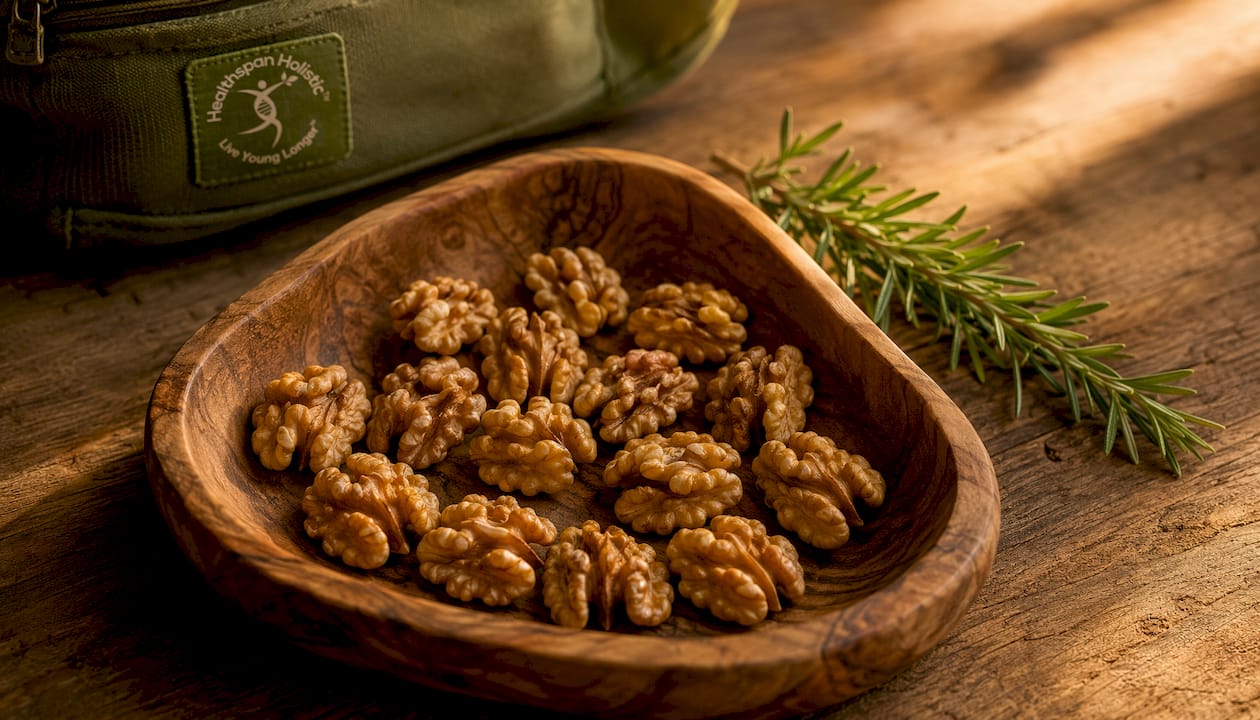
Common study servings range from about 1 ounce (12–14 halves) to 1.5 ounces daily, and most documented benefits appear within that range. A 1-oz serving is roughly a small handful or about one-quarter cup of walnut halves. Trials showing gut microbiome improvements used 1.5 oz daily over 8 weeks. Heart health benefits appear consistently at 1–1.5 oz per day across multiple trials and meta-analyses.
Timing matters less than consistency, but combining walnuts with a meal tends to enhance satiety more than eating them alone between meals. Adding them to breakfast oatmeal, a lunch salad, or an afternoon snack that replaces something processed is a practical way to hit the target without thinking too hard about it.
A few portion-control habits that work well in practice:
Pre-portion 1-oz bags at the start of the week so you’re not estimating from a large bag. Add walnuts to a dish rather than eating them straight from the container, which makes it easier to stay within a serving. If weight management is a goal, track the swap explicitly: walnuts in, chips or crackers out.
9. Practical ways to eat walnuts every day
Walnuts are versatile enough to fit into almost any meal or snack without much effort. Here are eight practical uses that work well and preserve nutrient quality:
- Raw on salads: Toss a handful over mixed greens with olive oil and lemon. The fat in walnuts helps absorb fat-soluble nutrients from vegetables.
- Ground walnut crust: Pulse walnuts in a food processor to a coarse crumb and use as a coating for baked fish or chicken instead of breadcrumbs.
- Walnut butter: Blend raw walnuts until smooth for a spread with more ALA than almond or peanut butter.
- Walnut pesto: Substitute walnuts for pine nuts in traditional pesto. The flavor is earthier and the cost is lower.
- Smoothie add-in: Add 1 oz of raw walnuts to a morning smoothie with banana, spinach, and protein powder for a filling, nutrient-dense start.
- Savory grain bowls: Scatter walnut halves over farro, quinoa, or brown rice bowls with roasted vegetables.
- Trail mix: Combine walnuts with dried tart cherries and pumpkin seeds for a portable snack that balances fat, fiber, and natural sugar.
- Yogurt or parfait topping: Layer walnuts into plain Greek yogurt with berries for a breakfast that covers protein, probiotics, and omega-3s in one bowl.
For storage, refrigerate or freeze walnuts in an airtight container to prevent rancidity. At room temperature, their polyunsaturated fats oxidize within weeks. When buying prepared foods with walnuts, check ingredient labels: roasted walnuts in packaged snacks often carry added salt, sugar, or oils that offset the health benefits.
10. Risks, allergies, and when to check with your clinician
Walnuts pose standard tree-nut allergy risks and are calorie-dense, so portion control is important. Some people should check with a clinician before making significant dietary changes, particularly those managing existing conditions or taking certain medications.
Allergy warning: Tree-nut allergies can be severe and life-threatening. Walnuts share cross-reactive proteins with other tree nuts including pecans, cashews, and almonds. If you’ve had a reaction to any tree nut, consult an allergist before adding walnuts to your diet.
Calorie density: At roughly 185 calories per ounce, walnuts are not a “free” food. For weight management, they must replace something rather than simply be added to your current intake.
Consult your clinician if you experience:
- Any new or severe allergic symptoms (hives, throat tightening, difficulty breathing) after eating walnuts or tree nuts.
- Significant metabolic or lipid concerns that need professional monitoring alongside dietary changes.
- Plans to make major dietary shifts while taking lipid-lowering medications (statins) or anticoagulants such as warfarin. Walnuts’ vitamin K and omega-3 content can interact with anticoagulant therapy at high intake levels, and your clinician should know about significant dietary changes.
- Existing kidney disease, since walnuts are moderately high in oxalates and phosphorus.
This article is general health information, not medical advice. Confirm any significant dietary changes with your clinician or a registered dietitian, especially if you manage a chronic condition.
11. When walnuts help most: using biomarkers to track your results
Walnuts are most effective as a targeted intervention when integrated with biomarker-driven tracking and a personalized plan. Eating a handful of walnuts daily is a good start, but if you want to know whether it’s actually moving the needle for you, measurable markers tell the story that subjective feeling cannot.
The biomarkers most directly relevant to walnut’s documented effects are:
- LDL cholesterol and total cholesterol — the primary lipid targets in walnut trials; recheck at 8–12 weeks after dietary change.
- Triglycerides — respond to ALA and dietary fat quality; useful baseline and follow-up marker.
- Apolipoprotein B (ApoB) — a more precise cardiovascular risk marker than LDL alone; tracks lipoprotein particle changes.
- hs-CRP — the key inflammation marker; walnut polyphenols and ALA both target this pathway.
- HbA1c and fasting glucose — relevant for metabolic health tracking over 8–12 weeks.
- Magnesium (RBC) — many adults over 40 are low; walnut’s magnesium content supports antioxidant enzyme function, and knowing your baseline helps contextualize dietary changes.
Pro Tip: Run a baseline panel before you change your diet, then recheck at 8–12 weeks. Without a before-and-after comparison, you’re guessing whether the change worked. A basic heart health panel covering LDL, triglycerides, and hs-CRP gives you the data to make that call confidently.
The people most likely to see measurable, clinically meaningful changes from walnut consumption are those with elevated LDL or triglycerides at baseline, adults over 45 with cardiometabolic risk factors, and older adults with early cognitive concerns. If you fall into one of these groups, formal testing and personalized coaching add real value beyond general dietary advice. That said, the basic benefits of eating 1–1.5 oz of walnuts daily don’t require paid services. The biomarker approach is an optional layer for people who want precision, not a prerequisite for getting started.
Key Takeaways
Walnuts deliver consistent, evidence-backed benefits for heart health, gut health, and metabolic function when eaten as 1–1.5 oz daily in place of less-healthy foods.
| Point | Details |
|---|---|
| Heart health is the strongest evidence | Walnut-enriched diets reduce total cholesterol ~3%, LDL ~4%, and triglycerides ~4–5% in pooled trials. |
| ALA per serving is significant | One ounce supplies ~2.5 g of ALA, more than any other common nut, supporting both cardiovascular and brain health. |
| Gut and inflammation benefits are real | 1.5 oz daily over 8 weeks shifts gut bacteria favorably; polyphenols convert to anti-inflammatory urolithins. |
| Portion control is non-optional | At ~185 calories per ounce, walnuts must replace less-healthy foods, not simply be added on top of your current diet. |
| Track your results with biomarkers | Recheck LDL, triglycerides, hs-CRP, and HbA1c at 8–12 weeks to confirm individual response to dietary change. |
| Healthspan Holistic offers a structured path | The 90 Day Journey to Longevity pairs lab testing with coaching to measure and personalize walnut-driven benefits. |
Why walnuts deserve a permanent spot in your longevity plan
The evidence for walnuts is unusually consistent for a single food. Most nutritional research is messy, confounded, and hard to translate into personal action. Walnuts are an exception: the lipid data from RCTs is replicable, the gut microbiome findings are mechanistically coherent, and the ALA content is quantifiable per serving. That combination of clinical evidence and biological plausibility is rare.
What I find most compelling, though, is the synergy argument. No single compound in walnuts explains all the benefits. ALA, polyphenols, arginine, magnesium, and fiber each contribute, and they work better together than in isolation. That’s exactly the kind of food that fits a holistic approach to aging rather than a reductionist supplement strategy.
The caveat I’d add is this: walnuts are a tool, not a treatment. If your LDL is 160 and your hs-CRP is elevated, a handful of walnuts daily is a genuinely useful dietary move, but it’s not a substitute for understanding your full cardiometabolic picture. The readers who get the most out of walnuts are those who pair the dietary change with baseline testing, track their markers at 8–12 weeks, and adjust their broader plan accordingly. That’s not complexity for its own sake. It’s just how you know something is working.
Ready to measure what walnuts are doing for your health?
Walnuts are one of the most evidence-supported foods you can add to your daily routine, but knowing they work in general is different from knowing they’re working for you. Healthspan Holistic offers the tools to close that gap: advanced blood panels that track LDL, triglycerides, ApoB, hs-CRP, and HbA1c, plus one-on-one coaching to interpret your results and build a personalized nutrition and supplement plan around them.
For readers with elevated cardiometabolic risk or cognitive concerns, the 90 Day Journey to Longevity is a structured program that combines baseline and follow-up lab testing with personalized coaching, giving you a before-and-after picture of exactly how dietary changes like adding walnuts are shifting your biomarkers. You can also check your RBC magnesium levels as a standalone test if you want to start with one targeted marker.
These services are optional. Walnuts work whether or not you test. But if you want precision rather than guesswork, the data makes the difference.
1st Time Customers can take advantage of our BUY 1 GET 1 50% OFF special offer on all supplements.
Sources and further reading
The claims in this article draw on peer-reviewed meta-analyses, randomized controlled trials, and registered dietitian guidance from the following sources. For personalized interpretation of any lab results, consult your clinician.
- Antioxidant and Anti-Inflammatory Properties of Walnut Constituents — PMC/NIH
- 4 Health Benefits of Walnuts and How Much You Should Eat — UC Davis Health
- Health Benefits of Walnuts — Harvard Health Blog
- Health Benefits of Walnuts — Cleveland Clinic
- 10 Health Benefits of Walnuts — Healthline
- 8 Health Benefits of Walnuts, According to a Dietitian — Health.com
- Nutritional Composition, Phytochemical Profile, Health Benefits and Food Applications of Walnuts — Springer (2025)
- USDA FoodData Central — for nutrient data lookups by serving size
- Dietary Guidelines for Americans 2020–2025 — nut and healthy fat recommendations
FAQ
How many walnuts a day is a healthy amount?
Most trials use 1–1.5 oz daily (about 12–14 halves), and that range covers the servings where heart, gut, and metabolic benefits have been documented. Start with 1 oz and treat it as a swap for a less-healthy snack rather than an addition to your current intake.
What happens when you eat walnuts every day?
Regular daily walnut consumption is associated with modest reductions in LDL cholesterol and triglycerides, favorable shifts in gut bacteria, and lower markers of oxidative stress. Most measurable lipid and metabolic changes appear within 8–12 weeks of consistent intake.
Which organ benefits most from walnuts?
The heart has the strongest clinical evidence, with pooled trials showing consistent LDL and triglyceride reductions. The brain and gut also benefit, particularly in older adults, through ALA, polyphenols, and prebiotic fiber.
What are the top three healthiest nuts to eat every day?
Walnuts stand out for ALA content and antioxidant activity; almonds are high in vitamin E and calcium; and pistachios offer a favorable protein-to-calorie ratio with lutein for eye health. All three fit well within a holistic nutrition plan for adults over 40.
Are walnuts good for skin health?
Walnuts’ ALA, vitamin E, and polyphenols support skin health by reducing oxidative stress and systemic inflammation, two key drivers of skin aging. While direct skin-specific RCTs are limited, the anti-inflammatory mechanisms that benefit the cardiovascular system also apply to skin tissue.
Leave a comment: