

TL;DR:
Holistic nutrition focuses on individualized food and lifestyle choices that restore balance, especially after age 45.
It emphasizes whole foods, fiber, plant diversity, and testing to address root causes rather than symptoms, promoting long-term health.
If you have been eating “reasonably well” for decades and still feel tired, inflamed, or just not quite right, the problem likely is not willpower. It is approach. A genuine holistic nutrition guide does not tell you to count calories or cut entire food groups. It asks a more useful question: what does your body actually need to restore balance and function well? For adults between 45 and 75, that question matters more than ever, because the nutritional stakes get higher with every passing decade. This guide walks you through exactly how to answer it.
Key takeaways
| Point | Details |
|---|---|
| Root-cause focus | Holistic nutrition addresses why your body is struggling, not just what symptoms to manage. |
| Fiber is foundational | 97% of Americans fall short on fiber, a gap that directly affects gut, heart, and immune health. |
| Personalization beats generic advice | Personalized nutrition protocols improve cardiometabolic outcomes more than standard dietary guidance. |
| Plant diversity is the goal | Eating 30 or more different plants weekly builds a more resilient microbiome and better immunity. |
| Testing reveals what food cannot show | Micronutrient and mineral testing guides precise nutrition decisions that guesswork cannot. |
What is holistic nutrition and why it matters after 45
What is holistic nutrition, exactly? The short answer: it is a food-and-lifestyle approach that treats your body as a connected system rather than a collection of separate symptoms. Instead of prescribing the same low-fat diet to everyone, a holistic dietary approach starts with you. Your metabolism, your stress load, your sleep, your gut health.
This matters enormously after 45 because your nutritional needs genuinely shift. Digestion slows. Muscle mass begins to decline. Inflammation becomes a more constant presence. Hormonal changes alter how you process carbohydrates and absorb key nutrients like magnesium and B12. A generic wellness food guide designed for a 30-year-old will not address those realities.
The core principles of this integrative health nutrition approach include:
-
Whole, minimally processed foods as the foundation of every meal
-
Nutrient density over calorie math — focusing on what each bite delivers, not just what it costs
-
Mineral and hydration balance, because drinking water alone can actually deplete electrolytes if your mineral intake is insufficient
-
Mental and emotional factors — stress and poor sleep sabotage even perfect eating plans
-
Avoiding ultra-processed foods, which are linked to a 62% higher risk of heart disease
Pro Tip: Think of minerals as the spark plugs of your body. Without adequate magnesium, potassium, and calcium, no amount of clean eating will fully restore your energy or metabolic rhythm.
Chronic inflammation underlies most chronic diseases adults face after midlife, from arthritis to cardiovascular disease. Anti-inflammatory foods — fatty fish, leafy greens, berries, olive oil — are not optional extras in this framework. They are the medicine.
How to prepare for a holistic nutrition lifestyle shift
The biggest reason people abandon new eating approaches is poor preparation. Before you change a single meal, take stock of where you actually are.
-
Audit your current diet honestly. Write down everything you eat for five days, including snacks and drinks. You will likely spot patterns: too little fiber, too much sodium, or meals that are calorie-rich but nutrient-poor.
-
Identify your key nutritional gaps. 97% of American adults do not consume enough dietary fiber. Most adults over 50 are also low in magnesium, vitamin D, and B12. These gaps are the starting point, not the whole picture.
-
Set realistic, progressive goals. Instead of “I will eat perfectly starting Monday,” try “I will add one serving of legumes three times this week.” Small wins compound.
-
Stock your kitchen with the right tools. A quality blender, a set of glass storage containers, and a pressure cooker or rice cooker make whole-food cooking dramatically more practical.
-
Plan for batch cooking. Batch cooking grains, beans, and roasted vegetables on weekends removes the biggest weekday obstacle: time. You will always have something nutrient-dense ready.
Pro Tip: Before making any major dietary changes, work with a qualified practitioner to test your baseline micronutrient and mineral levels. Guessing at deficiencies leads to guessing at solutions.
Here is a simple comparison to help frame your expectations:
| Conventional diet approach | Holistic dietary approach |
|---|---|
| Calorie restriction | Nutrient density focus |
| Symptom management | Root-cause resolution |
| Generic meal plan | Personalized to your biomarkers |
| Short-term fix | Sustainable lifestyle shift |
| Supplements as afterthoughts | Targeted based on lab testing |
Daily execution: putting holistic nutrition into practice
This is where real change happens. The goal is not perfection. It is building repeatable, sustainable habits that your body actually responds to. Here are the areas that move the needle most.
Build your plate around fiber and plant diversity
30 or more different plants weekly is the target for microbiome richness and immune resilience. This sounds like a lot until you realize that herbs, spices, nuts, seeds, and legumes all count. A meal of black bean soup with cilantro, pumpkin seeds, and a side of roasted beets can tick six or seven plant varieties at once.

The WHO recommends at least 25 grams of naturally occurring dietary fiber daily. Practical sources include chia seeds (10g per two tablespoons), lentils (15g per cup), and oats (4g per serving). Learn more about meeting your needs in this fiber guide for ages 45-75.
Enhance nutrient absorption with simple habits
Eating the right foods is only half the equation. Your body needs to absorb what you eat.
-
Add a squeeze of citrus juice to iron-rich plant foods like lentils or spinach. Vitamin C increases non-heme iron absorption significantly.
-
Pair fat-soluble nutrients (vitamins A, D, E, K) with a small amount of healthy fat. Drizzle olive oil on your greens.
-
Eat fermented foods like yogurt, kimchi, or sauerkraut daily to support gut bacteria that regulate nutrient absorption. Better gut health also means better mood. The gut-microbiome connection is not a side note. It is central to how you feel every day.
-
Use fresh herbs liberally. Parsley, cilantro, and basil deliver polyphenols and antioxidants while reducing your reliance on salt.
Hydration and mineral balance
Most people over 60 are chronically mildly dehydrated without knowing it. But the fix is not just more water. Mineral-rich hydration means including foods high in potassium, magnesium, and calcium alongside your fluid intake. Think cucumber slices, coconut water, leafy greens, and sparkling mineral water as a soda replacement.
Pro Tip: Add a small pinch of quality sea salt and a squeeze of lemon to a glass of water in the morning. This simple habit supports electrolyte balance and can noticeably restore morning energy within days.
Here is a practical look at common food swaps that make a real difference:
| Swap out | Swap in | Key benefit |
|---|---|---|
| White rice | Quinoa or farro | More protein and fiber per serving |
| Table salt | Fresh herbs plus sea salt | Reduced sodium, added polyphenols |
| Sugary breakfast cereal | Steel-cut oats with chia seeds | Sustained energy, fiber, omega-3s |
| Processed snack bars | Handful of walnuts and fruit | Anti-inflammatory fats and natural sugars |
| Soda or sweetened tea | Sparkling mineral water with citrus | Electrolyte support, zero added sugar |
Overcoming the challenges that derail most people
No wellness food guide is honest if it skips the hard parts. Here is what typically trips people up and how to handle it.
-
Cravings and emotional eating. These are not character flaws. They are often signals of blood sugar instability, nutrient deficiency, or stress. When a craving hits, pause and ask: am I actually hungry, or am I tired, stressed, or bored?
-
Perfectionism. The all-or-nothing mindset kills more nutrition plans than anything else. A “low-bar” meal — scrambled eggs with whatever vegetables are in the fridge — beats a perfect meal you did not make because it felt like too much effort.
-
Sleep and stress. These are not separate from nutrition. Poor sleep raises cortisol, which drives sugar cravings and promotes fat storage. Your holistic health checklist should always include sleep quality alongside food choices.
-
Plateaus and slow progress. Your body adapts. When progress stalls, review your fiber intake, hydration, stress levels, and sleep before assuming the diet is wrong.
“Health is not a destination with a fixed arrival point. It is a daily practice of listening to your body and responding with care.”
Pro Tip: Track how you feel in a simple journal rather than tracking every calorie. Note your energy, sleep quality, and digestion. These real-world signals tell you more than any app.
When to seek professional guidance: if you experience persistent fatigue, significant digestive issues, unexplained weight changes, or worsening inflammation despite dietary changes, work with a practitioner who can run targeted lab work.
Benefits you can expect and how to measure them
When you apply a true holistic dietary approach consistently, the improvements tend to follow a predictable sequence. Digestion improves first, often within two to three weeks. Energy steadies out next. Inflammation markers, mood, and mental clarity follow over months.
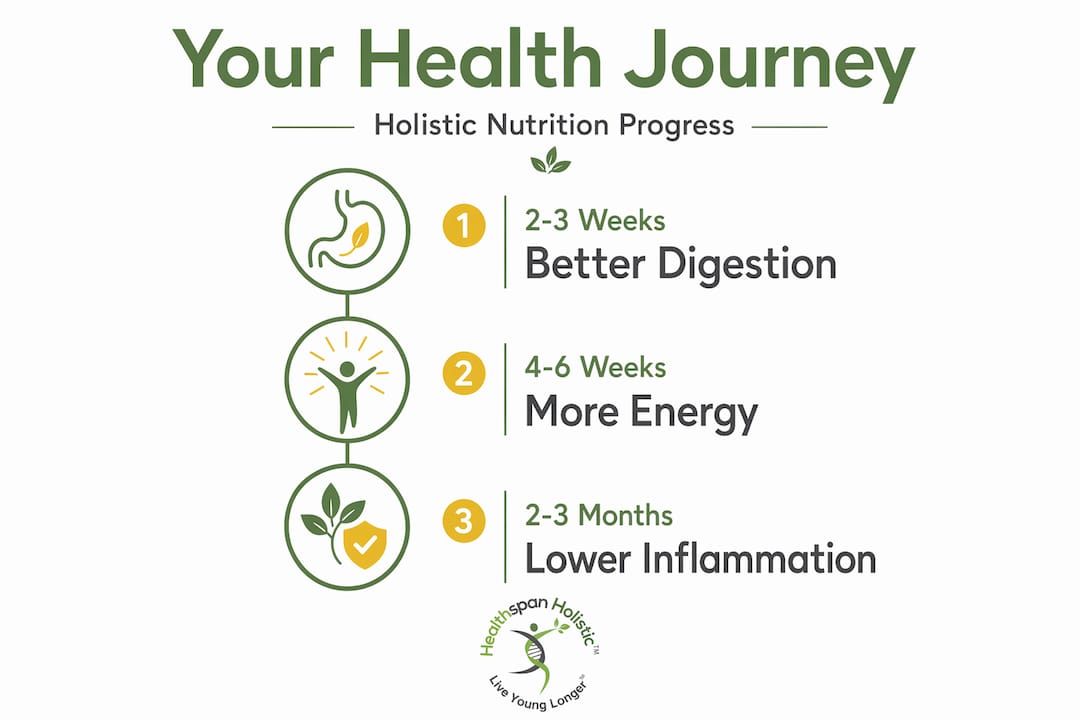
Here is what to watch for at each stage:
| Timeframe | Signs of progress |
|---|---|
| 2 to 3 weeks | Better digestion, more regular bowel movements, reduced bloating |
| 4 to 6 weeks | More consistent daily energy, improved sleep quality |
| 2 to 3 months | Reduced joint stiffness, better mood stability, lower inflammation markers |
| 6 months and beyond | Improved lab results, reduced reliance on medications (with physician oversight) |
Beyond how you feel, tracking measurable markers matters. Nutrient testing guides personalization and removes the guesswork from your supplement and food choices. Knowing your actual magnesium, vitamin D, and omega-3 levels gives you a precise target, not a generic recommendation. Plant-based nutrition strategies can also improve immune function and reduce chronic inflammation in ways that show up clearly on follow-up testing.
My honest perspective on holistic nutrition after midlife
I have worked with a lot of people in the 45 to 75 age range, and the pattern I see most often is this: they have tried everything and feel like their body has simply stopped cooperating. What I have learned is that the body has not given up. It has been given the wrong instructions.
What shifts everything is moving away from the idea that nutrition is a set of rules to follow and toward the idea that it is information you give your body. The food quality and plant food diversity you provide daily either supports your systems or quietly depletes them. There is no neutral.
In my experience, the people who sustain real improvement are not the ones who do everything perfectly. They are the ones who build a handful of reliable habits and stop treating every imperfect meal as a failure. They also pay attention to sleep, stress, and movement as equal partners to food. Integrating food with lifestyle factors is not a bonus strategy. It is the whole point.
The biggest misconception I encounter is that holistic eating is expensive or complicated. It is not. Lentils, oats, frozen greens, and herbs are among the most nutrient-dense foods available, and they cost very little. What takes effort is the consistency, not the cost.
If you take nothing else from this guide, take this: start where you are, use what you have, and add one thing at a time. That is not a compromise. That is exactly how lasting change happens.
— Chris
Know your numbers: test, then nourish
Reading a nutrition guide is a great start. But knowing your actual baseline is what makes every food and supplement choice count. At Healthspan Holistic, we offer targeted lab tests designed specifically for adults who want to take their wellness seriously.
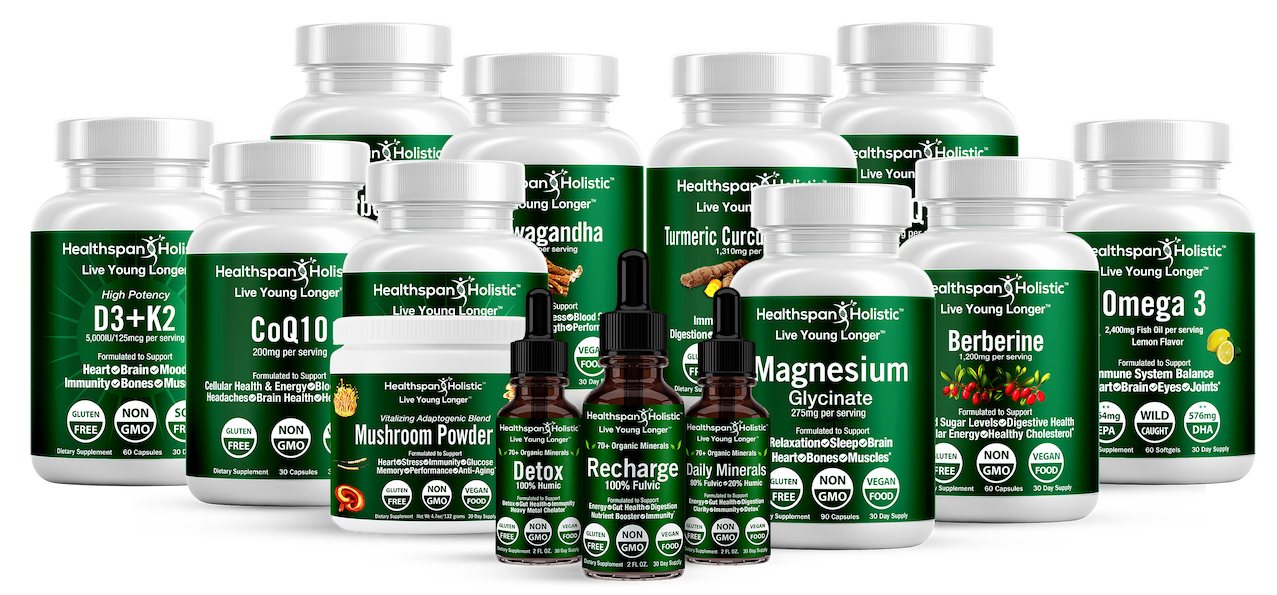
Our Magnesium RBC Test detects true cellular magnesium deficiency, which standard blood panels miss entirely. The Toxic and Essential Minerals Test reveals mineral imbalances that affect energy, metabolism, and brain function. For a complete picture, the Cellular Micronutrient Test shows exactly where your nutrition plan needs reinforcing.
1st Time Customers can take advantage of our BUY 1 GET 1 50% OFF special offer on all supplements.
These tools turn your holistic nutrition plan from an educated guess into a precision strategy. After reading this article we hope that you are feeling ready to take the next step toward a longer, more vital life!
FAQ
What is holistic nutrition?
Holistic nutrition is a personalized, whole-person approach to eating that focuses on root causes of poor health rather than treating symptoms. It integrates food quality, gut health, stress, sleep, and movement as an interconnected system.
How does a holistic dietary approach differ from a regular diet?
A standard diet typically restricts calories or eliminates food groups. A holistic dietary approach personalizes nutrition based on your unique biomarkers, lifestyle, and health history, producing better long-term cardiometabolic outcomes according to research in Nature Medicine.
How much fiber do I actually need daily?
The WHO recommends at least 25 grams of naturally occurring dietary fiber per day. Most American adults fall far short of this target, which directly impacts gut health, heart function, and immune resilience.
What are simple examples of holistic nutrition in practice?
Examples of holistic nutrition include swapping refined grains for quinoa, adding fresh herbs instead of salt, eating 30 or more different plant foods weekly, pairing iron-rich foods with citrus, and using mineral water to support electrolyte balance.
When should I get micronutrient testing?
If you are experiencing persistent fatigue, brain fog, poor sleep, or inflammation despite eating well, micronutrient testing is the logical next step. It identifies specific deficiencies so your nutrition and supplement plan can be targeted, not generic.
Leave a comment: