

TL;DR:
Perimenopause involves unpredictable fluctuations in estrogen and progesterone that cause shifting symptoms and irregular cycles.
Proper symptom tracking and clinical assessment are more effective than single lab tests in diagnosing and managing this hormonal transition.
If you’ve noticed your body behaving differently and your doctor’s lab results keep coming back “normal,” you’re not imagining things. Perimenopause hormone changes are real, measurable, and far more unpredictable than most women expect. This isn’t a smooth, gradual decline in estrogen. It’s a hormonal roller coaster that can last years, producing symptoms that shift from week to week and cycle to cycle. Understanding what’s actually happening inside your body is not just reassuring. It’s the first step toward doing something about it.
Key Takeaways
| Point | Details |
|---|---|
| Hormones fluctuate wildly | Estrogen and progesterone rise and fall unpredictably, not in a steady decline, causing shifting symptoms. |
| Lab tests have limits | A single hormone blood test rarely confirms perimenopause; clinical symptoms and age matter more. |
| Symptoms map to physiology | Every major symptom connects to a specific hormonal mechanism, from hot flashes to mood swings to bone loss. |
| Treatment is individualized | Hormone therapy benefits often outweigh risks in women under 60 without contraindications, but it requires personalized assessment. |
| Tracking beats guessing | Logging symptoms over time gives you and your provider far more useful data than any single lab result. |
What actually happens with perimenopause hormone changes
Most people assume perimenopause means estrogen starts dropping and keeps dropping until your period stops. That picture is wrong, and it explains why so many women are blindsided by their symptoms.
What actually happens is that estrogen and progesterone fluctuate unpredictably throughout each cycle. Some months estrogen surges higher than it ever did in your 30s. Other months it crashes. Your ovaries are still producing hormones, but the signaling between your brain and your ovaries is becoming inconsistent. Your brain sends follicle-stimulating hormone (FSH) to trigger egg development, but the ovaries respond erratically. FSH levels rise higher and higher trying to compensate, which is why elevated FSH is sometimes used as one indicator of the transition.
Here is what this looks like in real life:
-
Irregular cycles: Your period may arrive early one month and three weeks late the next. Cycles can get shorter or longer, lighter or heavier, sometimes both in the same year.
-
Skipped ovulation: Without consistent ovulation, progesterone production drops even when estrogen remains relatively high. This estrogen-to-progesterone imbalance drives many of the most disruptive symptoms.
-
Symptom variability: Because symptom intensity can change cycle to cycle despite labs falling in a “normal” range, you may feel fine for a month and then feel derailed the next.
-
Duration of transition: How long does perimenopause last? Typically between four and eight years, though the range varies widely from woman to woman.
Pro Tip: Keep a simple cycle and symptom log, even just a note on your phone. Patterns over two to three months tell a story that a single lab draw never can.
The distinction between perimenopause vs menopause matters here too. Menopause is confirmed after 12 consecutive months without a period. Perimenopause is everything before that point, the entire transitional phase where hormones are in flux.
Physical and emotional symptoms tied to hormone shifts
Because estrogen receptors exist throughout your entire body, not just in your reproductive system, the reach of hormonal imbalance during perimenopause is surprisingly broad.
-
Hot flashes and night sweats. These are among the most recognized symptoms of perimenopause. They happen because changing hormones disrupt the brain’s temperature regulation center, the hypothalamus, which suddenly reads your core temperature as too high and triggers a rapid heat release. They can last seconds or several minutes, and when they strike at night, sleep takes the hit.
-
Vaginal dryness and urinary changes. As estrogen levels drop, vaginal and urinary tissues lose their elasticity and moisture. This leads to discomfort during sex, increased susceptibility to infections, and urgency or frequency with urination. These symptoms are underreported because many women assume they’re just “part of aging.” They are not inevitable, and they are treatable.
-
Perimenopause mood swings. Estrogen plays a direct role in regulating serotonin and dopamine, the neurotransmitters that stabilize mood. When estrogen levels swing, so do the chemicals that help you feel calm and grounded. Irritability, anxiety, and sudden emotional shifts are physiological responses to this instability, not a sign of weakness.
-
Bone density loss. Lower estrogen contributes to faster bone loss during and after perimenopause, raising fracture risk significantly. This process begins well before menopause is confirmed, which is why starting bone health strategies early matters.
-
Cardiovascular risk shifts. Estrogen has a protective effect on your arteries and cholesterol balance. As levels decline, LDL cholesterol tends to rise and HDL tends to drop, a pattern that increases cardiovascular risk over time.
“Your symptoms are not in your head. They are in your hormones — and understanding the connection gives you real leverage to feel better.”
Perimenopause weight gain deserves a specific mention. Metabolic rate slows, insulin sensitivity shifts, and cortisol becomes more reactive as estrogen fluctuates. Fat distribution changes too, moving from hips toward the abdomen. This is not a willpower problem. It’s a hormonal and metabolic shift that responds best to targeted nutrition and strength training, not just cutting calories.
Diagnosing perimenopause: why one blood test isn’t enough

This is where a lot of women hit a wall. You go in feeling terrible. Your doctor orders a hormone panel. The results come back within “normal” range. And you leave without answers.
Here’s why that happens. Hormone blood tests are typically unhelpful for confirming perimenopause because levels fluctuate so widely, even within a single week. A test taken on day 3 of your cycle tells a completely different story than one taken on day 14. No single snapshot captures the full picture.
For women 45 and older with characteristic symptoms and menstrual irregularity, clinical diagnosis based on age, symptoms, and cycle history is the standard approach. Blood tests may still be useful for ruling out other conditions:
-
Thyroid dysfunction can mimic perimenopause almost perfectly, causing fatigue, weight changes, mood shifts, and irregular periods.
-
Depression and anxiety disorders overlap significantly with perimenopause mood symptoms.
-
Polycystic ovary syndrome (PCOS) can cause cycle irregularities in women approaching perimenopause age.
-
Premature ovarian insufficiency should be considered in women under 40 with similar symptoms.
Getting a comprehensive hormone panel gives you a more complete starting point, especially when combined with symptom tracking over several months.
Pro Tip: Before your next appointment, bring three months of symptom notes including cycle dates, sleep quality, mood shifts, and physical symptoms. This turns a vague conversation into a focused clinical discussion.
Because normal labs can coexist with significant symptoms, the most useful tool you have is your own documented experience. Your symptoms are data.
Managing symptoms: treatment options and lifestyle strategies
There is no single protocol that works for every woman. What there is: a growing body of evidence that helps you and your provider weigh options clearly.
| Approach | Best For | Key Considerations |
|---|---|---|
| Systemic hormone therapy | Moderate to severe hot flashes, bone protection | Benefits often outweigh risks in women under 60 or within 10 years of menopause onset |
| Local (vaginal) estrogen | Vaginal dryness, urinary symptoms | Very low systemic absorption; generally safe for most women |
| Non-hormonal medications | Women with contraindications to hormones | SSRIs, SNRIs, and gabapentin have evidence for vasomotor symptoms |
| Lifestyle modifications | All women; foundation of care | Nutrition, strength training, sleep hygiene, stress management |
| Targeted supplementation | Nutrient gaps, bone and heart support | Magnesium, vitamin D, omega-3s, and hormone-balancing botanicals |
Systemic hormone therapy can reduce hot flashes by approximately 75% in appropriate candidates. For women who qualify, this is one of the most effective symptom-relief tools available. The decision requires screening for contraindications including certain hormone-sensitive cancers, history of blood clots, uncontrolled hypertension, and cardiovascular disease. Individualized risk-benefit discussions with a knowledgeable provider are non-negotiable here.
For women exploring holistic and herbal approaches alongside or instead of hormone therapy, herbal remedies for menopause can offer supportive options worth discussing with your care team.
Pro Tip: Prioritize strength training at least twice a week. Muscle mass supports metabolic rate, improves insulin sensitivity, and helps counter the abdominal fat accumulation that often accompanies perimenopause weight gain. It also directly supports bone density.
Sleep, stress management, and blood sugar balance are not optional wellness extras. They are central to managing estrogen levels in perimenopause because cortisol and insulin interact directly with sex hormone production and metabolism. When those systems are dysregulated, every other symptom gets worse. You can also explore testosterone for women as an additional consideration for energy and vitality during this transition.
How hormones affect your body’s systems
Understanding which body system is being affected helps you connect your symptoms to a cause, which makes managing them feel far less overwhelming.
| Body System | Hormone Driver | Symptoms Experienced |
|---|---|---|
| Temperature regulation | Estrogen decline affecting hypothalamus | Hot flashes, night sweats, sleep disruption |
| Genitourinary tract | Estrogen drop reducing mucosal elasticity | Vaginal dryness, urinary urgency, recurrent infections |
| Musculoskeletal | Estrogen deficiency accelerating bone remodeling | Faster bone loss, increased fracture risk |
| Cardiovascular and metabolic | Estrogen decline shifting cholesterol patterns | Rising LDL, falling HDL, weight redistribution |
| Brain and mood | Estrogen influence on serotonin and dopamine | Mood swings, brain fog, anxiety, disrupted sleep |
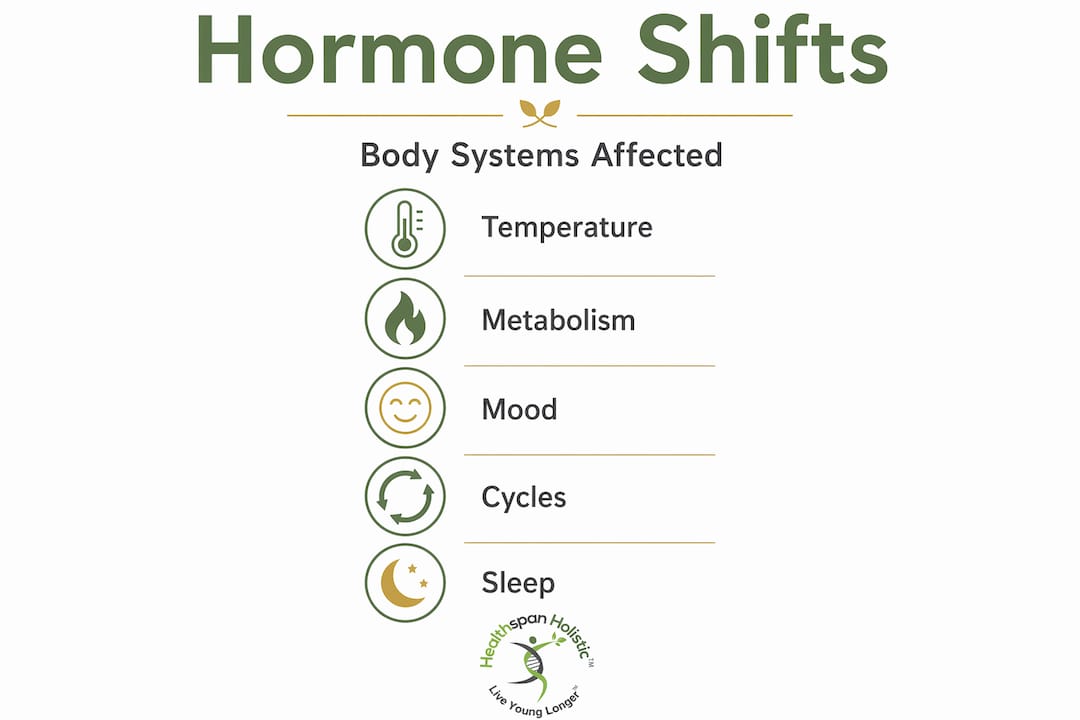
This framework matters because it reframes perimenopause from a reproductive event into a whole-body transition. Mapping your symptoms to specific systems lets you target your strategies, whether that’s bone health testing, heart health monitoring, or mood support. Hormonal changes in perimenopause are not a single problem with a single fix. They are a set of interconnected physiological shifts that respond best to a layered, personalized approach.
My perspective on navigating hormone changes
I’ve worked with many women in their 40s and 50s who come in frustrated and dismissed. They’ve had labs drawn, been told everything looks “normal,” and sent home with little direction. What I’ve learned from this pattern is that the medical system is often measuring the wrong things at the wrong time.
The fluctuating nature of perimenopause hormone changes means that a snapshot test captures one moment in what is actually a moving story. What I find genuinely useful is symptom tracking paired with comprehensive testing that looks at micronutrients, minerals, and metabolic markers alongside hormones. Magnesium, for example, plays a role in estrogen metabolism, sleep quality, and mood regulation. Many women entering perimenopause are quietly deficient in it, and that deficiency amplifies symptoms that could otherwise be managed.
What most people miss is the systemic nature of this transition. When estrogen fluctuates, it touches your bones, your heart, your brain, your gut, and your energy systems simultaneously. You cannot address perimenopause well by focusing only on hot flashes or only on mood. You need to assess the whole picture.
The best outcomes I’ve seen come from women who track their symptoms consistently, get thoughtful lab work done, and have shared decision-making conversations with their providers rather than accepting a single-option answer. You are the expert on how you feel. A good health partner helps you translate that into a plan.
— Chris
Support your hormonal health with Healthspanholistic

If you’re ready to move from confusion to clarity, Healthspan Holistic offers the tools to get there. Start with foundational testing like the Magnesium RBC test to identify deficiencies that directly impact hormone metabolism, mood, and sleep. Pair it with a cellular micronutrient assessment to see exactly where your nutritional foundation needs support. For hormone-specific supplementation, the Hormone Protect supplement supports estrogen balance with evidence-backed botanicals. And if vaginal dryness is affecting your quality of life, the Vaginal Beauty Serum offers targeted relief.
1st Time Customers can take advantage of our BUY 1 GET 1 50% OFF special offer on all supplements.
FAQ
What are the first signs of perimenopause hormone changes?
Irregular periods are often the first signal, followed by sleep disruption, mood shifts, and hot flashes. These symptoms arise because estrogen and progesterone begin fluctuating unpredictably rather than declining steadily.
Can my hormone levels be normal but still have perimenopause symptoms?
Yes. Normal labs can coexist with significant symptoms because hormone levels shift dramatically even within a single cycle. Clinical diagnosis based on age, symptoms, and menstrual history is more reliable than a single blood test.
How long does perimenopause last on average?
Perimenopause typically lasts between four and eight years, ending once you’ve gone 12 consecutive months without a period, which marks the clinical confirmation of menopause.
Is hormone therapy safe during perimenopause?
For women under 60 or within 10 years of menopause onset without contraindications, hormone therapy benefits often outweigh the risks. An individualized assessment with your provider is the right starting point.
What can I do about perimenopause weight gain?
Perimenopause weight gain responds best to strength training, blood sugar balance through nutrient-dense eating, stress management, and addressing underlying nutrient deficiencies like magnesium and vitamin D rather than calorie restriction alone.
Leave a comment: