

TL;DR:
- Taking more supplements does not guarantee better health, as some antioxidant supplements may increase mortality risk in healthy adults when taken routinely. Holistic supplements support multiple body systems by targeting biological pathways like stress response, inflammation, and mitochondrial energy, emphasizing personalized use based on individual needs. Testing deficiencies and aligning supplements with lifestyle factors ensures safer, more effective support for adults over 40, rather than relying on generic, untested supplement stacks.
Taking more supplements does not automatically mean better health. In fact, some antioxidant supplements like beta-carotene, vitamin E, and vitamin A may actually increase mortality risk in healthy adults when taken routinely. That’s a sobering reality check for anyone over 40 who has a shelf full of bottles hoping to restore energy and reduce pain. This article cuts through the noise with evidence-based insights to help you make smarter, safer, and more personalized decisions about holistic supplements.
Key Takeaways
| Point | Details |
|---|---|
| Personalization matters | Supplements work best when matched to your age, health status, and lab-tested deficiencies. |
| Evidence over trends | Choose supplements like CoQ10, ashwagandha, and curcumin with proven benefits, not just popular options. |
| Foundation before extras | Diet, sleep, and activity are essential; supplements add value only when actual gaps are identified. |
| Potential risks exist | Some supplements can cause harm if taken unnecessarily or in excess, so informed guidance is crucial. |
| Measure your results | Track improvements in energy, sleep, and pain with simple self-assessments or lab tests. |
What makes holistic supplements unique?
Now that we’ve cleared up a common misconception, let’s clarify what truly sets holistic supplements apart from standard single-nutrient products.
Understanding what holistic health means is the first step. Holistic supplements don’t just target a single symptom in isolation. Instead, they work across multiple body systems simultaneously, aiming to restore balance and support your body’s own healing mechanisms. Think of them as tools that help the whole machine run better, not just fix one squeaky part.
These supplements work through several distinct biological pathways. Cellular mechanisms of holistic supplements include adaptogenic stress response modulation such as cortisol regulation, anti-inflammatory pathways like NF-kB inhibition by curcumin and withaferin A, mitochondrial energy support via CoQ10, and antioxidant protection against oxidative stress. That’s a broad range of action compared to, say, a simple vitamin C tablet.
Here’s a quick look at what some of the most popular holistic supplements actually do:
-
Ashwagandha: An adaptogenic herb that modulates cortisol levels and helps your nervous system recover from stress. It also supports muscle recovery and sleep quality.
-
Curcumin: The active compound in turmeric, it works by blocking NF-kB, a key molecular switch that drives inflammation. This is why it’s so effective for joint pain and reducing inflammation holistically.
-
CoQ10: A molecule that acts inside your mitochondria, the energy factories of your cells, to help produce ATP. Energy levels often drop after 40 partly because CoQ10 production naturally declines with age.
-
Collagen: Provides structural support to joints, skin, and connective tissue. It also stimulates fibroblasts to produce more collagen naturally.
“Holistic supplements don’t replace medicine, but they support the biological environment where healing and energy production happen. The difference is working with your body rather than around it.”
Not every supplement acts the same way or works the same for every person. That’s exactly why personalization isn’t a luxury, it’s a necessity. Two people can take the same ashwagandha dose and have completely different results based on their cortisol baseline, stress levels, and sleep habits.
The science: How supplements support adults over 40
To move from definitions to practical impact, let’s look at the science behind these supplements for people over 40.
Clinical research gives us meaningful benchmarks. Evidence-based supplements after 40 consistently highlight four standout compounds: ashwagandha, CoQ10, curcumin, and collagen. Each has multiple randomized controlled trials supporting its role in energy, pain relief, or general wellness.
| Supplement | Primary benefit | Studied dosage range | Key outcome measure |
|---|---|---|---|
| CoQ10 | Reduces fatigue | 50 to 600 mg per day | Fatigue scores, energy levels |
| Curcumin | Joint pain relief | 500 to 1,500 mg per day | VAS pain scale vs. ibuprofen |
| Ashwagandha | Sleep, stress, muscle | 300 to 600 mg per day | PSQI sleep score, grip strength |
| Collagen | Joint mobility | 5 to 15 g per day | Osteoarthritis mobility scores |
The data behind these numbers is compelling. Ashwagandha RCTs show muscle strength gains, improved sleep scores, and reduced knee pain based on VAS (Visual Analog Scale) measurements. CoQ10 has shown consistent fatigue reduction across multiple trials. Curcumin at therapeutic doses reduces joint pain at levels comparable to ibuprofen. Collagen has demonstrated improved joint mobility in osteoarthritis patients.
On the cellular level, ashwagandha enhances telomerase activity and reduces C-reactive protein (CRP), a standard marker of systemic inflammation. CoQ10 functions as an electron carrier inside the mitochondria, which means it directly supports the process that generates your body’s energy currency, ATP. These aren’t vague wellness claims; they’re measurable, trackable biological effects.
Dosage benchmarks worth knowing:
Clinical benchmarks suggest the following starting points for adults over 40:
-
Energy: CoQ10 at 100 to 300 mg daily, tracked via subjective fatigue scales
-
Pain: Curcumin at 500 to 1,500 mg daily with piperine for absorption, tracked via VAS scores
-
Stress and sleep: Ashwagandha at 300 to 600 mg daily, tracked via PSQI (Pittsburgh Sleep Quality Index) and grip strength
Pro Tip: Track your results before and after supplementing. Use a simple journal or app to log sleep quality, pain levels, and energy on a scale of 1 to 10. This gives you real data about what’s working for your body specifically.
Browse the most popular supplements to see professional-grade options that meet these therapeutic dosage standards. Not all supplement brands use clinically studied doses, so this detail matters enormously.
Personalization: Why ‘best’ is different for everyone
While scientific studies guide us, the real-world impact depends on matching the right supplement to your personal situation.

After 40, your body absorbs nutrients less efficiently. Stomach acid production decreases, which affects how well you absorb B12 and iron. Skin synthesis of vitamin D drops. Muscle mass naturally declines, making protein and magnesium more important. These changes mean the standard “one size fits all” supplement recommendation rarely holds up in practice.
Testing for deficiencies first is the smarter move. Pairing supplements with a healthy diet, regular exercise, and quality sleep maximizes their effect. And identifying your actual gaps, whether that’s vitamin D, B12, or magnesium, ensures you’re spending money on what your body actually needs.
Here’s a comparison of supplementation approaches: reactive versus personalized.
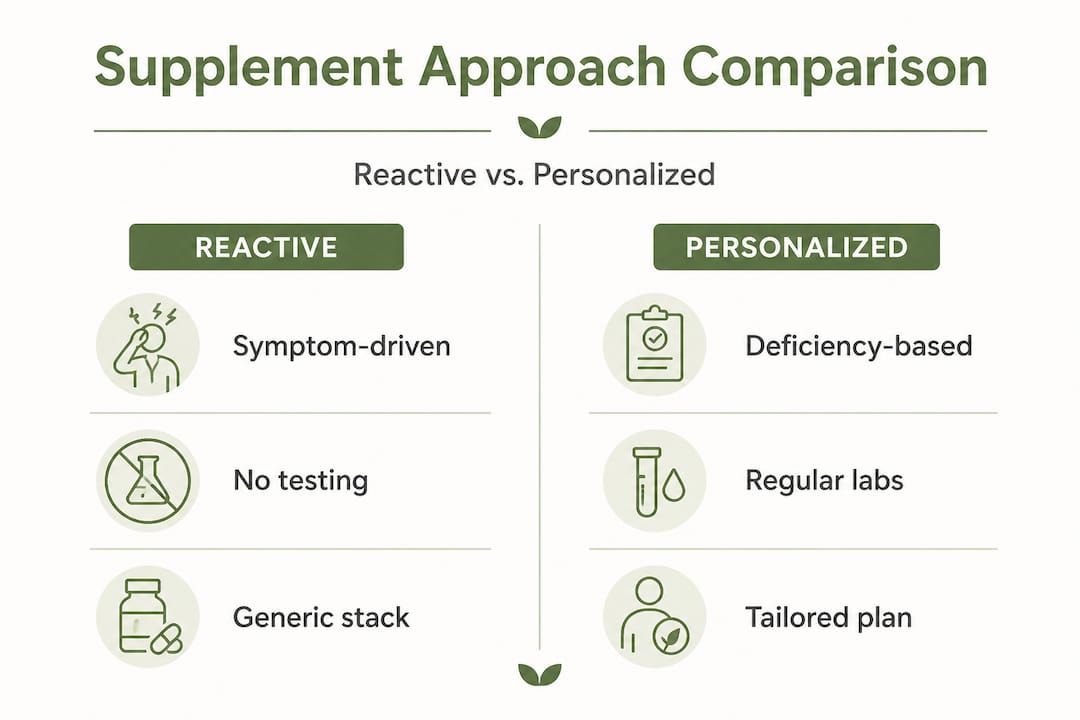
| Approach | What it looks like | Outcomes |
|---|---|---|
| Reactive (taking popular supplements) | Buying trending products without testing | Wasted money, potential harm |
| Personalized (test-first) | Lab testing then targeted supplementation | Better results, improved safety |
| Lifestyle-integrated | Supplements + diet + exercise + sleep | Best long-term outcomes |
Understanding personalized supplementation means recognizing that different groups have vastly different needs:
-
Statin users: These individuals commonly develop CoQ10 depletion because statins block the same pathway the body uses to produce CoQ10. Supplementing CoQ10 may help restore energy and reduce muscle aches in this group.
-
Perimenopausal and postmenopausal women: Estrogen decline affects calcium metabolism, collagen production, and bone density. Targeted collagen and magnesium support becomes especially relevant here.
-
Men over 50: Testosterone decline affects muscle maintenance and energy. Ashwagandha has shown benefits for both testosterone levels and physical performance in this group.
-
People with limited sun exposure: Vitamin D deficiency is extremely common after 40 and is directly linked to fatigue, bone loss, and immune function. Read more about why to supplement vitamin D to understand why this one is often a priority.
-
Vegetarians and vegans: Benefits are stronger in those deficient, particularly for B12 and iron. Plant-based adults over 40 often have undetected B12 insufficiency that manifests as fatigue and brain fog.
Pro Tip: Ask your doctor to test vitamin D, B12, magnesium RBC, and ferritin levels at your next checkup. These four markers are the most commonly low in adults over 40 and each has a direct impact on how energized, sharp, and pain-free you feel.
The point is this: your neighbor’s supplement stack isn’t your supplement stack. Their results won’t be your results unless you share the same biology, diet, and lifestyle gaps.
When supplements help (and when they don’t)
Understanding when supplements matter ensures safer, more effective choices and prevents common mistakes.
There is strong evidence for supplements when a genuine need exists. Protein and energy supplementation in undernourished elderly adults produced a small but meaningful weight gain of around 2.2%, reduced mortality risk (RR 0.79), and fewer medical complications (RR 0.86). In other words, when your body is genuinely running low, targeted supplementation delivers real, measurable protection.
The picture is very different for healthy adults without deficiencies. Here’s where the science gets uncomfortable for supplement enthusiasts:
-
Antioxidants in healthy people: Beta-carotene, vitamin E, and vitamin A may increase mortality in healthy adults (RR 1.03 to 1.04 in low-bias trials). This is not a fringe finding; it’s from rigorous Cochrane Review data.
-
No deficiency, no clear benefit: Taking high-dose vitamins “just in case” doesn’t add health benefits if your levels are already adequate. The body simply excretes water-soluble excess and stores fat-soluble vitamins to potentially toxic levels.
-
Supplements aren’t food substitutes: Nutrients work best in the complex matrix they come in naturally. Isolated compounds don’t always replicate the synergistic benefits of eating a varied, nutrient-dense diet.
“The goal is to fill genuine gaps, not to flood your body with nutrients it doesn’t need. More is not always better, and in some cases, more is actually worse.”
Check out our guide on holistic immune system support to understand how foundational habits like sleep, stress management, and whole foods do the heavy lifting that supplements cannot replace.
When DO supplements make the most sense for adults over 40?
-
When lab testing confirms a specific deficiency
-
When managing a condition that increases nutrient needs (e.g., statin use, Crohn’s disease)
-
When dietary intake falls short due to food restrictions or appetite changes
-
When recovering from illness or surgery and nutrient needs are temporarily elevated
-
When specific therapeutic goals like joint pain relief or sleep improvement are supported by clinical data
The most effective approach combines targeted supplementation with the lifestyle foundations. Without sleep, movement, and nutrition working in your favor, even the best supplements will underdeliver.
A fresh take: Why most people misuse holistic supplements (and what really works)
Here’s something we rarely say loudly enough: the supplement industry profits when people are confused. And confusion leads to a predictable pattern. People over 40 feel low energy or joint pain, walk into a health food store or scroll an online shop, and leave with six new products they read about on social media. Some of those products may help. Some may not. And a few, taken in excess without testing, can genuinely cause harm.
The hard truth is that most people skip the foundational steps and jump straight to supplementation. They aren’t sleeping well, they’re skipping meals or eating processed foods, they haven’t exercised consistently in months, and they’ve never had their nutrient levels tested. Layering supplements on top of that foundation is like painting over a cracked wall. It looks better for a moment, but the structure underneath still needs fixing.
What actually works is less glamorous but far more effective. Start with how nutrition shapes your mental health and overall vitality, because food is the most powerful supplement most people ignore. Then stabilize your sleep, move your body consistently, and manage your stress levels. After those foundations are solid, targeted supplementation based on actual lab results produces results you can see and feel.
We’ve seen this pattern repeatedly: the people who see the most dramatic improvement from supplements are those who already have their lifestyle dialed in and are filling specific, confirmed gaps. CoQ10 for the statin user with fatigue. Ashwagandha for the high-stress professional whose cortisol is running hot. Vitamin D for the office worker with confirmed deficiency.
Ask yourself the tough questions. Why am I taking this supplement? Do I have a confirmed deficiency? Has anything I’m doing changed since I started taking it? Is my fatigue or pain actually improving? These questions separate purposeful supplementation from expensive guesswork.
Ready for a personalized approach? Holistic support that fits you
If you’re ready to put this knowledge into action, here’s how expert support can help you personalize and optimize your holistic supplement journey.
Understanding which supplements you actually need starts with knowing what’s happening inside your body right now. You don’t have to guess.
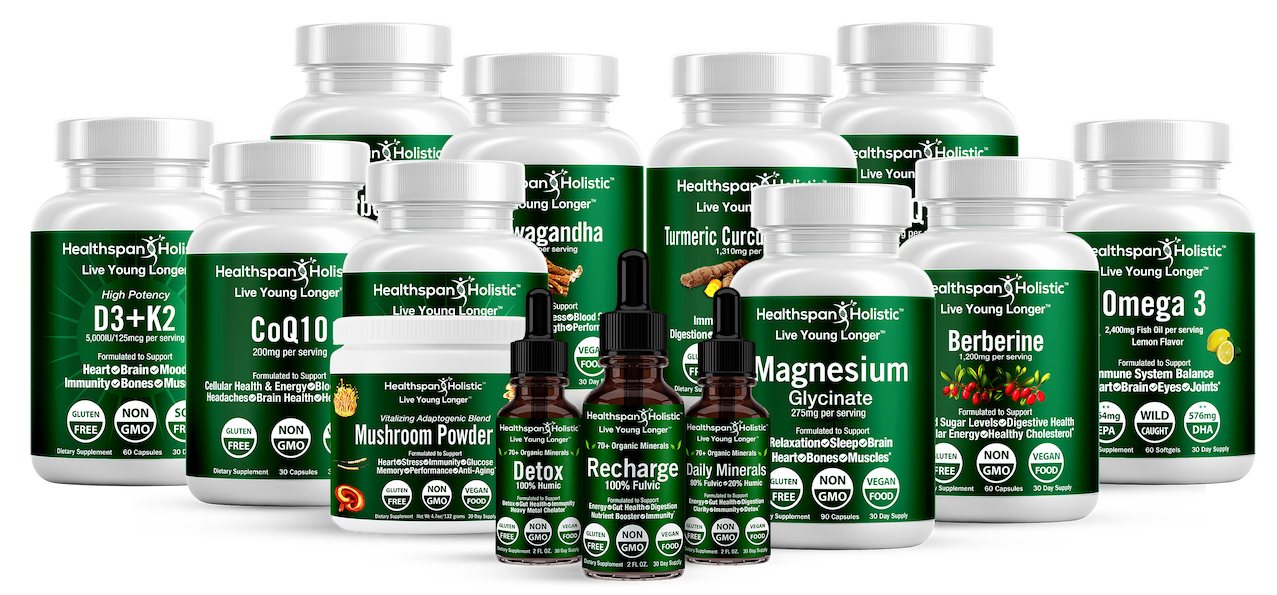
At Healthspan Holistic, we make it straightforward to get from confusion to clarity. Start with a cellular micronutrient test to identify your actual deficiency profile, or check your magnesium status with a precise magnesium deficiency test. Magnesium is one of the most underdiagnosed deficiencies in adults over 40, impacting energy, sleep, and muscle function. From there, contact us to book a health coaching call to build a personalized supplement and lifestyle plan backed by your real data. Your healthspan deserves a strategy, not a guess.
Frequently asked questions
Is it safe to take holistic supplements daily after age 40?
Most holistic supplements are safe when matched to your confirmed needs and taken at appropriate doses, but some, including high-dose antioxidants like vitamin E, A, and beta-carotene, carry increased risk when taken routinely without a deficiency.
How do I know which holistic supplements are right for me?
Testing for deficiencies in vitamins like D, B12, and minerals like magnesium gives you a clear picture of your actual gaps, making supplement choices both safer and more effective.
Do supplements really help fatigue and joint pain?
Yes, when matched to your needs. CoQ10 reduces fatigue, curcumin reduces joint pain at levels comparable to ibuprofen, and ashwagandha shows consistent improvements in sleep and knee pain in clinical trials.
Can supplements replace a healthy diet for adults over 40?
No. Supplements complement but do not replace a foundation built on nutrient-dense food, consistent movement, and quality sleep.
Which supplements should I avoid taking without guidance?
Avoid routinely taking high-dose beta-carotene, vitamin E, or vitamin A unless a deficiency is confirmed, as evidence suggests these may increase mortality risk in healthy adults without a documented need.
Leave a comment: