

TL;DR:
- Retatrutide is a promising triple-acting peptide in late-stage trials that can significantly reduce weight and knee pain. However, long-term safety data is lacking, and risks include gastrointestinal issues and nerve sensations, especially at higher doses. Holistic strategies emphasizing lifestyle, nutrition, and supervised medical guidance remain essential for durable health improvements.
Imagine losing nearly 30% of your body weight without surgery, while also cutting your knee pain by three quarters. That’s not a late-night infomercial claim. It’s what Phase 3 clinical data on retatrutide (commonly called “reta peptide”) is actually showing, with over 58% of participants losing 25% or more of their body weight. For anyone over 40 who has struggled with stubborn weight, joint pain, or metabolic decline, those numbers feel almost too good to be true. And in some important ways, they still are. Let’s cut through the noise and look at what reta peptide really offers, what it risks, and how holistic strategies can help you build similar results on your own terms.
Key Takeaways
| Point | Details |
|---|---|
| Weight loss benefits | Reta peptide offers unparalleled weight reduction—often surpassing existing drugs and approaching surgical outcomes. |
| Risks of self-sourcing | Illicit or non-approved peptides carry risks including severe side effects and impurity dangers. |
| Holistic potential | Improved pain, blood markers, and possible anti-inflammatory effects enhance the holistic appeal, but longevity remains unproven long term. |
| Supervised use only | Consult professionals and avoid non-medical sources—FDA approval is pending and safety protocols are crucial. |
| Next steps for vitality | Personalized health coaching and metabolic testing provide safe, actionable routes to longevity and energy. |
What is reta peptide and why is it different?
Reta peptide is the shorthand name for retatrutide, a next-generation injectable drug currently in late-stage clinical trials. What sets it apart from earlier weight-loss medications is its triple-action mechanism. While drugs like semaglutide (Ozempic, Wegovy) work on a single hormone receptor called GLP-1, and tirzepatide (Mounjaro) targets two receptors (GLP-1 and GIP), retatrutide hits all three: GLP-1, GIP, and glucagon.
This triple activation matters because each receptor does something different. GLP-1 slows digestion and reduces appetite. GIP improves insulin sensitivity and supports fat metabolism. Glucagon boosts energy expenditure and drives fat burning directly. Together, they create what researchers describe as a powerful metabolic reset, going well beyond appetite suppression alone.
Here’s a quick comparison to put reta peptide in context:
| Drug | Receptors targeted | Average weight loss | Approval status |
|---|---|---|---|
| Semaglutide | GLP-1 | 15 to 20% | FDA approved |
| Tirzepatide | GLP-1 + GIP | ~22% | FDA approved |
| Retatrutide | GLP-1 + GIP + Glucagon | 26 to 29% | Phase 3 / Pending |
The potential benefits for people in the 40 to 75 age range go beyond the scale. Researchers are exploring whether reta peptide’s anti-inflammatory effects could support neuroprotection, meaning it may help protect brain function as you age. That’s a compelling angle for anyone focused on peptide therapy evidence and longevity. However, the critical caveat is that long-term evidence beyond 68 weeks simply does not exist yet. Exciting potential is not the same as proven safety.
Key differentiators at a glance:
-
Triple receptor action produces greater fat loss than any currently approved drug
-
Continued weight loss beyond 48 weeks, where other drugs often plateau
-
Potential anti-inflammatory effects may benefit joint health and metabolic aging
-
Neuroprotective signals are early and promising but not yet confirmed
-
Long-term data (5+ years) is still missing, which matters enormously for longevity planning
If you’re already exploring supplements for longevity and proactive health strategies, reta peptide is worth understanding, even if it isn’t ready for widespread use yet.
Now that the landscape of reta peptide is clear, let’s examine what the science really shows about its benefits and risks.
Evidence-based results: What can reta peptide actually do?
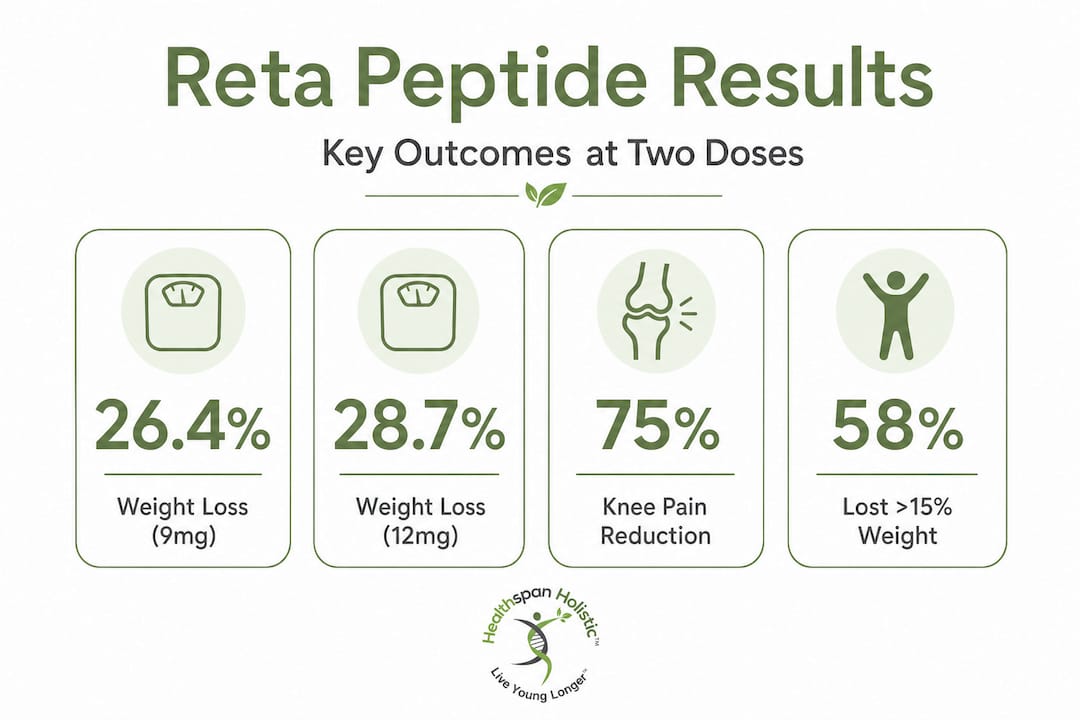
The Phase 3 TRIUMPH-4 trial ran for 68 weeks and enrolled adults with obesity and knee osteoarthritis (OA). The results were striking. Participants on the 12mg dose lost an average of 28.7% of body weight, roughly 71 pounds. The 9mg group lost 26.4%. For context, bariatric surgery typically produces 25 to 35% weight loss. Reta peptide is approaching that range without a single incision.
“Over 58% of participants lost 25% or more of their body weight, approaching surgical outcomes without invasiveness.” — TRIUMPH-4 Trial Data
The pain relief findings were equally impressive. Participants reported a 75% reduction in knee pain as measured by the WOMAC scale (a validated tool for osteoarthritis symptoms). Blood pressure dropped by an average of 14 mmHg, and lipid profiles improved significantly. For someone over 50 managing both weight and joint pain, these numbers represent a genuinely meaningful shift in quality of life.
| Outcome measure | 9mg dose result | 12mg dose result |
|---|---|---|
| Average weight loss | 26.4% | 28.7% (~71 lbs) |
| Knee pain reduction (WOMAC) | Significant | ~75% reduction |
| Blood pressure change | Improved | ~14 mmHg decrease |
| Lipid profile | Improved | Improved |

These cardiovascular and metabolic improvements are where reta peptide intersects with holistic health goals. Reducing visceral fat (the deep belly fat that drives inflammation) lowers the risk of heart disease, type 2 diabetes, and joint degeneration. This is why many people exploring GLP-1s for weight loss are now watching reta peptide closely.
It’s also worth noting that people with type 2 diabetes may tolerate the drug particularly well, since the metabolic improvements align with their existing needs. For those dealing with chronic inflammation, there’s also growing interest in pairing metabolic interventions with targeted anti-inflammatory support, such as KPV peptide, which works through a different pathway to calm systemic inflammation.
Impressive numbers entice many, but what are the trade-offs and hidden risks involved?
Risks, side effects, and hidden dangers
No drug with this level of metabolic impact comes without a cost. The most common side effects are gastrointestinal. In clinical trials, nausea affected 43% of participants, with diarrhea and vomiting also reported at meaningful rates. These effects are dose-dependent and tend to peak during the dose escalation phase, when your body is adjusting to the drug.
A newer and more concerning signal emerged at the 12mg dose: dysesthesia, which means abnormal sensations like tingling, numbness, or burning. This occurred in 20.9% of participants at the highest dose. That’s a significant proportion, and it raises questions about nerve-related effects that need much more investigation before anyone should consider this drug casually.
“Dysesthesia at 20.9% in the 12mg group is a new safety signal that wasn’t seen with earlier GLP-1 drugs. It warrants serious attention.” — Retatrutide safety review
Additional risks include:
-
Heart rate increases from the glucagon component, which may be a concern for people with existing cardiac conditions
-
Higher discontinuation rates at the 12mg dose, suggesting tolerability is a real barrier
-
Mood effects have been anecdotally reported but are not yet well characterized in trials
-
Unknown long-term effects on bone density, muscle mass, and hormonal balance
The dangers multiply dramatically when people try to source reta peptide outside of a clinical or medical setting. Reta peptide is not yet FDA approved, with a decision expected in late 2026 at the earliest. Research-grade peptides sold online are unregulated, may contain impurities, and have been linked to serious harm, including at least one reported death from severe diarrhea and dehydration.
Pro Tip: If you’re curious about the FDA peptide announcement and what it means for your health options, read up on the regulatory landscape before making any decisions. Understanding the rules protects you.
The good news is that many of reta peptide’s metabolic benefits can be meaningfully replicated through personalized supplementation and targeted lifestyle strategies. More on that below.
Despite the risks, many hope for breakthrough benefits. Here’s how reta peptide fits (and doesn’t fit) into holistic health strategies.
Holistic application: Should you consider reta peptide?
For most people over 40 who are serious about longevity and vitality, the honest answer right now is: not yet, and not without medical supervision. But that doesn’t mean you can’t act on the same biological goals reta peptide targets.
Here’s a practical framework for thinking about reta peptide in a holistic context:
-
Assess your metabolic baseline first. Before chasing any drug or peptide, get a full picture of your current metabolic health. Blood sugar, insulin, lipids, inflammation markers, and body composition all matter. This is exactly what comprehensive lab testing is designed to reveal.
-
Prioritize the lifestyle levers that mimic reta peptide’s effects. Resistance training boosts GLP-1 naturally. Time-restricted eating (eating within an 8 to 10 hour window) improves insulin sensitivity similarly to GIP activation. Cold exposure and high-intensity interval training (HIIT) increase glucagon and fat oxidation. You can activate all three pathways reta peptide targets through deliberate lifestyle choices.
-
Use targeted nutrition to reduce inflammation. Omega-3 rich foods (fatty fish, walnuts, flaxseed), polyphenol-dense produce (berries, leafy greens, olive oil), and anti-inflammatory spices like turmeric and ginger all work on the same inflammatory pathways that reta peptide may influence.
-
Consider evidence-based supplements. Berberine, for example, activates AMPK (a key metabolic switch) and has been compared to metformin in its insulin-sensitizing effects. Magnesium, vitamin D, and omega-3s support metabolic and joint health with a strong safety record. Explore longevity supplements that are grounded in evidence and appropriate for your health profile.
-
Wait for supervised access. If reta peptide receives approval and your physician believes it’s appropriate for your situation, that’s the time to revisit it. The holistic data on OA pain, cardiovascular markers, and metabolic function is genuinely promising. But the long-term safety picture (5+ years) simply isn’t there yet.
Pro Tip: Your body’s ability to respond to any intervention, drug or natural, depends on your underlying nutrient status and hormonal environment. Testing before acting is always the smarter move.
To cut through the conflicting noise, here’s a candid, experience-based perspective on reta peptide for aging well.
Reta peptide: What most articles miss and hard-won lessons
Most coverage of reta peptide focuses on one of two extremes. Either it’s the miracle drug that will end obesity, or it’s a dangerous experiment that no one should touch. Both framings miss the real story.
Here’s what we’ve learned from watching the peptide and longevity space evolve: triple-action drugs are not magic, they’re powerful tools that require the right context. When you disrupt three major hormonal pathways simultaneously, your body doesn’t just lose weight. It recalibrates. Appetite signals change. Energy metabolism shifts. Gut motility changes. For some people, that recalibration feels transformative. For others, the systemic disruption is too much, which is why discontinuation rates at higher doses are notable.
The risks of self-sourcing are not theoretical. Illicit versions of reta peptide lack any quality control. There’s no way to verify purity, concentration, or sterility. Experts have documented cases of severe gastrointestinal complications, mood disturbances, and at least one death. Chasing a clinical trial drug through online research peptide suppliers is a gamble that no potential benefit justifies.
The deeper lesson is this: the most powerful longevity interventions are the ones you can sustain for decades, not weeks. Reta peptide, even if approved, will likely require indefinite use to maintain its effects, similar to other GLP-1 drugs. That’s a very different proposition than building a lifestyle that naturally supports metabolic health, reduces inflammation, and protects your joints year after year.
We believe that peptide therapy safety and supervised, personalized approaches will always outperform off-label chasing. The FDA announcement landscape is evolving quickly, and there will likely be a time when reta peptide is a legitimate, supervised option for the right candidate. That time is not now, and the path there should run through your doctor, not an online checkout cart.
Real gains come from integration: combining smart nutrition, targeted movement, evidence-based supplementation, and professional guidance. That’s not a consolation prize. That’s the actual strategy.
Next steps for holistic vitality and longevity
If reta peptide’s results have you motivated to take your metabolic health seriously, that energy is worth channeling into something you can act on today. You don’t need to wait for a drug approval to start building the same biological conditions that make those clinical outcomes possible.
At Healthspan Holistic, we help you start with clarity. A metabolic panel gives you the real picture of your insulin sensitivity, inflammation levels, lipids, and more, so you know exactly where to focus. The Healthspan Plan combines advanced diagnostics, AI-powered health tracking, and one-on-one coaching to build a personalized longevity strategy that works for your body. And right now, first-time customers can take advantage of our BOGO 50% Off offer on our professional-grade supplement line, buy one, get a second at half price. Ready to start? Contact Us and let’s build your plan together.
Frequently asked questions
Is reta peptide FDA approved in 2026?
No, reta peptide is not yet FDA approved. Phase 3 trials are still ongoing, and a regulatory decision is expected in late 2026 or beyond.
What are the main side effects of reta peptide?
The most common side effects are gastrointestinal, including nausea (43%), diarrhea, and vomiting. A newer concern is dysesthesia (tingling or numbness), which affected 20.9% of participants at the 12mg dose.
How does reta peptide compare to other weight loss drugs?
Reta peptide produces greater average weight loss than either semaglutide or tirzepatide, with over 58% of participants losing 25% or more of their body weight, approaching surgical outcomes.
Is self-sourcing reta peptide safe?
No. Unauthorized versions lack purity controls and regulation, and experts have documented serious harm including death cases linked to illicit peptides. Supervised medical use once approved is the only responsible path.
What are the holistic health benefits of reta peptide?
Reta peptide shows promise for reducing fat, joint pain, blood pressure, and inflammation markers. However, long-term data over 5+ years is still needed before longevity claims can be substantiated.
Leave a comment: