

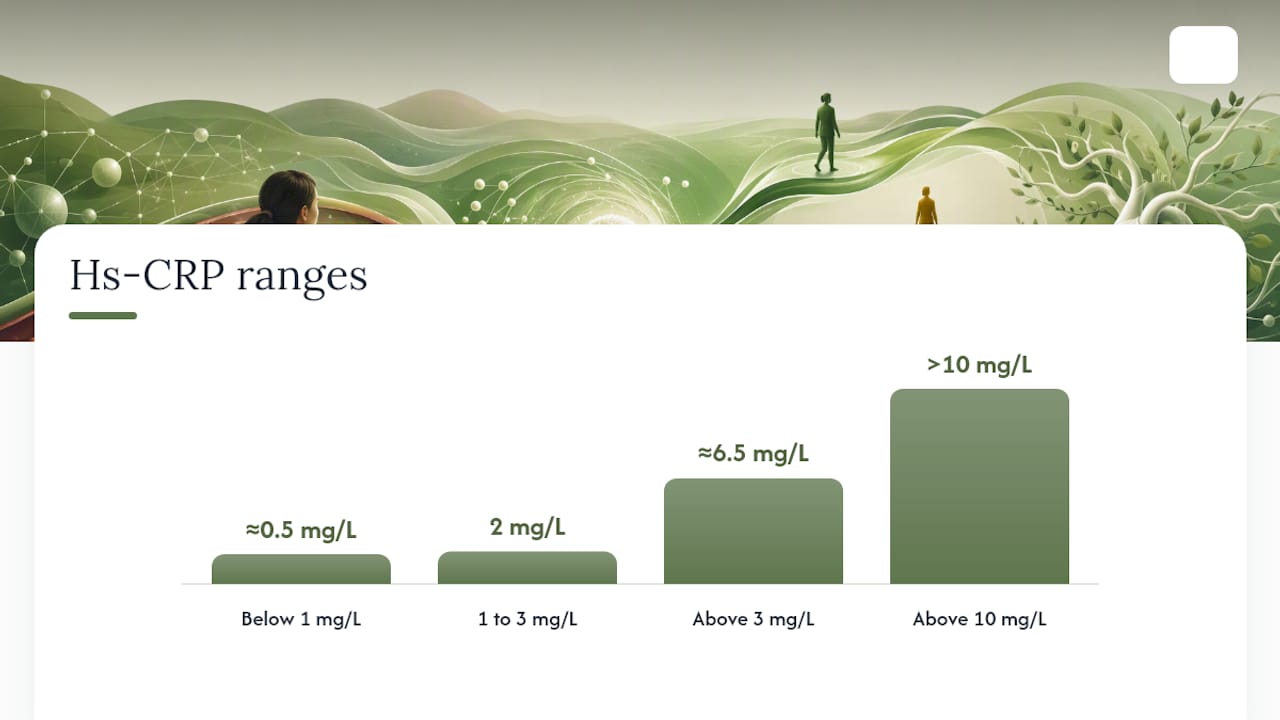
The hs-CRP test measures low-grade inflammation circulating in your blood, and clinicians use it to fine-tune cardiovascular risk. A result under 1 mg/L is generally considered low risk, from 1 to 3 mg/L is average, and above 3 mg/L is seen as high risk; levels typically above 10 mg/L usually indicate acute inflammation rather than chronic cardiac risk. Because a single reading can be noisy, most providers recommend testing twice before drawing conclusions.
TL;DR:
A single hs-CRP reading can fluctuate due to minor infections or injuries, so a repeat test two weeks apart provides a more accurate baseline.
Levels below 1 mg/L indicate low cardiovascular risk, while above 3 mg/L suggest elevated risk, but levels above 10 mg/L usually point to acute inflammation from non-cardiac sources.
The test cannot distinguish between inflammation in arteries and other parts of the body, so external factors like infections or dental issues can falsely elevate results.
Hs-CRP is most valuable for clarifying risk in patients with borderline cholesterol or other risk factors, rather than screening otherwise healthy individuals.
Combining hs-CRP with other assessments, such as lipid panels or calcium scans, supports targeted lifestyle changes and therapies like weight loss, quitting smoking, or statins if appropriate.
What Does the Hs-CRP Test Actually Measure?
C-reactive protein is a protein your liver produces in response to inflammation anywhere in the body. Standard CRP tests were built to catch high levels tied to infections, injuries, or flare-ups of autoimmune disease. The high-sensitivity version measures the same protein, but with far greater precision at the low end of the scale, using lab methods like immunoturbidimetry or immunochemiluminometric assays that can detect concentrations standard CRP tests would miss entirely.
That distinction is not a marketing footnote. It is the entire reason hs-CRP is used for cardiac risk assessment while standard CRP is reserved for spotting acute inflammation, like a post-surgical infection or a rheumatoid arthritis flare. Hs-CRP does not visualize arterial plaque or measure blockages directly. It is a biomarker, a smoke detector for low-grade inflammation that research links to atherosclerosis. A high number tells you inflammation is present. It does not, by itself, tell you where.
Why Would a Doctor Order an Hs-CRP Test?
Clinicians typically reach for hs-CRP when someone’s traditional risk factors, cholesterol, blood pressure, family history, put them in a gray zone. It is not usually the first test ordered, and it is not meant to replace a lipid panel. Its real value shows up when the numbers alone don’t tell a clear story.
Guideline summaries point to a few common scenarios where hs-CRP earns its place on the order form:
-
Reclassifying “intermediate risk” patients into a clearer high or low risk category
-
Identifying residual inflammatory risk in people already on statin therapy
-
Supporting a shared decision about starting preventive medication when other factors are borderline
-
Middle-aged and older adults without known cardiovascular disease who want a fuller risk picture
Hs-CRP is less useful, and can actively mislead, when someone is acutely ill, recently injured, or already known to be at clearly high cardiovascular risk based on existing markers. In those cases, inflammation adds predictive value beyond lipid levels only when the baseline health picture is otherwise stable.
How Do You Interpret Hs-CRP Test Results?
The reference ranges clinicians use are fairly consistent across labs, though the clinical weight given to each band depends on your overall risk profile.
| Hs-CRP Level | Category | General Interpretation |
|---|---|---|
| Below 1 mg/L | Low risk | Lower likelihood of inflammation-related cardiovascular risk |
| 1 to 3 mg/L | Average risk | Moderate inflammatory signal; interpreted alongside other factors |
| Above 3 mg/L | High risk | Elevated cardiovascular risk associated with inflammation |
| Above 10 mg/L | Acute inflammation | Usually reflects infection, injury, or flare rather than baseline risk |
Pro Tip: A single hs-CRP draw can swing based on a minor cold you didn’t even notice. Ask your provider about repeating the test, since the lowest of two readings taken weeks apart gives a far more trustworthy baseline than one number in isolation.
These routine interpretation bands shape what happens next. A high reading in someone with borderline cholesterol might prompt a closer look at statin candidacy, even when LDL alone wouldn’t justify it. It might also trigger a lipid recheck, a coronary artery calcium scan, or simply a more direct conversation about smoking, weight, and activity level. A low reading, meanwhile, can be reassuring enough to hold off on medication and revisit the picture in a year.
What Causes a False-Positive Hs-CRP Result?
Here’s the catch with hs-CRP: it doesn’t know the difference between inflammation in your arteries and inflammation from a sore tooth. That’s what “non-specific” means in practice, and it’s the single biggest limitation of this test.
Common noncardiac causes of an elevated reading include:
-
Acute infections, from a sinus infection to a urinary tract infection
-
Recent surgery or physical injury
-
Chronic inflammatory conditions like rheumatoid arthritis or lupus
-
Periodontal disease and other dental infections
-
Obesity and metabolic syndrome
-
Smoking
Because CRP is a nonspecific acute-phase reactant, any of these can push your number into “high risk” territory without your heart being the actual problem. Someone fighting a head cold or recovering from a root canal could show a temporarily inflated result that has nothing to do with cardiovascular risk.
Pro Tip: If you’re sick, recently injured, or have an active dental infection, ask to postpone hs-CRP testing. Waiting a few weeks for things to settle down gives you a number that actually reflects your baseline, not your immune system’s reaction to last week’s flu.
What Should You Expect During the Test?
Getting tested is straightforward, and there’s little to prepare for unless it’s bundled with other labs.
-
A phlebotomist draws blood from a vein in your arm, the same venipuncture process used for most standard blood work.
-
No fasting is required for hs-CRP alone. If your provider is running it alongside a lipid panel, you may need to fast for 9 to 12 hours beforehand.
-
You can resume normal activity immediately after the draw. There’s no downtime.
-
Providers commonly schedule a second draw at least two weeks later to confirm the result and calculate a more reliable baseline average.
Cost varies depending on your provider, whether it’s bundled into a broader panel, and your insurance coverage, so it’s worth asking upfront how it will be billed.
How Do You Turn an Hs-CRP Number Into a Real Plan?
A number on a lab report only matters if someone helps you act on it. At Healthspan Holistic, hs-CRP results are read alongside a fuller diagnostic picture, not in isolation. That typically means pairing hs-CRP with a full lipid panel, a coronary calcium score when appropriate, and wearable or genetic data that adds context most single blood draws can’t provide.
The interventions that move hs-CRP in the right direction are well established: weight loss, quitting smoking, regular exercise, treating underlying infections, and, for select patients, statin therapy when guideline criteria support it. Some GLP-1 therapies have also shown measurable effects on inflammation markers in people managing metabolic conditions. Coaching sessions translate the number into a specific, personalized sequence of next steps rather than a vague instruction to “reduce inflammation.”
Why Most People Misread Their Hs-CRP Number
The biggest mistake I see in how hs-CRP gets talked about online is treating it like a verdict instead of a clue. A 3.5 mg/L result doesn’t mean your arteries are in trouble. It means inflammation is present, and inflammation has dozens of possible sources, only some of which involve your heart.
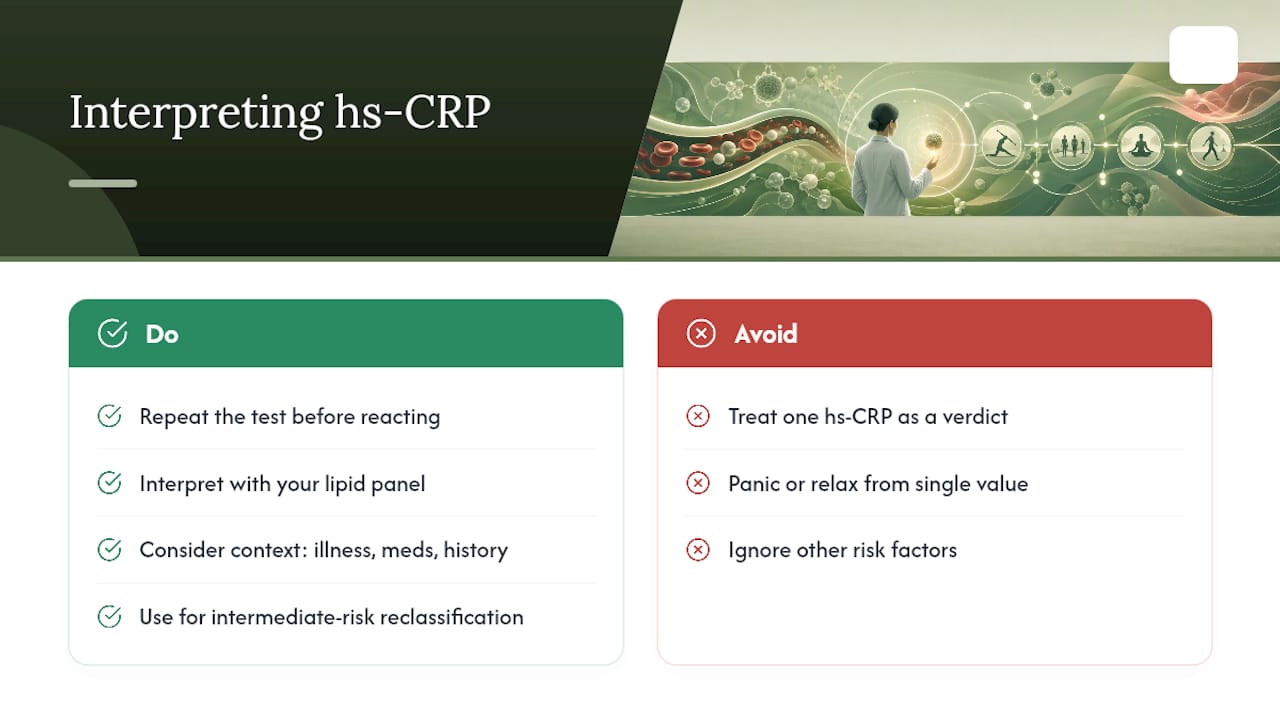
The conventional advice, “get tested, see the number, panic or relax accordingly,” skips the part that actually matters: context. A high hs-CRP in a 55 year old with borderline LDL and a family history of early heart disease means something entirely different than the same number in someone who just finished a round of antibiotics for bronchitis. Guidelines lean on hs-CRP mainly to reclassify intermediate-risk patients, not to hand down standalone verdicts.
What should you prioritize first? Get a repeat test before reacting to any single number. Then look at hs-CRP next to your lipid panel, not instead of it. The people who benefit most from this test are the ones already asking sharper questions, “am I actually at risk, or just inflamed this week,” rather than treating one lab value as destiny.
— Chris
Testing Options That Build on Your Hs-CRP Result
An hs-CRP number is a starting point, not a finish line, and pairing it with the right follow-up testing is where the real value shows up. Healthspan Holistic’s Inflammation Panel expands beyond a single hs-CRP draw to map out multiple inflammatory markers at once, giving you and your coach a fuller picture instead of one noisy data point.

For readers who want a broader diagnostic baseline, the Peptide Baseline Lab Panel pairs with one-on-one coaching to turn your results, inflammation markers included, into a specific plan around nutrition, activity, and supplementation.
1st Time Customers can take advantage of our BUY 1 GET 1 50% OFF special offer on all supplements.
If you’re ready to see where your inflammation levels actually stand, order the Inflammation Panel and book a follow-up coaching session to walk through what your numbers mean for your specific risk profile.
Sources
This article is general information, not a substitute for advice from a qualified doctor. Consult a qualified healthcare professional about your own circumstances before acting on anything here.
FAQ
What does it mean if your hs-CRP is high?
A result above approximately 3 mg/L suggests elevated cardiovascular risk associated with inflammation, while levels significantly above 10 mg/L usually point to acute inflammation from infection or injury rather than chronic heart risk.
How is high hs-CRP treated?
Treatment focuses on the underlying driver: weight loss, smoking cessation, and regular exercise for lifestyle-related inflammation, or statin therapy in select patients where guidelines support it. Testing results can be paired with coaching to build a specific plan around your results.
What infections can cause a high CRP reading?
Common culprits include sinus infections, urinary tract infections, dental abscesses, and any acute bacterial or viral illness, since CRP rises as part of the body’s general inflammatory response rather than reacting specifically to heart-related inflammation.
What is considered an alarming level of CRP?
Levels above 10 mg/L are generally considered a sign of acute inflammation, such as an active infection or recent injury, and typically warrant retesting once the acute issue resolves rather than immediate cardiovascular concern.
Should I get an hs-CRP test if I’m not at risk for heart disease?
Hs-CRP is most useful for people in an intermediate risk category, where traditional factors alone don’t give a clear answer. If your risk is already clearly low or clearly high, other testing usually matters more.
Leave a comment: