

TL;DR:
- Properly fermented sourdough bread offers metabolic and digestive benefits distinct from conventional bread due to its extended fermentation process. It reduces phytic acids, improves mineral absorption, and has a lower glycemic index, which may support blood sugar stability for those over 45. However, the health advantages depend on ingredients, fermentation time, and portion control, emphasizing that sourdough is most effective as part of a balanced diet rather than a standalone health fix.
Most people over 45 have been told to avoid bread if they want to protect their blood sugar, gut, and waistline. That advice feels sensible on the surface, but it paints every loaf with the same brush. Traditional sourdough stands apart from the packaged sliced bread on grocery store shelves. Its unique fermentation process genuinely changes the chemistry of the bread, and the science suggests it may support better blood sugar balance and improved digestive comfort compared to conventional options. Here is what the evidence actually shows, where the caveats are, and how to make sourdough work for your health goals.
Key Takeaways
| Point | Details |
|---|---|
| Sourdough’s fermentation advantage | Sourdough fermentation slows carbohydrate digestion and may reduce blood sugar spikes compared to conventional breads. |
| Gut health benefits are inconsistent | Some people find sourdough easier to digest, but reactions vary and not all sourdough is low-FODMAP. |
| Gluten remains in most sourdough | Unless made with certified gluten-free grains, sourdough bread contains gluten and is not safe for celiac disease. |
| Choose whole grain and authentic loaves | Selecting whole grain breads with long fermentation maximizes potential health benefits. |
| Balanced diet is key | Even healthy bread should be eaten in moderation as part of a diverse, nutrient-rich diet. |
What makes sourdough different from other breads?
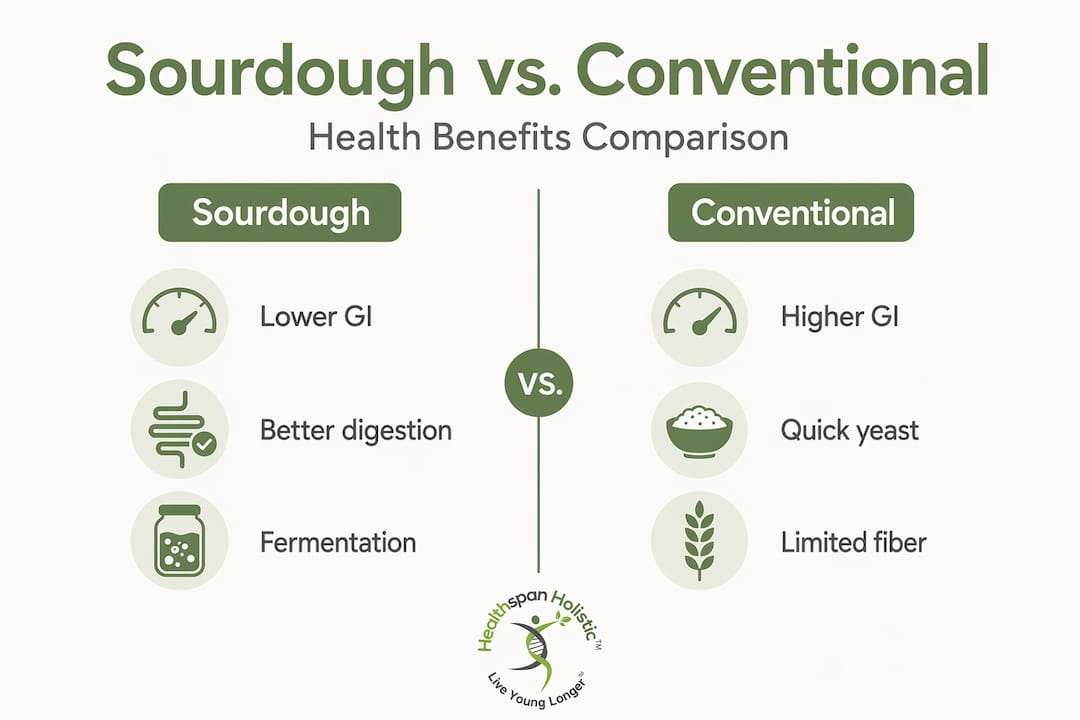
The difference starts before the bread even goes into the oven. Conventional bread is made with commercial baker’s yeast, which acts quickly and skips the slow chemical changes that give sourdough its character. Sourdough is made with a living starter, a culture of wild yeast and beneficial bacteria that ferments the dough over many hours.
That fermentation process does something remarkable. It partially breaks down starches and reduces compounds called phytic acids, which are natural plant substances that can block absorption of minerals like zinc and magnesium. As we understand at Healthspan Holistic, nutrition transforms aging in meaningful ways, and the bioavailability of minerals becomes increasingly important as we get older. Better mineral absorption from a properly fermented loaf is not a small detail. It adds up over time.
Fermentation slows carbohydrate digestion and can lead to a lower glycemic response, meaning your blood sugar rises more slowly and gently after eating sourdough compared to standard white or even whole-wheat bread. This is one of the most clinically meaningful differences between sourdough and other bread choices.
How sourdough compares to conventional breads
| Feature | Sourdough | Commercial white bread | Commercial whole-wheat bread |
|---|---|---|---|
| Leavening agent | Wild yeast and bacteria | Baker’s yeast | Baker’s yeast |
| Fermentation time | 8 to 48 hours | 1 to 2 hours | 1 to 2 hours |
| Phytic acid level | Significantly reduced | Higher | Higher |
| Glycemic index | ~54 to 55 | ~83 | ~71 |
| Mineral bioavailability | Improved | Lower | Moderate |
Key takeaways from that comparison:
-
Long fermentation is the key variable. A bread labeled “sourdough” but fermented for only an hour offers few of these benefits.
-
Whole grain sourdough amplifies the advantages because it starts with more fiber, vitamins, and minerals.
-
Commercial white bread triggers a faster, sharper blood sugar spike than even conventional whole-wheat bread.
The fermentation process essentially gives your body a head start on digestion, which is especially relevant as digestive enzyme production naturally declines after age 45.
Glycemic index: How sourdough impacts blood sugar

For health-conscious individuals managing energy levels, weight, or metabolic health, blood sugar stability is a top priority. The glycemic index (GI) is a scale from 0 to 100 that ranks how quickly a food raises blood glucose. Lower scores mean a slower, gentler rise, and that is where sourdough earns its reputation.
The numbers are striking. Sourdough bread GI sits around 54 to 55, compared to approximately 71 for whole-wheat bread and roughly 83 for bread made from 100% white flour. That places authentic sourdough firmly in the low-to-medium GI category, while most other bread options fall into the medium-to-high range.
Blood sugar response comparison
| Bread type | Estimated glycemic index | Blood sugar impact |
|---|---|---|
| Sourdough (whole grain) | 54 to 55 | Slow, gradual rise |
| Whole-wheat bread | ~71 | Moderate rise |
| White bread | ~83 | Fast, sharp spike |
| Rye sourdough | ~48 to 53 | Very slow rise |
Why does this matter for you? Repeated sharp blood sugar spikes contribute to insulin resistance over time, accelerate cellular aging, and drive the kind of chronic low-grade inflammation that undermines energy and vitality. For anyone over 45 working to protect metabolic health and support evidence-based longevity, keeping blood sugar stable throughout the day is a genuine priority.
That said, sourdough is not a “free pass” with unlimited portions. Portion size and overall meal composition still matter most for people managing blood sugar, including those with diabetes or prediabetes. Eating four thick slices of sourdough can still overwhelm any glycemic benefit the fermentation process provides.
Statistic spotlight: Moving from white bread (GI 83) to authentic sourdough (GI 54) represents roughly a 35% reduction in glycemic impact per serving. For daily bread eaters, that is a meaningful shift over weeks and months.
Pro Tip: Pair your sourdough with a source of protein like eggs, nut butter, or sardines, and add fiber-rich toppings like avocado or leafy greens. Both protein and fiber further slow carbohydrate absorption and reduce the blood sugar response, multiplying the natural benefit of the fermentation process.
Gut health and digestion: Fermentation’s role
Digestion and gut comfort become more complicated for many people as they age. Bloating, irregularity, and food sensitivities that were not issues at 30 can become real concerns at 55 or 65. So does sourdough actually help?
The honest answer is: it can, but the evidence is mixed. Fermentation may improve gut comfort for some people compared to bread made with baker’s yeast, but benefits depend on the specific formulation of the bread and the individual eating it. This is not a case where one answer fits everyone.
Here is what fermentation does that may help digestion:
-
Reduces phytic acid, which in addition to blocking mineral absorption can irritate the gut lining in sensitive individuals.
-
Partially breaks down gluten proteins, which may make the bread more tolerable for those with mild gluten sensitivity (though not celiac disease).
-
Alters fermentable carbohydrates (FODMAPs), which are short-chain sugars that trigger digestive distress in people with irritable bowel syndrome (IBS).
-
Produces organic acids like lactic acid that may support a healthy gut environment by slightly lowering pH in the digestive tract.
On the FODMAP question, the picture requires nuance. Fermentation can reduce some FODMAPs in some sourdough products, but the results are not uniform across all loaves. Fermentation time, grain type, and bacterial strains in the starter all affect how much FODMAP reduction actually occurs. A sourdough loaf fermented for 36 hours behaves very differently in your gut than one fermented for two hours, even if both are labeled “sourdough.”
Pro Tip: If you have IBS or known FODMAP sensitivity, do not assume any sourdough will work for you. Start with a small portion from an artisan baker using documented long-fermentation methods. Track your gut response for two to three days before making it a regular choice.
“The gut microbiome thrives on diversity and consistency. Choosing foods that support that environment, like genuinely fermented breads, seeds, vegetables, and legumes, creates a more resilient digestive system over time.”
Understanding fiber’s role in digestive health is equally important here. Whole grain sourdough combines fermentation benefits with prebiotic fiber that feeds beneficial gut bacteria. It is worth noting that sourdough does not function as a probiotic food because the live bacteria are killed during baking. The gut benefits come from fermentation byproducts and altered nutrient structures, not from consuming live cultures.
Gluten, grains, and buying sourdough: What you need to know
This is where misinformation runs rampant, and it is worth being direct. Sourdough is not gluten-free. Traditional sourdough made with wheat, rye, or barley still contains gluten. Fermentation may reduce certain gluten-related proteins and make the bread more digestible for some people with mild sensitivity, but it absolutely does not make sourdough safe for anyone with celiac disease. If you have celiac disease, you need bread certified as gluten-free made with certified gluten-free grains.
That cleared up, the next critical issue is what “sourdough” actually means in the loaf you buy. Sourdough benefits are greater when made with whole grains and authentic long fermentation. Many commercial loaves in grocery stores cut corners with added vinegar for flavor and short fermentation windows. These loaves taste sour, but they do not deliver the same metabolic or digestive advantages.
What to look for on the label
-
Short ingredients list: Flour, water, salt, and starter. Nothing more is required for authentic sourdough.
-
Whole grain as the first ingredient: Whole wheat, whole rye, or sprouted whole grain for maximum fiber and nutrient density.
-
No added vinegar or “natural flavors”: These are shortcuts that mimic sourdough taste without the fermentation benefits.
-
Artisan or bakery-made options: Local bakeries often use genuine long-fermentation methods that supermarket bread cannot replicate at scale.
-
Dense, slightly chewy texture: Authentic sourdough has a specific structure from long fermentation. Soft, airy “sourdough” loaves are often not the real thing.
Sourdough types and their benefits
| Loaf type | Grain | Fermentation | Recommended for |
|---|---|---|---|
| Whole wheat sourdough | Whole wheat | 24 to 36 hours | Everyday use, blood sugar balance |
| Rye sourdough | Whole rye | 24 to 48 hours | Gut health, lowest GI |
| White sourdough | Refined flour | 8 to 12 hours | Occasional treat |
| Commercial “sourdough” | Varies | Often less than 2 hours | Minimal health benefit |
Making informed choices in this category is part of a holistic health approach that connects diet to measurable outcomes. If you are actively monitoring your metabolic health through regular lab work, tracking how different breads affect your fasting glucose and energy levels can be genuinely revealing. Blood testing for longevity gives you real data to make decisions like this with confidence rather than guesswork.
Why “healthy” sourdough is more about your choices than the loaf
Here is the honest, slightly uncomfortable perspective we want to share after years of working with health-focused individuals over 40: sourdough does have real nutritional advantages over most other breads, and those advantages are meaningful. But we have seen too many people decide that sourdough is a “health food” and proceed to eat generous amounts of it while expecting dramatic improvements in their wellness.
That is not how food works, and it is not how the human body works either. No single food is a fix. Sourdough is genuinely useful as one component of a nutrient-dense, diverse, whole-food diet. It becomes much less useful when it crowds out vegetables, legumes, lean proteins, and the wide variety of plant foods that support mitochondrial energy and longevity.
The most important insight we can offer is this: wellness is a pattern, not a food choice. Authentic whole grain sourdough eaten in reasonable portions as part of a Mediterranean-style or plant-forward diet contributes positively to your health pattern. The same bread eaten in large quantities alongside highly processed foods, minimal movement, and poor sleep adds very little.
We also encourage you to resist the marketing noise around any food labeled “fermented” or “ancient grain.” These words can mean something genuinely beneficial, or they can mean very little depending on how the product was made. Your job as an informed consumer is to look past the label and ask real questions about ingredients, fermentation time, and grain quality. That kind of critical thinking, applied consistently to your food environment, is far more powerful than any single healthy food choice.
Sourdough done right, in a diet done right, is a genuinely worthwhile choice. That is the balanced truth.
Take your wellness further: Holistic support tools
Understanding sourdough’s benefits is a great start, but true metabolic and digestive wellness goes deeper than any single food. At Healthspan Holistic, we help you measure what is actually happening in your body with detailed blood panels, continuous glucose monitoring guidance, and mineral lab testing that tells you how your diet is affecting key health markers. If you want to know exactly how foods like sourdough are affecting your blood sugar patterns and inflammation levels, we have the tools and coaching to show you. Contact Us to explore a personalized, evidence-based plan that connects your food choices, lifestyle habits, and supplement strategy into one coherent path toward better energy, resilience, and longevity.
Frequently asked questions
Is sourdough bread safe for people with diabetes?
Sourdough’s lower glycemic index may help stabilize blood sugar compared to white or whole-wheat bread, but portion sizes matter most alongside overall meal composition for anyone managing diabetes.
Can people with celiac disease eat sourdough bread?
No. Traditional sourdough with wheat or rye or barley contains gluten, and fermentation does not reduce it to safe levels for celiac disease. Only certified gluten-free sourdough using certified gluten-free grains is safe.
Does sourdough bread improve gut health?
Fermentation may reduce gut discomfort for some people compared to conventionally yeasted bread, but evidence is mixed and results vary significantly based on the bread’s recipe and individual gut sensitivity.
Is all sourdough bread equally healthy?
No. Sourdough benefits depend on whole grains, authentic long fermentation, and a clean ingredients list. Many commercial loaves use shortcuts that eliminate most of the health advantage.
Does sourdough bread contain probiotics?
Sourdough does not deliver live probiotic organisms because baking kills the bacteria in the starter. Its gut-related benefits come from fermentation acids, altered starches, and reduced anti-nutrients, not live cultures.
Leave a comment: