

TL;DR:
- The keto Mediterranean diet combines low-carb principles with traditional Mediterranean whole foods to support ketosis and reduce inflammation. It promotes sustainable weight loss, hormone support, and better energy, especially for adults over 40. Prioritizing quality foods like olive oil, fatty fish, and vegetables ensures long-term adherence and health benefits.
The keto Mediterranean diet is defined as a nutritional approach that merges ketogenic low-carb principles with the whole-food quality of traditional Mediterranean eating. It keeps daily net carbohydrates in the 20–40g range while centering meals around extra virgin olive oil, fatty fish, and colorful low-carb vegetables. The result is a way of eating that supports ketosis, reduces inflammation, and delivers the micronutrients your body needs most between ages 30 and 60. If you want sustainable weight loss, steadier energy, and better hormone balance, this approach delivers on all three fronts.
What does the keto Mediterranean diet actually do for your health?
The science behind this eating pattern is more convincing than most diet trends. A real-world clinical study found that both dietary approaches achieved roughly 15% weight loss over 3 months, whether participants followed a very-low-calorie ketogenic diet (VLCKD) or a whole-food Mediterranean ketogenic diet (MedKD). That finding matters because it tells you the MedKD gets the same weight loss result without the extreme caloric restriction of VLCKD.
The metabolic improvements go beyond the scale. Both the ketogenic and Mediterranean diets improve blood glucose control and support healthier blood pressure, with measurable decreases in HbA1c. For adults in their 40s and 50s managing early insulin resistance, that is a meaningful clinical outcome.
Long-term adherence is where the Mediterranean approach separates itself. Nutrition experts consistently favor the Mediterranean diet for superior long-term sustainability compared to traditional ketogenic eating. The reason is simple: the food is satisfying, varied, and socially compatible.
| Metric | VLCKD | MedKD |
|---|---|---|
| Weight loss at 3 months | ~15% | ~15% |
| Caloric restriction | Very low | Moderate |
| Food variety | Limited | High |
| Long-term sustainability | Challenging | Strong |
| Inflammation reduction | Moderate | High |
“Weight loss may naturally result from the Mediterranean diet rather than being its primary purpose. The focus is on satiating whole foods and longevity.” — Mediterranean diet nutrition research
What foods are central to a keto Mediterranean eating plan?
Food quality is the defining feature of this approach. Every meal is built around ingredients that have been part of traditional Mediterranean culture for centuries, not products engineered to fit a macro label.
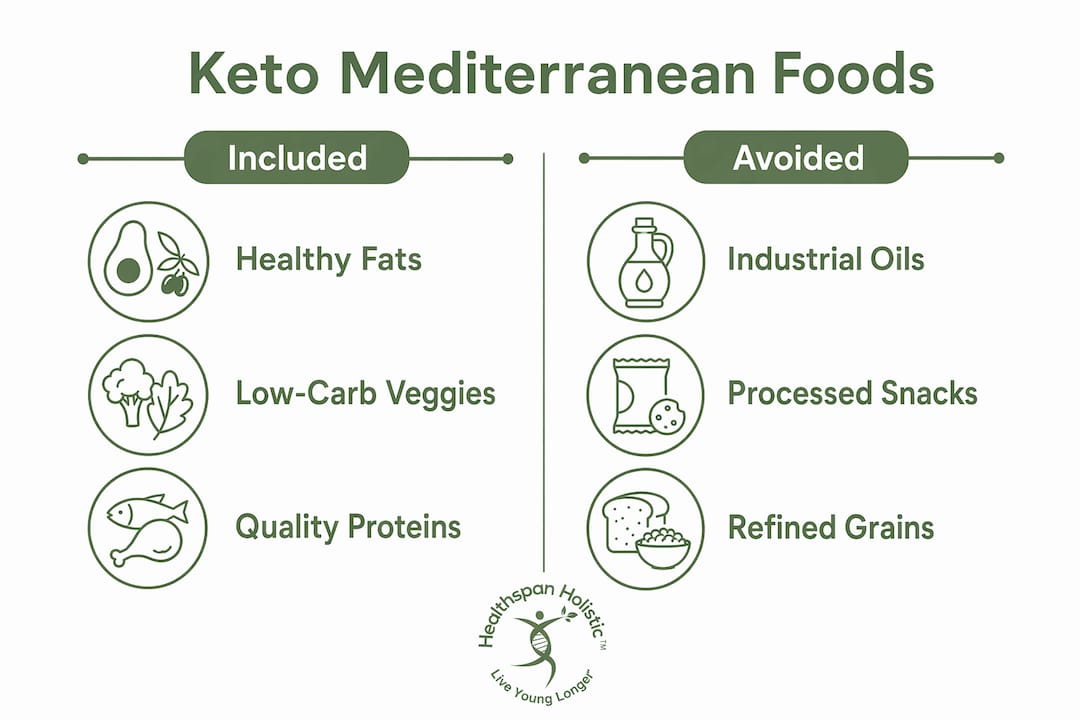
The foundation foods you want on your plate:
-
Extra virgin olive oil: Your primary fat source. Its polyphenols actively support estrogen metabolism and reduce systemic inflammation. Using it generously across cooking and dressings is standard practice in this eating pattern.
-
Fatty fish: Sardines, mackerel, salmon, and anchovies deliver omega-3 fatty acids that support hormone production, reduce joint inflammation, and protect cardiovascular health. Aim for at least three servings per week.
-
Low-carb Mediterranean vegetables: Zucchini, eggplant, artichokes, spinach, arugula, and bell peppers provide fiber, polyphenols, and micronutrients without spiking blood sugar.
-
Olives and feta cheese: Both are nutrient-dense, naturally low in carbohydrates, and central to authentic Mediterranean meals. A traditional Greek salad built from cucumbers, tomatoes, olives, and thick feta provides nutrient density and satiety without lettuce filler.
-
Herbs and spices: Oregano, rosemary, thyme, and garlic add flavor while contributing anti-inflammatory compounds. They replace the need for processed sauces.
What to remove entirely:
Mediterranean keto strictly avoids industrial seed oils such as canola, soybean, and corn oil, along with any ultra-processed products labeled as “keto.” Those products undermine the anti-inflammatory goal of the diet even when they technically fit the macros.
Pro Tip: Build each meal around one protein, one fat source, and two or three vegetables. This simple structure keeps carbs low, micronutrients high, and decision fatigue minimal.
How to start a keto Mediterranean diet step by step
Starting well prevents the most common early mistakes. The transition into ketosis takes 3–7 days, and how you manage that window determines whether you feel energized or exhausted.
-
Set your carb target. Begin with 20–40g of net carbohydrates per day. Net carbs are total carbohydrates minus fiber. Most people find the lower end of that range produces faster ketosis.
-
Stock your kitchen first. Before you change a single meal, fill your refrigerator with extra virgin olive oil, canned sardines or salmon, eggs, leafy greens, zucchini, olives, feta, and full-fat Greek yogurt. Having the right food available removes the biggest barrier to consistency.
-
Build a simple meal template. Breakfast: eggs cooked in olive oil with spinach. Lunch: Greek salad with tuna or grilled chicken. Dinner: baked salmon with roasted zucchini and a drizzle of olive oil. Snacks: olives, a handful of walnuts, or cucumber slices with hummus in small portions.
-
Add probiotics early. Blood sugar instability during the keto transition can trigger anxiety and mood dips. 70% of serotonin is produced in the gut, and probiotic-rich foods like full-fat Greek yogurt help stabilize the gut-brain axis during this adjustment period.
-
Hydrate and replenish electrolytes. Ketosis causes your kidneys to excrete more sodium, potassium, and magnesium. Add sea salt to meals, eat magnesium-rich foods like pumpkin seeds and dark leafy greens, and drink water consistently throughout the day.
-
Plan your low carb Mediterranean meal plan weekly. Batch-cook proteins and roast vegetables on Sundays. Pre-portioning meals removes the temptation to reach for processed convenience foods when you are tired.
Pro Tip: If you feel foggy or irritable in the first week, increase your sodium intake before assuming the diet is not working. Most “keto flu” symptoms are electrolyte-related, not metabolic.
How does this diet support hormones and aging after 40?
The keto Mediterranean diet is particularly well-suited for adults between 40 and 60 because it directly addresses the nutritional gaps that drive hormonal decline. This is not a coincidence. The foods at the center of this eating pattern are rich in the exact micronutrients that hormone production depends on.

Magnesium, zinc, and B vitamins from Mediterranean keto foods support hormone production and metabolism, especially in perimenopausal women. Magnesium alone is involved in over 300 enzymatic reactions, including the conversion of cholesterol into steroid hormones. Most adults over 40 are deficient in it without knowing. A Magnesium RBC test can confirm your actual cellular magnesium status, which is far more accurate than a standard serum test.
The polyphenols in extra virgin olive oil play a specific role in estrogen metabolism. For women navigating perimenopause hormone changes, this is a meaningful dietary lever. Olive oil polyphenols help the liver process and clear excess estrogen more efficiently, which can reduce symptoms like bloating, mood swings, and fatigue.
Omega-3 fatty acids from fatty fish reduce the inflammatory cytokines that worsen joint pain, brain fog, and mood instability in midlife. Ketones themselves serve as a clean fuel for the brain, supporting mental clarity in ways that glucose-dependent diets often cannot match after 40. For a broader view of nutrition for midlife adults, the principles of this eating pattern align closely with what the research recommends for healthy aging.
Key takeaways
The keto Mediterranean diet delivers weight loss, hormone support, and sustained energy by combining ketogenic carb restriction with the whole-food quality of traditional Mediterranean eating.
| Point | Details |
|---|---|
| Equal weight loss results | MedKD achieves ~15% weight loss in 3 months, matching VLCKD without extreme caloric restriction. |
| Food quality is non-negotiable | Extra virgin olive oil, fatty fish, and low-carb vegetables form the foundation; seed oils and processed keto products are excluded. |
| Gut health supports the transition | Probiotic foods like Greek yogurt stabilize mood and serotonin during the early keto adjustment period. |
| Hormone support is built in | Magnesium, zinc, B vitamins, and olive oil polyphenols directly support hormone production and estrogen metabolism in adults 40+. |
| Sustainability beats restriction | Mediterranean eating patterns are favored by nutrition experts for long-term adherence over traditional ketogenic diets. |
Why food quality beats macro counting every time
I have worked with a lot of people in their 40s and 50s who tried strict keto and quit within six weeks. The macros were right. The food was wrong. They were eating processed cheese crisps and keto bars instead of real food, and their energy and mood reflected it.
What I have seen work consistently is shifting the focus from hitting a carb number to building a plate of real, recognizable ingredients. When you eat sardines with olive oil and roasted vegetables, you are not thinking about macros. You are eating the way people in Crete and Sardinia have eaten for generations, and those populations have some of the longest healthspans on record.
The other thing I want to be honest about: this diet is not a fix for poor sleep, chronic stress, or a sedentary lifestyle. Food is one pillar. If you are eating well but sleeping five hours a night and skipping movement, the results will be modest. The diet works best as part of a broader commitment to your health, which includes stress management, regular movement, and knowing your actual biomarker numbers. I always recommend getting baseline lab work before starting any significant dietary change. You cannot manage what you cannot measure.
— Chris
How Healthspan Holistic supports your keto Mediterranean lifestyle
Starting a new eating pattern is one step. Knowing whether it is actually working inside your body is another.

Healthspan Holistic offers the lab testing and personalized coaching that turns dietary effort into measurable results. The 90 Day Journey to Longevity program is built for adults who want structured, sustained health improvements with professional guidance. For cardiovascular monitoring as you shift your fat intake, the Basic Heart Health Test gives you a reliable baseline. The Magnesium RBC test confirms whether your cellular magnesium levels are actually supporting your hormones and energy. Real progress starts with real data.
1st Time Customers can take advantage of our BUY 1 GET 1 50% OFF special offer on all supplements.
FAQ
What is the keto Mediterranean diet?
The keto Mediterranean diet combines ketogenic low-carb principles (20–40g net carbs daily) with the whole-food quality of Mediterranean eating, centering meals on extra virgin olive oil, fatty fish, and low-carb vegetables to support ketosis and reduce inflammation.
How long does it take to see results on a Mediterranean keto plan?
Clinical research shows roughly 15% weight loss is achievable within 3 months. Most people notice improved energy and reduced bloating within the first two weeks as their body adapts to burning fat for fuel.
Can women over 40 benefit specifically from this diet?
Yes. Micronutrients like magnesium, zinc, and B vitamins in Mediterranean keto foods support hormone production during perimenopause, and olive oil polyphenols actively support estrogen metabolism.
What foods should I avoid on a keto Mediterranean diet?
Avoid industrial seed oils (canola, soybean, corn), ultra-processed keto-labeled snacks, refined grains, and added sugars. These foods drive inflammation and undermine the core benefits of the diet.
Is the Mediterranean keto diet sustainable long-term?
Nutrition experts consistently rate the Mediterranean diet as more sustainable than traditional ketogenic diets because of its food variety and flexibility. Combining both approaches preserves the metabolic benefits of ketosis while making the diet far easier to maintain.
Leave a comment: