

TL;DR:
- NAC restores glutathione, supporting liver, respiratory, and cellular health, especially with aging. Its strongest evidence exists in liver detoxification and respiratory conditions, while neuroprotection remains preliminary. Quality supplements, correct dosing, and baseline testing are essential for safe, effective use.
N-acetylcysteine, commonly called NAC, is a supplement that restores your body’s most powerful internal antioxidant: glutathione. NAC supplement benefits center on this single biochemical role. When your glutathione levels drop with age, oxidative stress climbs, and cellular damage accelerates. NAC directly addresses that decline. For adults over 40 who want to protect their liver, lungs, and brain while aging well, understanding what NAC actually does, and what it cannot do, is the first step toward using it wisely.
What are the scientifically supported NAC supplement benefits?
NAC’s most proven benefits come from clinical medicine, not the supplement aisle. As an approved antidote for acetaminophen overdose, NAC works by rapidly replenishing glutathione in the liver before serious damage sets in. That single application tells you something important: NAC’s liver-protective effects are real and biochemically grounded.
For respiratory health, the evidence is equally strong. NAC acts as a mucolytic, breaking down thick mucus in the airways, and as an anti-inflammatory agent at the cellular level. The NECTAR consensus on NAC in respiratory diseases confirms it as an adjunctive therapy for COPD, bronchiectasis, and cystic fibrosis. These are not minor conditions. For adults over 50 who notice declining lung capacity or frequent respiratory infections, this evidence carries real weight.
Here is a clear picture of where the evidence stands across key benefit areas:
- Liver protection: Strong clinical evidence, particularly in acute overdose settings and general detoxification support.
- Respiratory health: Well-supported for COPD, bronchiectasis, and cystic fibrosis at clinical doses.
- Antioxidant and anti-inflammatory effects: Solid mechanistic evidence via glutathione synthesis and redox modulation.
- Neuroprotection and cognitive support: Promising but preliminary, with low to moderate quality evidence and a need for larger trials.
- Immune support and general detox: Claims are not well established; treat marketing language in this area with caution.
“NAC works best clinically when oxidative stress and mucus or biofilm issues are present, rather than as a generalized detox or immune enhancer.” — NECTAR Consensus, Frontiers in Medicine 2026
The neuroprotective angle is worth watching. Early research suggests NAC may support brain health in aging adults by reducing neuroinflammation and oxidative damage. However, many brain-related benefits in studies come from formulations combining NAC with other compounds, making it hard to credit NAC alone. Optimism is warranted. Certainty is not.
How does NAC work in the body?
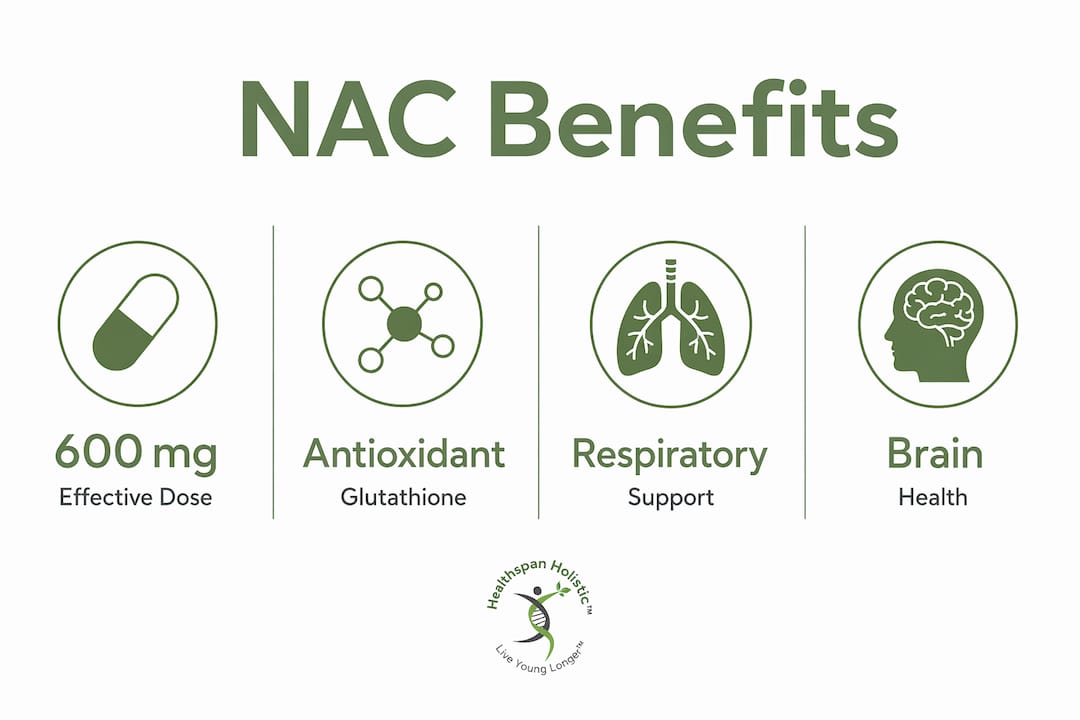
NAC is not a generic antioxidant. It is a thiol-based redox modulator. That distinction matters because it explains why NAC works powerfully in some people and modestly in others.

Your body uses NAC as a direct precursor to glutathione, the molecule your cells rely on to neutralize free radicals and clear toxic byproducts. Think of glutathione as your cells’ internal cleanup crew. NAC supplies the raw material to keep that crew working. As you age past 40, your natural glutathione production declines, and NAC supplementation can help restore that balance. You can read more about how this connects to cellular energy and redox health in the context of broader mitochondrial function.
Beyond glutathione, NAC modulates redox signaling pathways that regulate inflammation, cell survival, and detoxification. These pathways are not one-size-fits-all. Your baseline oxidative stress level, your genetics, and even your gut’s ability to absorb NAC all influence how much benefit you experience.
| Factor | Effect on NAC response |
|---|---|
| Baseline oxidative stress | Higher stress = greater potential benefit from glutathione restoration |
| Pharmacogenetics | Gene variants affect how efficiently NAC is metabolized |
| Tissue delivery | NAC reaches some tissues more effectively than others |
| Formulation type | Bioavailability varies between standard and liposomal forms |
| Supplement dose | OTC doses often fall below clinically studied thresholds |
Pro Tip: If you have tried NAC and noticed little effect, your baseline glutathione may already be adequate. A cellular micronutrient test can reveal your actual antioxidant status before you invest further in supplementation.
Individual variability in outcomes is one of the most underreported aspects of NAC supplementation. Two people taking the same dose can have very different results. This is not a flaw in the supplement. It reflects the complexity of redox biology.
What are the dosing, safety, and quality considerations?
Getting the dose right is where many adults go wrong with NAC. The clinically validated dose for COPD is 600 mg twice daily. Many over-the-counter supplements use lower doses or different regimens. That gap between what studies use and what you find on store shelves can mean you are not getting the therapeutic effect you expect.
For general wellness supplementation, doses typically range from 600 mg to 1,800 mg per day. Adults over 40 should start at the lower end and assess tolerance before increasing. Your pharmacokinetics change with age, meaning your body processes compounds differently than it did at 30.
Safety is generally favorable, but not without caveats:
- Headaches are the most commonly reported side effect, particularly at higher doses.
- Gastrointestinal issues including nausea and loose stools can occur, especially on an empty stomach.
- Product contamination is a real concern. ConsumerLab reviews have identified labeling issues in some NAC products, including excess iodide that can affect thyroid function.
- Drug interactions are possible, particularly with nitroglycerin and certain blood pressure medications.
Pro Tip: Always choose NAC supplements that carry third-party testing certification from organizations like NSF International or USP. This single step eliminates most contamination and mislabeling risks.
Product quality is not a minor detail. It is the difference between a supplement that works and one that harms. The NAC Antioxidant Blend from Healthspan Holistic is formulated with quality assurance in mind, pairing NAC with complementary antioxidants for enhanced liver and cellular support.
How does NAC fit into a broader longevity regimen?
NAC works best as part of a larger strategy, not as a standalone fix. For adults aged 40 to 75, the goal is extending healthspan, the years you spend feeling well and functioning at your best, not just adding years to your life. NAC supports that goal in specific, measurable ways.
Here is how to integrate NAC thoughtfully into your wellness regimen:
- Establish your baseline first. Before adding any supplement, get a cellular micronutrient test to understand your actual antioxidant status. Supplementing without data is guesswork.
- Pair NAC with lifestyle foundations. NAC amplifies the effects of a nutrient-dense diet, regular movement, and quality sleep. It does not replace them.
- Consider synergistic supplements. NAC works well alongside vitamin C, alpha-lipoic acid, and selenium, all of which support glutathione recycling and redox balance.
- Consult your physician before starting. This is especially true if you take medications for blood pressure, heart disease, or thyroid conditions.
- Track your response over 8 to 12 weeks. Meaningful changes in energy, respiratory comfort, or recovery time are realistic markers to watch.
- Reassess periodically. Your oxidative stress levels and supplement needs change as you age. Annual retesting keeps your regimen aligned with your actual biology.
Translating NAC’s glutathione-raising mechanism into guaranteed anti-aging outcomes is an oversimplification. NAC is a tool, and like any tool, its value depends on how and when you use it. Adults who approach it with realistic expectations and a data-informed plan get the most from it.
Key Takeaways
NAC’s core value lies in glutathione restoration and redox modulation, with its strongest evidence in respiratory and liver health, not broad anti-aging or immune claims.
| Point | Details |
|---|---|
| Glutathione is the mechanism | NAC raises glutathione levels, which drives its antioxidant and liver-protective effects. |
| Respiratory evidence is strong | Clinical doses of 600 mg twice daily reduce exacerbations in COPD and bronchiectasis. |
| Neuroprotection is promising but early | Current studies show potential for brain health, but larger trials are still needed. |
| Product quality matters greatly | Third-party tested supplements reduce contamination and mislabeling risks significantly. |
| Baseline testing improves outcomes | Knowing your antioxidant status before supplementing helps you dose and track effectively. |
My honest assessment of NAC for adults over 40
I have spent years reviewing the supplement research landscape, and NAC is one of the few compounds that genuinely earns its reputation, within limits. The biochemistry is real. Glutathione depletion is a documented feature of aging, and NAC is one of the most direct ways to address it. That part is not hype.
What concerns me is the gap between the clinical evidence and how NAC is marketed. Phrases like “detox support” and “immune booster” are applied to NAC constantly, yet the evidence for those specific claims remains thin. Adults over 40 deserve better than vague promises. They deserve to know that NAC’s proven strengths are in respiratory health, liver protection, and oxidative stress reduction, and that those are genuinely valuable.
The quality issue keeps me up at night more than the dosing debate. I have seen too many people spend months on a supplement that was either underdosed or contaminated. The ConsumerLab findings on excess iodide in some NAC products are not a footnote. They are a warning. Buy from brands that test their products and show you the results.
My practical advice: start with a baseline test, use a quality product at a clinically relevant dose, and give it three months before judging results. NAC is not a miracle. It is a well-researched compound that does specific things well. That is more than enough reason to take it seriously.
— Chris
NAC supplements and the Healthspan Holistic longevity program
If you are ready to move beyond guessing and build a supplement plan grounded in your own biology, Healthspan Holistic has the tools to support that.
The 90 Day Journey to Longevity program integrates professional-grade supplements like NAC with personalized coaching, lab testing, and health tracking to create a plan built around your body’s actual needs. The NAC 120 Capsules from Healthspan Holistic are formulated to clinically relevant standards, so you are getting a dose that matches the research.
1st Time Customers can take advantage of our BUY 1 GET 1 50% OFF special offer on all supplements.
This is the kind of support that turns good intentions into real results.
FAQ
What does NAC do for the body?
NAC raises glutathione levels, the body’s primary antioxidant, which supports liver detoxification, reduces oxidative stress, and helps clear mucus from the airways. Its effects are strongest when oxidative stress or respiratory inflammation is already elevated.
Is NAC good for liver health?
Yes. NAC is an approved antidote for acetaminophen-related liver damage and supports general liver detoxification through glutathione replenishment. It is one of the most evidence-backed supplements for liver protection.
What is the recommended NAC dosage for adults?
General wellness doses range from 600 mg to 1,800 mg per day. The clinically studied dose for respiratory conditions like COPD is 600 mg twice daily. Always consult a physician before starting, especially if you take medications.
Does NAC have side effects?
The most common side effects are headaches and gastrointestinal discomfort, particularly at higher doses or when taken on an empty stomach. Some products have also been found to contain excess iodide, so choosing a third-party tested brand reduces this risk.
Can NAC support brain health as you age?
Early research shows neuroprotective potential for NAC in aging-related cognitive conditions, but the evidence is preliminary. Most studies use multi-compound formulations, making it difficult to attribute benefits to NAC alone. Larger clinical trials are still needed.
Leave a comment: