

TL;DR:
- Healthspan refers to the years a person lives in good health, free from disease or disability. Most Americans have an average healthspan of about 63 to 65 years, spending roughly 13 years in poor health at life’s end. Regular exercise, strength training, quality sleep, and preventive health monitoring can significantly extend healthy years.
Healthspan is defined as the number of years a person lives in good health, free from chronic disease or significant disability. It is not the same as lifespan, which simply counts total years alive. The distinction matters enormously for adults aged 45–75, because the quality of those years is what determines your energy, independence, and vitality. Research from UCLA Health shows the average American healthspan is about 63 years for men and 65 years for women. That means most people spend roughly 13 years at the end of life in poor health. The good news is that healthspan is largely within your control.
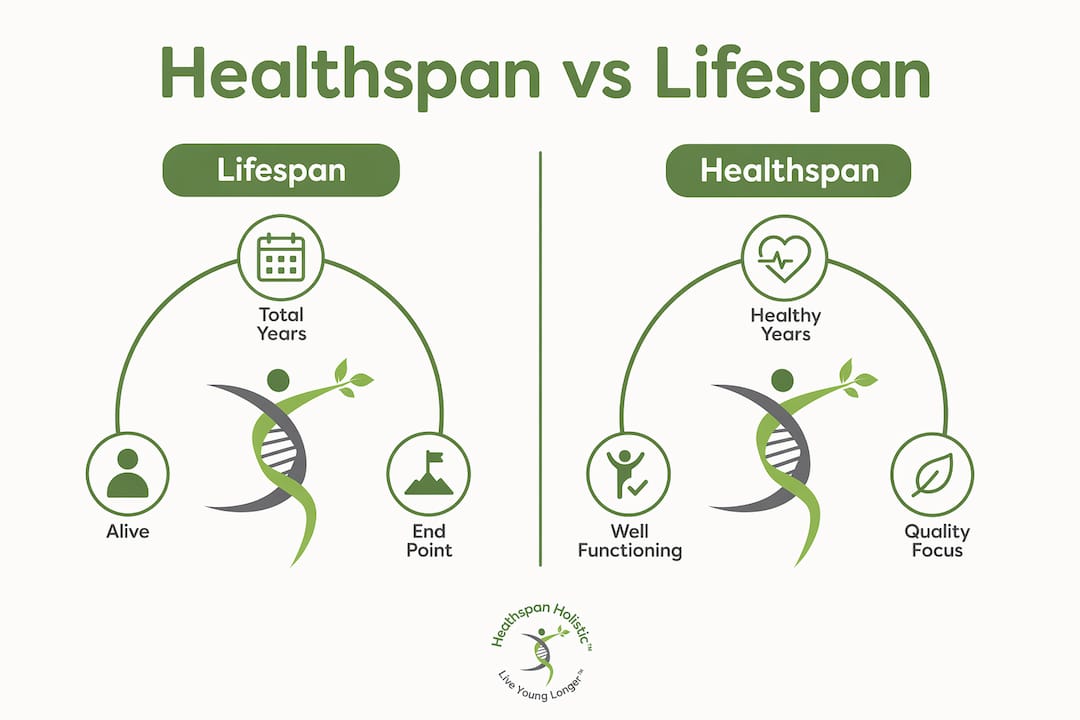
What is the difference between healthspan vs lifespan?
Lifespan is the total number of years you are alive. Healthspan is the portion of those years spent functioning well, mentally sharp, physically capable, and free from debilitating illness. The two numbers are not the same, and the gap between them is growing.
The American Heart Association reports that 79% of adults 60+ manage two or more chronic illnesses. That statistic tells you something important: living longer does not automatically mean living better. A person can reach 85 years of age while spending the last 15 of those years managing diabetes, heart disease, or mobility loss.
The table below shows how healthspan and lifespan compare across key dimensions.
| Dimension | Lifespan | Healthspan |
|---|---|---|
| Definition | Total years alive | Years lived in good health |
| Focus | Quantity of life | Quality of life |
| Measurement | Age at death | Biomarkers, function, disease-free years |
| Influenced by | Genetics, accidents, environment | Lifestyle, nutrition, sleep, exercise |
| Goal | Live longer | Live better, longer |
The gap between lifespan and healthspan signals a need to shift healthcare focus from treating illness to preventing it. That shift is exactly what modern wellness science is building toward.
What factors influence healthspan and how can you measure it?
Several interconnected factors shape how many healthy years you accumulate. Physical activity, diet, sleep quality, mental health, social connections, and access to preventive healthcare all play direct roles. No single factor works in isolation.

Measuring healthspan is genuinely complex. A systematic review published on PubMed confirms that no universal standard definition exists for healthspan. That means tracking it requires monitoring multiple biomarkers over time rather than relying on one number or score.
Key healthspan indicators worth tracking include:
-
Blood pressure: Elevated readings are one of the earliest signs of cardiovascular stress.
-
HbA1c: This blood sugar marker reveals metabolic health trends before diabetes develops.
-
Lipid profiles: Total cholesterol, LDL, and HDL levels reflect cardiovascular risk.
-
Muscle mass and grip strength: Both predict functional independence as you age.
-
Inflammatory markers: Elevated CRP or homocysteine often precede chronic disease.
-
Sleep quality: Poor sleep accelerates biological aging and metabolic dysfunction.
The American Heart Association recommends the Life’s Essential 8 framework as a practical guide. It covers diet, physical activity, nicotine exposure, sleep, body weight, blood glucose, blood lipids, and blood pressure. Scoring well across all eight areas correlates strongly with a longer, healthier life.
Pro Tip: Don’t wait for a diagnosis to start tracking. Monitoring leading clinical indicators like blood pressure and HbA1c now gives you the chance to course-correct years before a problem becomes serious.
How can adults aged 45–75 improve their healthspan?
The most effective ways to increase healthspan are not exotic or expensive. They are consistent, research-supported habits applied over years. Here are the core strategies, ranked by impact.
-
Move your body every day. Experts at UCLA Health recommend at least 150 minutes of moderate aerobic activity weekly, plus two days of muscle-strengthening exercise. Walking, cycling, swimming, and dancing all count. The key is consistency, not intensity.
-
Prioritize resistance training. Muscle loss, known clinically as sarcopenia, is one of the leading drivers of healthspan decline in adults over 45. Research published in PMC confirms that resistance training prevents sarcopenia and reduces the risk of falls and functional limitations. Lifting weights or using resistance bands twice a week is non-negotiable for this age group.
-
Protect your sleep. Aim for 7–9 hours of quality sleep each night. Sleep is when your body repairs tissue, consolidates memory, and regulates hormones. Chronic short sleep accelerates metabolic aging faster than almost any other lifestyle factor.
-
Eat for cellular health. A nutrient-dense diet rich in vegetables, lean proteins, healthy fats, and whole grains supports mitochondrial function and reduces systemic inflammation. Nutrition’s role in healthy aging extends well beyond weight management.
-
Invest in mental and social health. The American Heart Association identifies social connection and mental health as critical upstream factors for healthspan. Loneliness and chronic stress accelerate biological aging. Maintaining close relationships and managing stress are as important as diet and exercise.
-
Get preventive screenings regularly. Catching problems early through blood panels, cardiovascular testing, and hormone assessments allows for intervention before disease takes hold. A holistic health checklist tailored to your age group is a practical starting point.
Pro Tip: Short bursts of physical activity spread across the day also deliver real benefits. The American Heart Association notes that brief activity sessions multiple times daily can reduce cancer and cardiovascular deaths. You don’t need a gym to move more.
What are emerging scientific approaches to extending healthspan?
Modern aging science is moving fast. Researchers are no longer satisfied with simply adding years to life. The goal now is to extend lifespan while maintaining the health profile of someone significantly younger.
Scientific American describes this shift as the healthspan paradigm: the ambition to give people the biological age of someone 20 years younger, even as their chronological age advances. This means targeting the cellular and molecular mechanisms of aging directly, not just managing the diseases that result from them.
Precision medicine is central to this approach. Personalized blood panels, genetic data, wearable health monitors, and AI-powered analytics allow clinicians to identify risk years before symptoms appear. For adults aged 45–75, this is particularly valuable because many chronic conditions develop silently over a decade or more before becoming diagnosable.
“The goal isn’t just to live longer. It’s to live longer with the vitality, function, and independence of someone far younger.” — Scientific American, The Healthspan Paradigm
Diagnostics like cellular micronutrient testing, hormone panels, and metabolic assessments give you a precise picture of where your biology stands today. That data becomes the foundation for targeted lifestyle changes, supplementation, and coaching. The longevity guide for adults 40–75 at Healthspan Holistic reflects exactly this model: measure first, then act.
Key Takeaways
Healthspan is the single most important metric for quality of life after 45, and it is shaped far more by daily habits and proactive monitoring than by genetics alone.
| Point | Details |
|---|---|
| Healthspan vs lifespan | Healthspan measures healthy years lived; lifespan measures total years alive. |
| The 13-year gap | Average Americans spend about 13 years in poor health at life’s end. |
| Top lifestyle levers | Exercise, sleep, nutrition, and social connection each directly extend healthy years. |
| Resistance training is critical | Strength training twice weekly prevents sarcopenia and preserves functional independence. |
| Measure before you manage | Tracking blood pressure, HbA1c, and lipid profiles enables early intervention. |
Why I think the healthspan conversation is overdue
Most people I speak with have spent decades focused on the wrong number. They track their weight, their age, maybe their cholesterol. But very few have ever asked themselves: how many of my remaining years will I actually feel good in?
That question changes everything. When you shift from “how long will I live” to “how well will I live,” the daily decisions look completely different. A 20-minute walk stops feeling optional. Sleep becomes a priority, not a luxury. The blood test you’ve been putting off for two years suddenly feels urgent.
What I’ve found, working with adults in the 45–75 range, is that the people who thrive are not the ones doing the most extreme things. They are the ones doing the right things consistently. They walk most days. They lift something heavy twice a week. They sleep seven hours. They know their HbA1c. None of that is complicated. All of it compounds.
The other thing I want to say plainly: mental and social health are not soft add-ons to a wellness plan. They are load-bearing walls. Chronic loneliness and unmanaged stress will undo every good habit you build. A holistic approach to health after 45 means treating your mind and your relationships with the same seriousness you give your diet.
You have more control over your healthspan than any doctor, drug, or supplement. Start with what you can measure. Then build from there.
— Chris
How Healthspan Holistic supports your healthy years
Healthspan Holistic was built for exactly this stage of life. The 90 Day Journey to Longevity program combines detailed lab testing, personalized coaching, and evidence-based supplementation to give you a clear picture of where your health stands and what to do about it.
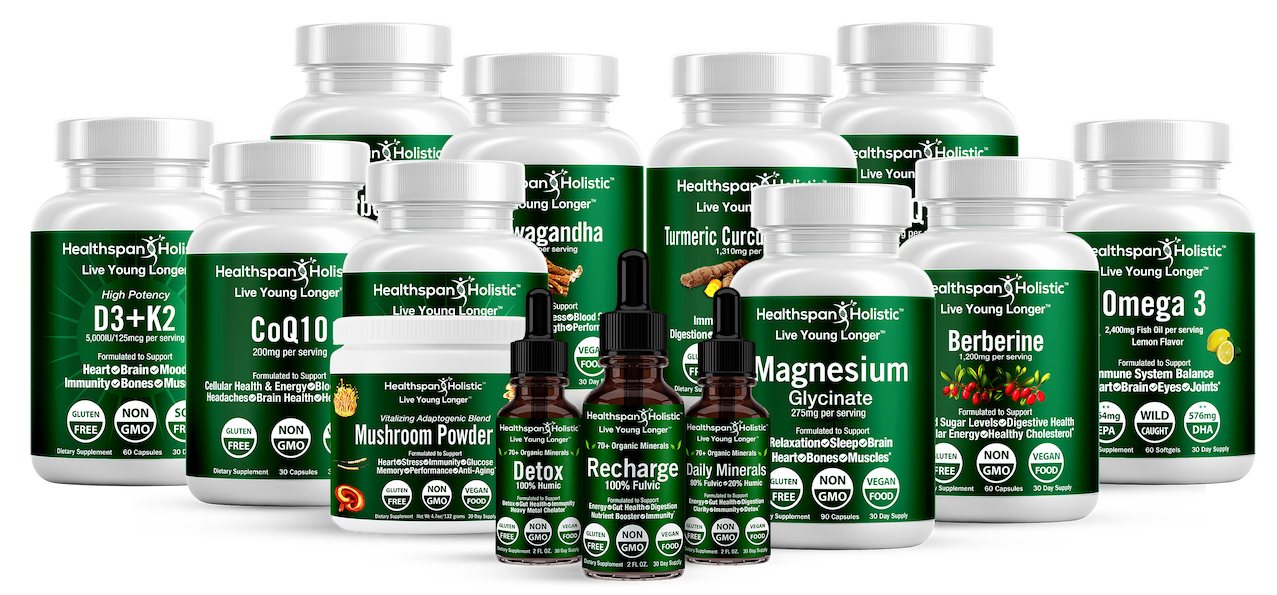
Whether you want to check your basic heart health, run a metabolic panel, or test your vitamin D, Omega-3, and magnesium levels, Healthspan Holistic offers professional-grade diagnostics designed for adults who want answers, not guesses. Browse the full supplement collection at HealthspanHolistic.com and take advantage of a great offer for new customers.
1st Time Customers can take advantage of our BUY 1 GET 1 50% OFF special offer on all supplements.
FAQ
What is healthspan in simple terms?
Healthspan is the number of years you live in good health, free from chronic disease or disability. It differs from lifespan, which counts total years alive regardless of health status.
What is the average healthspan in the United States?
The average American healthspan is about 63 years for men and 65 years for women, with roughly 13 years spent in poor health at the end of life.
What are the best ways to increase healthspan after 45?
The most effective strategies include 150 minutes of aerobic exercise weekly, two days of resistance training, 7–9 hours of sleep, a nutrient-dense diet, and regular preventive blood testing.
How is healthspan measured?
No single validated score exists for healthspan. Tracking multiple biomarkers over time, including blood pressure, HbA1c, lipid profiles, and muscle strength, gives the most complete picture.
Why does resistance training matter so much for healthspan?
Resistance training prevents sarcopenia, the age-related loss of muscle mass that leads to falls, reduced mobility, and functional decline. Adults aged 45–75 who strength-train twice weekly preserve independence significantly longer.
Recommended
-
What Is Immune System Health and Why It Matters After 45 | Healthspan Holistic
-
Healthspan Holistic: Your Longevity Guide for 40-75 | Healthspan Holistic
-
Why Choose a Holistic Approach to Health After 45 | Healthspan Holistic
-
Men’s Wellness After 45: Your Practical Longevity Guide | Healthspan Holistic
Leave a comment: