

TL;DR:
- Retatrutide is an investigational triple receptor agonist showing promising weight loss results, but it remains unavailable outside clinical trials and poses significant risks, especially for adults over 45. The drug has demonstrated substantial efficacy in clinical studies, yet concerns about muscle loss and safety underscore the importance of holistic health support. Access through illegal compounding is dangerous, and proper safety monitoring and lifestyle measures are essential during any weight loss intervention.
If you’ve been researching reta peptide, also known as retatrutide, you’ve likely encountered bold claims about dramatic weight loss sitting right next to confusing warnings about legal status and safety. The reality is more nuanced than either extreme. Retatrutide is a genuinely promising investigational drug, but it remains unavailable outside clinical trials, carries real risks, and raises specific concerns for adults over 45, particularly around lean muscle mass loss. Here’s what the actual clinical data shows, what the risks mean for your body, and how to think about this drug with clear eyes.
Key takeaways
| Point | Details |
|---|---|
| Reta is investigational only | Retatrutide has no FDA approval and is legally accessible only through clinical trial enrollment. |
| Exceptional weight loss data | The 12mg dose produced an average 28.7% body weight reduction over 68 weeks in Phase 3 trials. |
| Muscle loss is a real concern | Significant lean tissue loss during rapid weight reduction poses particular risks for adults over 45. |
| Compounded versions are illegal | FDA prohibits pharmacy compounding of retatrutide due to peptide complexity and contamination risks. |
| Holistic support matters | Nutrition, resistance training, and targeted supplements can help protect muscle and bone during weight loss. |
What reta peptide is and how it works
Retatrutide, commonly referred to as reta, is a triple hormone receptor agonist. That means it activates three separate receptors simultaneously: GLP-1 (glucagon-like peptide-1), GIP (glucose-dependent insulinotropic polypeptide), and the glucagon receptor. This triple action sets it apart from drugs like semaglutide, which targets only GLP-1, and tirzepatide, which targets GLP-1 and GIP.
Each receptor plays a different role:
-
GLP-1 activation slows gastric emptying, reduces appetite, and improves insulin sensitivity
-
GIP activation enhances insulin secretion and may improve fat metabolism
-
Glucagon receptor activation increases energy expenditure and promotes fat breakdown in the liver
You can think of this triple mechanism as three separate metabolic levers being pulled at once. The combined effect is more powerful calorie reduction and energy expenditure than any single or dual agonist achieves. For a deeper look at how this drug class works in the body, Healthspanholistic’s guide on GLP-1 weight loss benefits provides useful context.
The glucagon component is particularly important to understand. It contributes to unique side effects like dysesthesia that are not observed in comparable GLP-1 therapies, and may influence dose recommendations once the drug reaches approval.
Pro Tip: If you’ve used semaglutide or tirzepatide before, don’t assume retatrutide will feel the same. The glucagon receptor activation creates a meaningfully different physiological experience, including side effects that neither of those drugs produces.
Clinical evidence on reta’s weight loss efficacy
The Phase 3 TRIUMPH-4 trial results are genuinely striking. At the 12mg dose, retatrutide produced an average weight loss of 28.7%, equivalent to roughly 71.2 pounds, over 68 weeks. More than half of participants at that dose lost at least 25% of their body weight.
| Drug | Mechanism | Average weight loss |
|---|---|---|
| Semaglutide (Wegovy) | GLP-1 agonist | ~15% over 68 weeks |
| Tirzepatide (Zepbound) | GLP-1 + GIP agonist | ~20-22% over 72 weeks |
| Retatrutide (9mg) | Triple agonist | ~26.4% over 68 weeks |
| Retatrutide (12mg) | Triple agonist | ~28.7% over 68 weeks |
The 9mg dose produced 26.4% weight loss, which is still substantially greater than what any currently approved medication achieves. These numbers represent a meaningful step forward for people who have struggled with obesity-related metabolic conditions.
Beyond weight, the trial data shows improvements in cardiometabolic markers including blood pressure, triglycerides, and fasting glucose. These are outcomes that matter deeply for adults in the 45 to 75 age range who often carry compounding metabolic risk factors.
That said, this is still an investigational drug. FDA approval is expected between 2027 and 2028, pending NDA filing and regulatory review. The long-term safety profile is still being established, and no commercial availability exists as of 2026.
Risks and side effects, including muscle mass loss
This is where the conversation gets critically important for older adults. Retatrutide’s side effect profile is more complex than what most people researching it online will encounter.
The most common side effects during dose escalation include:
-
Nausea affecting 50 to 60% of patients at the 12mg dose during titration
-
Vomiting in approximately 30% of participants
-
Diarrhea in 25 to 30% of participants
-
Constipation in 20 to 25% of participants
Most of these gastrointestinal effects concentrate in the first four to eight weeks and improve as the body adjusts. A slower titration schedule, holding dose steps longer before escalating, reduces their severity, though it extends the time to reach the maintenance dose.
What makes retatrutide distinctly different is dysesthesia. Dysesthesia was reported in 20.9% of participants at the 12mg dose. This is an abnormal skin sensation, often described as tingling or burning, that scales with dose and duration of exposure. Semaglutide and tirzepatide show no comparable reports. This side effect alone may shape how physicians dose the drug post-approval.
Retatrutide also raises resting heart rate by 5 to 8 bpm, slightly more than other GLP-1 agonists, which warrants monitoring in adults with existing cardiovascular conditions.
The muscle mass concern you need to take seriously
For adults over 45, the most consequential risk is lean muscle mass loss. Rapid, significant weight reduction from any source tends to include loss of lean tissue alongside fat. Lean tissue loss is particularly relevant for metabolic health and physical function in older adults, where muscle mass already declines naturally with age.

Losing 28% of your body weight over 68 weeks sounds like a win. But if a meaningful portion of that loss comes from muscle rather than fat, you may end up lighter and weaker, with reduced mobility, lower resting metabolic rate, and increased fracture risk. Older adults considering retatrutide face increased risks related to lean muscle loss and fluid balance disruptions from gastrointestinal side effects.
Long-term risks also include gallbladder disease and pancreatitis, consistent with the broader GLP-1 drug class. These are still under investigation in ongoing trials.
Pro Tip: If you are enrolled in a retatrutide trial or considering enrollment, ask your care team specifically about DEXA scan monitoring to track lean mass versus fat mass changes throughout treatment. This data point is your most important safety signal.
Legal status and the dangers of compounded reta
Here is where clarity matters most, because the online marketplace for peptides is actively misleading people.
Retatrutide is an investigational drug with no FDA approval. Clinical trial participation is the only legal way to access it today. There is no prescription pathway, no telehealth workaround, and no legitimate compounding pharmacy option.
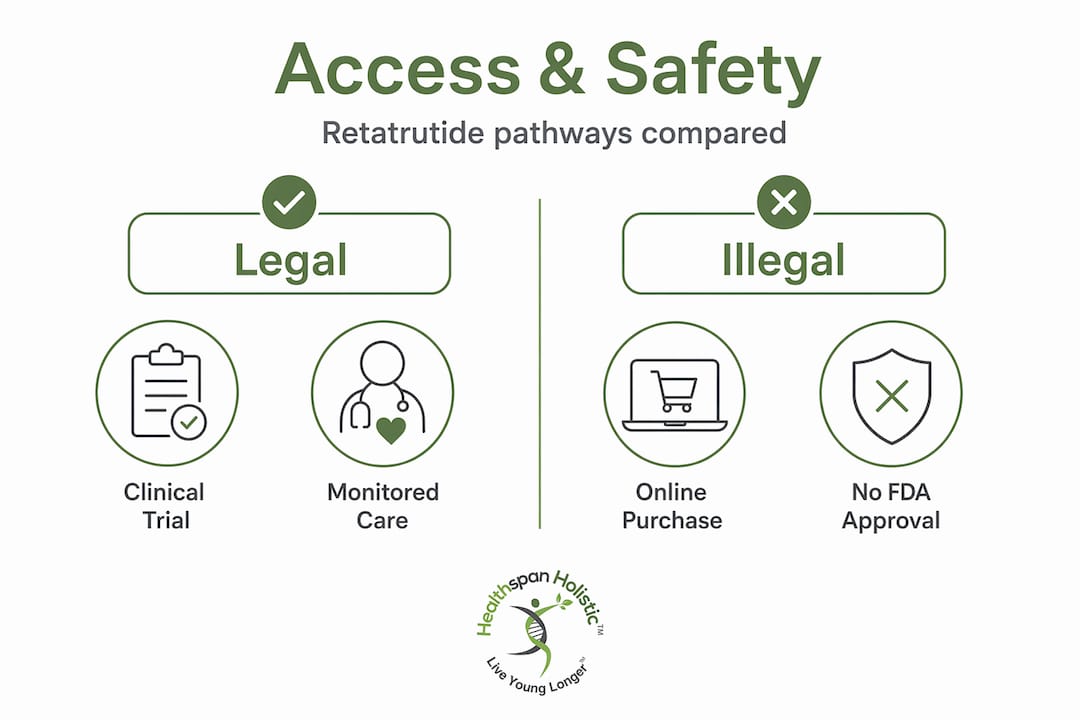
| Access method | Legal status | Safety level |
|---|---|---|
| FDA-approved clinical trial | Legal | Monitored and controlled |
| Expanded access (compassionate use) | Limited legal pathway | Physician-supervised |
| Compounding pharmacy | Illegal | High risk |
| Online peptide vendor | Illegal | Extremely high risk |
The FDA has issued over 50 warning letters to compounding pharmacies attempting to produce retatrutide. The reason goes beyond regulatory technicality. Retatrutide requires precise peptide chain length and molecular bonding that standard compounding methods cannot reliably replicate. Compounding retatrutide is inherently unsafe due to peptide synthesis complexity, leading to contamination risks and improper dosing outside FDA manufacturing standards.
Unlike semaglutide, which had an FDA-approved molecule that could qualify for compounding exemptions during shortage periods, retatrutide has never had any FDA-approved molecule or monograph. It is legally ineligible for compounding exemptions under any circumstance.
“Purchasing retatrutide from any source outside a registered clinical trial is not a gray area. It is illegal, and the product you receive carries real contamination and dosing risks that no amount of vendor reassurance can eliminate.”
For a thorough breakdown of the current regulatory picture, Healthspanholistic’s article on the 2026 FDA peptide announcement explains what these restrictions mean for people actively researching peptide therapies.
Holistic perspectives on supporting your body
If you are in a clinical trial or simply preparing for when retatrutide becomes available, protecting your muscle mass and overall health requires more than the drug itself.
Here are the most practical steps to take alongside any significant weight loss program:
-
Prioritize resistance training. Two to three sessions per week of strength-focused exercise is the most effective tool for preserving lean muscle during caloric restriction.
-
Optimize protein intake. Adults over 50 need more dietary protein per pound of body weight than younger adults. Aim for at least 1.2 grams per kilogram of body weight daily, and consider working with a dietitian to hit that target consistently.
-
Support bone and muscle health with targeted supplements. Vitamin D3 and K2 work together to support calcium metabolism and bone density, which becomes especially relevant when body composition is shifting rapidly.
-
Protect liver and metabolic function. Rapid fat mobilization during aggressive weight loss places additional demands on liver function. Botanical liver support formulas can help your body manage this load.
-
Stay well hydrated. Gastrointestinal side effects from retatrutide can disrupt fluid and electrolyte balance. Consistent hydration is a simple but underestimated protective factor.
For a broader look at the evidence, risks, and holistic perspectives on reta peptide, Healthspanholistic’s dedicated reta peptide resource covers these intersections in depth.
My honest take on retatrutide’s promise and its limits
I’ve followed the GLP-1 drug class closely for years, and retatrutide genuinely impresses me on the clinical data. A 28.7% average weight loss in a Phase 3 trial is not a marginal improvement over existing options. It is a category-defining result.
But I’d be doing you a disservice if I stopped there. What concerns me most about the current environment is the gap between what the data shows and how people are actually accessing this drug. The online peptide market is full of products labeled as retatrutide that are, at best, poorly synthesized approximations and, at worst, something else entirely.
For adults in their 50s, 60s, and 70s, the muscle loss risk is not a footnote. It is the central issue. Losing 70 pounds sounds transformative until you realize a significant portion came from the muscle that kept you mobile, strong, and metabolically healthy. I’ve seen this pattern repeat with aggressive weight loss interventions across the board. The scale moves, but the body composition tells a different story.
My advice is straightforward. If retatrutide interests you, look into legitimate trial enrollment through ClinicalTrials.gov. Talk to your physician honestly about your goals and your starting muscle mass. And in the meantime, build the lifestyle foundation that will make any weight loss intervention work better and safer. Supplements, strength training, and proper nutrition are not optional extras. They are the infrastructure that protects you.
— Chris
Support your body while you wait for what’s next
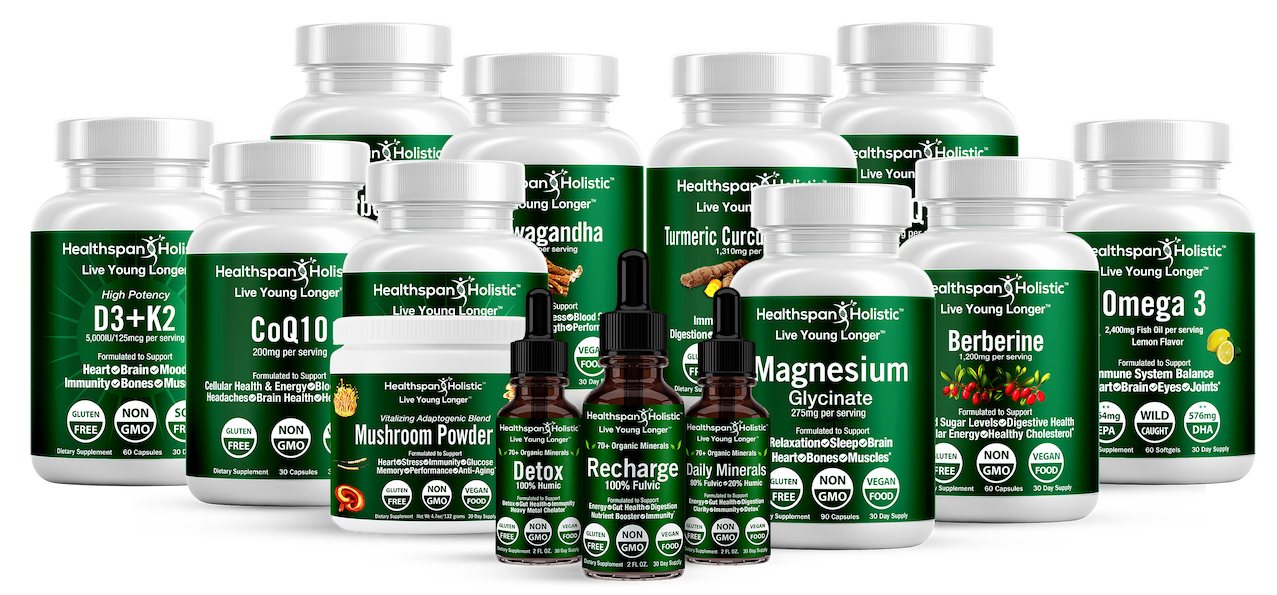
Whether you’re enrolled in a clinical trial or simply taking a proactive approach to your health right now, the right supplements can make a real difference in protecting muscle, bone, and metabolic function. At Healthspanholistic, we’ve curated professional-grade products specifically for adults who take their healthspan seriously.
Our Liver Sauce Botanical Blend supports liver and metabolic health, which is particularly relevant during periods of significant weight change. Our Vitamin D3 + K2 supplement helps protect bone density and supports calcium metabolism, two priorities for anyone concerned about lean tissue loss. And our PC Liquid formula supports cellular health and metabolism at the foundational level.
1st Time Customers can take advantage of our BOGO 50% OFF special offer: Buy 1, Get 1 50% Off on all supplements. Always consult your healthcare provider before starting new supplements, especially alongside any prescription or investigational treatment.
FAQ
What is reta peptide?
Reta, short for retatrutide, is an investigational triple hormone receptor agonist that activates GLP-1, GIP, and glucagon receptors simultaneously to promote weight loss and metabolic improvement.
Does reta peptide cause muscle loss?
Yes. Significant lean tissue loss has been observed during rapid weight reduction with retatrutide, which is a particular concern for adults over 45 where muscle mass is already declining with age.
Is reta peptide legal to buy online?
No. Retatrutide is not legally available outside of clinical trials. The FDA has issued over 50 warning letters to compounding pharmacies, and no online vendor can legally sell it.
When will reta peptide be FDA approved?
FDA approval for retatrutide is expected between 2027 and 2028, following completion of Phase 3 trials and a New Drug Application filing by Eli Lilly.
How much weight can you lose with reta peptide?
Phase 3 trial data shows an average weight loss of 28.7% of body weight at the 12mg dose over 68 weeks, with more than half of participants losing at least 25% of their body weight.
Leave a comment: