

TL;DR:
- Gut health influences immune function, mood, energy, and aging, extending beyond digestion. It is a dynamic, multi-component system involving digestion, microbiome balance, immunity, metabolism, and the gut-brain axis, all affecting overall well-being. Maintaining this system through fiber-rich diets, physical activity, stress management, and personalized supplements supports long-term health, especially after age 45.
Most people assume gut health is simply about digestion. Bloating, regularity, maybe the occasional stomach ache. But the role of gut health reaches far beyond your digestive tract. It shapes your immune defenses, your mood, your energy levels, and even how gracefully you age. A 2026 ISAPP consensus confirms gut health as a multi-component state affecting whole-body well-being, not just what happens after a meal. If you are in your 40s, 50s, 60s, or beyond, understanding this bigger picture is one of the most powerful steps you can take for your long-term vitality.
Key Takeaways
| Point | Details |
|---|---|
| Gut health is multifaceted | It involves multiple physiological systems and your subjective experience, not just digestion. |
| Microbiome diversity matters | A diverse gut microbiome supports resilience and systemic wellness, especially as you age. |
| Lifestyle is foundational | Fiber-rich diets, exercise, sleep, and stress control are essential for maintaining gut health. |
| Personalize your approach | Monitor your symptoms and goals to tailor diet and supplements effectively. |
| Supplements aid, don’t replace | Use probiotics and other supplements as complements, not substitutes, for holistic lifestyle changes. |
Understanding the multidimensional role of gut health
Gut health is not a single measurement or a symptom checklist. It is a living, dynamic system. According to the ISAPP consensus statement, gut health is a complex, multicomponent concept that integrates physiological function and your personal experience across six distinct domains.
Those six domains are:
-
Digestion and nutrient absorption — breaking down food and absorbing what your body needs
-
Gut microbiome balance — the community of trillions of microbes living in your intestines
-
Intestinal barrier function — the protective lining that keeps harmful substances from entering your bloodstream
-
Gut immunity — your gut houses roughly 70% of your immune system
-
Metabolic function — how your gut influences blood sugar, weight, and energy
-
The gut-brain axis — the two-way communication highway between your gut and your brain
“Gut health is not just about the absence of disease. It is about how well all these systems work together to support how you feel and function every day.”
What makes assessment tricky is that both objective measures and your lived experience matter. You could have normal test results and still feel chronically sluggish, bloated, or mentally foggy. That gap between function and feeling is real, and it deserves attention. Your genetics, immune history, age, stress levels, medications, and daily environment all shape which direction your gut health trends.
The gut microbiome’s impact on whole-body wellness and aging
Understanding gut health’s components prepares us to appreciate how the role of gut microbiome drives whole-body wellness, and how significantly it shifts as we age.
Your gut microbiome is essentially a miniature ecosystem. It contains bacteria, fungi, viruses, and other microorganisms that collectively do far more than assist digestion. Gut microbes break down fiber, synthesize key vitamins like B12 and K2, produce short-chain fatty acids (SCFAs), and maintain the intestinal barrier. SCFAs, produced when fiber ferments in the colon, are particularly important. They fuel the cells lining your gut, regulate inflammation, and even influence appetite and insulin response.

Here is where the news gets personal for those of us over 45. Research shows that aging reconfigures microbiome composition, increasing variability between individuals and creating a tendency toward dysbiosis, an imbalance where harmful microbes gain ground over beneficial ones. This shift is linked to increased gut permeability, chronic low-grade inflammation (sometimes called “inflammaging”), and higher vulnerability to frailty.
The microbiome does not only affect your gut. It communicates with distant organs through several established pathways:
| Gut-organ axis | What it influences |
|---|---|
| Gut-brain axis | Mood, cognition, anxiety, sleep quality |
| Gut-lung axis | Respiratory immunity, asthma risk |
| Gut-liver axis | Detoxification, metabolic health |
| Gut-cardiac axis | Blood pressure, cardiovascular inflammation |
Gut microbiota influence systemic health through all four of these axes, meaning a gut imbalance in your 60s can quietly ripple into cardiovascular or cognitive territory years down the road. Read our aging and gut microbiome research for a deeper look at what the latest science reveals.
Pro Tip: If you are over 50 and taking medications like proton pump inhibitors, antibiotics, or metformin, know that these commonly alter microbiome composition. Ask your doctor whether a targeted probiotic or dietary strategy makes sense alongside your current treatment plan.
Holistic lifestyle strategies to improve gut health after 45
With microbiome insights in mind, let’s explore actionable steps that genuinely move the needle on how to improve gut health, especially for older adults.
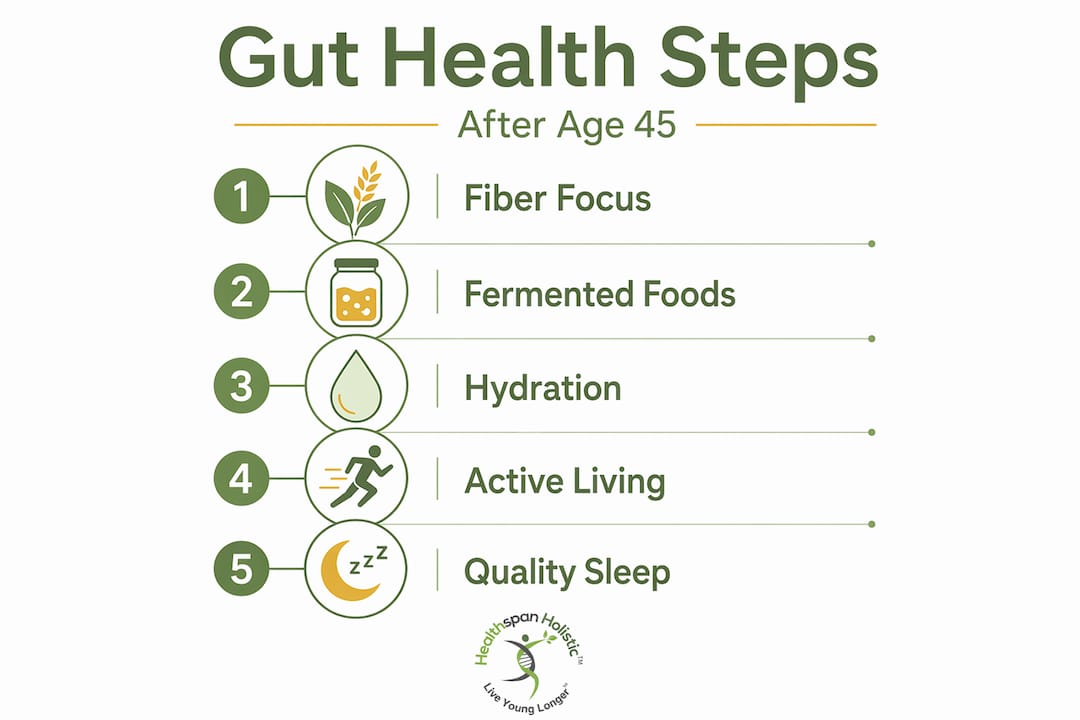
The foundation is fiber, and most adults are not getting nearly enough. The target is about 25 grams per day for women and 38 grams for men, drawn from a variety of plant sources, not just one. Diversity matters because different fiber types feed different beneficial microbes. Think lentils, oats, flaxseed, berries, leafy greens, and roasted vegetables. Rotating these week to week keeps your microbial community varied and resilient.
Here is a practical sequence we recommend for building a gut-supportive lifestyle:
-
Start with fiber first. Increase plant food variety before adding anything else. Your gut microbiome needs this foundation to respond well to other interventions.
-
Introduce fermented foods gradually. Yogurt, kefir, kimchi, sauerkraut, and miso are excellent sources of live cultures. Start with 1-2 tablespoons per day and work up slowly to avoid gas and bloating. Rushing this step often backfires.
-
Move your body daily. Even 30 minutes of moderate walking improves gut motility and supports microbial diversity. Exercise and sleep both support the gut microbiome and barrier function. It does not have to be intense.
-
Protect your sleep window. Your gut has its own circadian rhythm. Poor sleep disrupts the microbial patterns that regulate digestion and immune function. Aim for 7 to 9 hours on a consistent schedule.
-
Manage stress with intention. Chronic stress raises cortisol, which directly weakens your gut barrier. Even 10 minutes of daily breathwork, meditation, or a quiet walk outdoors helps restore gut barrier integrity over time.
-
Stay well hydrated. Water keeps fiber moving through your system and supports the mucus layer that protects your intestinal lining. Eight to ten cups a day is a solid benchmark.
Pro Tip: If you find high-fiber foods cause discomfort at first, try cooking your vegetables thoroughly and soaking legumes overnight. This breaks down compounds that can irritate a sensitive gut, making the fiber easier to absorb and the transition smoother.
You can also consider targeted supplements to support this process. Our ProbioMax Plus probiotic and digestive support capsules are formulated to complement these lifestyle steps, not replace them.
Personalizing gut health approaches with supplements and monitoring
After building lifestyle foundations, the next layer is personalization. This is where many people either overcomplicate things or give up too soon.
The importance of gut health personalization comes down to one truth: your microbiome is as individual as your fingerprint. What works brilliantly for your neighbor may do nothing for you. Here is a structured approach that helps:
-
Define your goals clearly before starting any supplement. Are you addressing bloating, energy, mood, or immunity? Your goal shapes the right probiotic strain and dosage. A broad-spectrum probiotic suits general wellness, while targeted strains work better for specific issues like IBS or antibiotic recovery.
-
Establish your dietary fiber baseline first. Probiotics perform significantly better in a gut that already has fiber-fed beneficial bacteria. Think of fiber as the soil and probiotics as the seeds.
-
Track your symptoms and food intake. A simple daily log noting energy, bowel habits, bloating, and mood gives you far more useful information than any single lab marker. Tracking symptoms and diet quality provides meaningful measures of progress over time.
-
Give it enough time before judging results. Probiotic effects vary by strain and condition. Commit to a 30-day trial before deciding whether to continue, adjust the dose, or switch to a different strain.
-
Reassess with fresh eyes. After 30 days, review your log. Improved sleep, less bloating, more regular digestion, and steadier energy are all meaningful signs. If nothing has shifted, the strain or dose may need adjustment.
Our daily probiotic capsules are a good starting point for those new to supplementation, offering 30 billion CFUs in a shelf-stable formula designed for everyday use.
Why embracing gut health’s full complexity is vital for lasting wellness
Here is something most gut health content never says plainly: the biggest mistake is treating gut health like a problem you fix once and move on from.
We see this pattern repeatedly. Someone adds a probiotic, feels better for a few weeks, then stops when life gets busy. Or they read that a specific strain improved cognition in a study and take it without context, expecting dramatic results. The truth is that gut health is not a destination. It is a system you continuously tend.
The ISAPP consensus makes clear that gut health should be viewed as an integrated system, combining physiological function with subjective experience. This matters because it means no single biomarker tells the whole story. Your microbiome diversity score, your stool analysis, your inflammation markers, and how you actually feel all belong in the same picture.
What we also know is that high inter-individual microbiome variability means one-size-fits-all approaches often fail, particularly in older adults. Your aging trajectory is shaped by decades of diet, stress, medication use, illness, and lifestyle. No supplement can override that history. But consistent, layered choices can meaningfully shift your trajectory over months and years.
The gut health benefits that last come from sustainable patterns, not heroic interventions. We encourage you to look at your gut health as a central pillar of your overall healthspan, your years of living well, not just your years of living. Explore gut health personalization insights to go deeper on tailoring this approach to your specific needs and stage of life.
Explore holistic supplements to support your gut health journey
Having built a strong foundation of knowledge and practical tools, you are ready to consider whether targeted supplementation belongs in your personal gut health plan. The right products, chosen thoughtfully and used alongside real dietary and lifestyle shifts, can meaningfully accelerate your results.
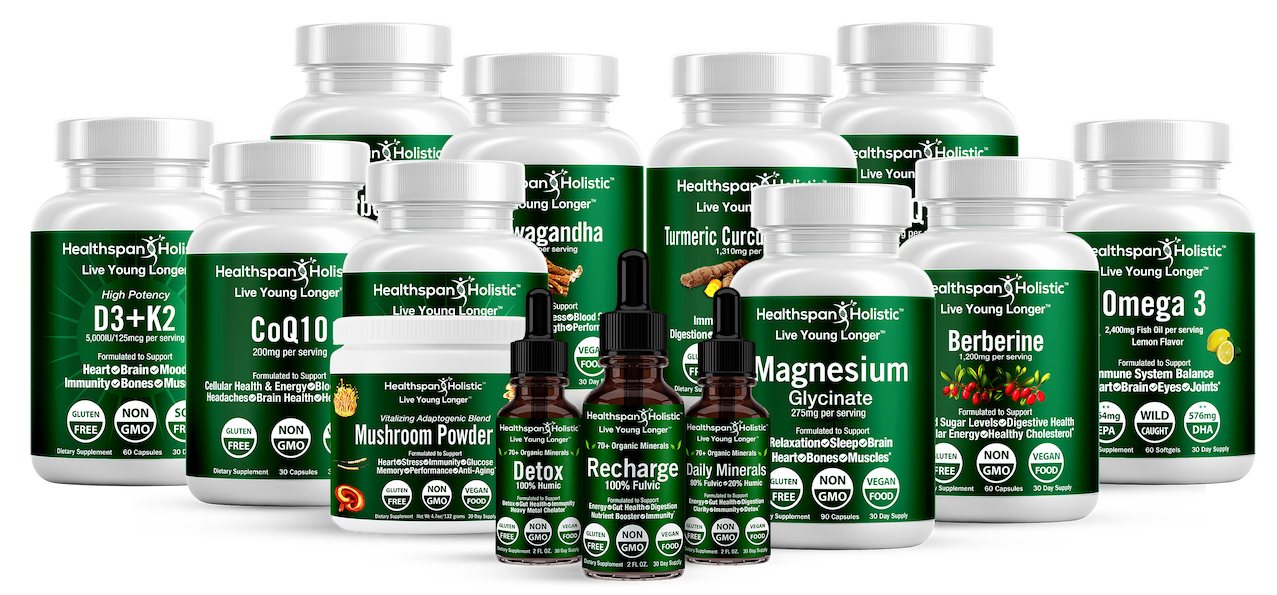
At Healthspan Holistic, our ProbioMax Plus 40B probiotic delivers 40 billion CFUs of diverse, research-backed strains designed to support microbial balance in adults over 40. Our GI Balance digestive support capsules are formulated to restore gut lining integrity and ease common digestive discomfort. And right now, 1st time customers can take advantage of our BOGO 50% Off offer across our full range of Healthspan Holistic supplements, making it easier than ever to try the products that fit your goals without overcommitting.
Frequently asked questions
What exactly does the term “gut health” mean?
Gut health is an integrated state of function without active disease or symptoms that diminish quality of life, combining physiological processes like digestion and immunity with your personal experience of how your body feels and performs.
How does aging affect the gut microbiome?
Aging reconfigures microbiome composition toward greater variability and dysbiosis, which can fuel chronic inflammation and contribute to frailty, though individual responses differ widely based on genetics, diet, and lifestyle history.
Can dietary fiber really improve gut health for older adults?
Yes, a fiber-centered diet nourishes beneficial microbes, supports digestion, and helps maintain gut barrier function, with target intakes of around 25 grams per day for women and 38 grams per day for men.
How should I use probiotics to benefit my gut health?
Introduce probiotics gradually after building a fiber-rich diet, set specific health goals before starting, and give each strain a 30-day trial period before deciding to continue or adjust.
What lifestyle habits best support a healthy gut?
Regular exercise, consistent sleep, stress management, adequate hydration, and a diverse plant-rich diet are the key gut health factors that promote a balanced microbiome and support lasting digestive wellness.
Leave a comment: