

Antioxidants neutralize reactive free radicals and help limit oxidative damage to your cells, DNA, and tissues. The safest, most evidence-backed way to get them is through a varied, plant-rich diet, not high-dose single supplements. One important clinical exception exists: the AREDS2 formula is supported by randomized trial evidence for people with intermediate age-related macular degeneration (AMD).
-
How they act: Antioxidants donate electrons to unstable free radicals, interrupting chain reactions that would otherwise damage cell membranes, proteins, and DNA. Your body also runs its own enzyme-based defense network, including superoxide dismutase (SOD), catalase, and glutathione peroxidase.
-
Safety note: High-dose antioxidant supplements can harm certain groups. Beta-carotene supplements, for example, raise lung cancer risk in smokers, and some vitamin E doses have been linked to increased stroke risk.
Key Takeaways
A varied, plant-rich diet remains the most evidence-backed strategy for antioxidant protection, with high-dose supplements reserved for specific, clinically indicated situations.
| Point | Details |
|---|---|
| Food-first rule | Colorful, varied plant foods supply a network of antioxidants no single supplement can replicate. |
| Supplement caution | High-dose antioxidant supplements are not routinely recommended; beta-carotene raises lung cancer risk in smokers. |
| AREDS2 exception | The AREDS2 formula reduced AMD progression in people with intermediate AMD and is the clearest RCT-supported use case. |
| Endogenous systems matter | SOD, catalase, and glutathione peroxidase are your primary defenses; exercise, sleep, and glucose control support them. |
| Healthspan Holistic | The 90 Day Journey to Longevity combines lab testing, AI analytics, and coaching to personalize your antioxidant and metabolic strategy. |
What is the role of antioxidants in your body?
The word “antioxidant” describes a chemical property, not a single nutrient category. Any molecule that can donate an electron to a reactive species, or otherwise interrupt an oxidative chain reaction, qualifies. As a Nature review on antioxidant biology explains, antioxidants function within interconnected biological networks, which is precisely why isolated supplement molecules so often fail to reproduce the benefits seen with whole foods.
Two broad categories exist. Dietary antioxidants arrive from food: vitamin C, vitamin E, carotenoids like beta-carotene and lutein, and polyphenols like flavonoids. Endogenous antioxidant enzymes are produced inside your cells: SOD converts the superoxide radical into hydrogen peroxide, catalase breaks that peroxide down into water and oxygen, and glutathione peroxidase handles a range of reactive species. These systems work together, not in isolation.
How do free radicals form and damage your cells?
Free radicals are molecules with one or more unpaired electrons. That instability makes them highly reactive. Your body generates them constantly during normal processes, and environmental exposures add to the load.
Common sources of free radicals:
-
Mitochondrial energy production (the single largest internal source)
-
Immune cells deliberately releasing reactive oxygen species to destroy pathogens
-
UV radiation from sunlight
-
Air pollution and cigarette smoke
-
Certain medications and metabolic conditions like poorly controlled blood glucose
Once formed, free radicals trigger chain reactions. They steal electrons from nearby lipids in cell membranes (lipid peroxidation), oxidize proteins so they lose function, and damage DNA strands in ways that can contribute to mutation. StatPearls confirms that this oxidative stress is linked to cardiovascular disease, neurodegeneration, cancer, and accelerated aging. The damage is cumulative, which is why chronic low-grade oxidative stress matters more than any single exposure.
How antioxidants protect your cells: mechanisms and networks
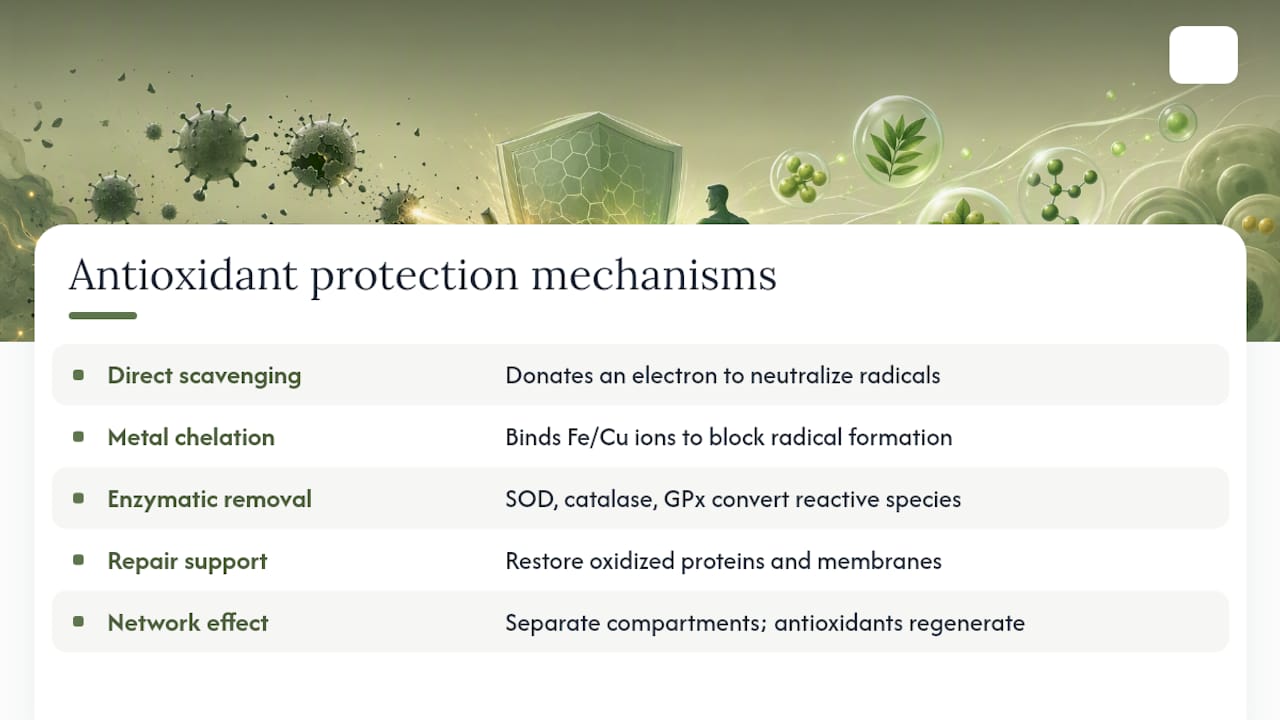
Antioxidants protect cells through four overlapping mechanisms. First, direct scavenging: a molecule like vitamin C donates an electron to a free radical, neutralizing it. Second, metal chelation: some antioxidants bind iron or copper ions that would otherwise catalyze radical formation. Third, enzyme-mediated removal: SOD, catalase, and glutathione peroxidase convert reactive species into harmless byproducts. Fourth, repair support: certain compounds help restore oxidized proteins and membranes after damage occurs.
What makes this system elegant is the network effect. Water-soluble vitamin C works in the cell’s aqueous compartments, while fat-soluble vitamin E protects membranes. When vitamin E is oxidized in the process of neutralizing a radical, flavonoids like hesperetin can restore it. No single molecule does everything, which explains why the Nature review on antioxidant biology emphasizes networks over individual compounds.
One often-overlooked fact: free radicals are not purely harmful. Your immune cells use them to kill bacteria, and they serve as signaling molecules after exercise. The goal is balance, not elimination.
Pro Tip: Supporting your endogenous enzyme systems through lifestyle, not just diet, is as important as eating antioxidant-rich foods. Regular moderate exercise, blood-glucose control, and adequate sleep all help maintain SOD, catalase, and glutathione peroxidase activity.
Major antioxidant classes and where they work
| Class | Key Example | Where It Acts | Top Food Sources |
|---|---|---|---|
| Water-soluble vitamins | Vitamin C | Cytoplasm, plasma | Bell peppers, citrus, kiwi |
| Fat-soluble vitamins | Vitamin E | Cell membranes | Almonds, sunflower seeds, olive oil |
| Carotenoids | Lutein, lycopene | Membranes, eye tissue | Tomatoes, kale, carrots |
| Flavonoids/polyphenols | Quercetin, resveratrol | Cytoplasm, nucleus | Berries, dark chocolate, green tea |
| Mineral cofactors | Selenium | Enzyme cofactor (GPx) | Brazil nuts, tuna, eggs |
| Endogenous enzymes | SOD, catalase, GPx | All cellular compartments | Produced internally |
A few points worth noting about this table. Carotenoids split into provitamin A types (beta-carotene, which converts to vitamin A) and non-provitamin A types (lutein, zeaxanthin, lycopene). Lutein and zeaxanthin concentrate in the macula of the eye, which is why they appear in the AREDS2 formula. Selenium is not an antioxidant itself but is an essential cofactor for glutathione peroxidase, so a selenium deficiency quietly undermines your entire glutathione defense system.
Which foods give you the most antioxidant protection?
A colorful plate is the most practical shorthand for antioxidant coverage. Different pigments signal different phytochemical classes, so variety across colors is more protective than eating large amounts of a single food.
High-antioxidant food groups to prioritize:
-
Berries (blueberries, strawberries, blackberries): among the richest sources of anthocyanins and vitamin C
-
Leafy greens and cruciferous vegetables (spinach, kale, broccoli): supply lutein, vitamin C, and sulforaphane
-
Nuts and seeds (almonds, walnuts, sunflower seeds): concentrated sources of vitamin E and selenium
-
Legumes (black beans, lentils): polyphenol-rich and often overlooked
-
Coffee, green tea, and cocoa: among the most consumed sources of polyphenols in the American diet
-
Colorful fruits (tomatoes, oranges, mangoes): lycopene, beta-carotene, and vitamin C
Cooking matters more than most people realize. Mayo Clinic notes that cooking tomatoes increases lycopene bioavailability, because heat breaks down cell walls and releases the carotenoid. Freezing, by contrast, generally preserves antioxidant content well, so frozen berries are a legitimate alternative to fresh. Light steaming tends to preserve water-soluble antioxidants better than boiling, which leaches them into cooking water.
For practical coverage, aim for nutrition strategies that span multiple antioxidant classes rather than relying on any single superfood.
What does the science actually show about disease prevention?
The evidence splits clearly along study design lines, and understanding that split protects you from misleading supplement marketing.
Observational studies consistently show that people who eat more fruits and vegetables have lower rates of cardiovascular disease and certain cancers. A review of 95 observational studies covering more than 2 million participants found this association to be robust. These diets supply hundreds of compounds working together, not a single antioxidant in isolation.
Randomized controlled trials (RCTs) on high-dose single antioxidant supplements tell a different story. Most have shown no benefit for chronic disease prevention, and some have shown harm. The beta-carotene story is the clearest warning: two large RCTs found that beta-carotene supplements significantly increased lung cancer incidence among smokers and asbestos workers. Some vitamin E trials have raised concerns about hemorrhagic stroke at high doses.
The AREDS exception. The Age-Related Eye Disease Study (AREDS) and its follow-up AREDS2 are the strongest RCT evidence for antioxidant supplementation in any specific condition. The original AREDS formula reduced progression to advanced AMD by approximately 25% in people with intermediate AMD. AREDS2 replaced beta-carotene with lutein and zeaxanthin, achieving similar protection without the lung cancer risk for smokers and former smokers. This is a clinically indicated, formula-specific use, not a general endorsement of antioxidant supplements.
A PMC review on antioxidants and human health found limited or low-certainty evidence that supplements prevent cognitive decline or most other age-related diseases outside specific clinical contexts like AMD.
Are antioxidant supplements safe? Risks, interactions, and who may benefit
Most healthy adults eating a varied diet do not need high-dose antioxidant supplements. The risks are real and specific.
Known risks and red flags:
-
Beta-carotene supplements in smokers or former smokers: increased lung cancer risk confirmed in multiple RCTs. Avoid entirely.
-
High-dose vitamin E (above 400 IU/day): associated with increased risk of hemorrhagic stroke and, in some trials, prostate cancer.
-
Interactions with cancer therapy: NCI explains that antioxidant supplements may reduce the effectiveness of chemotherapy or radiation, which deliberately use oxidative stress to destroy cancer cells. Always disclose supplements to your oncologist.
-
Anticoagulant interactions: high-dose vitamin E and vitamin K-containing supplements can interfere with warfarin and other blood thinners.
-
Pro-oxidant effects at high doses: some antioxidants switch from protective to damaging when concentrations exceed physiological ranges, a key reason Harvard Health cautions against indiscriminate supplementation.
Who may benefit from targeted supplementation:
-
People with intermediate AMD (AREDS2 formula, under ophthalmologist guidance)
-
Those with confirmed nutrient deficiencies (selenium, vitamin C, vitamin E) identified through lab testing
-
Individuals with significant dietary restrictions that limit food-based intake
Pro Tip: Before starting any antioxidant supplement, check with your clinician, especially if you smoke, are undergoing cancer treatment, or take anticoagulants. A targeted blood panel can reveal whether you actually have a deficiency worth addressing, rather than supplementing blind.
For a broader look at which supplements have genuine longevity evidence, the evidence-based supplement guide for adults over 40 is worth reading alongside this article.
Practical steps to strengthen your antioxidant defenses
These steps are grounded in what the evidence actually supports, not supplement marketing.
-
Eat five or more servings of fruits and vegetables daily, spanning at least three different colors. Color variety is your shortcut to covering multiple antioxidant classes.
-
Pair fat with carotenoid-rich vegetables. A drizzle of olive oil on roasted carrots or a handful of almonds with a spinach salad increases absorption of fat-soluble carotenoids significantly.
-
Cook tomatoes and red peppers to increase lycopene bioavailability. Keep leafy greens lightly steamed rather than boiled to preserve vitamin C.
-
Include green tea or coffee daily. Both are among the richest polyphenol sources in the typical American diet and carry consistent observational associations with cardiovascular health.
-
Exercise moderately and consistently. Regular physical activity upregulates your endogenous antioxidant enzyme systems, including SOD and glutathione peroxidase, more reliably than any supplement.
-
Control blood glucose. Chronically elevated glucose generates excess free radicals through glycation and mitochondrial stress. This single lifestyle factor has an outsized effect on oxidative load.
-
Prioritize sleep. Oxidative repair processes are most active during sleep; chronic sleep deprivation measurably increases oxidative stress markers.
-
Avoid smoking. Cigarette smoke is one of the highest-volume external sources of free radicals and simultaneously depletes vitamin C.
-
Consider low-dose, targeted supplementation only when lab results indicate a deficiency, not as a general insurance policy.
Antioxidant defense is also deeply connected to mitochondrial health, since mitochondria are both the primary source of free radicals and the site where much of your endogenous antioxidant activity occurs.
When should you consider testing or a personalized approach?
A food-first strategy works well for most people, but certain situations call for a more targeted, data-driven approach. Consider lab testing if you experience unexplained fatigue, are planning high-dose supplementation, have early-onset chronic disease, or are actively working to extend your healthspan beyond what general lifestyle advice can deliver.
Relevant tests include oxidative stress markers, selenium status, RBC magnesium (a cofactor for hundreds of enzymatic reactions), vitamin D, and a full metabolic panel. Results from these panels change recommendations in concrete ways. A person with confirmed selenium deficiency needs a very different plan than someone with optimal levels who is simply looking to optimize.
Blood testing for wellness and longevity is particularly valuable for adults over 45, when oxidative stress tends to rise and endogenous enzyme activity can begin to decline. A Magnesium RBC test is a practical starting point, since magnesium deficiency is common and directly affects antioxidant enzyme function.
Pro Tip: Combining lab results with wearable data (heart rate variability, sleep quality, glucose trends) and genetic markers gives you a far more precise picture of your personal oxidative stress load than any single test alone. This is where personalized supplementation moves from guesswork to genuine precision.
Why food-first thinking still wins, even in 2026
The supplement industry has spent decades trying to bottle the benefits of plant-rich diets into single capsules. The clinical trial record is clear: it largely has not worked. The reason is not that antioxidants are ineffective, but that the “antioxidant” label covers hundreds of compounds that work as a coordinated network, regenerating each other, acting in different cellular compartments, and interacting with your endogenous enzyme systems in ways that no isolated molecule can replicate.
What I find most compelling in the research is the AREDS2 story, not because it validates supplements broadly, but because it shows exactly what targeted, evidence-based supplementation looks like. A specific formula, for a specific condition, in a specific population, with a specific safety modification (swapping beta-carotene for lutein to protect smokers). That level of precision is what separates clinical supplementation from wellness marketing.
For most of us, the path forward is simpler and more satisfying than a supplement stack: eat a wide variety of colorful whole foods, support your body’s own antioxidant systems through exercise and sleep, and use lab testing to identify the rare genuine deficiency worth addressing. That combination, grounded in evidence and personalized to your biology, is what actually moves the needle on long-term health.
Healthspan Holistic supports your antioxidant health with precision testing
If you want to move beyond general advice and understand your personal oxidative stress picture, Healthspan Holistic offers the tools to do it. The 90 Day Journey to Longevity combines advanced blood panels, including metabolic and nutrient-status markers, with AI-powered data integration and one-on-one health coaching. You get a clear picture of where your defenses stand and a personalized plan to address real gaps, not assumed ones.
For adults over 40 who want to know whether their antioxidant and metabolic status is actually optimized, this program removes the guesswork that comes with generic supplement advice. Targeted lab tests like the Magnesium RBC panel and full metabolic panels are available individually as well.
Sources
This article is general information, not a substitute for advice from a qualified doctor. Consult a qualified healthcare professional about your own circumstances before acting on anything here.
FAQ
What is the biological role of antioxidants?
Antioxidants neutralize reactive free radicals by donating electrons, interrupting oxidative chain reactions that would otherwise damage cell membranes, proteins, and DNA. Your body also produces its own antioxidant enzymes, including superoxide dismutase, catalase, and glutathione peroxidase, which are central to this defense.
What is the function of the antioxidant enzyme system?
The endogenous antioxidant enzyme system converts reactive oxygen species into harmless byproducts: SOD converts superoxide into hydrogen peroxide, catalase breaks that down into water and oxygen, and glutathione peroxidase handles a broader range of reactive species. These enzymes are your primary internal defense against oxidative stress.
What happens if you lack antioxidants?
Insufficient antioxidant defense, whether from poor diet, deficiency, or overwhelmed enzyme systems, allows oxidative stress to accumulate, damaging lipids, proteins, and DNA over time. This chronic damage is associated with higher risk of cardiovascular disease, neurodegeneration, and accelerated cellular aging.
Do antioxidant supplements prevent disease?
Observational studies consistently link fruit- and vegetable-rich diets with lower chronic disease risk, but randomized trials have generally not shown that high-dose single antioxidant supplements reproduce those benefits. The AREDS2 formula for intermediate AMD is the clearest exception, supported by direct RCT evidence.
When should you consider antioxidant testing?
Lab testing for oxidative stress markers, selenium, vitamin D, and RBC magnesium is worth considering if you have unexplained fatigue, early-onset chronic disease, or are planning targeted supplementation. Healthspan Holistic’s metabolic panel and nutrient-status tests can identify genuine deficiencies before you supplement.
Leave a comment: