

Age management medicine is a proactive, preventative medical specialty that uses personalized diagnostics, lifestyle prescriptions, and targeted clinical interventions to preserve your function and quality of life as you age, rather than simply treating disease after it appears. According to the Age Management Medicine Group (AMMG), this approach is fundamentally different from vague “anti-aging” marketing: it is physician-guided, data-driven, and grounded in measurable outcomes. The World Health Organization frames healthy aging as a global public-health priority, emphasizing the preservation of functional ability, not just the absence of disease.
Adults over 40 who want an evidence-based roadmap, rather than a quick fix, are the people who benefit most from a structured age management program.
The four building blocks of a credible program are:
- Testing and biomarkers: baseline labs, metabolic panels, and hormone profiles
- Lifestyle interventions: nutrition, exercise, sleep, and stress management
- Targeted clinical therapies: hormone optimization, peptides, or GLP-1 where clinically indicated
- Ongoing monitoring: scheduled follow-ups with data-driven adjustments
One note on terminology: “age management” sometimes appears in human-resources literature to describe workplace policies for older workers, as SHRM documents. This article focuses exclusively on age management medicine, the clinical specialty.
Key Takeaways
Age management medicine works when it combines personalized diagnostics, evidence-backed lifestyle interventions, and ongoing monitoring, rather than relying on any single supplement or therapy.
| Point | Details |
|---|---|
| Definition matters | Age management medicine is a proactive specialty focused on healthspan, not a marketing term for anti-aging products. |
| Lifestyle is the foundation | Exercise, sleep, nutrition, and smoking cessation carry the strongest evidence and should anchor any program. |
| Labs need context | Biomarkers are most useful when interpreted alongside your history and tracked over time, not read as a single snapshot. |
| Evidence varies by intervention | Hormone therapy and peptides require documented need, close monitoring, and informed consent; lifespan extension claims remain unproven at the individual level. |
| Healthspan Holistic | The 90 Day Journey to Longevity offers a structured, data-driven starting point for adults 40+ seeking a full age management program. |
What a well-run age management program actually includes
Credible programs share a common architecture, even when the specific interventions vary. Understanding each component helps you tell a serious clinic from a supplement shop with a white coat.
Medical history and physical exam. Every reputable program starts here. A clinician reviews your personal and family history, current medications, symptoms, and functional status before ordering a single test. This context shapes which labs matter most for you.
Personalized lab testing and biomarker interpretation. A broad baseline panel, covering metabolic function, lipids, thyroid, sex hormones, inflammatory markers, and key micronutrients, gives the program its data foundation. Results are interpreted in the context of your history, not just compared against a generic “normal” range.
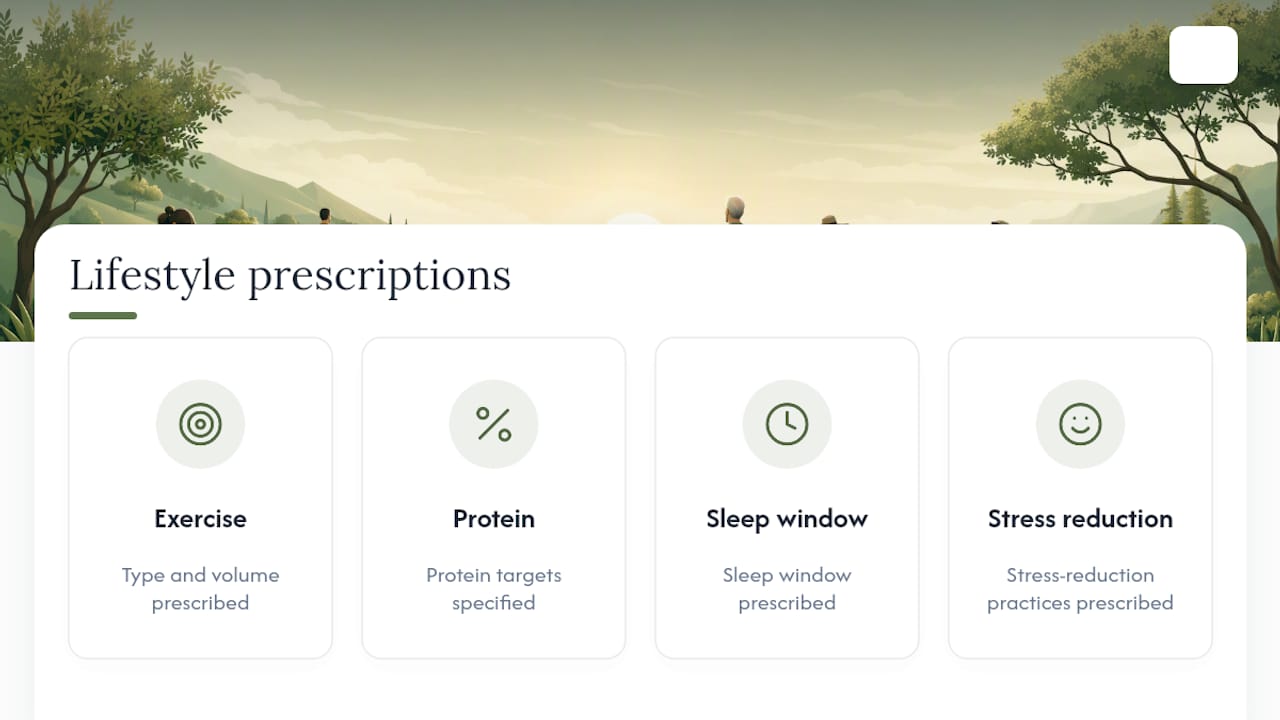
Lifestyle prescriptions. Exercise type and volume, protein targets, sleep window, and stress-reduction practices are prescribed with the same specificity as medications. These are not suggestions; they are the highest-leverage interventions in the program.
Targeted clinical interventions. Depending on your labs and symptoms, a clinician may recommend hormone optimization, peptide therapies, GLP-1 weight management, or nutraceutical protocols. Each should be tied to a specific finding, not offered as a blanket package.
Supplements and nutraceuticals. Professional-grade supplements targeting cardiovascular health, mitochondrial function, bone density, and hormone balance can complement clinical interventions. The key word is complement: supplements work best alongside, not instead of, lifestyle and medical care. A review of evidence-based supplements for longevity can help you prioritize.

Technology-enabled monitoring. Wearables, genetic data integration, and AI-powered analytics allow programs to track sleep quality, activity levels, and recovery between clinic visits. This continuous data stream makes follow-up adjustments far more precise than a once-a-year physical.
Pro Tip: Ask any prospective provider to show you the actual lab reference ranges they use and explain why. A quality program shares your numbers transparently and tells you the threshold at which they would recommend action. A clinic that hides behind “proprietary formulas” or refuses to share raw results is a red flag, not a feature.
Which tests and biomarkers do programs commonly use?
A biomarker, as defined by the National Cancer Institute, is any measurable indicator of a biological state or condition. In age management medicine, biomarkers are the program’s compass: they tell you where you are, and repeat testing shows whether you are moving in the right direction.
| Test / Biomarker | What it measures | Why programs use it | Key limitation |
|---|---|---|---|
| Basic metabolic panel | Kidney function, electrolytes, blood glucose | Screens for early metabolic dysfunction | Single snapshot; context matters |
| Lipid panel | LDL, HDL, triglycerides, total cholesterol | Cardiovascular risk stratification | Standard LDL may miss particle size issues |
| HbA1c | 90-day average blood glucose | Early insulin resistance and diabetes risk | Less sensitive in early-stage changes |
| Thyroid panel (TSH, free T3, free T4) | Thyroid hormone output and conversion | Fatigue, weight, and metabolic rate clues | Optimal ranges debated in functional medicine |
| Sex hormones (testosterone, estradiol, DHEA-S) | Hormonal status and decline patterns | Guides hormone optimization decisions | Diurnal variation requires consistent timing |
| Vitamin D | Circulating vitamin D status | Bone, immune, and cardiovascular health | Optimal vs. sufficient levels still debated |
| High-sensitivity CRP | Systemic inflammatory burden | Cardiovascular and metabolic risk marker | Non-specific; elevated by many conditions |
| Fasting insulin | Insulin sensitivity | Earlier signal than HbA1c alone | Not yet standard in all primary care panels |
Beyond these core tests, specialized categories add depth:
- Aging clocks and epigenetic markers: DNA methylation-based clocks (such as the Horvath clock) estimate biological age, though peer-reviewed research notes their clinical utility remains limited outside research settings.
- Glycation markers: Advanced glycation end-products reflect cumulative metabolic stress.
- Mitochondrial function markers: Organic acids and CoQ10 levels hint at cellular energy production.
- Inflammatory profile: A full cytokine or oxidative stress panel goes beyond CRP alone.
A word of caution: lab-to-lab variability, cost, and the gap between research promise and clinical utility are real. A single aging-clock result should inform a conversation, not drive a treatment decision on its own. Guidance on choosing the right lab tests can help you prioritize what to order first.
What the evidence supports, and where the controversies lie
The strongest evidence in age management medicine sits squarely in lifestyle medicine. Regular aerobic and resistance exercise, a nutrient-dense dietary pattern, adequate sleep, smoking cessation, and moderate alcohol intake each carry decades of large-scale trial data supporting their role in reducing chronic disease risk and preserving function. These are not experimental; they are the foundation.
The evidence gets thinner as you move toward more targeted interventions. A PubMed-indexed review of aging mechanisms and interventions supports a cautious, mechanism-based approach: the biological rationale for many therapies is sound, but large randomized controlled trials confirming long-term benefit in healthy aging populations are still limited. Geroscience research, as outlined in PMC6941207, is a growing field with genuine promise and genuine uncertainty.
Key risk and controversy areas to know:
- Hormone therapy: Testosterone and estrogen optimization carry real clinical benefit for people with documented deficiency, but unmonitored, high-dose prescribing has been linked to cardiovascular events and, in some contexts, cancer signals. Supervision and regular monitoring are non-negotiable.
- Growth hormone and peptides: Some peptide therapies show early promise in research settings. Off-label growth hormone prescribing for “anti-aging” without a documented deficiency is not supported by current evidence and carries metabolic risks.
- Supplement quality and regulation: The U.S. supplement market is not subject to pre-market FDA approval. Contamination, mislabeling, and inflated efficacy claims are documented problems. Professional-grade products from verified manufacturers reduce, but do not eliminate, this risk.
- Aging clocks as diagnostic tools: Epigenetic clocks are valuable research instruments. Using a single clock result to justify aggressive interventions in a healthy person goes beyond what current evidence supports.
- Stem cell therapies: Unregulated stem cell clinics offering “rejuvenation” treatments lack clinical trial evidence for most anti-aging claims, and the Mayo Clinic has documented serious adverse events from unproven procedures.
The honest summary: lifestyle interventions are well-established, targeted clinical therapies require documented need and close monitoring, and anything marketed as a guaranteed lifespan extender should be viewed with skepticism.
Who should consider an age management program?
Age management programs are best suited to adults who are proactive about their health, not those in acute medical crisis. The right candidate is typically someone who wants to optimize function and reduce risk, not someone seeking a cure for an existing serious illness.
Ideal candidates tend to be:
- Adults 40 and older who are generally healthy but noticing early changes in energy, body composition, sleep, or recovery
- People with concerning lab trends (rising fasting glucose, declining testosterone, elevated CRP) that have not yet crossed into disease territory
- Those with a strong family history of early cardiovascular disease, diabetes, or cognitive decline who want to act before symptoms appear
- Anyone who has tried generic wellness advice without measurable results and wants a personalized, data-driven plan
Signs that a clinical evaluation is warranted:
- Unexplained fatigue that persists despite adequate sleep
- New difficulty maintaining weight or muscle mass
- Symptoms consistent with hormonal changes (low libido, mood shifts, hot flashes, poor recovery)
- Metabolic lab values trending in the wrong direction over two or more years
Who should proceed cautiously or consult a specialist first:
- People with unstable cardiovascular disease, active cancer, or serious autoimmune conditions
- Pregnant or breastfeeding individuals
- Cancer survivors considering hormone therapy, who need oncology clearance before any hormonal intervention
Age management is not a replacement for standard preventive care. If you have not had a recent physical, lipid panel, or age-appropriate cancer screening, start there.
How a reputable program typically unfolds
A well-structured program follows a clear sequence. Here is what to expect:
-
Initial intake (Week 0). A detailed health history, symptom review, medication list, and functional assessment. The clinician establishes your goals and explains the program’s scope.
-
Baseline labs and biomarker review (Weeks 1–2). A comprehensive panel is drawn. Results are reviewed in a dedicated appointment, not just flagged as “normal” in a portal message.
-
Personalized plan creation (Week 3). Based on history and labs, the clinician builds a written plan covering lifestyle targets, any clinical interventions, supplement recommendations, and measurable goals.
-
Short-term interventions and coaching (Weeks 4–8). You begin the plan with support from a health coach or care coordinator. Wearable data, nutrition logs, and symptom tracking feed into the process. A step-by-step holistic health plan can give you a preview of this structure.
-
First follow-up and adjustment (Weeks 8–12). Repeat labs for any markers that needed intervention. The clinician reviews progress against measurable goals and adjusts the plan. This is where good programs separate from mediocre ones: adjustments are data-driven, not anecdotal.
-
Ongoing monitoring (Every 3–6 months). Scheduled reviews keep the plan current as your biology changes. Longer-term markers like bone density or cardiovascular risk scores are reassessed annually.
Pro Tip: Good follow-up looks like this: a written summary of your lab changes, a documented reason for any adjustment to therapy, and a clear explanation of what you are consenting to before any higher-risk intervention begins. If a clinic skips the written consent step for hormone or peptide therapy, walk away.
Evidence-backed steps you can start today
You do not need a clinic visit to begin. These lifestyle moves carry the strongest evidence base in aging research and cost nothing but consistency.
Movement:
- Aim for at least 150 minutes of moderate aerobic activity per week, plus two resistance training sessions
- Prioritize compound movements (squats, deadlifts, rows) to preserve muscle mass and bone density
- Even a daily 20-minute walk meaningfully reduces metabolic risk
Nutrition:
- Shift toward a Mediterranean-style eating pattern: vegetables, legumes, whole grains, olive oil, fish, and limited processed foods
- Target adequate protein (distributed across meals, not concentrated in one sitting) to support muscle protein synthesis
- Reduce ultra-processed food and added sugar, which drive glycation and inflammation
Sleep:
- Set a consistent sleep and wake time, even on weekends, to anchor your circadian rhythms
- Keep your bedroom cool and dark; limit screens 60 minutes before bed
- Sleep quality is one of the highest-leverage longevity levers, with effects on metabolic health, inflammation, and cognitive function
Screenings to discuss with your doctor:
- Blood pressure check (at every visit)
- Fasting lipid panel and glucose (every 1–3 years depending on risk)
- Colon cancer screening starting at 45 for average-risk adults
- Bone density scan (DEXA) for women at 65, or earlier with risk factors
Pro tip for tracking: Pick one wearable metric (resting heart rate, sleep duration, or daily steps) and track it for 30 days before adding more. A single consistent signal is more useful than five noisy ones.
What realistic results look like, and when to expect them
Age management programs deliver measurable change, but the timeline varies by intervention and individual baseline.
Weeks 2–6: Sleep quality often improves with consistent sleep hygiene. Fasting glucose and energy levels can shift noticeably within the first month of dietary changes.
Months 2–4: Lipid panels typically reflect dietary and exercise changes. Body composition (lean mass gain, fat reduction) becomes measurable. Inflammatory markers like CRP often improve with consistent exercise and anti-inflammatory nutrition.
Months 6–12: Hormonal optimization effects on mood, libido, and body composition become clearer. Thyroid-related symptoms may resolve. Vitamin D levels normalize with consistent supplementation.
One to three years: Bone density changes require at least 12–18 months to show on DEXA. Cardiovascular risk score reductions accumulate over years of sustained lifestyle change.
What you should realistically expect: improved energy, better lab numbers, reduced risk markers, and a stronger functional baseline. What no credible program can promise: a guaranteed extension of your lifespan. The evidence for individual lifespan extension from any current intervention remains preliminary, as the mechanisms of aging research makes clear. The goal is more years of good health, not a number on a birth certificate.
Measure progress with repeat labs at 3-month intervals for active interventions, validated questionnaires for energy and sleep quality, and functional measures like grip strength or VO2 max if your program includes them.
How to find a trustworthy provider and spot the red flags
Choosing the right clinician matters as much as choosing the right interventions. Here is a practical vetting checklist.
What to look for:
- Board certification in internal medicine, family medicine, or endocrinology, plus additional training or certification through AMMG or a comparable body
- Transparent lab reporting: you receive your actual numbers, not just a “pass/fail”
- Evidence citations for proposed interventions (the clinician can name the research basis)
- A clear written consent process for any hormone, peptide, or off-label therapy
- A defined follow-up schedule with repeat labs built in
- Verifiable patient reviews on independent platforms
Questions to ask during your first consultation:
- Which labs will you order, and why those specifically?
- What is the evidence base for the therapy you are recommending?
- How will we measure whether this is working?
- What are the risks, and how will you monitor for them?
- What are the total expected costs over the first year?
Red flags that should stop you:
- Blanket “reverse your age” or “cure aging” promises
- Large up-front package pricing before any assessment has been done
- Heavy pressure to purchase a proprietary supplement bundle as part of the program
- Off-label high-dose hormone or growth hormone offers with minimal monitoring
- No mention of risks or contraindications during the consultation
- Inability or unwillingness to share lab reference ranges and raw results
The benefits of lab testing are only realized when a provider uses those results transparently and adjusts your plan based on what the data actually shows.
An honest perspective on age management medicine
The most common mistake people make with age management is treating it as a shopping list rather than a system. They read about a promising peptide or an aging clock test, order it in isolation, and wonder why nothing changes. The interventions that work, work because they are layered on a foundation of sleep, movement, and nutrition, and because someone is tracking the results and adjusting the plan.
What I find genuinely encouraging about this field is the shift from reactive medicine to proactive health optimization. For too long, the standard model waited for a diagnosis before acting. Age management medicine, done responsibly, asks a better question: what does your biology look like now, and what can we do to keep it moving in the right direction?
The ethical obligation in this space is real. Patients who come in motivated and hopeful deserve honest probability estimates, not inflated promises. An intervention with a solid mechanistic rationale but limited long-term trial data should be offered as exactly that: promising, monitored, and revisable. The moment a provider stops saying “we don’t know yet” about genuinely uncertain interventions, they have crossed from medicine into marketing.
The practical wisdom: start with the interventions that have the strongest evidence (lifestyle, sleep, nutrition, resistance training), get a thorough baseline panel, and build from there. The most sophisticated longevity protocol in the world underperforms a consistent sleep schedule and three weekly strength sessions for most people over 40.
Healthspan Holistic brings this whole program together for you
If you have read this far, you already know what a credible age management program looks like. Healthspan Holistic is built around exactly that model: advanced lab panels, AI-powered integration of wearable and genetic data, and one-on-one personalized coaching for adults 40 and older who want measurable results, not guesswork.

The 90 Day Journey to Longevity is the structured starting point: a 90-day program that maps directly to the intake, testing, planning, and monitoring sequence described in this guide. You also have access to individual lab panels, including the Metabolic Panel and Comprehensive Hormone Panel, if you want to begin with targeted diagnostics before committing to a full program.
Ready to see where your numbers actually stand? Start with the 90 Day Journey to Longevity and get a clear, personalized picture of your health today.
Sources
- Ageing and health — WHO
- Biomarker — NCI Dictionary of Cancer Terms
- PMC article (aging biomarkers / translational research)
- PubMed entry (mechanisms of aging / interventions)
This article is general information, not a substitute for advice from a qualified doctor. Consult a qualified healthcare professional about your own circumstances before acting on anything here.
FAQ
What is age management in adults?
Age management medicine is a proactive, physician-guided specialty that uses personalized diagnostics, lifestyle prescriptions, and targeted clinical interventions to preserve function and quality of life as you age, as defined by the AMMG. It differs from standard care by acting before disease appears, not after.
What slows aging the most?
The strongest evidence points to regular resistance and aerobic exercise, a nutrient-dense dietary pattern, consistent quality sleep, and not smoking. These lifestyle factors reduce chronic disease risk and preserve functional capacity more reliably than any single supplement or therapy currently available.
What should a 70-year-old be doing every day?
Daily priorities include at least 30 minutes of movement (walking, resistance training, or both), adequate protein at each meal to protect muscle mass, a consistent sleep schedule, and staying current with age-appropriate screenings like blood pressure checks, lipid panels, and bone density assessments.
What are signs of aging well?
Aging well typically shows up as sustained energy and physical function, stable or improving metabolic lab values (blood glucose, lipids, blood pressure), good sleep quality, maintained muscle mass, and the absence of accelerating chronic disease. Functional measures like grip strength and balance are practical, trackable indicators.
Leave a comment: