

TL;DR:
- Blood sugar tracking offers crucial insights for those over 40 seeking sustained energy and health management. It enables early detection of glucose patterns, informs lifestyle adjustments, and enhances collaboration with healthcare providers. While beneficial for prediabetes and at-risk individuals, routine monitoring in healthy people remains an emerging area with personalized strategies advised.
Blood sugar tracking isn’t just a tool for people managing diabetes. If you’re over 40 and focused on staying energetic, sharp, and well for the long haul, understanding your glucose levels can be genuinely transformative. Tracking blood glucose helps you notice real-time highs and lows, respond to them, and adjust your food, activity, and medications with your care team. This article breaks down who benefits, how monitoring works, and how to make sense of the numbers so you can feel confident taking this step toward better health.
Key Takeaways
| Point | Details |
|---|---|
| Identify hidden risks | Blood sugar monitoring reveals silent patterns that can drive heart, nerve, and metabolic problems even before symptoms appear. |
| Empower healthy choices | Tracking your glucose equips you to adjust diet, exercise, and habits based on real-time or trend feedback. |
| Choose the right method | Fingerstick and CGM each have strengths and limitations; the best choice is personal and should be guided by your needs. |
| Personalize your plan | Work with a health provider to define when, why, and how to track blood sugar for your unique risk and goals. |
| Avoid unnecessary anxiety | For non-diabetics, routine CGM can increase stress without proven benefit—be thoughtful about why and how you monitor. |
What is blood sugar tracking and who benefits?
Blood sugar (or blood glucose) tracking means measuring the amount of glucose circulating in your blood at any given time. Glucose is your body’s primary fuel source, and keeping it in a healthy range is central to sustained energy, clear thinking, and long-term disease prevention.
There are three main methods used today:
-
Fingerstick (capillary) testing: A small drop of blood from your fingertip is placed on a test strip and read by a glucometer. It gives you a single snapshot reading and is widely accessible and affordable.
-
Continuous glucose monitoring (CGM): A small sensor worn on the skin reads glucose levels in real time, every few minutes, throughout the day and night, giving you a full trend picture.
-
Lab-based blood tests: These include fasting plasma glucose, A1C, and the oral glucose tolerance test (OGTT). They’re typically ordered by a healthcare provider and reviewed at scheduled visits.
The question “who benefits?” has a broader answer than most people expect. Yes, people with type 1 and type 2 diabetes rely on monitoring to stay safe and manage their condition daily. But the benefits extend well beyond that group.
“Tracking blood glucose helps people, especially those with diabetes or at risk, notice real-time highs and lows, respond to them, and adjust food, activity, and medicines with their care team.” — National Institute of Diabetes and Digestive and Kidney Diseases
People with prediabetes, a condition where glucose is elevated but not yet in the diabetic range, stand to gain enormously from monitoring. The same is true for those with a family history of diabetes, anyone managing weight, or individuals experiencing symptoms like fatigue, brain fog, or frequent energy crashes. Understanding why testing your blood matters for wellness and longevity is a powerful starting point for anyone over 40.
It’s worth knowing that prediabetes screening relies on blood tests like A1C, fasting plasma glucose, or the 2-hour OGTT, and these tests don’t always identify the same people. That’s one reason why tracking trends over time, rather than relying on a single result, gives you a much clearer picture of your metabolic health. If a test result is borderline or surprising, confirmatory testing with a different method is often recommended.
How does tracking blood sugar support better health?
With a clear sense of who benefits, we can dig deeper into how tracking blood sugar actually supports better health across many scenarios.
Both hyperglycemia and hypoglycemia (that is, blood sugar that’s too high or too low) can cause acute emergencies and contribute to long-term complications including nerve damage, heart disease, and kidney issues. Monitoring is what keeps you ahead of those risks.
Here’s how the process actually plays out in real life:
-
Recognize hidden patterns. Many people are surprised to discover that foods they assumed were “healthy” trigger significant glucose spikes. Tracking reveals those patterns clearly, giving you data-driven insight instead of guesswork.
-
Link lifestyle choices to readings. When you see how a poor night of sleep, a stressful week, or a sedentary afternoon raises your glucose, the connection between daily habits and metabolic health becomes undeniable. That awareness alone motivates meaningful change.
-
Take action before problems escalate. For those with prediabetes, regular monitoring combined with lifestyle shifts like improved nutrition and increased movement can significantly reduce the risk of progressing to type 2 diabetes. Major guidelines support using glucose monitoring to prevent that progression.
-
Work smarter with your care team. When you walk into an appointment with weeks of glucose trend data, your provider can make much more precise recommendations about your nutrition, activity, or medication adjustments.
“Monitoring can mean the difference between catching a health emergency early or missing silent risks that compound over time.”
Supporting a healthy metabolism through the right nutrition and supplementation strategies also works hand in hand with glucose tracking. They reinforce each other.
Pro Tip: Focus on pattern recognition over single numbers. A glucose reading of 140 mg/dL after a carbohydrate-heavy meal isn’t alarming on its own. But if you’re regularly hitting that level after every meal, that trend tells an important story worth discussing with your provider.
Methods for monitoring: Capillary tests versus CGM
Understanding how blood sugar monitoring benefits health raises an important question: which approach should you consider and what are the trade-offs?
CGM provides trend information across the day and night, which can improve day-to-day decision-making compared with single point-in-time testing. But fingerstick testing remains valuable, particularly for confirming readings during rapid glucose changes.
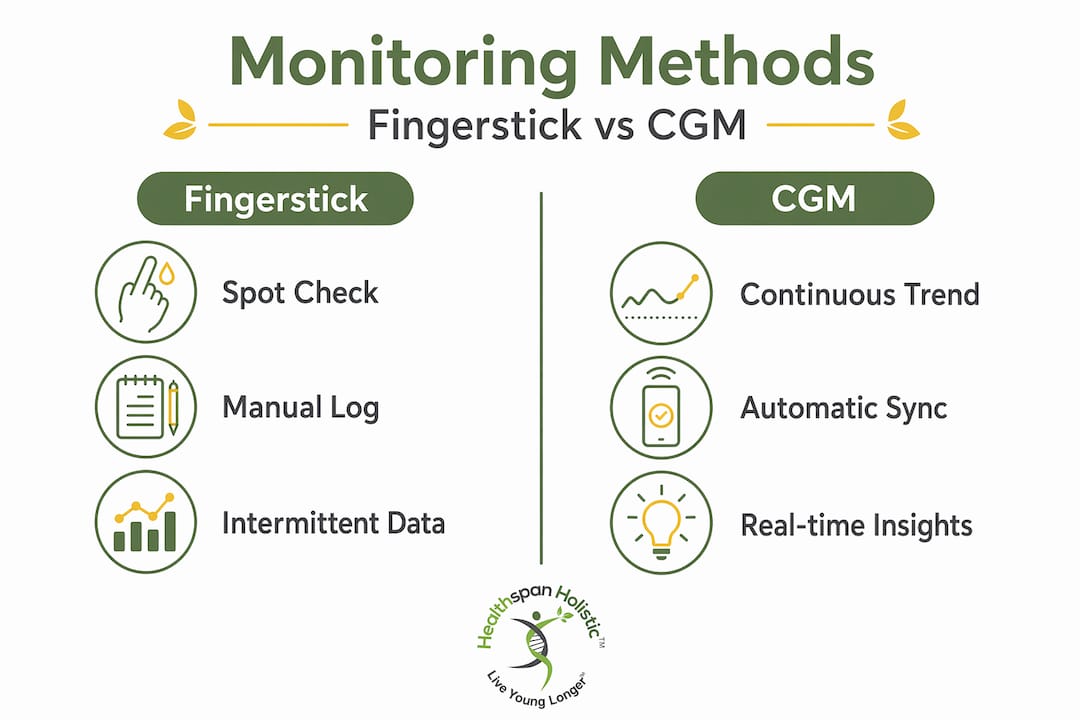
Here’s a side-by-side comparison to help you evaluate your options:
| Feature | Fingerstick (capillary) | CGM |
|---|---|---|
| Frequency | On-demand, typically 2-8 times/day | Continuous, every 1-5 minutes |
| Data type | Single snapshot reading | Full trend curves and graphs |
| Cost | Lower upfront cost | Higher upfront cost, sensor replacements needed |
| Pattern insights | Limited without frequent testing | Excellent, shows overnight trends and meal spikes |
| Immediate feedback | Yes, within seconds | Yes, with alerts for highs and lows |
| Limitations | Misses trends between checks | Can drift from true blood glucose; needs calibration |
It’s important to understand that CGM and capillary blood glucose are not interchangeable in terms of what they measure at any given moment. CGM reads glucose from interstitial fluid (the fluid between cells), which lags slightly behind blood glucose. That’s why accuracy matters in specific situations.
Practical situations for each method:
-
Fingerstick works well for daily spot-checking, verifying a CGM reading during a rapid rise or fall, and cost-conscious monitoring on a consistent schedule.
-
CGM works best for intensive glucose management, overnight monitoring, identifying meal-related spikes, and short-term educational experiments to understand how your body responds to specific foods or activities.
Checkout this CGM option to see if it might be a good fit for your lifestyle and health goals. Pairing CGM with a cellular micronutrient test can add another layer of metabolic insight, since certain deficiencies in magnesium, chromium, and B vitamins can directly affect glucose regulation.
Pro Tip: Always interpret CGM readings in context. If your sensor shows a rapid drop but you feel perfectly fine, do a fingerstick to confirm before taking any corrective action. Trend data is powerful, but cross-checking is smart.
Nuances, evidence, and cautions for non-diabetics
Having compared practical methods, it’s essential to consider some of the debates and cautions, especially for those not managing diabetes.
The honest truth? The evidence for routine blood sugar monitoring in metabolically healthy individuals is still developing. Experts caution that CGM can increase anxiety and that there isn’t yet strong evidence that routine CGM tracking improves health outcomes in metabolically normal individuals.
That doesn’t mean tracking is harmful or without value. It means context matters enormously. Here’s a summary of what the evidence currently shows:
| Population | Evidence for monitoring | Likely outcome |
|---|---|---|
| People with diabetes | Strong, well-established | Improved glucose control, fewer complications |
| People with prediabetes | Moderate, guideline-supported | Can prevent or delay progression to diabetes |
| Metabolically healthy adults | Weak to emerging | Educational value; unclear long-term health benefit |
“We don’t yet have strong evidence that routine CGM tracking improves health outcomes in people who are metabolically normal. Pathologizing normal glucose fluctuations can do more harm than good.” — Johns Hopkins Bloomberg School of Public Health
For non-diabetics who are curious about monitoring, there are specific situations where it may make good sense:
-
You have two or more risk factors for diabetes (family history, obesity, sedentary lifestyle, history of gestational diabetes)
-
You’re exploring how specific foods, stress, or sleep affect your glucose as a short-term educational experiment
-
Your provider has flagged borderline lab results and wants closer tracking
-
You’re working with a holistic health coach and using data to personalize your nutrition plan
-
You’ve noticed symptoms like fatigue after meals, frequent urination, or unexplained energy crashes
Personalizing your testing approach based on your unique risk profile is far more effective than applying a one-size-fits-all answer. The key is to gather meaningful data without becoming consumed by it.
Personalizing your plan: How and when to track blood sugar
With nuance and context in mind, let’s translate understanding into clear action steps to help you personalize blood sugar monitoring for your lifestyle and needs.
Health professionals individualize glucose monitoring goals based on risk, treatment plan, and hypoglycemia risk rather than applying a universal target for everyone. Your plan should reflect your specific situation.
Here’s a straightforward sequence to get started:
-
Talk to your provider first. Share your health history, symptoms, and goals. Ask whether periodic lab testing, fingerstick monitoring, or a CGM trial makes sense for your situation.
-
Choose your method based on purpose. Are you monitoring for safety, prevention, education, or optimization? Your answer shapes whether a one-time lab panel or a two-week CGM trial is more appropriate.
-
Set a clear target range. Know what numbers you’re aiming for. For most non-diabetic adults, a fasting glucose below 100 mg/dL and a post-meal peak below 140 mg/dL are generally considered healthy ranges.
-
Track consistently, then adjust. Tracking for a week or two with purpose is more valuable than sporadic monitoring over months. Use that data to have a specific, informed conversation with your healthcare team.
-
Revisit your approach regularly. As your health changes, your monitoring needs change too. What worked at 45 may need updating at 55.
Individual factors that affect how and how often you track include your age, current medications (especially ones affecting glucose like steroids or certain blood pressure drugs), family history, body weight, activity level, and any existing conditions like polycystic ovary syndrome (PCOS) or fatty liver disease.
Questions to ask your provider to build a tailored plan:
-
What are my current fasting glucose and A1C levels?
-
Do I have any signs of insulin resistance or prediabetes?
-
Which monitoring method makes the most sense for my specific risk factors?
-
What glucose range should I be aiming for?
-
How often should I retest or reassess?
Understanding how fiber affects glucose regulation is another piece of the puzzle. Consistent dietary fiber intake can meaningfully blunt post-meal glucose spikes, and that’s the kind of practical, customizable action that makes monitoring truly worthwhile.
Perspective: What most people miss about blood sugar tracking
Here’s something we see often: people get access to blood sugar data and immediately start chasing a perfect number. They eat, check their glucose, feel relieved or anxious based on that single reading, and repeat the cycle. It feels productive. But it often misses the point entirely.
The real power of glucose monitoring lies in trends and context, not in individual snapshots. A reading of 125 mg/dL after a big pasta dinner tells you almost nothing by itself. But watching your glucose consistently spike to that level after any meal containing refined carbohydrates, and then take two hours to come back down, that’s a signal worth acting on.
We also want to be honest about the psychological side of this. Tracking anything obsessively can shift from empowering to anxiety-inducing very quickly. For health-conscious people without diabetes, the risk isn’t always missing a dangerous glucose spike. Sometimes the risk is developing a stressful relationship with food and data that actually undermines wellbeing. Experts at Johns Hopkins have flagged this concern specifically, noting that normal glucose fluctuations can be misread as problems when they aren’t.
The healthier frame is curiosity. Treat your readings the way a scientist treats data: with interest, not judgment. When something surprises you, get curious. “My glucose stays elevated after a short night of sleep even when I eat the same breakfast. What does that tell me about how sleep affects my metabolism?” That’s a far more productive question than “Did I fail today?”
Understanding your blood through consistent testing over time, paired with real coaching support, gives you the context that makes data meaningful rather than stressful.
Pro Tip: Use your blood sugar readings as a conversation starter with your care team, not as a grading system. Numbers are information, not a report card on your worth or discipline.
Take the next step with Healthspan Holistic
Blood sugar tracking is one of the most actionable tools available for protecting your health after 40, but only when it’s part of a broader, personalized strategy. At Healthspan Holistic, we combine advanced diagnostics, smart tracking tools, and one-on-one coaching to help you translate data into real, lasting results. Whether you’re curious about your metabolic health, managing prediabetes, or ready to optimize your energy and longevity, we’re here to support every step. You can Contact Us to get personalized guidance, explore CGM options that fit your lifestyle, or order a metabolic panel to see exactly where you stand today.
Frequently asked questions
How often should I check my blood sugar if I don’t have diabetes?
Most experts recommend checking only if you have specific risk factors, are monitoring lifestyle changes, or at your provider’s advice. Monitoring goals are individualized based on risk and health status, not a universal schedule.
What is the difference between fasting blood sugar and A1C?
Fasting blood sugar measures your glucose at one moment after an overnight fast, while A1C reflects your average glucose levels over the past two to three months. Prediabetes diagnosis can use either test, and each captures different information.
Can tracking blood sugar help prevent type 2 diabetes?
Yes, for those with prediabetes, regular monitoring paired with lifestyle adjustments can significantly reduce the risk of progression. Major guidelines support using glucose monitoring as part of a prevention strategy.
Is CGM recommended for people without diabetes?
Most experts do not recommend routine CGM for non-diabetics except in high-risk situations or for short-term educational use. Evidence for benefit in metabolically normal individuals remains limited, and it can sometimes increase unnecessary anxiety.
Does the type of monitoring method matter for everyone?
The best method truly depends on your goals, health status, and provider guidance. CGM provides trend data that a single fingerstick cannot, but fingerstick testing remains accurate, affordable, and practical for many situations.
Leave a comment: