

TL;DR:
- Butyrate is a vital short-chain fatty acid produced by gut bacteria that fuel colon cells and maintain gut barrier integrity. Its systemic anti-inflammatory effects support metabolic, immune, and brain health, especially with aging. Eating fermentable fibers, such as resistant starch and inulin-rich vegetables, is the most effective way to naturally boost butyrate levels in the colon.
Butyrate is a short-chain fatty acid (SCFA) produced in your colon when gut bacteria ferment dietary fiber, and it serves as the primary fuel source for the cells lining your large intestine. For adults over 45, this molecule is one of the most important metabolites your body produces. Low butyrate levels are directly linked to increased gut permeability, chronic inflammation, and a higher risk of conditions like inflammatory bowel disease, type 2 diabetes, and cognitive decline. Understanding how to protect and restore your butyrate production is one of the most practical steps you can take for long-term wellness.
What is butyrate and how does it support colon health?
Butyrate, also known as butyric acid, belongs to the short-chain fatty acid family alongside acetate and propionate. Your colon produces it through microbial fermentation of dietary fiber, and colonocytes (the cells lining your colon) rely on it for up to 70% of their energy. That makes it the single most important fuel source for maintaining a healthy gut lining. Without adequate butyrate, those cells weaken, and the entire gut barrier becomes vulnerable.
Three bacterial species do most of the heavy lifting: Faecalibacterium prausnitzii, Roseburia intestinalis, and Eubacterium rectale. These are keystone species in the gut microbiome, meaning their decline has outsized negative effects on your overall microbial ecosystem. After age 45, the diversity and abundance of these bacteria naturally decrease, which is one reason gut health tends to deteriorate with age.
Butyrate does more than fuel cells. It strengthens tight junction proteins and stimulates mucin production by goblet cells, which together form the physical barrier that keeps bacteria and toxins inside the gut where they belong. When this barrier weakens, a condition commonly called “leaky gut” develops, allowing inflammatory compounds to enter the bloodstream. Butyrate is the primary defense against that process.
-
Faecalibacterium prausnitzii is one of the most abundant bacteria in a healthy gut and one of the first to decline with poor diet or antibiotic use
-
Roseburia and Eubacterium rectale are highly sensitive to low-fiber diets, meaning they drop off quickly when you reduce whole foods
-
Mucin production by goblet cells creates a protective gel layer that physically separates gut bacteria from the intestinal wall
Pro Tip: If you have taken antibiotics in the past year, your butyrate-producing bacteria may be significantly depleted. Prioritizing fermentable fiber intake immediately after a course of antibiotics is one of the most effective ways to restore these populations.
What are the health benefits of butyrate beyond the gut?
Butyrate’s influence extends well beyond your colon. One of its most significant mechanisms is the inhibition of histone deacetylase (HDAC), an enzyme that controls gene expression. This HDAC inhibition affects approximately 2% of mammalian genes, including those that regulate immune responses and epithelial barrier function. That may sound small, but 2% of your genome represents thousands of genes with wide-ranging effects on inflammation and disease risk.
Butyrate also suppresses NF-kB, a master regulator of the inflammatory response. By reducing NF-kB activity, butyrate lowers both local gut inflammation and systemic inflammatory markers. For adults dealing with joint pain, fatigue, or metabolic issues, this systemic anti-inflammatory effect is clinically meaningful. Chronic low-grade inflammation is the common thread running through most age-related diseases, and butyrate directly addresses it.
The gut-brain connection adds another layer of importance. Circulating butyrate can cross the blood-brain barrier and modulate microglial activation, the brain’s primary immune response. This means butyrate produced in your gut can reduce neuroinflammation, which is increasingly recognized as a driver of cognitive decline and mood disorders. For adults concerned about brain health as they age, this is a compelling reason to prioritize gut microbiome support.
Additional systemic benefits include:
-
Support for regulatory T cells, which maintain immune balance and prevent autoimmune overreaction
-
Improved insulin sensitivity through effects on gut hormones like GLP-1 and peptide YY
-
Appetite regulation by signaling satiety hormones, which supports healthy weight management
-
Reduced oxidative stress in the gut lining, protecting against cellular damage over time
What are the most effective natural ways to raise butyrate levels?
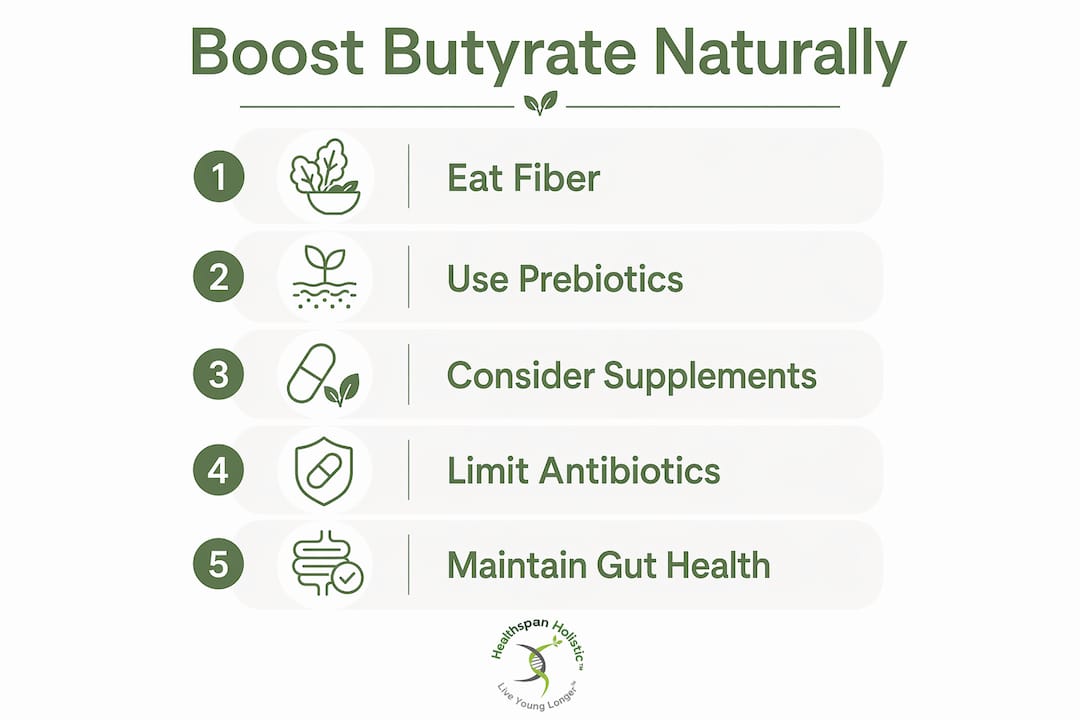
The most reliable way to increase butyrate is to feed the bacteria that produce it. These bacteria thrive on fermentable fibers, specifically resistant starch, inulin, fructooligosaccharides (FOS), and beta-glucan. Feeding butyrate-producing bacteria with these specific fibers is more effective than any supplement for raising butyrate concentrations in the colon. The reason is simple: bacteria produce butyrate on-site, in the exact location where it is needed most.
Here are the most practical steps to restore and maintain healthy butyrate production:
-
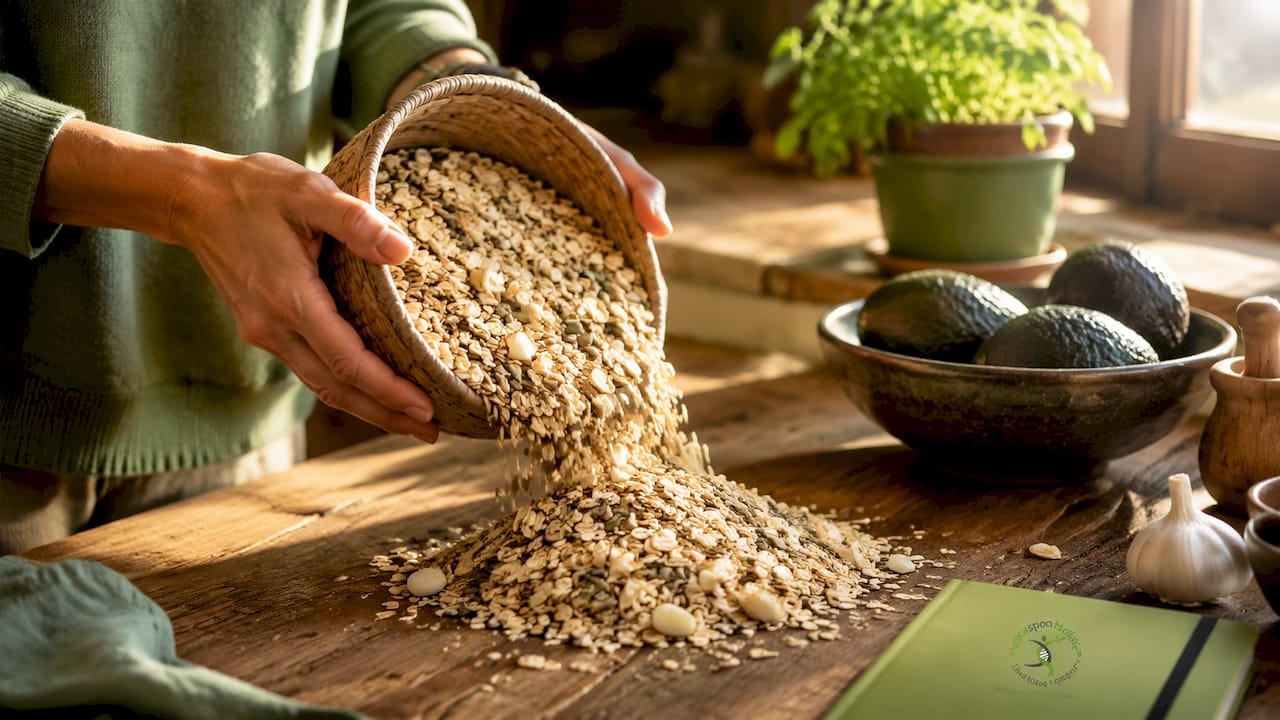
Eat resistant starch daily. Cooled potatoes, green bananas, and cooked-then-cooled rice are among the richest sources of resistant starch. Cooling these foods after cooking converts digestible starch into resistant starch that reaches your colon intact.
-
Add inulin and FOS-rich vegetables. Onions, garlic, leeks, asparagus, and chicory root feed Roseburia and Faecalibacterium prausnitzii directly. Aim to include at least two of these in your daily meals.
-
Include oats and barley regularly. Both are rich in beta-glucan, a soluble fiber that supports butyrate production and also improves cholesterol and blood sugar regulation simultaneously.
-
Diversify your plant intake. A diet with 30 or more different plant foods per week consistently produces higher microbial diversity and butyrate output than a narrow diet, even a healthy one.
-
Limit antibiotic use to genuine medical necessity. Antibiotics are sometimes unavoidable, but unnecessary use wipes out butyrate-producing species that can take months to recover. Always discuss alternatives with your physician when appropriate.
-
Consider targeted prebiotics and probiotics. Products like psyllium prebiotic fiber and BioMaintenance Probiotic can help restore the microbial environment needed for butyrate production, particularly after illness or antibiotic treatment.
Pro Tip: Xylooligosaccharides (XOS), such as iXOS® prebiotic, are among the most selective prebiotics for feeding butyrate-producing bacteria without causing the bloating that some people experience with inulin at higher doses.
Should you consider butyrate supplements?
Butyrate supplementation is a growing category, but the science is more nuanced than most product labels suggest. Most oral butyrate supplements are absorbed in the small intestine before they ever reach the colon, which is where they are actually needed. This absorption issue limits their direct benefit for healthy individuals who are simply looking to support gut health.
| Supplement Form | Delivery to Colon | Best Use Case | Limitations |
|---|---|---|---|
| Sodium butyrate (standard) | Poor. Absorbed in small intestine | Research settings, short-term clinical use | Strong odor, limited colonic delivery |
| Microencapsulated butyrate | Moderate. Partial colonic release | Mild gut symptoms, general support | Evidence limited in healthy adults |
| Enteric-coated capsules | Better. Designed for lower GI release | IBD support under medical supervision | Higher cost, variable efficacy |
| Calcium magnesium butyrate | Moderate to good | Gut barrier support, general wellness | Requires consistent use over time |
Sodium butyrate has a notoriously strong, unpleasant odor. In laboratory settings, handling butyrate compounds requires gloves and respiratory protection. Reputable supplement manufacturers address this through encapsulation, but it is worth knowing why the smell exists. The calcium and magnesium salt forms are generally better tolerated and more practical for daily use.
Supplementation makes the most sense in clinical contexts, particularly for people with inflammatory bowel disease, irritable bowel syndrome, or confirmed gut barrier dysfunction, ideally under the guidance of a healthcare provider. For most adults, restoring dietary fiber is the more effective and sustainable first step. That said, a quality calcium magnesium butyrate supplement can serve as a useful complement to a fiber-rich diet, especially during periods of dietary disruption or recovery.
What does current research say about butyrate and chronic disease?
The research connecting butyrate to chronic disease prevention has accelerated significantly. Reduced butyrate production is now consistently associated with inflammatory bowel disease, obesity, type 2 diabetes, and neurodegenerative conditions including Alzheimer’s disease. The epigenetic and immunological effects of butyrate, particularly its HDAC inhibition, are increasingly recognized as central mechanisms in these disease pathways. This is not a peripheral finding. It places butyrate at the intersection of gut health, immune regulation, and metabolic function.
On the production side, commercial butyric acid synthesis currently relies heavily on chemical processes that raise environmental concerns. Researchers are actively developing biosynthesis methods using engineered microorganisms and targeted prebiotic interventions to restore native butyrate-producing bacteria more sustainably. These approaches may eventually make therapeutic-grade butyrate more accessible and environmentally responsible.
The gut-brain axis research is particularly relevant for adults over 45. Butyrate’s ability to modulate microglial activation and reduce neuroinflammation positions it as a potential protective factor against age-related cognitive decline. While clinical trials in humans are still catching up to the mechanistic research, the direction of evidence is consistent and encouraging. Prioritizing butyrate production now is a reasonable, low-risk investment in long-term brain and metabolic health.
Key takeaways
Butyrate is the gut’s most critical metabolite, and restoring its production through diet is the single most effective strategy for gut barrier integrity, inflammation control, and long-term metabolic health.
| Point | Details |
|---|---|
| Primary energy source | Butyrate fuels up to 70% of colonocyte energy needs, making it irreplaceable for gut lining health. |
| Diet over supplements | Feeding butyrate-producing bacteria with fermentable fiber is more effective than oral supplementation for most adults. |
| Systemic anti-inflammatory | Butyrate reduces NF-kB and HDAC activity, lowering inflammation throughout the body, not just in the gut. |
| Brain health connection | Butyrate crosses the blood-brain barrier and reduces neuroinflammation, supporting cognitive function as you age. |
| Supplement strategy | Enteric-coated or calcium magnesium butyrate forms offer better colonic delivery when supplementation is appropriate. |
Why I think most people are approaching butyrate backwards
After working with adults over 45 on gut and metabolic health, I have noticed a consistent pattern. People hear about butyrate, get excited, and immediately reach for a supplement. I understand the appeal. It feels direct. But this approach skips the most important step, which is rebuilding the microbial environment that produces butyrate naturally.
Your gut bacteria are not passive recipients of whatever you swallow. They are a living ecosystem shaped by what you eat every single day. When you consistently feed Faecalibacterium prausnitzii and Roseburia with resistant starch and fermentable fiber, they produce butyrate continuously, in exactly the right location, at levels no supplement can reliably replicate. A supplement delivers a fixed dose. Your microbiome, when properly supported, produces butyrate around the clock.
That said, I do not dismiss supplements entirely. For someone recovering from a course of antibiotics, managing IBD, or dealing with significant gut barrier dysfunction, a quality sodium butyrate capsule or calcium magnesium butyrate formula can provide meaningful short-term support while dietary habits are being rebuilt. The key word is “while.” Supplements work best as a bridge, not a destination.
The other thing I want to be direct about: if you are eating a low-fiber diet, no amount of supplementation will compensate for the absence of the bacteria that produce butyrate. You cannot outsupplement a poor diet. Start with the food. Add the fiber. Then, if needed, layer in targeted support. That sequence produces results. The reverse rarely does.
— Chris
Restore your gut health with personalized support from Healthspan Holistic
If you are ready to take your gut health seriously, Healthspan Holistic offers the tools to do it with precision. Our Healthspan Plan pairs one-on-one holistic health coaching with advanced lab testing to identify exactly where your gut and metabolic health need support. We use detailed micronutrient panels, including our cellular micronutrient test, to give you a clear picture of what your body actually needs. From there, we build a personalized nutrition and supplementation plan designed around your biology, not a generic template.
1st Time Customers can take advantage of our BUY 1 GET 1 50% OFF special offer on all supplements.
FAQ
What is butyrate and why does it matter?
Butyrate is a short-chain fatty acid produced by gut bacteria during fiber fermentation, and it serves as the primary energy source for colon cells. Low butyrate levels are linked to gut inflammation, leaky gut, and increased risk of chronic diseases including IBD and type 2 diabetes.
What foods naturally increase butyrate production?
Cooled potatoes, green bananas, oats, barley, onions, garlic, and asparagus are among the most effective foods for feeding butyrate-producing gut bacteria. These foods provide resistant starch, inulin, FOS, and beta-glucan, the fermentable fibers that Faecalibacterium prausnitzii and Roseburia convert into butyrate.
Do butyrate supplements actually work?
Most standard oral butyrate supplements are absorbed in the small intestine before reaching the colon, limiting their direct effect. Enteric-coated and microencapsulated forms offer better delivery, but dietary fiber remains the most effective strategy for raising butyrate levels in healthy adults.
How does butyrate affect inflammation?
Butyrate reduces inflammation by inhibiting histone deacetylase (HDAC) and suppressing NF-kB, two key regulators of the inflammatory response. This mechanism lowers both gut-specific and systemic inflammation, which is particularly relevant for adults managing chronic inflammatory conditions.
Can butyrate support brain health?
Yes. Butyrate can cross the blood-brain barrier and reduce neuroinflammation by modulating microglial activation, the brain’s primary immune response. This gut-brain axis connection makes butyrate production relevant not just for digestive health but also for cognitive function and mood as you age.
Leave a comment: