

TL;DR:
- Anti-aging peptides signal the skin to produce collagen, repair tissue, and reduce wrinkles. Clinically supported options include GHK-Cu, Matrixyl, Matrixyl 3000, and Argireline, each working through different mechanisms. Combining signal, carrier, and neurotransmitter peptides offers the most comprehensive approach to skin aging.
Anti-aging peptides are short chains of amino acids that signal your skin to produce more collagen, repair tissue, and reduce the appearance of wrinkles. The most clinically supported list of anti-aging peptides includes GHK-Cu, Matrixyl (Palmitoyl Pentapeptide-4), Matrixyl 3000, and Argireline, each working through distinct biological mechanisms. If you are between 40 and 70 and want real results from your skincare routine, understanding which peptides do what, and why, is the most direct path forward. This guide breaks down the top peptides for skin by mechanism, evidence, and practical use so you can make confident choices.
The complete list of anti-aging peptides worth knowing
Peptides in skincare fall into four recognized categories: signal peptides, carrier peptides, neurotransmitter peptides, and enzyme-inhibiting peptides. Dermatologists classify these types because each one targets aging through a different pathway. Knowing the category helps you stack products intelligently rather than guessing. Below are the most effective peptide treatments backed by clinical data.
1. ghk-cu (copper tripeptide-1)
GHK-Cu is the most biologically versatile peptide on this list. It modulates over 4,000 genes, enhances collagen synthesis, and accelerates wound healing without causing irritation. That gene-modulating range means GHK-Cu does not just address surface wrinkles. It restores the skin’s structural foundation from the inside out. Research dating back to the 1970s confirms its safety and effectiveness, and 12-week studies show it outperforms Vitamin C for skin repair. You can find GHK-Cu in topical serums and in oral supplement form, such as GHK-Cu copper peptide tablets designed to support skin health from within.
2. matrixyl (palmitoyl pentapeptide-4)

Matrixyl is the most studied signal peptide in cosmetic dermatology. Clinical trials show it reduces wrinkle depth up to 36% over 12 weeks. That level of reduction is comparable to prescription-strength retinoids, without the peeling or sensitivity. Matrixyl works by mimicking a collagen fragment, which triggers your skin to produce more collagen as if it were repairing a wound. It is well-tolerated across all skin types, making it a reliable first-choice peptide for anyone starting an anti-aging routine after 40.
3. matrixyl 3000
Matrixyl 3000 is not simply a stronger version of Matrixyl. It is a dual-action peptide complex that combines Palmitoyl Tripeptide-1 with Palmitoyl Tetrapeptide-7. The first component stimulates new collagen production. The second suppresses the enzymes that break collagen down. This build-and-protect mechanism is why Matrixyl 3000 delivers 22–28% wrinkle reduction in 8–12 weeks across multiple studies. Single-action peptides can only do half the job. Matrixyl 3000 addresses both sides of the collagen equation simultaneously.
4. argireline (acetyl hexapeptide-3)
Argireline is the peptide most often compared to Botox, and the comparison is partly earned. It works by inhibiting the SNARE complex, which is the mechanism your muscles use to contract. Less muscle contraction means fewer expression lines around the eyes and forehead. At a 10% concentration, Argireline achieves up to 27% wrinkle depth reduction, confirmed by clinical data from both 2002 and 2021. The key difference from Botox is that Argireline is topical, gradual, and reversible. It works best on dynamic wrinkles caused by repeated facial movement.
5. leuphasyl
Leuphasyl is a neuropeptide that works through a different receptor pathway than Argireline. On its own, its effect is modest. Combined with Argireline, the two peptides enhance each other’s efficacy significantly. Leuphasyl targets the enkephalin receptor to reduce muscle tension, while Argireline blocks the SNARE complex. Using both together produces a more complete muscle-relaxing effect than either peptide alone. Many premium eye creams and forehead serums now include this combination for this reason.
6. snap-8 (acetyl octapeptide-3)
SNAP-8 is an extended version of Argireline with two additional amino acids. Those extra amino acids allow it to bind more effectively to the SNARE complex. The result is a stronger inhibition of muscle contraction at lower concentrations. SNAP-8 is particularly useful for people who find Argireline alone insufficient for deeper expression lines. It is most commonly found in targeted eye serums and forehead treatments, and it pairs well with Leuphasyl for a layered neurotransmitter approach.
7. palmitoyl oligopeptide
Palmitoyl Oligopeptide is a signal peptide that stimulates both collagen and hyaluronic acid production. Hyaluronic acid is what keeps skin plump and hydrated, so this dual action addresses both structural firmness and surface moisture. It is frequently combined with Palmitoyl Tetrapeptide-7 in commercial formulations. This peptide is a strong choice if your primary concerns are skin laxity and loss of volume rather than expression lines specifically.
8. palmitoyl tetrapeptide-7
Palmitoyl Tetrapeptide-7 is the anti-inflammatory half of the Matrixyl 3000 complex, and it also stands on its own as a valuable peptide. It reduces the production of interleukin-6, a key inflammatory signal that accelerates skin aging. Chronic low-grade inflammation is one of the main drivers of collagen degradation after 50. By suppressing that inflammatory signal, Palmitoyl Tetrapeptide-7 protects the collagen your other peptides are working to build.
9. syn-coll (palmitoyl tripeptide-5)
Syn-Coll mimics the body’s natural collagen-stimulating mechanism by activating TGF-beta, a growth factor that signals fibroblasts to produce collagen. It is one of the more targeted signal peptides available, with clinical studies showing measurable improvements in skin firmness and wrinkle depth over 84 days. Syn-Coll is a strong option for people who want a collagen-focused peptide with a well-documented mechanism of action.
10. epithalon (epitalon)
Epithalon is a tetrapeptide studied primarily for its effects on telomere length and cellular longevity. Unlike the topical peptides above, Epithalon is a systemic peptide that remains investigational, with limited human clinical trial data and no regulatory approval for cosmetic or therapeutic use in the United States. It sits in a different category from Matrixyl or GHK-Cu. Mention it here because it appears frequently in longevity discussions, but the evidence base does not yet match the topical peptides on this list. Approach systemic peptides with caution and always consult a qualified health professional first.
How anti-aging peptides work at the skin level
Understanding peptide mechanisms helps you build a routine that actually delivers results. Signal peptides send chemical messages to fibroblasts, the cells that produce collagen and elastin. Carrier peptides, like GHK-Cu, deliver trace minerals such as copper directly to the skin’s repair machinery. Neurotransmitter peptides reduce the muscle contractions that carve expression lines into your face over decades.
Enzyme-inhibiting peptides protect the collagen you already have by blocking the enzymes that degrade it. This is the mechanism behind Palmitoyl Tetrapeptide-7. The most effective anti-aging peptide regimens combine signal, carrier, and neurotransmitter peptides for comprehensive coverage. Think of it as a three-part system: build new collagen, protect existing collagen, and reduce the muscle tension that creates new lines.
Pro Tip: Apply neurotransmitter peptides like Argireline and SNAP-8 to clean skin before moisturizer. They need direct contact with the skin surface to penetrate effectively. Layering them under heavy creams reduces their bioavailability.
How to choose and use peptide products effectively
Selecting the right peptide product requires more than reading the label. Here is a practical framework for getting the most from your investment.
-
Check peptide concentration. Many products list peptides in their formulas but dilute them in proprietary blends to the point where the active level is too low to produce results. Look for products that list the peptide within the first five to seven ingredients, or that specify a percentage on the label.
-
Distinguish topical from systemic peptides. Topical peptides like Matrixyl and GHK-Cu have strong cosmetic trial data and a clear safety record. Systemic peptides like Epithalon remain in a regulatory gray zone with limited human evidence. For skin health goals, topical peptides are the safer and more reliable choice.
-
Layer peptides with retinoids for maximum results. Combining peptides with retinoids covers collagen signaling, cellular turnover, and hydration in one routine. Peptides cause less irritation than retinoids, so they balance out the sensitivity that retinoids can cause. Apply your peptide serum in the morning and your retinoid at night.
-
Set realistic timelines. Most clinical trials measure results at 8–12 weeks. You will not see dramatic changes in two weeks. Consistent daily use over three months is the minimum commitment for meaningful improvement.
-
Consider delivery vehicle. Molecular weight and the product’s base formula affect how deeply a peptide penetrates. Lightweight serums generally deliver peptides more effectively than thick creams. A copper peptide serum formulated specifically for bioavailability will outperform a generic moisturizer that lists copper peptide as a minor ingredient.
Pro Tip: If you are new to peptides, start with a single well-studied option like Matrixyl or GHK-Cu for 12 weeks before adding more. This lets you clearly track what is working before you build a more complex routine.
Comparing the most effective peptide treatments
| Peptide | Mechanism | Primary Target | Clinical Evidence | Typical Outcome |
|---|---|---|---|---|
| GHK-Cu | Carrier, gene modulation | Collagen, wound repair | Strong (RCTs since 1970s) | Firmer skin, reduced fine lines |
| Matrixyl | Signal peptide | Wrinkle depth, collagen | Strong (12-week trials) | Up to 36% wrinkle reduction |
| Matrixyl 3000 | Dual signal + enzyme inhibitor | Wrinkles, collagen protection | Strong (8–12 week trials) | 22–28% wrinkle reduction |
| Argireline | Neurotransmitter inhibitor | Expression lines | Moderate to strong | Up to 27% wrinkle reduction |
| SNAP-8 | Neurotransmitter inhibitor | Deep expression lines | Moderate | Enhanced Argireline effect |
| Palmitoyl Tetrapeptide-7 | Anti-inflammatory, enzyme inhibitor | Collagen degradation | Moderate | Reduced inflammation, collagen protection |
| Epithalon | Telomere regulation | Cellular longevity | Weak (limited human RCTs) | Investigational only |
Peptides generally cause far less irritation than retinoids, which makes them accessible even for sensitive skin. GHK-Cu and Matrixyl are the strongest starting points based on the depth and consistency of their clinical evidence. For expression lines specifically, Argireline combined with Leuphasyl or SNAP-8 is the most targeted approach available without a prescription.
Key takeaways
The most effective anti-aging peptide routine combines signal peptides for collagen production, carrier peptides for mineral delivery, and neurotransmitter peptides for expression line control.
| Point | Details |
|---|---|
| GHK-Cu leads the list | It modulates over 4,000 genes and outperforms Vitamin C in 12-week skin repair studies. |
| Matrixyl 3000 outperforms single peptides | Its build-and-protect dual action delivers 22–28% wrinkle reduction in 8–12 weeks. |
| Argireline targets expression lines | At 10% concentration, it reduces wrinkle depth up to 27% by relaxing facial muscles. |
| Topical beats systemic for safety | Cosmetic peptides have strong trial data; systemic peptides like Epithalon remain investigational. |
| Combine peptide types for best results | Stacking signal, carrier, and neurotransmitter peptides covers all major aging pathways. |
Why I think most people are using peptides wrong
After working with clients over 40 on skin health and longevity, I keep seeing the same mistake. People buy a peptide-labeled product, use it for three weeks, and conclude that peptides do not work. The problem is almost never the peptide. It is the formulation, the concentration, or the timeline.
The second mistake I see is chasing systemic longevity peptides like Epithalon before mastering the basics. The topical peptides on this list, particularly GHK-Cu, Matrixyl 3000, and Argireline, have decades of clinical backing. They are not exciting in the way that experimental biohacking peptides sound exciting. But they work, consistently, for the people who use them correctly.
My honest recommendation is to build your routine around two or three well-studied topical peptides before exploring anything systemic. Pair them with a retinoid at night and a broad-spectrum SPF in the morning. That combination covers collagen signaling, cellular turnover, and UV protection, which are the three biggest levers for skin aging after 50. You can learn more about how peptide therapy supports vitality and skin health through evidence-based approaches if you want to go deeper on the science.
The emerging area I am watching closely is oral peptide supplementation, particularly GHK-Cu in tablet form. The systemic delivery route may enhance results beyond what topical application alone can achieve. The research is still developing, but the safety profile is strong and the mechanism is well understood. For anyone serious about skin longevity, it is worth exploring alongside a qualified health coach who can track your progress with real data.
— Chris
Start your peptide journey with healthspan holistic
Knowing which peptides work is the first step. Knowing how they fit into your personal health picture is where real results begin.
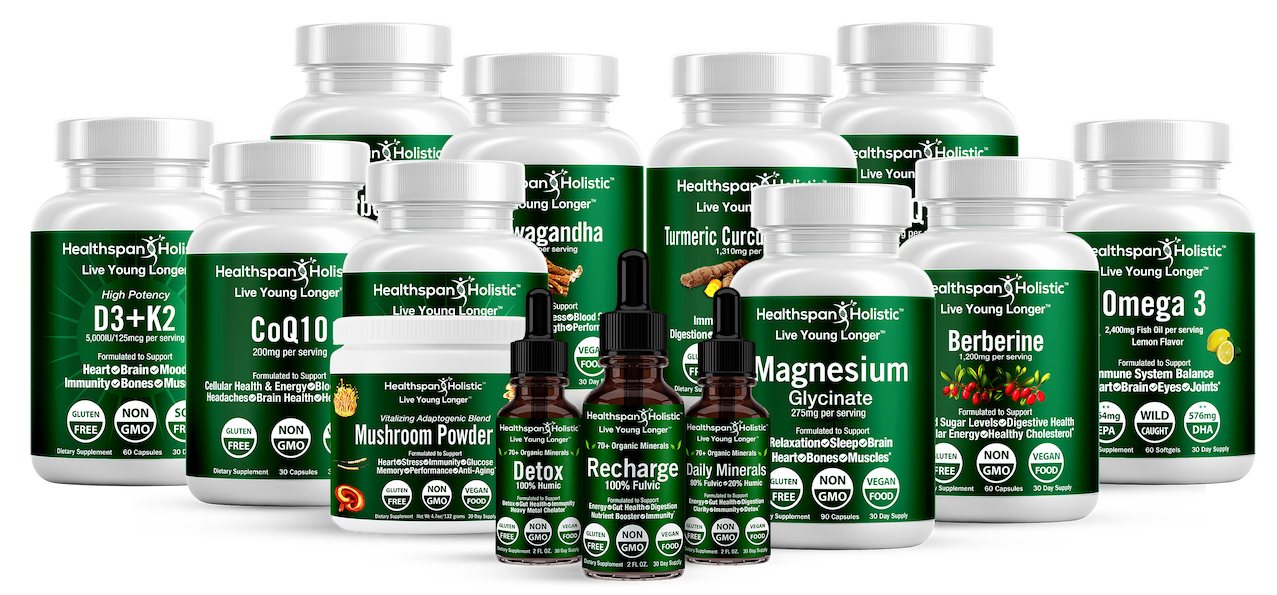
At Healthspan Holistic, we combine evidence-based supplementation with personalized health coaching to help you restore vitality and protect your skin from the inside out. Checkout the Skin Care Products that we currently carry at Healthspan Holistic. 1st Time Customers can take advantage of our BUY 1 GET 1 50% OFF special offer on all supplements. Your skin, energy, and longevity are worth the investment!
FAQ
What is the most effective anti-aging peptide for skin?
GHK-Cu and Matrixyl (Palmitoyl Pentapeptide-4) are the most clinically supported options. GHK-Cu modulates over 4,000 genes and outperforms Vitamin C in 12-week studies, while Matrixyl reduces wrinkle depth up to 36%.
How long does it take for peptides to work on skin?
Most clinical trials measure results at 8–12 weeks of consistent daily use. Visible improvement in wrinkle depth and skin firmness typically requires at least three months.
Can you use peptides with retinoids?
Yes. Combining peptides with retinoids is recommended by dermatologists because the two ingredients cover different aging pathways. Peptides cause less irritation and help balance the sensitivity that retinoids can produce.
What is the difference between matrixyl and matrixyl 3000?
Matrixyl is a single signal peptide that stimulates collagen production. Matrixyl 3000 is a dual-peptide complex that both stimulates collagen and inhibits the enzymes that break it down, making it more effective for comprehensive wrinkle reduction.
Are systemic peptides like epithalon safe for anti-aging?
Epithalon remains investigational with limited human clinical trial data and no regulatory approval in the United States. Topical peptides like GHK-Cu and Matrixyl have far stronger safety records and are the recommended starting point for anti-aging skin care.
Leave a comment: