

TL;DR:
- Butyrate is a gut-produced fatty acid that enhances brain health by reducing inflammation and strengthening the blood-brain barrier. It regulates genes related to neuron growth and mood, with benefits becoming evident after 3 to 6 months of consistent support. Supporting its production through diet, supplements, and lifestyle improves cognitive resilience, especially for adults over 50.
Butyrate is a short-chain fatty acid produced by gut bacteria that directly shapes how your brain functions, ages, and protects itself. Researchers now recognize it as one of the most important gut-derived compounds in cognitive health, working through three distinct pathways: reducing neuroinflammation, strengthening the blood-brain barrier, and regulating gene expression via histone deacetylase (HDAC) inhibition. The connection between butyrate and your brain is no longer theoretical. Recent 2026 research confirms that low butyrate levels correlate with accelerated cognitive decline, while restoring them supports neurotrophic factors like BDNF and SIRT1. Healthspan Holistic covers this science because it sits at the heart of what midlife brain wellness actually requires.
How does butyrate affect the brain?
Butyrate reaches the brain through the gut-brain axis, a two-way communication network linking your gut microbiome to your central nervous system. When butyrate-producing bacteria ferment dietary fiber, the resulting butyrate enters circulation and crosses the blood-brain barrier. Once inside, it acts as a molecular switch with consequences that ripple across neuron survival, inflammation, and mental clarity.
Butyrate as an HDAC inhibitor
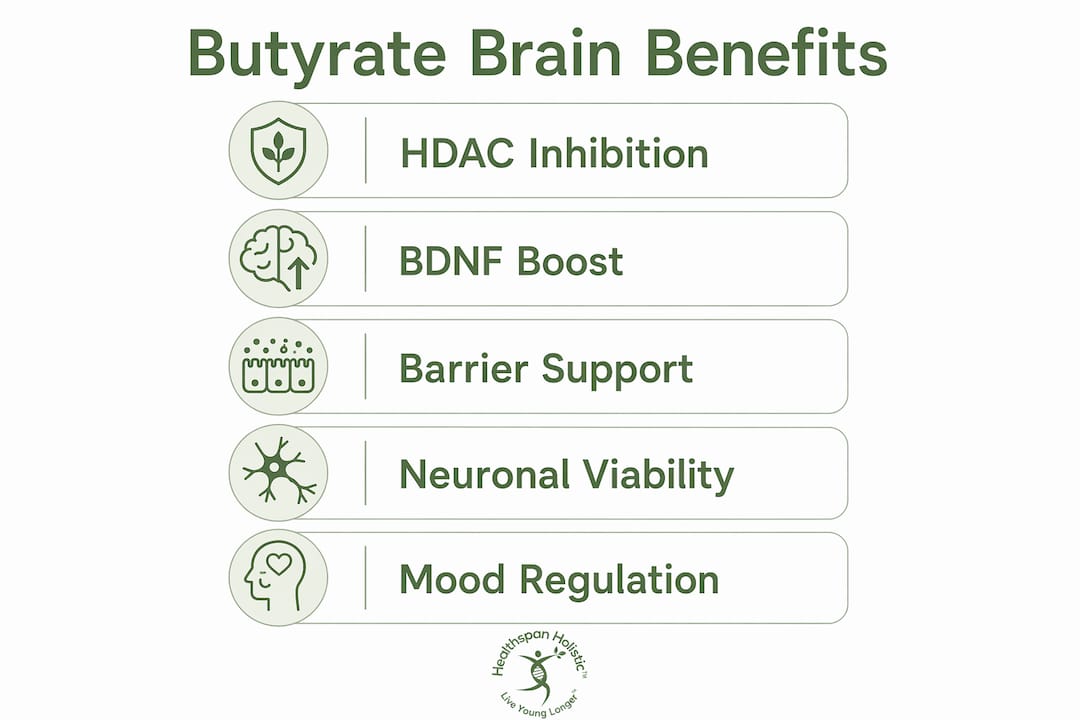
The most well-documented brain benefit of butyrate comes from its role as an HDAC inhibitor. Butyrate modulates about 2% of human genes by blocking HDAC enzymes that would otherwise silence protective gene expression. That 2% sounds small, but it includes genes responsible for producing BDNF, the protein your brain uses to grow and maintain neurons.
- BDNF upregulation: Butyrate increases brain-derived neurotrophic factor, which supports learning, memory consolidation, and neuron repair.
- SIRT1 activation: This longevity-linked protein improves mitochondrial function in neurons and reduces oxidative stress.
- Microglial polarization: Butyrate shifts microglia, your brain’s immune cells, from a pro-inflammatory state to a neuroprotective one.
- Cytokine reduction: Lower levels of IL-6, IL-1β, and TNF-α mean less chronic brain inflammation.
- Synaptic integrity: Reduced inflammation preserves synaptic connections that underpin memory and focus.
Pro Tip: If you are over 50 and notice slower recall or mental fatigue, low BDNF is a likely contributor. Butyrate is one of the few dietary compounds with direct evidence for restoring it.
The gut-brain barrier connection
The microbiota-butyrate-mTORC1-ISR axis explains what happens when butyrate production drops. Butyrate deficiency triggers systemic inflammation that weakens the blood-brain barrier, allowing inflammatory molecules to enter brain tissue and cause synaptic damage. This pathway connects gut dysbiosis directly to neurodegeneration. Restoring butyrate signaling is now considered a key step in protecting the brain from environmental stressors, including microplastics and chronic stress.
What does recent research say about butyrate and cognitive function?
The 2026 research landscape on butyrate brain health has moved well beyond animal models. Studies now show measurable cognitive improvements in aging subjects, with specific data on dosing, delivery form, and inflammatory markers.
Sodium butyrate at 10–50 µM significantly improves neuronal viability by reducing apoptosis and increasing BDNF and SIRT1 levels. The statistical significance was strong across all three outcomes (p < 0.001 for viability and factor increases; p < 0.0001 for apoptosis reduction). These results suggest that even modest butyrate restoration can meaningfully protect neurons under Alzheimer’s-like conditions.
A separate line of research compared delivery forms. Butyrylated starch (BNMS2) outperformed sodium butyrate in aging mice by more effectively reducing IL-6, IL-1β, and TNF-α while also increasing GABA and tryptophan metabolites linked to mood and cognition. The implication is that the form of butyrate you consume matters as much as the dose.
| Study focus | Form used | Key outcome | Cognitive metric improved |
|---|---|---|---|
| Neuronal viability under stress | Sodium butyrate (10–50 µM) | Reduced apoptosis, raised BDNF and SIRT1 | Neuron survival, neuroprotection |
| Aging cognitive dysfunction | Butyrylated starch (BNMS2) | Reduced IL-6, IL-1β, TNF-α | Memory, mood-linked metabolites |
| Blood-brain barrier integrity | Microbiota-butyrate axis | Reduced systemic inflammation | Barrier function, synaptic health |
| Epigenetic gene regulation | Sodium butyrate | HDAC inhibition, 2% gene modulation | BDNF expression, anti-inflammatory |
The role of butyrate in precision psychiatry is also gaining traction. Researchers now frame butyrate as a cornerstone molecule for managing treatment-resistant depression and anxiety, not just neurodegenerative disease. The catch is that its effectiveness depends on a diverse gut ecosystem, not a single probiotic strain.
How can you increase butyrate levels for brain health?
Raising your butyrate levels requires a combination of diet, smart supplementation, and lifestyle habits that support the gut bacteria responsible for producing it. You cannot simply take a pill and skip the rest. The bacteria that make butyrate need the right fuel to thrive.

Dietary fiber sources that feed butyrate producers
The most reliable way to raise butyrate naturally is to eat more fermentable fiber. Butyrate-producing bacteria, including Faecalibacterium prausnitzii and Roseburia intestinalis, ferment specific fibers that most Americans undereat.
- Resistant starch: Found in cooked-and-cooled potatoes, green bananas, and oats. This is the most direct butyrate precursor.
- Inulin-type fructans: Found in garlic, onions, leeks, and chicory root. These feed a broad range of butyrate producers.
- Pectin: Found in apples and citrus peel. Supports cross-feeding interactions between gut microbes.
- Arabinoxylan: Found in whole wheat and rye. Particularly effective at increasing Roseburia species.
Butyrate-producing bacteria rely on cross-feeding with other gut microbes. A diverse, fiber-rich diet supports these networks far better than any single-strain probiotic. This is why eating a wide variety of plant foods matters more than targeting one specific fiber.
Supplement forms and dosing
When diet alone is not enough, supplementation fills the gap. The recommended adult dose for sodium butyrate or tributyrin ranges from 300 mg to 1,200 mg daily. Higher doses appear in inflammatory bowel disease research, but the 300–600 mg range is a reasonable starting point for cognitive support.
Delivery form is critical. Sodium butyrate is rapidly absorbed in the upper GI tract, which means standard capsules may not deliver enough butyrate to the colon where it is most needed. Enteric-coated or microencapsulated forms, as well as tributyrin, bypass upper GI absorption and release butyrate where it does the most work. Healthspan Holistic offers both sodium butyrate capsules and calcium magnesium butyrate for readers who want professionally formulated options.
Pro Tip: Pair your butyrate supplement with a fiber-rich meal. The fiber feeds your existing butyrate-producing bacteria while the supplement provides direct support. The two approaches work better together than either does alone.
Lifestyle factors that support butyrate production
Coffee consumption increases Lawsonibacter asaccharolyticus, a gut bacterium that produces butyrate. This gives your morning coffee a legitimate gut-brain health benefit beyond caffeine. Regular physical activity, adequate sleep, and stress management also support microbiome diversity, which in turn sustains butyrate production.
What are realistic expectations for butyrate and cognitive health?
Butyrate is not a quick fix for cognitive decline. Setting accurate expectations protects you from disappointment and keeps you consistent long enough to see real results.
Cognitive benefits from butyrate supplementation typically appear after 3–6 months of consistent use. The delay reflects the time needed for epigenetic changes to accumulate and for the gut microbiome to shift toward a more butyrate-favorable composition. Neurological changes are gradual by nature.
Several common misconceptions are worth addressing directly:
- “One probiotic strain is enough.” This is the monostrain fallacy. Butyrate production depends on microbial networks, not a single species. A diverse diet supports those networks; a single-strain supplement does not.
- “More butyrate is always better.” Dosing above 1,200 mg daily without medical supervision is not supported by current evidence for cognitive applications.
- “Results will be dramatic and fast.” Most people notice subtle improvements in mental clarity, mood stability, and focus before any measurable memory gains appear.
- “Diet alone is sufficient for everyone.” Adults over 50 often have reduced microbial diversity, meaning dietary fiber alone may not generate adequate butyrate. Supplementation can be a necessary bridge.
The gut-brain connection and mental health is a long game. Consistent dietary and lifestyle support, sustained over months, produces the kind of epigenetic and microbiome changes that translate into lasting cognitive resilience.
Key Takeaways
Butyrate supports brain health through HDAC inhibition, BDNF upregulation, and blood-brain barrier protection, with measurable cognitive benefits appearing after 3–6 months of consistent dietary and supplementation support.
| Point | Details |
|---|---|
| Butyrate is an HDAC inhibitor | It regulates about 2% of human genes, including those that produce BDNF and reduce neuroinflammation. |
| Delivery form matters | Enteric-coated or tributyrin forms reach the colon more effectively than standard sodium butyrate capsules. |
| Diet drives production | Resistant starch, inulin, and diverse plant fibers feed the gut bacteria that generate butyrate naturally. |
| Expect a 3–6 month timeline | Epigenetic and microbiome changes are gradual; consistent daily habits produce the most reliable results. |
| Diversity beats single strains | A varied fiber-rich diet supports butyrate-producing microbial networks better than any single probiotic. |
Why I think butyrate is the most underrated tool in midlife brain wellness
Working with adults in the 40-to-75 age range, I see the same pattern repeatedly. People invest in brain supplements, nootropics, and memory programs, but they skip the foundational work of restoring gut-derived butyrate. The brain benefits they are chasing are often downstream of a gut problem they have not addressed.
What surprises most people is how specific the mechanism is. Butyrate does not vaguely “support” brain health. It inhibits a specific enzyme class, upregulates specific proteins, and shifts specific immune cells toward a neuroprotective state. That level of precision is rare in nutritional science, and it is why I take the research seriously.
The supplementation pitfall I see most often is choosing a standard sodium butyrate capsule without considering delivery. If it dissolves in your stomach, most of the benefit is lost before it reaches the colon. Enteric-coated forms and tributyrin are worth the extra cost for anyone serious about cognitive support.
My broader point is this: butyrate is a cornerstone, not a ceiling. It works best as part of a gut-brain strategy that includes diverse fiber intake, quality sleep, and regular movement. If you are over 50 and concerned about cognitive aging, start with the gut. The butyrate and gut health connection is where the real leverage is.
— Chris
Supporting your brain health with Healthspan Holistic
If you are ready to put this research to work, Healthspan Holistic has the tools to help you move forward with confidence.

The 90 Day Journey to Longevity program integrates gut health, nutrition, and cognitive wellness into a structured plan built for adults over 40. It pairs well with butyrate supplementation because it addresses the full ecosystem your brain depends on. For targeted supplementation, Healthspan Holistic carries both sodium butyrate and calcium magnesium butyrate formulations. A metabolic panel can also give you a clearer picture of the inflammatory markers that butyrate directly addresses, so you can track real progress.
1st Time Customers can take advantage of our BUY 1 GET 1 50% OFF special offer on all supplements.
FAQ
What is butyrate and why does it matter for the brain?
Butyrate is a short-chain fatty acid produced when gut bacteria ferment dietary fiber. It supports brain health by inhibiting HDAC enzymes, increasing BDNF, reducing neuroinflammation, and strengthening the blood-brain barrier.
How long does it take to see cognitive benefits from butyrate?
Cognitive improvements from butyrate supplementation typically appear after 3–6 months of consistent use, reflecting the time needed for epigenetic and microbiome changes to accumulate.
What is the best form of butyrate supplement for brain health?
Enteric-coated sodium butyrate, microencapsulated forms, and tributyrin deliver butyrate more effectively to the colon than standard capsules, which are absorbed too quickly in the upper GI tract.
Can diet alone raise butyrate levels enough?
For many adults over 50, diet alone may not generate sufficient butyrate due to reduced microbial diversity. A fiber-rich diet combined with a quality supplement produces the most reliable results.
Does butyrate help with mood and anxiety?
Research identifies butyrate as a key molecule in precision psychiatry, with evidence that it shifts microglia toward neuroprotective states and supports resilience against treatment-resistant depression and anxiety through epigenetic modulation.
Leave a comment: