

TL;DR:
- Balancing functional peptides involves using objective lab tests like hormone panels and C-peptide measurements to target specific physiological bottlenecks. It requires a step-by-step approach that includes defining clear health goals, selecting one peptide per bottleneck, and adjusting dosing based on half-life data. Long-term success depends on regular monitoring, lifestyle support, and avoiding common mistakes such as mixing incompatible peptides or starting without baseline assessments.
Functional peptides are defined as short chains of amino acids that signal your body’s natural repair, metabolic, and hormonal pathways to restore balance rather than force drug-like effects. Learning how to balance functional peptides means tailoring which peptides you use, when you use them, and at what dose to match your body’s specific physiological needs. Peptide therapy works by signaling natural body pathways to support homeostasis, not to override them. That distinction matters enormously for adults over 45, whose hormonal and metabolic baselines shift with age. Healthspan Holistic helps readers in this age group build personalized, evidence-based peptide strategies that support real, lasting wellness.
How to balance functional peptides: tools and assessments you need first
Balancing peptide levels without baseline data is like adjusting a thermostat without a thermometer. You need objective measurements before selecting any peptide protocol.

The most informative starting point is a comprehensive hormone panel combined with metabolic markers. C-peptide is one of the most telling biomarkers. Higher C-peptide levels are associated with improved blood sugar management in type 2 diabetes, with 48.2% of patients showing better outcomes. That figure tells you C-peptide is not just a diagnostic curiosity. It is a functional marker that reflects how well your metabolic signaling is working right now.
| Test | What it measures | Why it matters for peptide planning |
|---|---|---|
| Comprehensive hormone panel | Testosterone, estrogen, cortisol, thyroid hormones | Identifies hormonal deficits that peptides may address |
| C-peptide (fasting) | Insulin secretion capacity | Reflects metabolic signaling health |
| IGF-1 | Growth hormone activity | Guides use of growth hormone secretagogue peptides |
| CRP (high sensitivity) | Systemic inflammation | Flags whether anti-inflammatory peptides are warranted |
| Magnesium RBC | Intracellular magnesium status | Supports metabolic function alongside peptide use |
Interpreting these results requires context. A low IGF-1 reading in a 60-year-old is expected, but it becomes clinically meaningful when paired with fatigue, poor recovery, and muscle loss. Your healthcare provider can help you read these markers as a system rather than as isolated numbers.
Pro Tip: Ask your provider to run a fasting C-peptide and IGF-1 together. These two markers give you a clear picture of both metabolic and growth hormone signaling before you commit to any peptide protocol.
For a deeper look at how medical professionals assess peptide intervention risks, Healthspan Holistic’s 2026 wellness guide is a practical starting point.
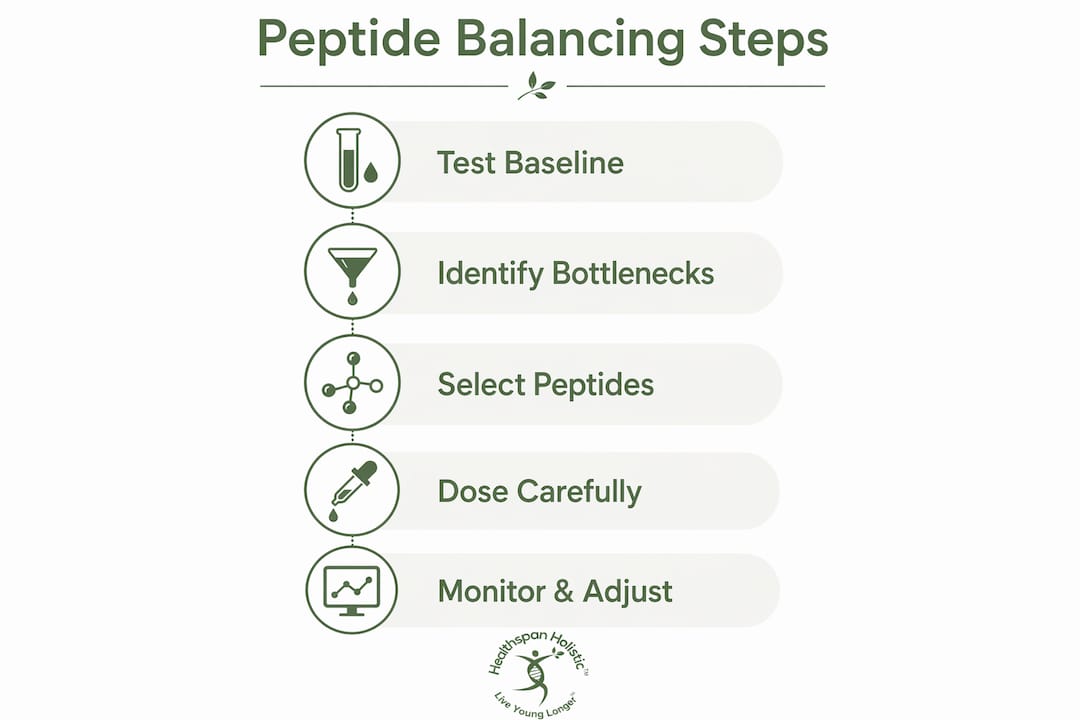
What is the step-by-step plan for balancing peptides effectively?
A clear, repeatable process separates effective peptide protocols from guesswork. The bottleneck framework guides peptide stacking by identifying the single rate-limiting physiological step and selecting one documented peptide per bottleneck. This prevents redundancy and keeps your protocol clean.
-
Define your specific health goal. Vague goals produce vague results. “I want more energy” is not a protocol. “I want to improve sleep quality and reduce morning cortisol” gives you a measurable target and a physiological direction.
-
Identify your primary bottleneck. Use your lab results to find the one system holding back your progress most. If your IGF-1 is low and recovery is slow, growth hormone signaling is your bottleneck. If inflammation markers are elevated, that is your first priority.
-
Select one documented peptide per bottleneck. Avoid stacking two peptides that target the same pathway. Redundancy does not double the benefit. It doubles the complexity and the risk of side effects.
-
Plan your dosing schedule around half-life. Therapeutic peptides generally have short half-lives, requiring tailored dosing schedules for sustained effects. A peptide with a two-hour half-life needs a very different schedule than one that stays active for twelve hours.
-
Separate peptides that require different conditions. Some peptides are stable only in specific pH ranges. Others require different diluents or injection sites. Administering them in separate syringes at separate times protects their integrity and your results.
-
Set a review window. Commit to reassessing your protocol after four to six weeks. Track symptoms, energy, sleep, and any relevant biomarkers. Adjust based on what the data shows, not what you hope is happening.
Pro Tip: Write your protocol down before you start. Include the peptide name, dose, timing, diluent, and injection site for each. Reviewing this log at your four-week check-in makes adjustments far more accurate.
For a more detailed look at personalizing peptide protocols based on individual baselines, Healthspan Holistic’s 2026 guide for adults 35–60 covers the process thoroughly.
What common mistakes should you avoid when balancing peptides?
Most peptide protocols fail not because the peptides are wrong, but because the execution is flawed. Knowing where things go wrong is as valuable as knowing what to do right.
“Mixing peptides with incompatible pH or diluents risks precipitation and complete loss of efficacy. Separate syringes are often the safer choice, not a convenience preference but a chemical necessity.”
-
Mixing incompatible peptides in one syringe. Peptide instability from pH or diluent mismatch causes precipitation, rendering the peptide inactive. Always check compatibility before combining.
-
Ignoring developability. A peptide may be potent in theory but unstable at room temperature or poorly absorbed subcutaneously. Choosing peptides with poor real-world stability leads to inconsistent results.
-
Running too many peptides at once. Starting three or four peptides simultaneously makes it impossible to know which one is helping or causing side effects. Introduce one at a time and wait at least two weeks before adding another.
-
Using unregulated peptides without critical evaluation. FDA-approved peptides like insulin and GLP-1 receptor agonists are backed by rigorous clinical trials. Many peptides sold online carry no such evidence. Treat unregulated products with serious caution.
-
Skipping the baseline assessment. Starting a peptide protocol without lab work is the single most common mistake. You cannot measure progress without a starting point, and you cannot personalize a protocol without data.
Avoiding these five mistakes puts you ahead of the majority of people who try peptide protocols and give up after inconsistent results.
How do you maintain functional peptide balance for long-term vitality?
Maintaining peptide balance is an ongoing process, not a one-time setup. Iterative monitoring and dose adjustment are the foundation of long-term peptide success. Your body changes, and your protocol needs to change with it.
Biomarker reassessment every three to six months keeps your protocol aligned with your current physiology. If IGF-1 has normalized, you may no longer need a growth hormone secretagogue at the same dose. If inflammation markers have dropped, you can phase out anti-inflammatory peptides and redirect attention to recovery or metabolic support.
| Phase | Focus | Key actions |
|---|---|---|
| Initiation (weeks 1–6) | Establish baseline response | Start one peptide, track symptoms daily, retest labs at week 6 |
| Adjustment (weeks 7–12) | Refine dose and timing | Modify schedule based on half-life data and symptom feedback |
| Maintenance (month 4+) | Sustain and reassess | Retest every 3–6 months, cycle peptides if appropriate |
Lifestyle factors are not optional additions to a peptide protocol. They are the foundation. Peptides signal pathways that nutrition, sleep, and exercise also regulate. A peptide targeting growth hormone secretion works significantly better when you are sleeping seven to nine hours and eating adequate protein. Skipping these basics blunts the signal.
Pro Tip: Track three simple daily metrics alongside your peptide protocol: sleep quality (1–10), morning energy (1–10), and workout recovery (1–10). These subjective scores, logged consistently, reveal trends that lab work alone can miss.
GLP-1 receptor agonists have robust phase 3 clinical trial data and regulatory approval for metabolic conditions. They set the standard for what evidence-backed peptide use looks like. Holding your own protocol to a similar standard of tracking and accountability produces far better long-term outcomes.
Adults in the 45–75 age group benefit from reading about bioregulator peptides for longevity, which addresses the specific physiological shifts that make ongoing monitoring so important in this life stage.
Key Takeaways
Balancing functional peptides requires baseline lab testing, a bottleneck-based selection process, careful dosing schedules, and iterative monitoring to sustain results safely over time.
| Point | Details |
|---|---|
| Start with lab testing | Run a hormone panel and C-peptide before choosing any peptide protocol. |
| Use the bottleneck framework | Target one rate-limiting physiological step with one documented peptide at a time. |
| Avoid mixing incompatible peptides | pH or diluent mismatch causes precipitation and makes peptides inactive. |
| Monitor and adjust every 3–6 months | Reassess biomarkers and symptoms regularly to keep your protocol aligned with your body. |
| Build on lifestyle foundations | Sleep, nutrition, and exercise amplify peptide signaling and cannot be skipped. |
What I’ve learned about peptide balance after watching protocols succeed and fail
The most common mistake I see is people treating peptide protocols like a shopping list rather than a physiological conversation. They read about a peptide that sounds promising, add it to their stack, and then add another one two weeks later because they read something else. Within a month, they have four peptides running simultaneously and no idea what is actually working.
Effective peptide protocols require balancing potency, selectivity, and developability simultaneously. That is not a theoretical concept. It is a practical discipline. The most potent peptide is worthless if it degrades before it reaches its target or if it hits five pathways when you only need one.
What I have found actually works is starting with the lifestyle foundation first. Sleep, protein intake, and resistance training are not things you add after the peptides start working. They are the conditions that make the peptides work at all. I have watched people with solid protocols get mediocre results because they were sleeping five hours a night and eating poorly. The signal cannot do its job in a depleted system.
My honest caution is about unregulated products. The peptide market has grown faster than the evidence base supporting many of its products. Regulatory approval exists for a reason. Before you use any peptide that lacks clinical trial data, ask yourself what you actually know about its safety profile. That question alone filters out most of the risk.
— Chris
Healthspan Holistic’s testing tools for your peptide wellness plan
Getting your peptide protocol right starts with knowing your numbers. Healthspan Holistic offers the Comprehensive Hormone Panel to give you the hormonal baseline every personalized peptide plan needs. Pair that with the Magnesium RBC Test to assess intracellular magnesium, a mineral that directly supports metabolic signaling alongside peptide use.
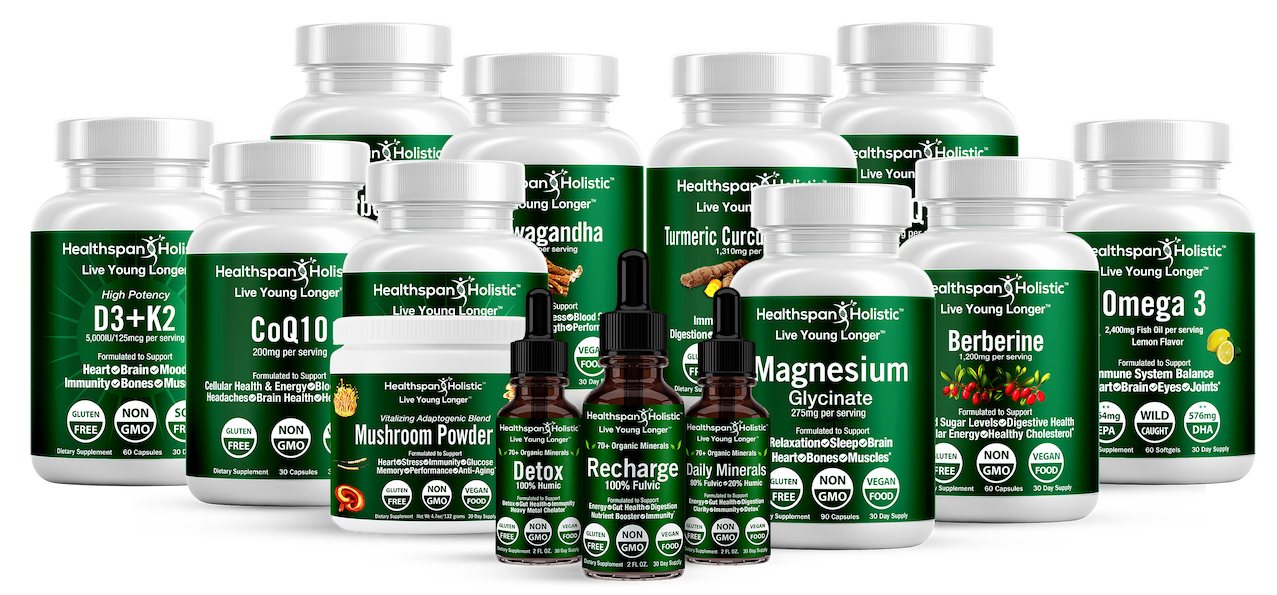
Checkout our line of Peptides which are made in a USA compounding pharmacy. More products are coming soon! For cardiovascular wellness monitoring, the Basic Heart Health Test rounds out a solid baseline assessment. All tests are professional grade and designed for adults who take their healthspan seriously.
1st Time Customers can take advantage of our BUY 1 GET 1 50% OFF special offer on all supplements.
FAQ
What are functional peptides and how do they work?
Functional peptides are short amino acid chains that signal the body’s natural repair and metabolic pathways. They aim to restore homeostasis rather than produce drug-like effects, making them distinct from conventional pharmaceuticals.
How do I know which peptides I need?
Start with a comprehensive hormone panel and fasting C-peptide test. Your lab results identify the physiological bottlenecks that a targeted peptide protocol can address.
Can I take multiple peptides at the same time?
You can, but introduce one at a time and wait at least two weeks before adding another. Running multiple peptides simultaneously makes it impossible to attribute benefits or side effects accurately.
Are all peptides safe to use?
No. FDA-approved peptides like insulin and GLP-1 receptor agonists have rigorous clinical trial data behind them. Many peptides sold online lack this evidence, and their safety profiles are not well established.
How often should I reassess my peptide protocol?
Reassess your biomarkers and symptoms every three to six months. Your physiology changes over time, and your protocol needs to reflect those changes to remain effective.
Leave a comment: