

TL;DR:
- High T4 symptoms include rapid heartbeat, weight loss, and nervousness due to excess thyroid hormone. Recognizing physical signs like goiter and eye protrusion aids diagnosis, especially in atypical presentations among older adults. Treatment varies from medication to surgery, depending on the cause, with timely intervention preventing serious health complications.
What are the most common high T4 symptoms?
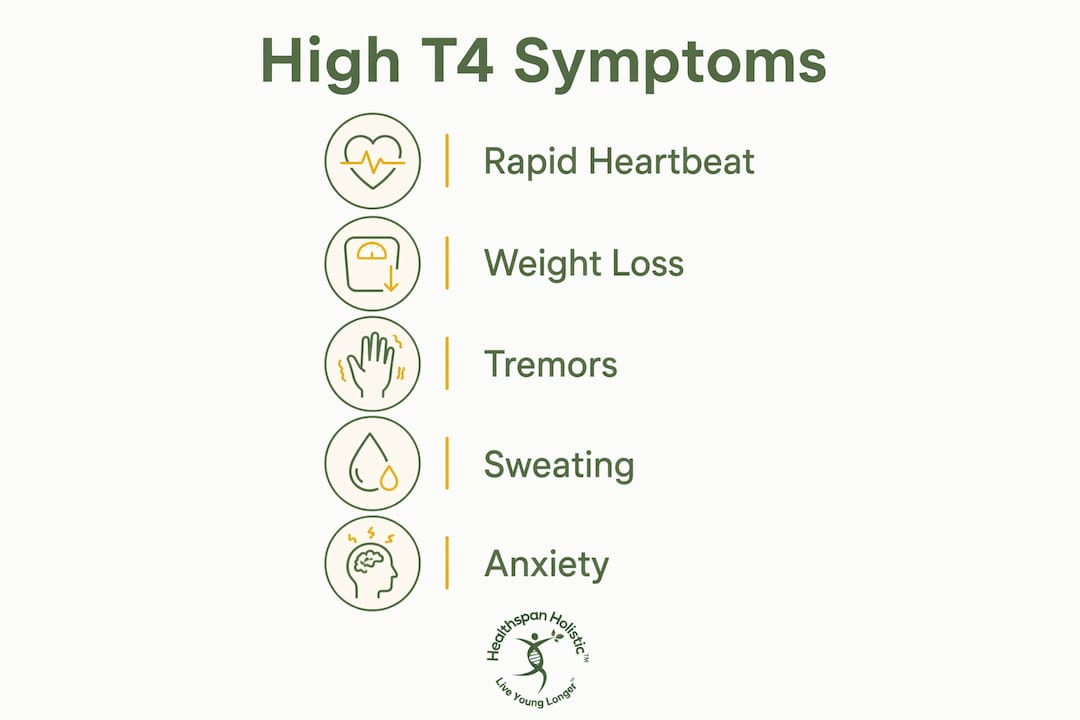
Elevated T4, the hallmark of hyperthyroidism, floods your body with excess thyroid hormone and essentially pushes every system into overdrive. The American Thyroid Association lists the most recognizable signs as:
- Rapid or irregular heartbeat (tachycardia)
- Unexplained weight loss despite a normal or increased appetite
- Hand tremors and muscle weakness
- Nervousness, anxiety, and irritability
- Heat intolerance and increased sweating
- Fatigue and difficulty sleeping
- Frequent bowel movements or diarrhea
- Mood swings and difficulty concentrating
Less obvious signs include menstrual irregularities, hair thinning, and a persistent restlessness that feels impossible to shake. Symptoms can appear suddenly or build gradually over weeks, which is part of why so many people initially chalk them up to stress or aging. The mental and emotional effects, especially anxiety and mood instability, are often the first clue that something deeper is going on with thyroid hormone levels.
Physical signs that point toward elevated T4
Your body leaves visible clues when thyroid hormone is running too high. Knowing what to look for can help you bring the right information to your doctor.
- Goiter: A visible swelling at the base of the neck caused by thyroid gland enlargement
- Warm, moist skin: The skin feels flushed and damp even without physical exertion
- Hand tremors: A fine, rapid shake most noticeable when hands are outstretched
- Frequent bowel movements: The gut speeds up along with everything else
- Protruding eyes (exophthalmos): Seen particularly in Graves’ disease, where the tissue behind the eyes swells
- Nail changes: Nails may thicken, flake, or separate from the nail bed
- High systolic blood pressure: The upper number in a blood pressure reading tends to rise
On the lab side, standard thyroid testing typically shows elevated free T4 and/or T3 alongside a suppressed TSH. TSH drops because the pituitary gland senses too much circulating hormone and pulls back its signal. Documenting when each physical sign appeared, and how it has changed, gives your clinician a clearer picture than lab values alone.
What causes high T4, and who is most at risk?
Hyperthyroidism has several distinct causes, and identifying the right one shapes the entire treatment plan.
- Graves’ disease: The most common cause in the U.S., an autoimmune condition where antibodies stimulate the thyroid to overproduce hormone
- Toxic nodular goiter: One or more thyroid nodules that produce hormone independently, bypassing normal regulatory signals
- Thyroiditis: Inflammation of the thyroid, sometimes following a viral illness, that releases stored hormone into the bloodstream
- Excessive iodine intake: High iodine from supplements, contrast dyes, or certain medications can trigger overproduction
- Pituitary abnormalities: Rarely, a TSH-secreting pituitary tumor drives the thyroid to overproduce despite high T4 levels
Risk factors include a family history of thyroid disease, being female (women develop hyperthyroidism far more often than men), prior thyroid conditions, and age. Graves’ disease peaks in women between 20 and 50, though it can occur at any age. Some forms of hyperthyroidism, particularly Graves’ disease, resist normal feedback control entirely, which is why the condition does not simply resolve on its own. Understanding thyroid health fundamentals is a useful starting point if you are trying to make sense of your diagnosis.
How high T4 looks different in older adults
In adults over 60, hyperthyroidism often presents atypically, making it one of the more commonly missed diagnoses in that age group.
- Withdrawal and social isolation rather than the anxious hyperactivity seen in younger patients
- Appetite loss and weight loss that can look identical to depression or cancer-related wasting
- Fatigue and weakness without the nervous energy that typically signals thyroid overactivity
- Cognitive changes that overlap with early dementia symptoms
The classic picture of a jittery, sweating, wide-eyed patient simply does not apply to many older adults. T4 levels can also read falsely normal during acute illness, further complicating the picture. Clinicians who suspect hyperthyroidism in an older patient often need to look beyond a single lab value and consider the full clinical context, including specialist input, to reach the right diagnosis.
When to seek care and what happens if you don’t
Most high T4 symptoms warrant a prompt call to your doctor, but certain signs require urgent or emergency attention.
- Heart rate consistently above 100 bpm at rest, or any episode of irregular heartbeat
- Severe anxiety, confusion, or agitation that appears suddenly
- High fever combined with rapid heart rate: These together can signal thyroid storm, a life-threatening emergency where the heart rate can exceed 140 bpm and immediate hospitalization is required
- Significant unintentional weight loss over a short period
Untreated hyperthyroidism carries real long-term risks. Sustained elevated T4 can cause atrial fibrillation, weaken bones and accelerate osteoporosis, cause progressive muscle wasting, and in Graves’ disease, lead to serious eye complications including vision loss. The cardiovascular strain alone, from years of a heart working harder than it should, justifies early intervention.
Pro Tip: Keep a running log of every symptom, including ones that seem minor, with the date they started. Bring that list to your appointment. Clinicians consistently find that a detailed symptom timeline leads to faster, more accurate diagnoses than lab results alone.

How doctors treat elevated thyroid hormone
Treatment for high T4 depends on the underlying cause, your age, and how severe your symptoms are. The main options, as outlined by MedlinePlus, include:
- Antithyroid medications: Methimazole and propylthiouracil block the thyroid’s ability to synthesize new hormone. Methimazole is preferred for most adults; propylthiouracil is used in pregnancy or when methimazole is not tolerated.
- Beta-blockers: Medications like propranolol do not lower T4 directly but quickly relieve distressing symptoms such as rapid heartbeat, tremors, and anxiety while longer-term treatments take effect.
- Radioactive iodine therapy: A one-time oral dose that selectively destroys overactive thyroid tissue. It is the most commonly used definitive treatment in the U.S.
- Thyroidectomy: Surgical removal of part or all of the thyroid, typically reserved for large goiters, suspected malignancy, or cases where other treatments are not suitable.
No single approach fits everyone. A person with mild Graves’ disease in their 30s may do well on antithyroid medication for 12–18 months and achieve remission. An older adult with a toxic nodule may be better served by radioactive iodine. Your endocrinologist will weigh your full picture before recommending a path.
Advanced lab insights for accurate thyroid assessment
Interpreting thyroid labs is more nuanced than a single number suggests. Standard thyroid panels measure free T4, free T3, and TSH together, and the pattern across all three tells a more complete story than any one value alone.
- Classic hyperthyroidism pattern: Elevated free T4 and/or T3 with suppressed TSH
- Normal TSH with high T4: Rare, but can indicate a TSH-secreting pituitary tumor or assay interference rather than primary thyroid disease
- T3 toxicosis: A variant where only T3 is elevated while T4 stays normal; standard panels miss this unless T3 is specifically ordered when TSH is low but T4 appears normal
- Falsely normal T4 in illness: Systemic illness can suppress T4 readings, masking true hyperthyroidism in hospitalized or acutely unwell patients
Thyroid storm alert: A heart rate exceeding 140 bpm combined with fever and confusion is a medical emergency. Call 911 immediately.
Diagnosis requires combining lab results with your symptom history. Labs alone can mislead, particularly in older adults or during illness. Tracking your symptoms over time and sharing that timeline with a specialist gives the full clinical picture needed for accurate, personalized management.
Healthspan Holistic can help you take the next step
If you suspect your thyroid hormones are out of range, getting the right lab work is the clearest first move. Healthspan Holistic offers a comprehensive hormone panel that includes thyroid markers alongside other key hormones, giving you and your care team a complete baseline to work from. For those concerned about cardiovascular strain from elevated T4, the basic heart health test provides a focused look at heart disease risk factors.

1st Time Customers can take advantage of our BUY 1 GET 1 50% OFF special offer on all supplements.
Key Takeaways
Elevated T4 drives a hypermetabolic state that affects the heart, brain, bones, and gut, and early recognition is the most direct path to preventing serious complications.
| Point | Details |
|---|---|
| Core symptoms to recognize | Rapid heartbeat, weight loss, tremors, sweating, anxiety, and heat intolerance are the hallmark signs. |
| Older adults present differently | Withdrawal, appetite loss, and fatigue often replace classic symptoms, leading to missed or delayed diagnoses. |
| Thyroid storm is an emergency | A heart rate above 140 bpm with fever and confusion requires immediate emergency care. |
| T3 toxicosis can be missed | When TSH is low but T4 is normal, T3 must be specifically tested to rule out this variant. |
| Treatment is individualized | Antithyroid drugs, radioactive iodine, beta-blockers, and surgery each suit different patients and causes. |
FAQ
How do you feel when your T4 is high?
Most people feel wired but exhausted: rapid heartbeat, anxiety, trembling hands, heat intolerance, and unexplained weight loss are the most common experiences. Symptoms can range from mild to severe and may appear gradually or suddenly.
How do you fix high T4?
Treatment depends on the cause. Antithyroid medications like methimazole reduce hormone production, beta-blockers relieve symptoms quickly, and radioactive iodine or surgery offer more permanent solutions for appropriate candidates.
What should you avoid if your T4 is high?
Avoid high-iodine supplements, iodine-rich contrast dyes when possible, and stimulants like caffeine that amplify heart rate and anxiety. Always discuss any supplement or medication changes with your doctor before making them.
What does it mean if T4 is high but TSH is normal?
This pattern is uncommon and may point to a TSH-secreting pituitary tumor or laboratory assay interference rather than standard hyperthyroidism. It warrants specialist evaluation and repeat testing to confirm the finding.
Leave a comment: