

TL;DR:
- Men’s wellness after 45 emphasizes physical activity, nutritious diet, quality sleep, mental health, and preventative screenings to extend both lifespan and vitality. Regular exercise, proper sleep, mental health check-ins, and monitoring key markers like waist circumference and blood pressure are vital for long-term health. Addressing emotional well-being and tracking micronutrient levels ensures a holistic approach to healthy aging.
Men’s wellness is a comprehensive framework that integrates physical fitness, mental well-being, nutrition, and preventive screenings to extend both the length and quality of life for men aged 45 to 75. The clinical term for this approach is “healthspan optimization,” meaning you are not just adding years to your life but adding life to your years. If you are in this age range, the decisions you make about sleep, exercise, nutrition, and mental health right now carry more weight than at any earlier point in your life. This guide gives you the evidence, the tools, and the direction to act on that reality.
What are the essential components of a men’s wellness routine after 45?
Men’s wellness after 45 rests on five interconnected pillars: physical activity, nutrition, sleep, mental health, and preventive screenings. Neglecting any one of them creates a weak link that the others cannot compensate for. Think of it as a chain where every link must hold.
Physical activity
The CDC and public health guidelines are clear: men need at least 150 minutes of moderate-intensity aerobic exercise per week, plus two strength training sessions. A practical way to hit that target is five 30-minute walks, bike rides, or swims spread across the week. Strength training twice weekly preserves muscle mass, which begins declining measurably after age 40.

Nutrition
A nutrient-dense diet built around whole foods, lean proteins, healthy fats, and fiber forms the backbone of a healthy lifestyle for men. Men are more likely to be overweight than women and develop type 2 diabetes at lower body weights, which means food quality matters more than most men realize. Micronutrient gaps, particularly in magnesium, vitamin D, and omega-3 fatty acids, are common after 45 and often go undetected without targeted testing.
Sleep
A 2026 study published in Nature found a U-shaped relationship between sleep duration and biological aging across multiple organ systems. The sweet spot is roughly 6.4 to 7.8 hours per night. Both short sleepers and long sleepers showed accelerated biological aging and higher systemic disease risk. This means that optimizing sleep is not a luxury. It is a clinical priority.
Mental health
1 in 10 men experiences depression or anxiety, and more than half of those men never receive treatment. That gap between prevalence and care is one of the most pressing issues in men’s health today. Routine mental health check-ins, whether with a therapist, a primary care physician, or a structured self-assessment tool, belong in every man’s wellness plan.
Preventive screenings
A 2026 PubMed systematic review of six randomized controlled trials involving nearly 790,000 men aged 45 to 80 found that PSA-based prostate cancer screening likely reduces prostate cancer-specific mortality. Colon cancer screenings, cardiovascular panels, and blood pressure monitoring round out the preventive picture. Catching problems early is always less costly, physically and financially, than treating advanced disease.
Pro Tip: Schedule all your annual screenings on the same month each year. Bundling them reduces the mental load of tracking multiple appointments and increases the chance you actually follow through.
How should men balance cardiovascular fitness, strength training, and flexibility?
Getting the exercise mix right is one of the most practical men’s health tips you can apply. The goal is not to train like a 25-year-old. The goal is to build a fitness routine that you can sustain for decades without injury.
-
Start aerobic exercise at conversational intensity. The MSD Manual recommends that older men perform aerobic activity at a pace where they can still hold a conversation. This keeps heart rate in a productive zone without overstressing joints or the cardiovascular system. Brisk walking, cycling, and swimming all qualify.
-
Begin strength training with lighter weights and higher repetitions. Research from the MSD Manual and Stanford Medicine confirms that starting with 12 to 20 repetitions at a manageable load builds muscle safely. You do not need to lift heavy to gain strength. Training close to muscular fatigue, not maximal load, is what drives strength gains according to Stanford Medicine clinical insights.
-
Add flexibility and balance work two to three times per week. Yoga, tai chi, and targeted stretching routines reduce fall risk, improve joint mobility, and support recovery between harder sessions. Falls are a leading cause of injury-related mortality in men over 65, making balance training a genuine longevity investment.
-
Progress gradually and respect fatigue signals. Increasing workout intensity by no more than 10 percent per week is a widely used guideline. If you feel unusual joint pain, persistent fatigue, or shortness of breath beyond normal exertion, that is your body asking you to slow down, not push harder.
-
Combine modalities for metabolic benefit. Men who pair aerobic and strength training see greater reductions in cardiovascular risk, blood sugar, and visceral fat than those who do only one type. The combination effect is greater than the sum of its parts.
Pro Tip: If you are new to strength training, consider two sessions with a certified personal trainer before going solo. Learning proper form upfront prevents the compensatory movement patterns that cause most gym injuries in men over 50.
What mental wellness practices are vital for men in midlife and later?
Mental wellness for men is underserved and underdiagnosed. The data from the Anxiety and Depression Association of America, cited by UChicago Medicine, shows that over half of affected men never seek or receive treatment for depression and anxiety. That is not a personal failing. It reflects decades of cultural messaging that discouraged men from acknowledging emotional struggle. Changing that pattern starts with awareness.
Practical mental wellness strategies that work for men in this age group include:
-
Mindfulness and breathwork. Even 10 minutes of daily mindfulness practice, using apps like Calm or Headspace, measurably reduces cortisol and improves sleep quality over time.
-
Social connection. Loneliness is a clinical risk factor for cardiovascular disease and cognitive decline. Maintaining at least two or three meaningful social relationships is protective in ways that no supplement can replicate.
-
Stress management for men. Chronic stress elevates cortisol, disrupts sleep, and accelerates biological aging. Regular physical activity, time in nature, and structured relaxation practices all lower the stress burden.
-
Integrative therapies. Acupuncture, massage therapy, and holistic therapies for adults over 45 have growing evidence bases for reducing anxiety and improving mood, particularly when combined with conventional care.
-
Professional screening. Ask your primary care physician to include a PHQ-9 depression screen and GAD-7 anxiety screen at your next annual visit. These are two-minute questionnaires that can open a conversation you might not otherwise have.
The holistic approach to health after 45 treats mental and physical health as inseparable. When you address both together, outcomes improve across the board.
How can men monitor key health markers for longevity and disease prevention?
Tracking your numbers transforms abstract wellness goals into concrete targets you can act on. A healthy BMI falls between 18.5 and 24.9, but Dignity Health is clear that BMI alone is not diagnostic. It is a starting point, not a verdict. Waist circumference is often more telling.
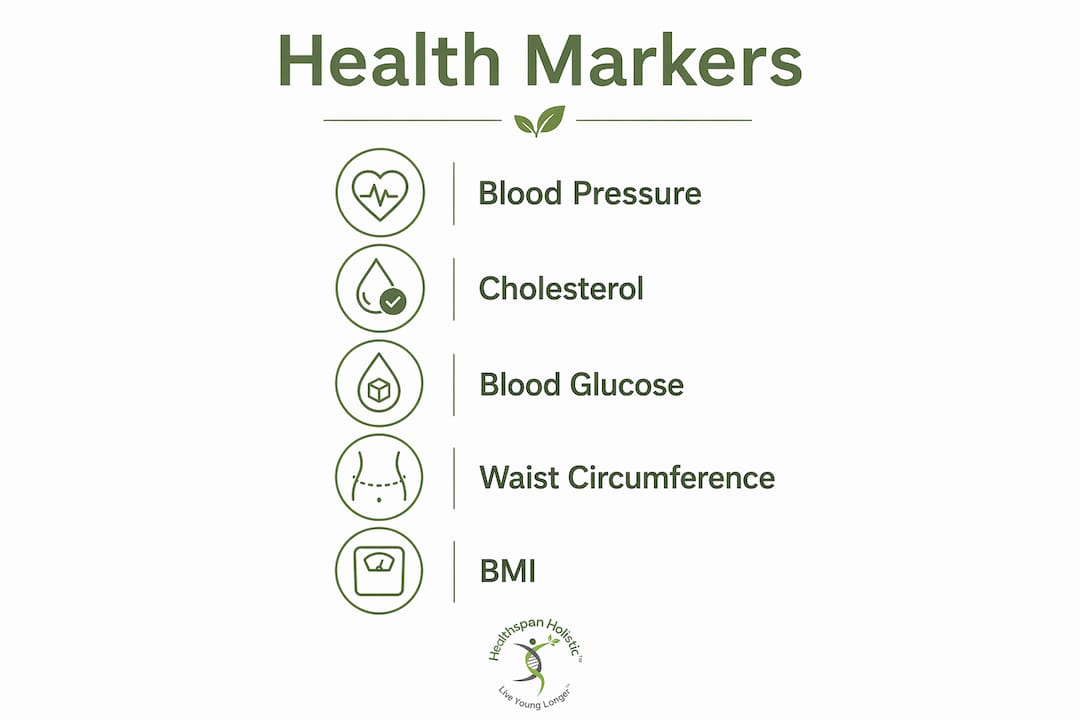
Men with a waist circumference above 40 inches carry significantly higher risk for type 2 diabetes, heart disease, and stroke, according to National Heart, Lung, and Blood Institute data. That single measurement, taken with a tape measure at home, gives you more actionable information than a scale reading.
The table below summarizes the key markers every man over 45 should track, along with target ranges and suggested screening intervals.
| Health Marker | Target Range | Screening Interval |
|---|---|---|
| Blood pressure | Below 120/80 mmHg | Every 1 to 2 years |
| Total cholesterol | Below 200 mg/dL | Every 4 to 6 years (more often if elevated) |
| Fasting blood glucose | 70 to 99 mg/dL | Every 3 years after age 45 |
| Waist circumference | Below 40 inches | Annually |
| BMI | 18.5 to 24.9 | Annually |
| PSA (prostate) | Discuss with physician | Starting at age 50, or 45 with risk factors |
| Testosterone / hormones | Physician-guided | Every 1 to 2 years if symptomatic |
Integrative wellness plans that incorporate micronutrient and hormone testing give you a far more precise picture than standard panels alone. Knowing your magnesium, vitamin D, and omega-3 status, alongside your hormone levels, allows you and your care team to make targeted adjustments rather than guessing.
Pro Tip: Request a cellular micronutrient test rather than a standard serum test for nutrients like magnesium. Serum levels can appear normal even when cellular stores are depleted, which is where deficiency actually affects your energy and recovery.
Key takeaways
Men’s wellness after 45 requires consistent integration of exercise, sleep, nutrition, mental health practices, and preventive screenings to meaningfully extend healthspan and reduce chronic disease risk.
| Point | Details |
|---|---|
| Exercise weekly minimums | Aim for 150 minutes of aerobic activity plus two strength sessions every week. |
| Sleep in the optimal range | Target 6.4 to 7.8 hours nightly to reduce biological aging and systemic disease risk. |
| Screen for mental health | 1 in 10 men has depression or anxiety; ask your doctor for a PHQ-9 screen annually. |
| Track waist circumference | A measurement above 40 inches signals elevated risk for diabetes and heart disease. |
| Test your micronutrients | Cellular nutrient and hormone panels reveal deficiencies that standard blood tests miss. |
Why I think most men wait too long to take wellness seriously
I have seen a consistent pattern in the men who come to Healthspan Holistic for coaching and testing. They arrive motivated, often after a health scare or a milestone birthday, and they want to fix everything at once. The instinct is understandable. The execution is where things go sideways.
The most common mistake is skipping the mental health piece entirely. Men will commit to a fitness routine, clean up their diet, and even get their labs done, but they treat emotional well-being as optional. The research does not support that hierarchy. Untreated anxiety and depression impair sleep, disrupt hormonal balance, and undermine the motivation that keeps every other habit alive. You cannot out-exercise a mind that is working against you.
The second mistake is treating sleep as a reward rather than a foundation. I have worked with men who were doing everything right on paper but still felt exhausted and inflamed. In several cases, undiagnosed sleep apnea was quietly erasing every benefit they were earning in the gym. Sleep is not passive recovery. It is when your body repairs tissue, consolidates memory, and regulates hormones. Protect it with the same seriousness you bring to your workout schedule.
The men who make the most sustained progress are the ones who accept that wellness is not a project with a finish line. It is a practice. Small, consistent actions compound over years into a dramatically different quality of life. Start where you are, measure what matters, and adjust as you learn more about your own body.
— Chris
Take your men’s wellness further with Healthspan Holistic
At Healthspan Holistic, we believe that knowing your numbers is the most powerful first step you can take toward lasting vitality. Our targeted lab tests, including the Magnesium RBC test, Cellular Micronutrient test, Basic Heart Health test, and Comprehensive Hormone Panel, give you a precise, personalized baseline to work from. Once you know where your gaps are, our professional-grade supplements from the Healthspan Holistic collection help you fill them with confidence.

1st Time Customers can take advantage of our BUY 1 GET 1 50% OFF special offer on all supplements. This is the right time to stop guessing and start optimizing. Your healthspan depends on the choices you make today.
FAQ
What is men’s wellness and why does it matter after 45?
Men’s wellness is a holistic framework combining physical fitness, mental health, nutrition, and preventive care to improve quality of life and longevity. After 45, hormonal shifts, muscle loss, and rising chronic disease risk make a structured wellness approach more impactful than at any earlier life stage.
How much exercise do men over 45 actually need?
Public health guidelines recommend at least 150 minutes of moderate aerobic activity plus two strength training sessions per week. Men who combine both types of exercise see greater reductions in cardiovascular risk and metabolic disease than those who focus on only one.
What sleep duration is best for men’s health and longevity?
A 2026 Nature study found that 6.4 to 7.8 hours of sleep per night is the optimal range for minimizing biological aging and systemic disease risk. Both sleeping too little and too much are associated with accelerated aging across multiple organ systems.
How often should men get preventive health screenings?
Blood pressure should be checked every one to two years, cholesterol every four to six years, and fasting blood glucose every three years starting at age 45. PSA prostate screening should be discussed with your physician starting at age 50, or age 45 if you have elevated risk factors.
Can supplements improve men’s wellness after 45?
Targeted supplementation based on lab-confirmed deficiencies, particularly in magnesium, vitamin D, and omega-3 fatty acids, supports energy, cardiovascular health, and hormonal balance. Testing before supplementing, rather than guessing, produces far better and safer outcomes.
Leave a comment: