

Injectable testosterone is an effective option for men who have both consistent symptoms of testosterone deficiency and at least two low morning total testosterone measurements, commonly below 300 ng/dL per AAFP 2024 guidance. When those two conditions are met, injections can meaningfully restore sexual function, libido, and lean body mass. The Endocrine Society is clear that diagnosis requires careful evaluation before any treatment begins, not just a single low lab result.
Here is what you need to do right now if you suspect low testosterone:
-
Get two fasting morning testosterone tests on separate days. One low result is not enough for a valid diagnosis.
-
List your symptoms (low libido, fatigue, reduced muscle mass, mood changes) and bring them to a clinician who can evaluate whether they fit hypogonadism.
-
Review contraindications before your appointment: active prostate or breast cancer, untreated severe sleep apnea, and very high hematocrit are reasons TRT will likely be deferred.
-
Understand the monitoring commitment. Testosterone is a Schedule CIII controlled substance in the U.S., meaning prescribing requires provider oversight and ongoing lab checks for hematocrit, PSA, and liver function.
Pro Tip: Schedule your testosterone blood draw before 10 AM. Testosterone levels follow a circadian rhythm and peak in the morning, so an afternoon draw can produce a falsely low result that leads to unnecessary repeat testing.
What injectable testosterone formulations are available and how do they differ?
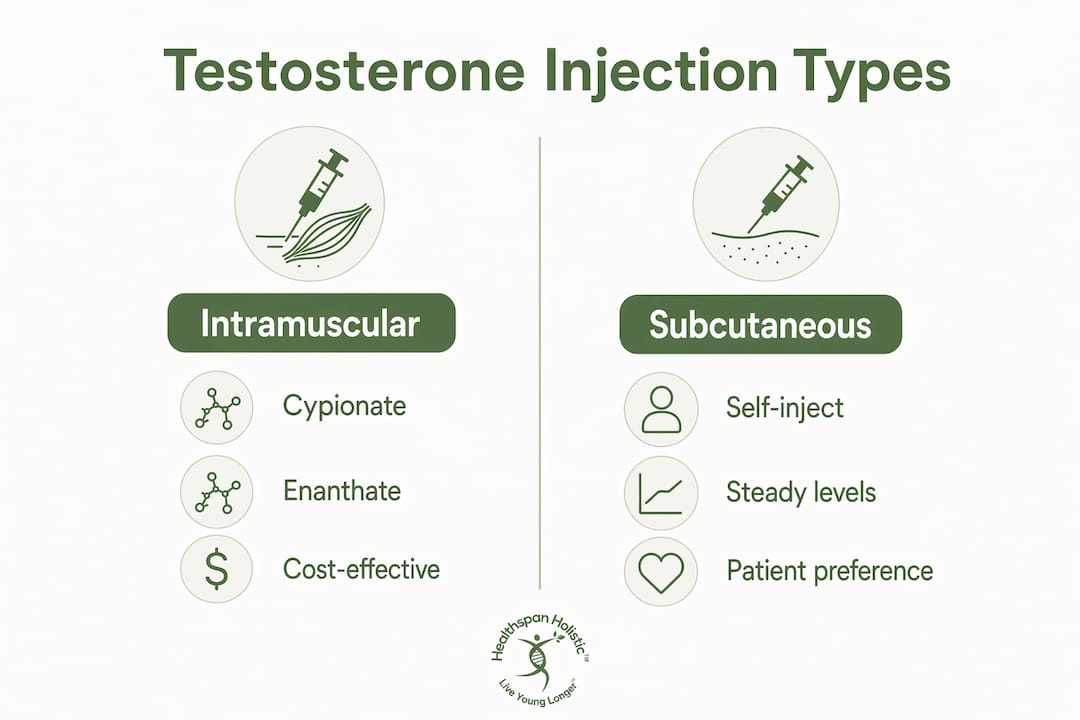
Three main formulations cover the vast majority of prescriptions written in the U.S.: testosterone cypionate, testosterone enanthate, and testosterone undecanoate. A fourth option, subcutaneous autoinjectors like XYOSTED (testosterone enanthate), has expanded the home-use category significantly.
| Formulation | Route | Typical Frequency | Duration of Effect | Clinic vs. Home | Cost/Insurance Notes |
|---|---|---|---|---|---|
| Testosterone cypionate | IM | Every 1–2 weeks | 7–14 days | Both; often clinic-started | Generally low cost; widely covered |
| Testosterone enanthate | IM | Every 1–2 weeks | 7–14 days | Both; often clinic-started | Generally low cost; widely covered |
| Testosterone undecanoate | IM | Every 10–14 weeks | Up to ~3 months | Clinic only (REMS program) | Higher cost; coverage varies |
| XYOSTED (enanthate subQ) | SubQ | Once weekly | ~7 days | Home use; 75 mg starting dose | Higher cost; coverage varies |
A few practical trade-offs worth knowing:
-
Cypionate and enanthate are the workhorses of testosterone replacement therapy for men. They are inexpensive, widely available, and familiar to most prescribers. The downside is the “roller coaster” effect: testosterone spikes shortly after injection and drops before the next dose, which some men notice as mood or energy swings.
-
Testosterone undecanoate (brand name Aveed) smooths out those peaks and troughs with its long-acting profile, but it requires clinic visits every 10–14 weeks and a 30-minute post-injection observation period due to the risk of serious pulmonary oil microembolism. It is administered only in certified healthcare settings.
-
XYOSTED, the subcutaneous autoinjector, starts at 75 mg weekly and is designed for self-administration at home after initial training. Weekly dosing keeps levels more stable than biweekly IM shots.
On cost and preference: the ACP recommends considering intramuscular formulations over transdermal options for men with age-related low testosterone because effectiveness is similar and cost is substantially lower. Patient preference data shows that in studies cited by the ACP, a majority of men who prioritized cost chose injectables, while those who valued convenience after a trial period often preferred topical gels.
All injectable forms suppress the body’s own testosterone production and reduce sperm output, which matters for men who want future children. That conversation should happen before the first injection.
How injections are given: technique, schedules, and what to expect
Intramuscular vs. subcutaneous technique
Intramuscular (IM) injections go into muscle tissue, typically the gluteus medius, the vastus lateralis (outer thigh), or the deltoid. A longer needle (usually 1–1.5 inches) is used, and the medication is injected slowly. Subcutaneous (subQ) injections go just under the skin, most often in the abdomen, using a shorter, finer needle. Many men find subQ injections less intimidating and report less injection-site discomfort.
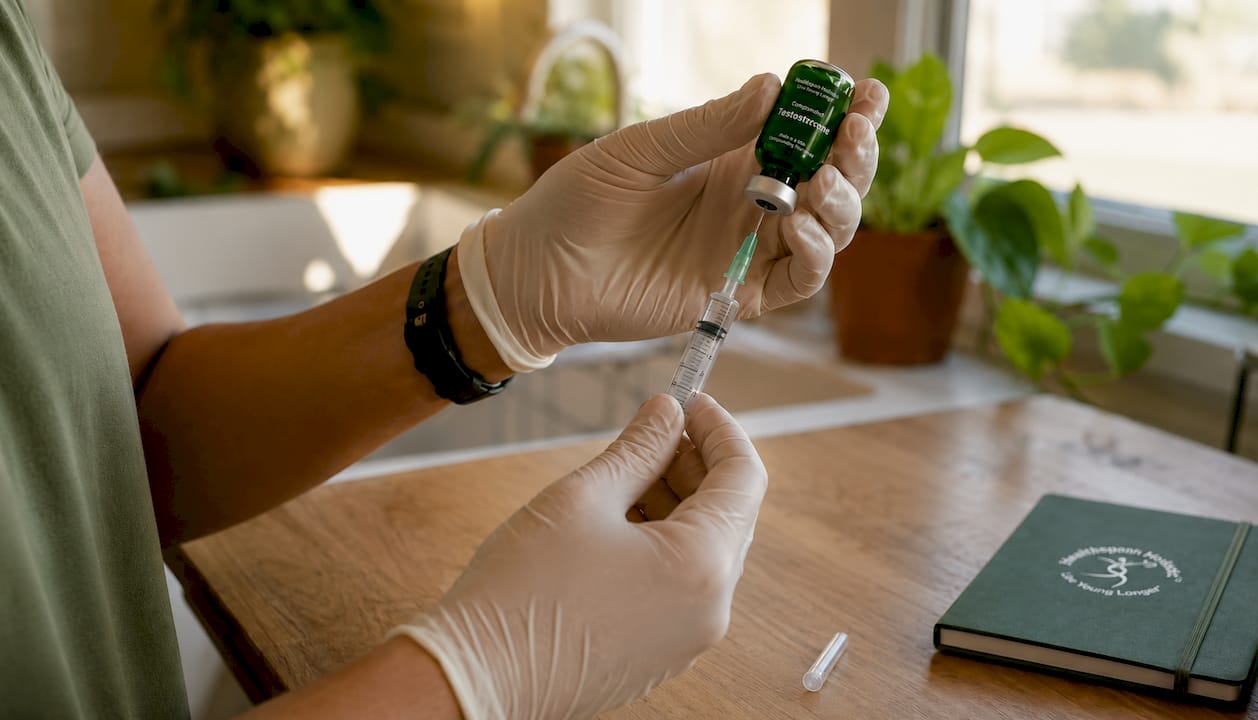
Rotating injection sites is non-negotiable. Injecting the same spot repeatedly causes scar tissue buildup, which slows absorption and increases discomfort over time.
Dosing schedules
-
Short-acting IM (cypionate/enanthate): typically every 7–14 days, though many clinicians now prefer weekly dosing to reduce peak-to-trough swings.
-
Long-acting IM (undecanoate): after an initial loading injection, maintenance doses are given every 10–14 weeks at a clinic.
-
Weekly subQ (XYOSTED): once weekly in the abdomen; dose is titrated based on follow-up testosterone levels.
Protocols vary by clinician and individual response. Never adjust your dose or frequency without guidance from your prescriber.
Clinic visits vs. self-injection
Mayo Clinic notes that subcutaneous testosterone can be self-administered at home after proper training, while IM injections are often started in the clinic. Your first subQ dose will typically be given in your provider’s office so they can observe your technique and watch for reactions. After that, most men transition to home administration.
Pro Tip: Before your first injection appointment, shower and wear loose clothing that gives easy access to the injection site. Bring a current medication list and any recent lab results. If fasting labs were requested, skip breakfast and arrive early.
Benefits you can realistically expect and when they show up
The Cleveland Clinic is clear that TRT can improve symptoms of low testosterone, but the timeline and magnitude of benefit vary by outcome. Sexual function and libido tend to respond first. Lean body mass changes take longer and require consistent effort.
| Outcome | Expected Timeline | Evidence Strength |
|---|---|---|
| Libido and sexual desire | 3–6 weeks | Strong |
| Erectile function | 3–12 weeks | Moderate to strong |
| Mood and sense of well-being | 3–6 weeks | Moderate |
| Lean body mass increase | 3–6 months | Moderate (randomized trials support gains) |
| Fat mass reduction | 3–6 months | Moderate |
| Bone mineral density | 6–12+ months | Moderate |
| Energy levels | Variable; weeks to months | Limited/inconsistent |
| Cognitive function | Uncertain | Low/mixed |
Randomized trials show lean mass gains and fat mass reduction with TRT, but the effect on long-term cardiovascular outcomes and mortality remains uncertain. The ACP recommends reevaluating sexual function within 12 months and discontinuing therapy if there is no meaningful improvement.
A few honest caveats:
-
Testosterone is not a universal energy fix. Men whose fatigue stems from sleep apnea, thyroid dysfunction, or depression may see little benefit from TRT alone.
-
Results plateau. The most noticeable improvements in libido and mood often occur in the first few months; lean mass changes require sustained resistance training alongside therapy.
-
Individual response varies considerably based on baseline levels, age, body composition, and adherence to monitoring.
Risks and side effects: what to watch for and when to seek care
Most men tolerate testosterone replacement therapy for men well, but the risk profile is real and requires active management.
Common side effects:
-
Injection-site pain, redness, or swelling (usually mild and temporary)
-
Fluid retention and mild edema
-
Acne or oily skin
-
Breast tenderness or gynecomastia (from testosterone converting to estrogen)
-
Reduced sperm production and potential infertility
Serious risks requiring monitoring or discontinuation:
-
Erythrocytosis (elevated red blood cell count/hematocrit): The most common serious metabolic effect. A baseline hematocrit above 48% is a contraindication to starting TRT. If hematocrit rises above 54% during therapy, treatment should be stopped and a hematology referral considered. You can read more about managing hematocrit on HRT to understand what those numbers mean in practice.
-
Cardiovascular risk: FDA labeling carries warnings about potential cardiovascular events. Long-term data remain mixed and underpowered for definitive conclusions, so men with existing heart disease or recent MI or stroke require careful shared decision-making.
-
Prostate stimulation: Testosterone may increase PSA and could theoretically stimulate subclinical prostate cancer. Active or suspected prostate cancer is an absolute contraindication.
-
Sleep apnea: TRT can worsen untreated obstructive sleep apnea. Clinicians should screen for this before starting therapy.
-
Clotting risk: Erythrocytosis increases blood viscosity and clotting risk. Know the warning signs: sudden leg pain or swelling, chest pain, shortness of breath, or sudden vision changes all warrant immediate emergency care.
Statistic callout: A hematocrit above 54% during TRT is the threshold at which most guidelines recommend stopping therapy and referring to hematology. Baseline hematocrit above 48% is a contraindication to initiating treatment per AAFP 2024 guidance.
Monitoring and tests your clinician will order before and during TRT
Baseline testing
Before your first injection, expect your clinician to order:
-
Two fasting morning total testosterone measurements (on separate days)
-
Hematocrit and hemoglobin
-
PSA (age-appropriate; typically men 40 and older)
-
Liver function tests (LFTs)
-
LH and FSH (to distinguish primary from secondary hypogonadism)
-
Prolactin (if secondary hypogonadism is suspected)
Ruling out thyroid dysfunction is also worth discussing with your provider, since thyroid imbalances can mimic or worsen low-testosterone symptoms.
Follow-up schedule and action thresholds
| Test | Timing | Action Threshold |
|---|---|---|
| Total testosterone | ~3 months post-start | Adjust dose to target mid-normal range |
| Hematocrit | 3–6 months, then annually | >54%: stop therapy, refer to hematology |
| PSA | 3–6 months, then annually | Rise in PSA in first 12 months: urology consult |
| LFTs | Baseline; repeat if symptoms arise | Elevated: evaluate cause, consider stopping |
| Symptom reassessment | 3–12 months | No improvement: reconsider diagnosis and therapy |
Ongoing monitoring is mandatory. Failure to adhere to follow-up testing is one of the most common reasons therapy is discontinued or leads to complications. Coverage for these labs varies by insurer; check with your plan before starting.
Who should not use testosterone injections and how clinicians decide
Absolute contraindications
-
Active or suspected prostate cancer or breast cancer in men
-
Palpable prostatic nodule or very high baseline PSA without urologic evaluation
-
Hematocrit above 48% at baseline
-
Untreated severe obstructive sleep apnea
-
Uncontrolled heart failure
-
Recent MI or stroke (timing thresholds vary by guideline; discuss with your cardiologist)
-
Known thrombophilia or history of venous thromboembolism
Diagnostic criteria
The Endocrine Society requires both: symptoms consistent with hypogonadism AND at least two fasting morning total testosterone measurements that are unequivocally low. A single low result is not sufficient. Additional evaluation with LH and prolactin helps determine whether the cause is primary (testicular failure) or secondary (pituitary/hypothalamic), which influences treatment choices.
Total testosterone below 300 ng/dL is the threshold commonly used in U.S. practice, though the clinical picture always matters alongside the number.
How clinicians weigh the decision
Age, fertility goals, cardiovascular risk, prostate cancer risk, comorbidities, and patient preferences all factor into the decision. A 35-year-old man who wants children is a very different clinical scenario than a 60-year-old man with confirmed primary hypogonadism and no fertility concerns. Comprehensive lab testing for adults can surface the full picture before that conversation happens.
Pro Tip: If you want children now or in the future, raise that explicitly at your first appointment. Sperm banking before starting TRT is a straightforward step that preserves options. Once you start injections, sperm production typically drops significantly and may not fully recover.
Alternatives and fertility-preserving options worth knowing about
Lifestyle-first approaches
Resistance training, weight loss, and sleep optimization are evidence-backed ways to support your body’s own testosterone production. Mayo Clinic lists these as first-line or adjunct measures, and they carry no contraindications. Men who are overweight, sedentary, or sleep-deprived often see meaningful testosterone improvements from lifestyle changes alone before any medication is considered. A practical longevity guide for men after 45 covers many of these strategies in depth.
Non-injectable TRT modalities
-
Topical gels and patches: convenient, avoid injection-site issues, but carry transfer risk to partners and children and tend to cost more than injectables.
-
Pellets: implanted under the skin every 3–6 months in a minor office procedure; steady hormone delivery but dose cannot be adjusted once implanted.
Fertility-preserving medical options
For men who want to father children, standard TRT injections are a poor choice because they suppress LH and FSH, which shuts down sperm production. Two alternatives are commonly discussed with reproductive specialists:
-
Enclomiphene: an oral medication that stimulates the pituitary to produce more LH and FSH, raising testosterone without suppressing sperm production.
-
Human chorionic gonadotropin (hCG): mimics LH and can maintain testicular function and sperm production, sometimes used alongside low-dose TRT.
Both require specialist oversight, typically from a reproductive endocrinologist or urologist with fertility expertise. Do not delay this referral if paternity is a goal.
What major medical societies and clinical trials conclude
The evidence base for testosterone replacement therapy for men has grown substantially, but important uncertainties remain.
Where the evidence is solid:
-
Sexual function and libido improve with TRT in men with confirmed hypogonadism. The Endocrine Society and ACP both support this indication.
-
Lean body mass increases and fat mass decreases in randomized trials.
-
ACP guidance suggests intramuscular formulations as a cost-effective starting point for men with age-related low testosterone who prioritize sexual function.
Where uncertainty remains:
-
Long-term cardiovascular outcomes: evidence is mixed and most trials were not powered to detect mortality differences.
-
Cognitive function: no consistent benefit has been established.
-
Prostate cancer risk: no large trial has confirmed that TRT causes prostate cancer, but men with high baseline risk require careful monitoring.
Shared decision-making is the standard. The ACP recommends reevaluating within 12 months and discontinuing if sexual function does not improve. The Endocrine Society emphasizes that diagnosis must be rigorous and that TRT should not be initiated based on symptoms alone.
Useful references for deeper reading:
-
Endocrine Society Clinical Practice Guideline on Testosterone Therapy
-
ACP Clinical Guideline: Testosterone Treatment in Adult Men With Age-Related Low Testosterone
-
AAFP 2024 Review: Testosterone Replacement Therapy for Male Hypogonadism
-
PMC Review: The Benefits and Risks of Testosterone Replacement Therapy
How a comprehensive testing and coaching program can help you move forward
The biggest mistake men make with suspected low testosterone is acting on a single lab result or a symptom list alone. The correct pathway looks like this:
-
Step 1: Symptom screen with a clinician who understands hypogonadism.
-
Step 2: Two fasting morning total testosterone tests on separate days.
-
Step 3: Baseline hematocrit, PSA, LFTs, and targeted endocrine workup (LH, prolactin) as indicated.
-
Step 4: Shared decision-making on whether TRT is appropriate, which formulation fits your lifestyle, and what your monitoring schedule will look like.
-
Step 5: Ongoing follow-up at 3 months, 6 months, and annually.
Programs that combine comprehensive hormone panels with coaching and structured follow-up reduce unnecessary starts and stops. When labs, lifestyle factors, and symptom tracking are integrated, clinicians and patients make better decisions together.
Healthspan Holistic’s Comprehensive Hormone Panel is built for exactly this workflow: it covers the key markers needed to evaluate testosterone status alongside metabolic and cardiovascular baselines. The 90 Day Journey to Longevity! pairs that diagnostic foundation with one-on-one coaching, lifestyle planning, and structured tracking so you are not navigating this process alone.
Pro Tip: Men who track their labs, symptoms, and lifestyle changes together get more out of every clinician visit. Bring a simple log of energy, sleep quality, libido, and mood to each appointment. Patterns in that data often reveal more than a single lab value.
Statistic callout: The AAFP 2024 review confirms that hematocrit and PSA monitoring at 3–6 months after starting TRT, then annually, is the standard of care. Men who miss these follow-up checks face higher risk of undetected erythrocytosis and prostate changes.
Key Takeaways
Testosterone injections can restore sexual function, lean mass, and libido in men with confirmed hypogonadism (symptoms plus at least two low morning testosterone measurements below 300 ng/dL), but safe use requires baseline labs, provider oversight, and scheduled monitoring throughout therapy.
| Point | Details |
|---|---|
| Diagnosis requires two tests | A single low testosterone result is not enough; two fasting morning measurements are required before starting TRT. |
| Hematocrit is the top safety marker | Baseline above 48% contraindicates TRT; levels above 54% during therapy require stopping and hematology referral. |
| Sexual function responds first | Libido and erectile improvements typically appear within 3–12 weeks; lean mass changes take 3–6 months. |
| Fertility must be discussed early | TRT suppresses sperm production; men who want children should discuss sperm banking or fertility-preserving alternatives before starting. |
| Healthspan Holistic offers integrated support | The Comprehensive Hormone Panel and 90 Day Journey to Longevity! provide lab testing, coaching, and structured follow-up for men navigating this process. |
What I think men get wrong about testosterone therapy
The conversation around testosterone injections has drifted in two unhelpful directions. On one side, men dismiss their symptoms as “just aging” and never get tested. On the other, they arrive at a clinic expecting injections to fix fatigue, low motivation, and poor sleep without addressing the lifestyle factors that are often driving those symptoms in the first place.
The evidence is genuinely encouraging for men with confirmed hypogonadism. Sexual function, libido, and lean mass respond well. But testosterone is not a shortcut around poor sleep, excess body fat, or a sedentary lifestyle. The men who get the most out of TRT are the ones who treat it as one component of a broader health plan, not the whole plan.
Shared decision-making matters here more than in most areas of medicine. The monitoring burden is real. The fertility implications are real. And the uncertainty around long-term cardiovascular outcomes means this is not a decision to make lightly or based on a single conversation. Get the labs done properly, discuss your goals honestly with your clinician, and if you want children, have that conversation before the first injection, not after.
The most patient-first approach is also the most conservative one: confirm the diagnosis rigorously, start at the lowest effective dose, pair therapy with resistance training and sleep optimization, and stay on top of your monitoring schedule. That combination gives you the best chance of real, lasting benefit.
- Chris
Healthspan Holistic supports your path to hormonal clarity
Knowing your numbers is the first step toward knowing your options. Healthspan Holistic gives men a clear, structured way to get the baseline data that any responsible TRT conversation requires, without the guesswork of piecing together labs from multiple sources.

The Comprehensive Hormone Panel covers testosterone, metabolic markers, and cardiovascular baselines in one coordinated panel. Pair it with the 90 Day Journey to Longevity! and you get one-on-one coaching, structured lab follow-up, and a personalized plan that connects your results to real lifestyle changes. This is the kind of integrated support that helps men move from “I think something is off” to “I know what to do next.” Ready to get started? Checkout our line of hormone optimization options for men.
1st Time Customers can take advantage of our BUY 1 GET 1 50% OFF special offer on all supplements.
FAQ
What happens when a man takes testosterone injections?
Testosterone injections raise serum testosterone levels, which can improve libido, sexual function, mood, and lean body mass in men with confirmed hypogonadism. They also suppress the body’s natural testosterone production and reduce sperm output, so medical oversight and regular monitoring are required.
How often should you inject testosterone?
Frequency depends on the formulation: testosterone cypionate and enanthate are typically injected every 1–2 weeks intramuscularly, weekly subcutaneous options like XYOSTED are dosed once a week, and long-acting testosterone undecanoate is given every 10–14 weeks at a clinic. Your clinician sets the schedule based on your labs and response.
Why are some doctors cautious about prescribing TRT?
Testosterone is a Schedule CIII controlled substance in the U.S., which requires careful prescribing and ongoing monitoring. Clinicians are also cautious because long-term cardiovascular data remain mixed, erythrocytosis is a real risk, and diagnosis must be confirmed with two low morning testosterone tests plus compatible symptoms before treatment is appropriate.
How long should a man stay on testosterone injections?
There is no universal duration. The ACP recommends reassessing sexual function within 12 months and discontinuing therapy if there is no meaningful improvement. Men who respond well and maintain appropriate lab values may continue long-term under regular monitoring, while others may taper off if lifestyle changes restore normal testosterone levels.
Key references and further reading
“The indication for testosterone-replacement therapy requires the presence of a low testosterone level and symptoms and signs of hypogonadism. The benefits and risks of TRT must be clearly discussed with the patient and assessment of prostate and other risk factors considered before commencing treatment.” — PMC Review: The Benefits and Risks of Testosterone Replacement Therapy
Primary clinical guidelines and patient resources:
-
Endocrine Society Clinical Practice Guideline: Testosterone Therapy for Hypogonadism
-
ACP Clinical Guideline: Testosterone Treatment in Adult Men With Age-Related Low Testosterone
-
AAFP 2024 Review: Testosterone Replacement Therapy for Male Hypogonadism
-
MedlinePlus: Testosterone Injection Drug Information
-
Cleveland Clinic: Testosterone Replacement Therapy Overview
-
Mayo Clinic: Testosterone Therapy — What It Is
-
DailyMed: XYOSTED (testosterone enanthate) Prescribing Information
-
PMC: The Benefits and Risks of Testosterone Replacement Therapy — A Review
1 comment
Aug 13, 2026 • Posted by scott
Leave a comment: