

TL;DR:
- Biohacking involves making personalized, data-driven adjustments to improve health and aging. Starting with foundational habits like sleep, nutrition, and stress management is crucial before adding advanced tools or supplements. Professional guidance ensures safety and maximizes results over an evidence-based, structured 12-week program.
Biohacking is the practice of making intentional, data-driven changes to your diet, lifestyle, environment, and biology to optimize how you feel, perform, and age. According to the Cleveland Clinic, it uses tools like wearables, genetic analysis, and advanced diagnostic testing to move from guesswork to personalized action. For adults over 40, the single most important takeaway is this: start with the fundamentals before adding any technology or supplements.
Your 40+ tl;dr:
-
Sleep enough hours, eat whole foods, lift weights, and manage stress first
-
Add diagnostics (blood panels, wearables) only after your baseline habits are solid
-
Work with a clinician before trying any hormonal, peptide, or pharmacologic intervention
Why biohacking matters more after you turn 40
After 40, your biology shifts in ways that generic wellness advice rarely addresses. Metabolism slows, hormones fluctuate, inflammation tends to creep upward, and muscle mass begins a gradual decline. These changes are real, but they are not fixed. Targeted, personalized interventions can meaningfully influence your healthspan, which is the number of years you spend in genuinely good health, not just alive.
What makes biohacking relevant here is the emphasis on your data, not population averages. A 55-year-old woman with subclinical thyroid changes needs a different protocol than a 48-year-old man with insulin resistance. Personalization is the lever that generic wellness programs miss.
Dr. Melissa Young, a functional medicine physician at the Cleveland Clinic, puts it plainly: the key to safe biohacking is knowing where a practice sits on the safety spectrum, and most gains come from nailing sleep, nutrition, and stress management first.
-
Foundational habits (sleep, diet, exercise, stress) deliver the largest longevity returns
-
Advanced tools amplify results only when basics are already in place
-
Professional oversight reduces the risk that test results lead to harmful DIY changes
Foundational biohacks that actually move the needle
The evidence-backed starting point for any biohacking lifestyle is not a supplement stack or a cold plunge. It is the daily habits that compound quietly over months and years.
Sleep with a consistent schedule Circadian rhythm disruption accelerates metabolic and hormonal aging. Aim for the same bedtime and wake time seven days a week. Track sleep stages with a wearable if you want data, but the goal is simple: protect your sleep window.
Nutrition (whole foods, protein-forward, plant-rich) A nutrient-dense diet built around vegetables, legumes, quality proteins, and healthy fats reduces systemic inflammation and supports mitochondrial function. Adults over 40 generally benefit from prioritizing protein to offset muscle loss. Nutrition’s role in aging is one of the most well-supported levers you have.
Exercise (resistance + zone 2 aerobic) Regular strength training preserves lean mass and bone density. Moderate-intensity cardio that maintains conversation supports metabolic flexibility and cardiovascular health.
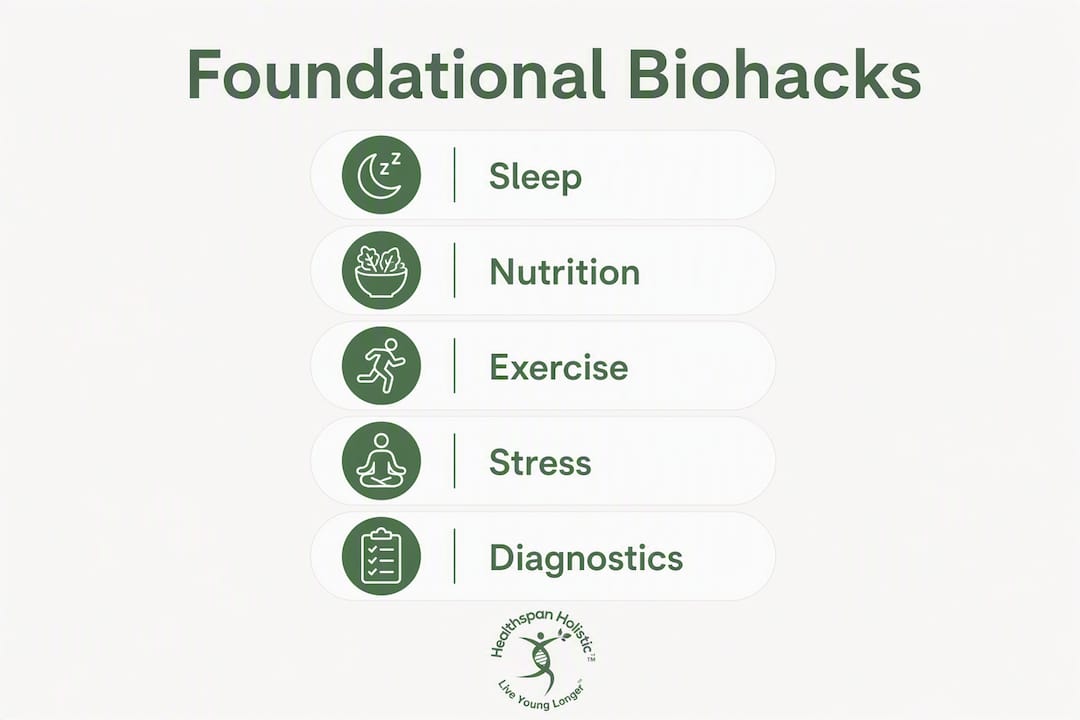
Stress management (mindfulness, breathwork) Chronic stress elevates cortisol, which disrupts sleep, promotes fat storage, and accelerates cellular aging. Even ten minutes of daily breathwork or meditation produces measurable physiological changes over weeks.
Intermediate biohacks with some evidence include time-restricted eating and sauna exposure. Both are worth exploring after your foundational habits are consistent, and responses vary enough by individual that baseline testing before starting is wise.
Pro Tip: Stack a new habit onto an existing one. If you already make coffee every morning, add a five-minute breathwork session immediately after. Habit stacking turns intention into automatic behavior far faster than willpower alone.
What diagnostic tools actually tell you about your biology
Modern biohacking techniques go beyond lifestyle tracking. Advanced diagnostics give you a biological snapshot that no symptom checklist can replicate. Here is how the main tools compare:

| Tool | Primary insight | Typical US cost range | Best for |
|---|---|---|---|
| Basic blood panel (CBC, metabolic, lipids) | Baseline organ function, cholesterol, blood sugar | Low ($50–$150) | Everyone as a starting point |
| Advanced biomarker panel (hormones, inflammation, nutrients) | Endocrine status, inflammatory load, micronutrient gaps | Moderate ($200–$600) | Adults 40+ with symptoms or goals |
| Continuous glucose monitor (CGM) | Real-time metabolic flexibility, food response | Low–moderate ($75–$200 for 2-week trial) | Metabolic health, weight, energy |
| Genetic testing (SNP panels) | Risk variants, nutrient metabolism, drug response | Moderate ($200–$500) | Personalization of diet and supplements |
| Wearable device (Oura Ring, Garmin, WHOOP) | Sleep, HRV, activity, recovery trends | Low–moderate ($30–$500 device cost) | Daily habit monitoring and trend tracking |
Practical considerations:
-
Blood panels are the highest-ROI starting point; they reveal actionable gaps quickly
-
CGMs are particularly useful for adults with energy crashes, weight resistance, or pre-diabetes risk
-
Genetic data is most valuable when interpreted by a clinician who can connect variants to your actual labs
-
Wearables generate motivation and trend data, but raw numbers without clinical context can mislead
As The Independent notes, these tools are most useful when integrated with professional interpretation, not used in isolation.
How to start biohacking safely, step by step
A staged approach protects you from the most common pitfall: adding complexity before you have a baseline.
-
Get a medical review and baseline labs. Ask your physician for a comprehensive metabolic panel, lipid panel, thyroid function, hormone levels (testosterone, estrogen, DHEA), vitamin D, and inflammatory markers (CRP, homocysteine). Use a guide like how to choose lab testing to prioritize.
-
Set two to three specific goals. “More energy,” “better sleep,” and “lose 15 pounds” are too vague. Translate them into measurable targets: sleep efficiency above 85%, fasting glucose below 90 mg/dL, or deadlift bodyweight by month six.
-
Start foundational practices for eight weeks. No supplements, no advanced tools yet. Let sleep, diet, and exercise do their work first.
-
Add one diagnostic or wearable. A CGM for two weeks or a sleep tracker gives you data to interpret your response to the foundational changes.
-
Iterate every 8–12 weeks. Re-test key biomarkers, adjust your protocol, and repeat.
Questions to bring to your clinician or coach:
-
Which of my labs are outside optimal (not just “normal”) range?
-
Do any of my current medications interact with supplements I am considering?
-
What metrics should I track to know if this intervention is working?
Red flags to avoid:
-
DIY hormone therapy or peptide injections without physician oversight
-
Unverified supplements purchased from unregulated sources
-
Extreme caloric restriction without medical supervision
-
Any implantable device or injectable outside a licensed clinical setting
Where does biohacking get dangerous?
WebMD and hospital-affiliated sources both confirm that biohacking spans a wide safety spectrum. Lifestyle-based changes carry minimal risk for most adults. Experimental procedures are a different matter entirely.
High-risk practices to avoid without direct clinical supervision:
-
Unsupervised hormone therapy or DIY testosterone/estrogen protocols
-
Unvetted peptide injections sourced online
-
Microchip or RFID implants performed outside medical settings
-
Extreme fasting protocols (multi-day water fasts) without physician monitoring
-
Unregulated “longevity” IV infusions from non-clinical providers
As AdventHealth notes, consumer-facing guidance consistently advises caution around unregulated therapies and recommends consulting licensed clinicians first. The fact that something is sold online does not make it safe or effective.
Pro Tip: Before trying any new supplement or technique, run a three-question check: Is there peer-reviewed evidence? Is it offered by a credentialed provider? Does my clinician know I am considering it? If any answer is “no,” pause.
Realistic timelines and what things cost
| Item | Ballpark US cost | When to buy | What to watch at 4–12 weeks |
|---|---|---|---|
| Basic blood panel | $50–$150 | Before you start | Glucose, lipids, thyroid |
| Advanced biomarker panel | $200–$600 | After basics are solid | Hormones, inflammation, nutrients |
| CGM (2-week trial) | $75–$200 | Weeks 4–8 | Glucose variability, food response |
| Wearable device | $30–$500 | Anytime | Sleep score, HRV, resting heart rate |
| 12-week coaching program | moderate cost | After baseline labs | Energy, body composition, lab trends |
Visible changes in energy, sleep quality, and mood often appear within weeks of consistent foundational habits. Biomarker improvements typically show after a few months of re-testing. Body composition changes vary depending on starting point and consistency.
Budgeting tip: Spend on labs before supplements. A $200 blood panel that reveals a vitamin D deficiency or thyroid imbalance will save you hundreds on supplements that were never targeting your actual gaps.
When should you work with a professional?
Self-directed biohacking works well for foundational habits. The moment you move into advanced territory, professional guidance shifts from helpful to necessary.
Seek clinician-backed coaching when:
-
Any lab result falls outside the optimal range, not just the reference range
-
You take prescription medications that may interact with supplements or dietary changes
-
Symptoms persist despite consistent lifestyle changes (fatigue, brain fog, weight resistance)
-
You want to explore peptide therapy, hormone optimization, or GLP-1 weight management
What a quality provider should offer:
-
Thorough medical intake and health history review
-
Lab ordering and clinical interpretation (not just flagging “abnormal”)
-
An individualized plan tied to your specific biomarkers and goals
-
Monitoring schedule with defined re-test points
-
Clear safety protocols for any pharmacologic or advanced intervention
A well-structured pathway looks like this:
-
Baseline labs and clinical intake
-
Professional interpretation of results
-
Personalized 12-week protocol (diet, exercise, supplements, lifestyle)
-
Scheduled follow-up and re-testing at weeks 8–12
-
Protocol adjustment based on measured outcomes
Functional lab testing goes deeper than standard panels, capturing markers of mitochondrial function, gut health, and hormonal balance that a routine physical often misses.
What a clinician-led diagnostics program actually looks like
A well-designed evidence-first program follows a clear, repeatable structure. Here is how a diagnostics-first approach typically flows:
-
Intake: Full health history, medication review, symptom mapping, and goal-setting
-
Baseline labs: Advanced blood panel covering hormones, metabolic markers, inflammation, and micronutrients
-
Data integration: Wearable and genetic data layered into the clinical picture using AI-assisted analytics
-
Individualized recommendations: Nutrition, exercise, supplementation, and lifestyle changes ranked by expected impact on your specific biomarkers
-
Coaching and follow-up: Regular check-ins, accountability, and protocol adjustments based on how your metrics respond
Deliverables a client typically receives:
-
A detailed lab report with clinical interpretation
-
A prioritized action plan (not a generic wellness checklist)
-
Evidence-based supplement and lifestyle recommendations tied to actual deficiencies
-
A monitoring schedule with defined re-test points
Professional oversight and measurable outcomes are the two features that separate a credible program from a wellness trend.
Key Takeaways
Biohacking works best for adults over 40 when it starts with foundational habits, uses diagnostics to personalize, and applies clinician oversight before any advanced or pharmacologic intervention.
| Point | Details |
|---|---|
| Start with foundations | Sleep 7–9 hours, eat whole foods, exercise regularly, and manage stress before adding any tools. |
| Diagnostics before supplements | A baseline blood panel reveals your actual gaps and prevents wasted spending on the wrong products. |
| Iterate in 8–12 week cycles | Re-test key biomarkers after each protocol phase to confirm interventions are producing real change. |
| Avoid high-risk experiments | DIY hormone therapy, unvetted injectables, and unregulated peptides carry serious risks without clinical supervision. |
| Healthspan Holistic’s approach | Combines advanced lab panels, AI-assisted data integration, and personalized coaching in a structured 12-week program for adults 40+. |
The case for data before decisions
Most people who try biohacking without a plan end up cycling through supplements and gadgets that never address their actual biology. The appeal of a quick fix is real, but the adults who see lasting results are the ones who treat their body like a system worth measuring, not a problem to throw products at.
What the research consistently shows is that the gap between “biohacking” and “evidence-based medicine” is narrower than the wellness industry suggests. Sleep, nutrition, resistance training, and stress management are not boring fallbacks. They are the highest-return interventions available, and they work better when you have the data to personalize them.
The experimental fringe of biohacking, including unregulated peptides, DIY hormone protocols, and implantables, gets the most attention online and carries the most risk. For adults over 40 focused on genuine healthspan extension, the smarter path is a structured, clinician-guided program that starts with your labs and builds from there. Personalization is not a luxury at this stage. It is what makes the difference between a protocol that fits your biology and one that simply sounds good on paper.
Healthspan Holistic: your clinician-backed starting point
If you are ready to move from general wellness advice to a program built around your actual biology, Healthspan Holistic offers exactly that. The 90 Day Journey to Longevity combines advanced baseline lab testing, clinical interpretation, AI-assisted integration of your wearable and genetic data, and a personalized 12-week coaching plan designed specifically for adults over 40.

You get a prioritized action plan tied to your real biomarkers, not a generic checklist. Supplement recommendations are based on what your labs show, and every step includes professional oversight so you are never experimenting blind. For adults interested in evidence-based supplements for longevity, the program connects lab findings directly to targeted supplementation.
1st Time Customers can take advantage of our BUY 1 GET 1 50% OFF special offer on all supplements.
FAQ
What is biohacking in simple terms?
Biohacking means making intentional, data-driven changes to your diet, lifestyle, and environment to improve how your body functions and ages. It ranges from basic habits like sleep and nutrition to advanced diagnostics and personalized interventions.
Is biohacking safe for adults over 50?
Foundational biohacks (sleep, diet, exercise, stress management) are safe for most adults. Advanced or experimental interventions, including hormone therapy, peptides, or injectables, require clinician supervision and should never be self-administered.
What blood tests should I get before starting a biohacking program?
A useful baseline includes a comprehensive metabolic panel, lipid panel, thyroid function, hormone levels (testosterone, estrogen, DHEA), vitamin D, and inflammatory markers like CRP and homocysteine. A clinician can help you prioritize based on your symptoms and goals.
How long before I see results from biohacking?
Visible changes in energy, sleep quality, and mood often appear within weeks of consistent foundational habits. Biomarker improvements typically show after a few months of re-testing. Body composition changes vary depending on starting point and consistency.
What does Healthspan Holistic’s 90 Day Journey to Longevity include?
The program combines advanced baseline lab testing, clinical interpretation, AI-assisted wearable and genetic data integration, and a personalized 12-week coaching plan tailored to adults over 40 seeking measurable healthspan improvements.
Leave a comment: