

TL;DR:
Your immune system is a balanced, adaptable network that indicates overall health beyond fighting infections.
After 45, aging and lifestyle factors like diet, stress, and gut health significantly reduce immune efficiency and resilience.
Understanding what is immune system health goes far beyond avoiding the common cold. After age 45, your immune system quietly shifts, and those changes affect everything from your energy levels to your risk of chronic disease. Most people think about immunity only when they’re sick, but the reality is that your immune system works around the clock as one of the most revealing indicators of your overall well-being. This article covers how your immune system actually functions, what disrupts it as you age, and the practical steps you can take to support it for the long haul.
Key takeaways
| Point | Details |
|---|---|
| Immunity is a balance, not a boost | A well-functioning immune system is regulated and resilient, not simply “stronger.” |
| Aging changes immune function | After 45, chronic low-grade inflammation and cellular aging reduce immune efficiency. |
| Lifestyle drives immune health | Nutrition, sleep, exercise, and stress management are the most powerful tools you have. |
| Gut health shapes your immunity | A diverse gut microbiome trains and regulates your immune response every single day. |
| Testing reveals your gaps | Personalized lab tests help you identify nutrient deficiencies that undermine immune function. |
What is immune system health and how the body’s defense works
The term “immune system health” is widely used, but the clinical concept behind it is called immune resilience. This refers to your immune system’s capacity to respond effectively to threats and then return to a balanced, non-inflammatory state. It’s not just about fighting germs. A healthy immune system also clears damaged cells, regulates inflammation, and maintains a kind of internal surveillance that protects against chronic disease.
Your immune system is made up of roughly 1.8 trillion cells distributed throughout every tissue in your body. These aren’t concentrated in one organ. They form a distributed, constantly adapting network that includes the thymus, spleen, lymph nodes, bone marrow, and the gut lining.
There are two main branches worth understanding:
-
Innate immunity is your fast, nonspecific first responder. It reacts within minutes to any perceived threat using physical barriers like skin, and immune cells that engulf foreign invaders.
-
Adaptive immunity is slower but far more precise. It produces antibodies and memory cells tailored to specific pathogens, which is why you don’t usually get the same infection twice.
Beyond these two arms, your immune system also includes proteins called cytokines (chemical messengers that coordinate responses), complement proteins (which tag invaders for destruction), and a growing class of natural killer cells that target abnormal cells before they become tumors.
Researchers now recognize that your immune grade predicts not just how well you fight infections but how you respond to vaccines, how quickly you recover from illness, and even how long you are likely to live in good health. This is why the importance of immune health extends far beyond cold season.
Pro Tip: Think of your immune system like a well-trained security team. You don’t want them asleep on the job, but you also don’t want them flagging every harmless passerby. Balance is the goal.
Factors affecting your immune system after 45
No two immune systems are identical. Genetics, where you grew up, childhood infections, and lifetime exposures all shape how your immune system responds. But after age 45, certain universal changes begin to accelerate.

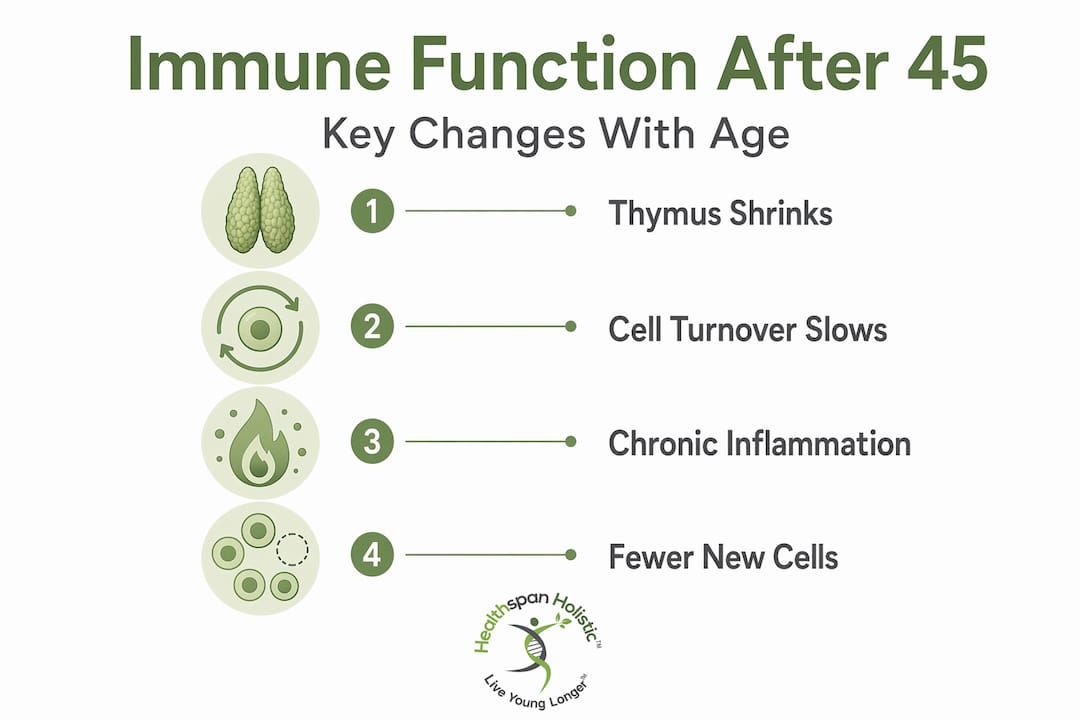
The most significant is a process called immunosenescence, the gradual aging of immune cells. Your thymus, the organ that produces and trains T cells, begins to shrink in early adulthood and continues through midlife. By your 50s and 60s, your body produces fewer naive T cells, meaning you have less capacity to mount a fresh response to new threats. At the same time, older immune cells that have “retired” but refused to die accumulate in your body, releasing low-grade inflammatory signals. Researchers call this inflammaging, and it is directly linked to increased risk of cardiovascular disease, cognitive decline, and metabolic disorders.
The key lifestyle factors affecting immune system function include:
-
Nutrition: A diet low in fiber, diverse plants, and fermented foods reduces microbial diversity and weakens immune training.
-
Exercise: Moderate, consistent movement improves immune surveillance and reduces systemic inflammation.
-
Sleep: Chronic sleep deprivation raises inflammatory markers and blunts vaccine response.
-
Chronic stress: High cortisol suppresses immune function and increases inflammation over time.
-
Smoking and excess alcohol: Both impair white blood cell activity and damage the gut lining.
One factor that often surprises people is the gut. Your gut contains specialized immune tissue called mucosa-associated lymphoid tissue, and it is responsible for training your immune system to tell the difference between harmful invaders and harmless food proteins or beneficial bacteria. A depleted gut microbiome essentially leaves your immune system poorly educated.
“Diversity in your gut is diversity in your defense. The more varied your microbiome, the more precisely your immune system can calibrate its responses.”
What’s less well known is that environmental exposure matters too. Gardening and contact with soil microbes has been shown to transfer beneficial bacteria that support gut health and immune regulation. In other words, getting your hands in the dirt is genuinely good medicine.
Healthy immune system tips for daily life
The good news is that the most powerful tools for supporting immune function are also the most accessible. Here is a framework that actually works for adults in the 45 to 75 range, built around habits rather than shortcuts.
-
Eat a wide variety of whole foods. Aim for 30 or more different plant foods per week, including vegetables, fruits, legumes, whole grains, nuts, and seeds. This fuels the microbial diversity your immune system depends on. Add fermented foods like yogurt, kefir, kimchi, or sauerkraut several times a week for a direct probiotic benefit. Explore the gut health connection if you want to go deeper on this.
-
Move consistently, not excessively. Current guidelines recommend 150 minutes of moderate activity or 75 minutes of vigorous exercise weekly. Brisk walking, swimming, cycling, and yoga all count. Note that extreme exercise without adequate recovery temporarily suppresses immune function, so more is not always better.
-
Protect your sleep. Adults who consistently get 7 to 8 hours of quality sleep show stronger antibody responses and recover from illness faster. Prioritize a consistent bedtime, keep your bedroom cool and dark, and limit screens in the hour before sleep.
-
Manage stress with daily micro-practices. You don’t need a weekend retreat. A 10-minute morning walk, five minutes of slow breathing, or a deliberate attitude shift can meaningfully reduce cortisol over time. Chronic stress is one of the most underestimated factors in immune system deterioration for adults over 50.
-
Stay current with vaccinations. Your adaptive immune system builds memory from exposure. Flu, shingles, and pneumonia vaccines are particularly relevant for adults over 50. They don’t weaken your immune system. They train it.
-
Limit alcohol and avoid smoking. Even moderate alcohol intake disrupts sleep quality and gut bacteria. Smoking is one of the most direct ways to suppress immune cell production and damage your respiratory defenses.
Pro Tip: Attach new immune-supportive habits to existing routines. Add a handful of seeds to your morning oatmeal, take your walk right after lunch, or do your breathing practice while coffee brews. Small anchors build lasting change.
Supplements and testing for immune support
This is where honest advice is most needed, because the supplement market is full of exaggerated claims.
Supplements like vitamin D, zinc, and elderberry are widely studied but the clinical evidence for their immune effects is more nuanced than the marketing suggests. Vitamin D deficiency is genuinely common in adults over 50, especially in northern climates, and correcting a deficiency does support immune function. But taking high-dose vitamin D when your levels are already adequate offers little benefit. The same logic applies to zinc and elderberry. They may help under specific conditions, but they are not substitutes for foundational lifestyle habits. For a clear-eyed look at the evidence, the longevity supplement research on how to improve immunity through targeted supplementation is worth reviewing.
Here is a quick comparison of testing options and what they reveal:
| Test | What it measures | Why it matters for immunity |
|---|---|---|
| Magnesium RBC | Magnesium inside red blood cells | Magnesium drives 300+ enzymatic reactions including immune signaling |
| Cellular Micronutrient | Nutrient levels inside white blood cells | Reflects actual nutrient availability for immune cells |
| Metabolic Panel | Glucose, insulin, liver and kidney markers | Metabolic imbalances directly suppress immune regulation |
Where testing becomes genuinely useful is when it guides personalized supplementation. Rather than guessing whether you need more zinc or vitamin D, a cellular micronutrient assessment tells you exactly what your immune cells are actually working with. This is the difference between a generic approach and a targeted one.
A few things to keep in mind:
-
Always discuss test results and supplement plans with a qualified healthcare provider.
-
Avoid self-diagnosing based on online tests alone.
-
Supplements work best as adjuncts to a solid lifestyle foundation, not as replacements.
1st Time Customers can take advantage of our BUY 1 GET 1 50% OFF special offer on all supplements.
My honest take on immune health after years working with adults 45 and older
I’ve worked with adults in the 45 to 75 range who came to me convinced they needed a better supplement stack. What most of them actually needed was better sleep, less chronic stress, and a wider variety of food on their plate.
The phrase “boost your immune system” has done real damage, in my view. It implies more is better, and that a pill can compensate for poor lifestyle habits. But immunity isn’t a volume knob you turn up. It’s a calibration. An overactive immune system causes autoimmune disease and chronic inflammation. An underactive one leaves you vulnerable to infections and cancer. What you want is a resilient, well-calibrated system that responds appropriately and then stands down.
What I’ve learned is that mindset and stress management are consistently the most overlooked levers. I’ve seen people eat perfectly and exercise regularly but remain chronically unwell because they carry enormous psychological stress with no outlet. Cortisol is relentless. It will undo a lot of good work if you don’t address it.
There’s also something that researchers have recently confirmed that I find sobering: your immune system retains memory of past metabolic states. Obesity, for example, leaves epigenetic marks on T cells that persist for up to a decade, even after weight loss. This is not a reason for despair. It is a reason to start now, whatever your starting point, because the decisions you make in your 50s and 60s are actively reshaping your immune landscape for the years ahead.
Start with one sustainable habit. Build from there. The cumulative effect over time is profound.
— Chris
Support your immune health with Healthspan Holistic
If this article has you thinking about where to start, you’re not alone. Most of our clients come to Healthspan Holistic with a sense that something is off but no clear picture of why. That’s exactly what our testing and personalized coaching is designed to address.
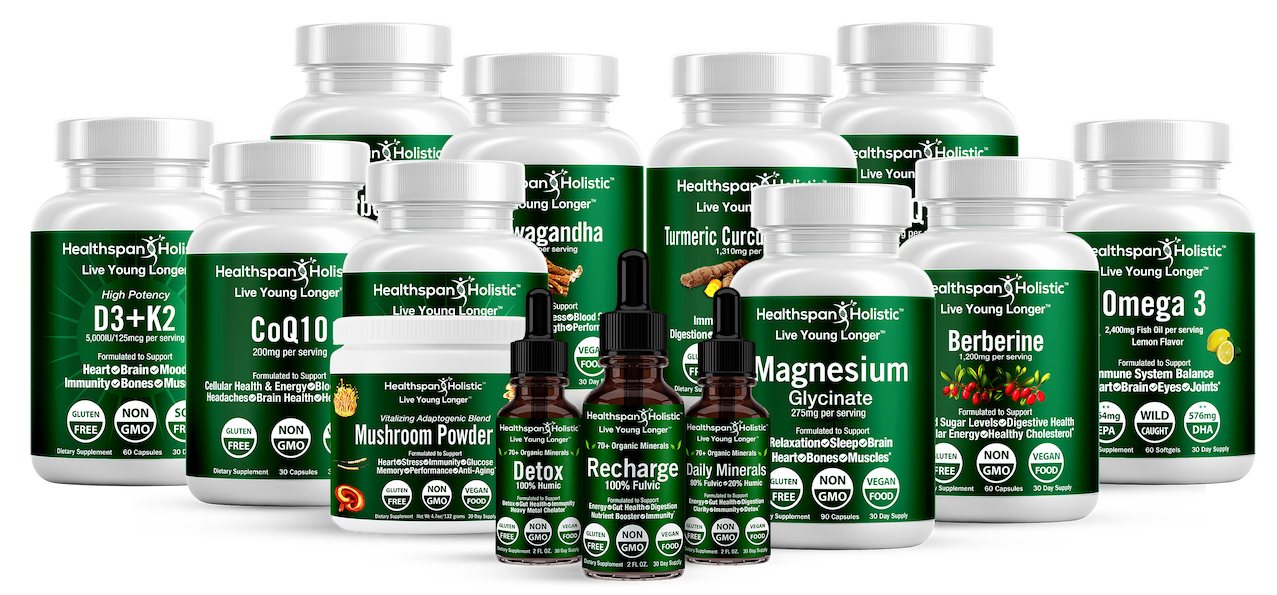
Our Magnesium RBC Test and Cellular Micronutrient Test give you a precise look at what your immune cells are actually working with, not what a standard blood panel assumes they have. From there, supplements like our Metabolic Nutrition formula and Daily Best Ultra provide targeted support built around your actual results. You can browse our full supplement range at Healthspan Holistic.
1st Time Customers can take advantage of our BUY 1 GET 1 50% OFF special offer on all supplements.
FAQ
What does immune system health actually mean?
Immune system health refers to your immune system’s ability to detect and respond to threats, regulate inflammation, and return to balance without causing collateral damage. It reflects your overall systemic wellness, not just your susceptibility to colds.
How does aging affect immune function?
After 45, the thymus shrinks and produces fewer fresh immune cells, while older immune cells accumulate and release chronic low-grade inflammation. This process, called immunosenescence, reduces your immune system’s precision and recovery speed.
What are the most effective ways to improve immunity?
The strongest evidence points to whole-food nutrition with diverse plant intake, consistent moderate exercise, 7 to 8 hours of quality sleep, and stress reduction. These lifestyle habits outperform any single supplement.
Do supplements like vitamin D and zinc actually help?
They can help if you are genuinely deficient, but taking them when your levels are adequate provides little measurable benefit. Functional testing is the most reliable way to know whether supplementation is warranted for your specific situation.
How does gut health connect to immune function?
Your gut contains specialized lymphoid tissue that trains your immune system daily, helping it distinguish between harmful threats and harmless substances. A diverse, fiber-rich diet supports this tissue and strengthens immune regulation throughout your body.
Leave a comment: