

TL;DR:
- Vitality reflects the combination of physical energy, mental resilience, and cellular life force that sustain overall well-being. It depends on healthy mitochondrial function, hormones, sleep, and low inflammation, with each domain influencing the others. Improving vitality involves targeted lifestyle changes, personalized testing, and coaching to address individual deficiencies and restore full function.
Vitality is your capacity to live, grow, and function with sustained energy, mental sharpness, and a felt sense of aliveness. Wikipedia describes it as the characteristic that distinguishes living from non-living things and a basic psychological drive. Merriam-Webster anchors it to physical and mental vigor. Healthspan Holistic treats it as the measurable foundation of a long, high-functioning life.
Three quick ways vitality shows up in real life:
-
Physical energy: You sustain focus and movement through the day without crashing by 2 PM.
-
Mental and emotional vigor: You recover from stress, stay motivated, and feel genuinely engaged with the people around you.
-
Life force: A cellular and existential sense of aliveness, growth, and repair that underlies both of the above.
TL;DR: If your energy, mood, and resilience feel off, your vitality is telling you something. The sections below explain why, and what to do about it.
What does vitality mean? Definitions and everyday examples
Cambridge English Dictionary defines vitality simply as “energy and strength.” The NCI Dictionary of Cancer Terms frames it as a state of being strong and active. Both definitions point to the same core idea: vitality is not just the absence of illness. It is the presence of something positive.
In everyday language, you recognize vitality when you see it:
-
A person who wakes up ready to work, not dreading the alarm.
-
A colleague who stays sharp and creative through a long afternoon meeting.
-
Someone who bounces back from a cold in four days instead of ten.
-
A friend at a dinner party who is genuinely enthusiastic, not just polite.
-
A writer or artist who enters a state of creative flow and loses track of time.
Common synonyms: energy, vigor, zest, life force, verve, vim.
Vitality differs from related terms in a useful way. Stamina is the ability to sustain effort over time, a component of vitality but not the whole picture. Energy is often used narrowly for physical fuel. Vitality is broader: it includes emotional resilience, motivation, and the subjective sense that life is worth engaging with fully.
What are the three main dimensions of vitality?
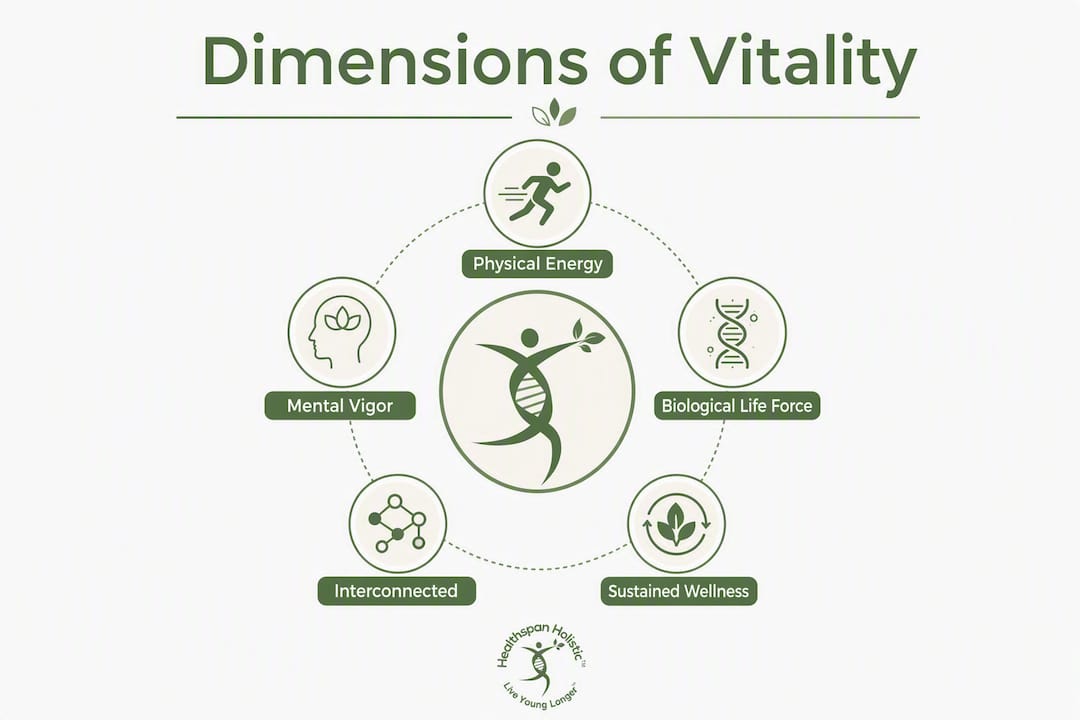
Research on vitality coaching consistently frames vitality as multi-domain, spanning physical, mental, and biological dimensions. Understanding which dimension is depleted helps you choose the right intervention rather than chasing a single fix.
Physical vitality covers energy output, stamina, and recovery speed. Someone with strong physical vitality can exercise, work, and socialize without running on empty. When it dips, the first signs are fatigue after mild exertion, slow recovery from illness, and disrupted sleep.

Mental and emotional vitality is resilience, motivation, and mood stability. You can have a well-rested body and still feel emotionally flat, disengaged, or chronically anxious. That gap is a mental vitality deficit, and it responds to different interventions than a purely physical one.

Biological life force operates at the cellular level: mitochondrial function, tissue repair, hormonal signaling, and immune competence. This is the substrate that makes the other two possible. A person can feel mentally motivated but still struggle if their cellular machinery is running below capacity.
The three dimensions overlap constantly. Poor sleep degrades all three at once. Chronic stress suppresses immune function and hormonal balance while draining emotional reserves. That interaction is why a single-axis approach, say, exercising more while ignoring sleep, rarely produces lasting results.
How does vitality work inside your body?
Vitality emerges from healthy cellular energy production, regulated sleep and circadian systems, balanced hormones, low chronic inflammation, and an adaptive psychological stress response. These are not independent levers; they form a system.
Primary physiological drivers:
-
Mitochondrial function: Your mitochondria convert nutrients into ATP, the currency of cellular energy. Declining mitochondrial density and efficiency with age is one of the central mechanisms behind the fatigue many adults over 40 describe.
-
Sleep quality and circadian rhythm: Deep sleep is when growth hormone peaks, cellular repair accelerates, and the brain clears metabolic waste. Disrupted circadian rhythms suppress all of that.
-
Endocrine balance: Thyroid hormones set your metabolic rate. Sex hormones (testosterone, estrogen) influence muscle mass, mood, and cognitive sharpness. Cortisol, when chronically elevated, degrades all three vitality dimensions.
-
Cardiovascular fitness: A stronger heart delivers more oxygen per beat, which translates directly into sustained physical and mental energy.
-
Inflammation markers: Low-grade chronic inflammation, often measured via high-sensitivity CRP, is associated with fatigue, brain fog, and accelerated aging.
Psychological and behavioral drivers matter just as much. Motivation and reward circuitry (dopamine pathways), social connectedness, a sense of purpose, and perceived control over your life all contribute to felt vitality. High workloads, personal worries, and a loss of autonomy can drain vitality as effectively as a nutritional deficiency.
Integrated coaching programs that address both dimensions produce measurable results. One analysis found that coaching participants had about $250 less in medical claims the following year compared with higher costs for non-participants, a difference of over $550 per person. Separate outcome data showed 60% of participants improved their stress rating, 84% lost or maintained weight, and 67% of participants with diabetes lowered their A1C.
Pro Tip: Step outside for 20 minutes of morning sunlight within an hour of waking, then add a brisk 10-minute walk. This combination anchors your circadian rhythm, raises cortisol at the right time of day, and primes dopamine pathways. Most people notice a perceptible lift within 48 hours.
How do you know if your vitality is high or low?
High vs. low vitality at a glance
| Domain | High vitality | Low vitality |
|---|---|---|
| Sleep | Wake refreshed, fall asleep within 20 minutes | Wake unrefreshed, rely on caffeine to function |
| Mood | Emotionally resilient, generally positive | Irritable, flat, or anxious most days |
| Productivity | Sustained focus for 2–3 hour blocks | Frequent brain fog, short attention span |
| Recovery | Bounce back from illness or exertion quickly | Slow recovery, lingering soreness or fatigue |
| Appetite | Steady hunger, few cravings | Erratic appetite, strong sugar or caffeine cravings |
Quick self-assessment (answer yes or no)
-
Do you wake most mornings feeling genuinely rested?
-
Can you sustain mental focus for at least 90 minutes without a significant dip?
-
Do you recover from a stressful day within a few hours, not days?
-
Is your physical energy consistent from morning through early evening?
-
Do you feel motivated by at least one area of your life most days?
-
Do you rarely need more than one cup of coffee to function?
-
Has your body weight been stable without extreme effort?
Five or more “yes” answers suggest solid vitality. Three or fewer points to a meaningful deficit worth investigating.
Red flags that warrant a primary-care visit:
-
Unexplained weight loss or gain over a short period
-
Persistent fatigue that does not improve after two weeks of better sleep and diet
-
Depressive symptoms lasting more than two weeks
-
New cognitive impairment (memory gaps, word-finding difficulty)
-
Abnormal resting heart rate, blood pressure, or temperature regulation
Practical ways to restore and build your vitality
The highest-impact changes, ranked by evidence and feasibility:
-
Prioritize sleep quality and circadian consistency. A consistent wake time, even on weekends, is the single most powerful circadian anchor. Aim for 7–9 hours in a cool, dark room.
-
Move daily in a way that raises your heart rate. Thirty minutes of moderate-intensity movement, brisk walking, cycling, or swimming, improves mitochondrial density, mood, and insulin sensitivity. You do not need a gym.
-
Adjust nutrition toward protein and micronutrients. Adequate protein (roughly 0.7–1 gram per pound of body weight) preserves muscle mass and stabilizes blood sugar. Micronutrient gaps in magnesium, vitamin D, and iron are among the most common and correctable drivers of low energy. See our holistic nutrition guide for ages 45–75 for practical meal strategies.
Additional evidence-based tactics:
-
Brief daily mindfulness (10 minutes) lowers cortisol and improves emotional vitality over weeks.
-
Social connection is not optional. Loneliness is physiologically stressful and suppresses immune function.
-
Targeted supplementation, when indicated by testing, can address specific gaps faster than diet alone. Our guide to functional supplements for vitality and longevity covers the evidence.
-
Gradual progressive overload in resistance training preserves muscle mass and hormonal health after 40.
Your 7-day vitality micro-plan
| Day | Morning | Daytime | Evening |
|---|---|---|---|
| 1 | 20 min sunlight + 10 min walk | Protein-first lunch | Lights dim by 9 PM |
| 2 | Same + 5 min breathing exercise | Hydrate to half your body weight in ounces | No screens 30 min before bed |
| 3 | Add 20 min resistance or yoga | Eat a handful of leafy greens | Journal one thing you are looking forward to |
| 4 | Repeat Day 1–3 routine | Take a 10-min walk after lunch | Consistent bedtime |
| 5 | Add a social activity or call | Limit caffeine after noon | Magnesium-rich snack (pumpkin seeds) |
| 6 | Outdoor activity 30+ min | Mindful eating, no screens at meals | Reflect on energy levels this week |
| 7 | Rest or gentle movement | Plan next week’s meals | Set one sleep and one movement goal |
Pro Tip: The single fastest vitality lift most people overlook is hydration. Drink 16 oz of water with a pinch of sea salt before your first coffee. Mild dehydration is a silent energy drain that caffeine masks but never fixes.
For a structured longer-term program, the step-by-step holistic health plan for ages 45–75 builds on these habits progressively.
Why does vitality matter for aging and daily life?
Vitality is not a luxury metric. It is the operating system that makes everything else possible.
-
Daily function: High vitality means you show up fully at work, in relationships, and in your own goals, not just going through the motions.
-
Burnout prevention: Vitality-focused workplace programs are associated with higher engagement, lower absenteeism, and better productivity when sustained over time rather than delivered as one-off events.
-
Illness recovery: Resilient cellular and immune function shortens recovery time from infections, surgeries, and physical stress.
-
Habit adherence: People with higher vitality find it easier to maintain the very habits that sustain it. Low vitality creates a downward spiral; high vitality creates an upward one.
-
Healthspan: Vitality is the experiential side of healthspan, the years you spend not just alive but genuinely functional and engaged. Nutrition’s role in this process is explored in depth in our article on how nutrition transforms aging and your vitality.
For adults over 40, the stakes rise. Hormonal shifts, declining mitochondrial efficiency, and accumulated lifestyle stress can quietly erode vitality over years before it becomes obvious. Catching and reversing that trend early is exactly what Healthspan Holistic’s diagnostic and coaching model is built for. For a broader view of what physical vitality means for performance and longevity, the evidence points consistently toward early, sustained investment.
Vitality is both a measurable biological state and a subjective sense of aliveness. Both dimensions matter, and both respond to the right interventions.
What tests can reveal why your vitality is low?
When lifestyle changes do not move the needle, lab testing often reveals the reason. These are the panels most relevant to vitality:
-
CBC (Complete Blood Count): Screens for anemia and immune dysfunction, two common and correctable causes of fatigue.
-
CMP (Comprehensive Metabolic Panel): Assesses kidney, liver, and blood sugar status. Elevated fasting glucose or impaired metabolic function suppresses energy.
-
Thyroid panel (TSH, Free T3, Free T4): Subclinical hypothyroidism is frequently missed and produces classic low-vitality symptoms: fatigue, weight gain, brain fog, and cold intolerance.
-
A1C and fasting insulin: Insulin resistance is one of the most common metabolic drivers of chronic fatigue and mood instability.
-
Lipid panel: Cardiovascular risk affects oxygen delivery and long-term energy capacity.
-
High-sensitivity CRP: Elevated chronic inflammation is a direct suppressor of mitochondrial function and mood.
-
Vitamin D: Deficiency is widespread and linked to fatigue, low mood, and immune vulnerability.
-
Ferritin: Low iron stores drain energy even when hemoglobin looks normal on a standard CBC.
-
Magnesium RBC: Standard serum magnesium misses intracellular deficiency. The RBC magnesium test is the more accurate measure and magnesium is involved in over 300 enzymatic reactions, including ATP production.
-
Hormone panel (testosterone, estrogen, DHEA, cortisol): Midlife hormonal shifts are among the most impactful and underdiagnosed contributors to low vitality in adults over 40. A comprehensive hormone panel provides a clear baseline.
Testing is warranted when fatigue persists despite two or more weeks of consistent sleep, nutrition, and movement improvements; when functional decline is rapid; or when you are navigating a midlife hormonal transition. Healthspan Holistic integrates lab results with wearable data and personal history to target interventions precisely, rather than guessing.
Key Takeaways
Vitality is a multi-dimensional state of physical energy, mental vigor, and biological life force that responds directly to sleep, nutrition, movement, hormonal balance, and stress management.
| Point | Details |
|---|---|
| Vitality is multi-dimensional | It spans physical energy, mental/emotional vigor, and cellular life force, each requiring targeted support. |
| Key physiological drivers | Mitochondrial function, sleep quality, hormone balance, and chronic inflammation are the primary levers to address. |
| Coaching produces measurable results | Participants in integrated coaching programs had about $250 less in medical claims the following year compared with higher costs for non-participants, a difference of over $550 per person. |
| Start with three high-impact habits | Consistent sleep timing, daily movement that raises heart rate, and protein-focused nutrition deliver the fastest baseline lift. |
| Healthspan Holistic’s approach | Lab testing, wearable data integration, and one-on-one coaching combine to identify and address your specific vitality gaps. |
My perspective on vitality worth considering
I believe that most people treat vitality as a feeling to chase rather than a system to maintain. That framing is where things go wrong.
When someone says they feel “run down,” they usually mean several things at once: poor sleep, low motivation, slow recovery, and a vague sense that something is off. The conventional response is to add a supplement or start a new workout routine. Sometimes that works. More often, it addresses one variable in a system that has three or four broken links.
What the evidence actually supports is an integrated view. Vitality coaching, when done well, does not just hand you a meal plan. It uses solution-focused questioning and behavioral activation to identify which domain is most depleted and what specific changes will move it. That is a fundamentally different process from generic wellness advice.
The part most people underestimate is the biological substrate. You can have perfect habits and still feel flat if your thyroid is sluggish, your ferritin is low, or your testosterone has quietly declined over a decade. Lab testing is not a last resort. For adults over 40, it is the starting point that makes every other intervention more precise and more effective.
Vitality is not a destination. It is a dynamic state you maintain by paying attention to the right signals, at the right time, with the right support.
- Chris
Healthspan Holistic can help you restore your vitality
Adults over 40 who feel persistently low on energy often have a specific, correctable reason. Healthspan Holistic’s 90 Day Journey to Longevity is built around exactly that premise: advanced blood panels, wearable and genetic data integration via AI analytics, and one-on-one coaching that translates results into a personalized plan for nutrition, supplementation, and lifestyle.
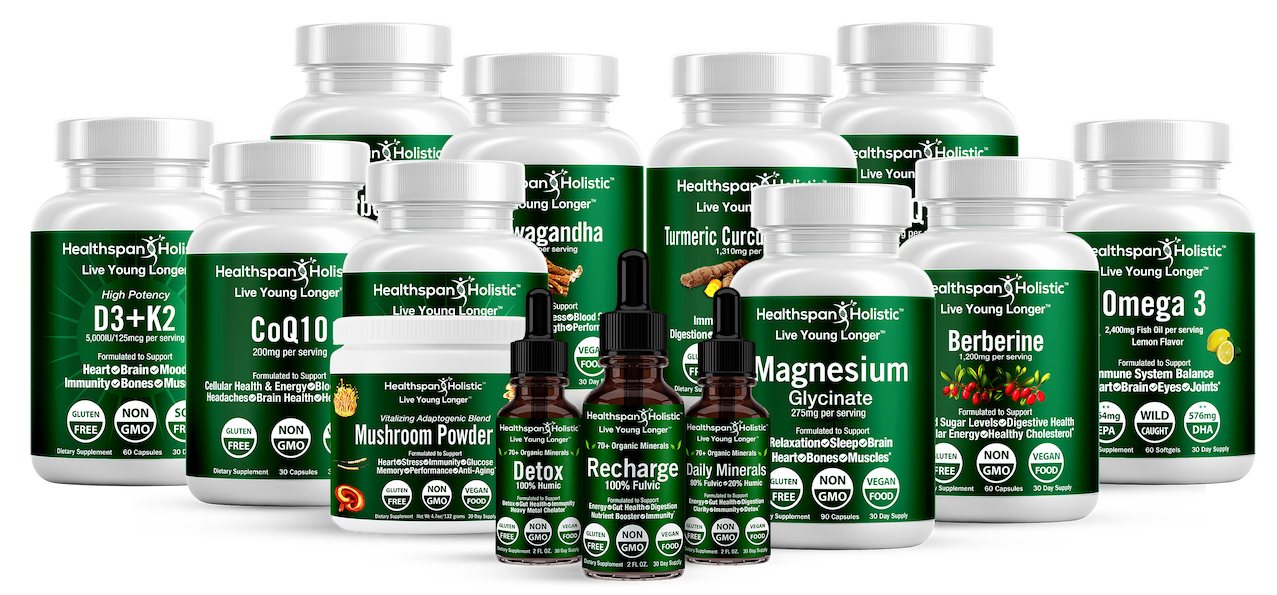
The program targets the drivers that matter most for adults in midlife: mitochondrial function, hormone balance, metabolic health, and cardiovascular resilience. Targeted supplements from Healthspan Holistic’s professional-grade store support those same systems between coaching sessions.
1st Time Customers can take advantage of our BUY 1 GET 1 50% OFF special offer on all supplements.
Useful sources
-
Vitality | Authentic Happiness, University of Pennsylvania — Academic framing of vitality as a basic psychological drive and component of well-being.
-
Definition of vitality, NCI Dictionary of Cancer Terms — Clinical definition from the National Cancer Institute.
-
Vitality, Wikipedia — Encyclopedic overview covering etymology, biological, and philosophical dimensions.
-
VITALITY, Cambridge English Dictionary — Standard dictionary definition with synonyms and usage examples.
-
The Role of Physical Vitality in Performance and Longevity, Viridos Blog — Evidence-based overview of physical vitality’s links to performance and longevity.
FAQ
What is vitality and how does it work?
Vitality is the capacity for sustained physical energy, mental vigor, and biological life force, produced by healthy mitochondrial function, balanced hormones, quality sleep, and low chronic inflammation. When these systems are working well together, you feel genuinely alive and resilient; when one breaks down, the others typically follow.
What are the main signs of low vitality?
Persistent fatigue that does not resolve with rest, brain fog, slow recovery from illness or exercise, low motivation, and disrupted sleep are the most consistent signs. Erratic appetite and strong sugar or caffeine cravings often accompany them.
How can you improve vitality quickly?
The fastest baseline improvements come from three changes: anchoring your sleep and wake time, adding 30 minutes of daily movement that raises your heart rate, and increasing protein and micronutrient intake. Most people notice a meaningful shift within 7–10 days of consistent effort.
When should you get lab tests for low vitality?
Testing is worth pursuing when fatigue persists despite two or more weeks of improved sleep, nutrition, and movement, or when you are in a midlife hormonal transition. A thyroid panel, CBC, vitamin D, ferritin, and a hormone panel are the most informative starting points.
What is vitality coaching?
Vitality coaching is a structured, behavior-change process that uses personalized questioning and goal-setting to identify and address the specific physical, mental, or lifestyle factors draining your energy. Coaches typically work on sleep, stress management, movement, and nutrition, and programs delivered digitally or in groups have shown that 60% of participants improved stress rating, 84% lost or maintained weight, and 67% of participants with diabetes lowered their A1C.
Leave a comment: