

A homocysteine test measures the amount of the amino acid homocysteine in your blood, most often to check for vitamin B6, B12, or folate deficiencies. Clinicians also order it to evaluate rare inherited metabolic disorders like homocystinuria, and occasionally to inform cardiovascular risk discussions, though that use remains debated. A typical lab reports normal results between about 5 and 15 µmol/L.
TL;DR:
- Homocysteine levels above 15 µmol/L often indicate deficiencies in vitamin B6, B12, or folate, requiring follow-up testing like methylmalonic acid or plasma folate.
- The test is primarily ordered for suspected vitamin deficiency, unexplained blood clots, or newborn screening for homocystinuria, not as a routine cardiovascular screen.
- Fasting for 8 to 12 hours and informing your clinician of supplements and medications is essential to ensure accurate homocysteine results.
- Elevated homocysteine does not directly predict heart attack or stroke risk in most people; supplementation lowers levels but does not reliably prevent cardiovascular events.
- The test carries minimal risks, with minor bruising or lightheadedness common, and results are influenced by age, kidney function, smoking, and menopausal status.
What the Homocysteine Test Measures and Why Levels Matter
Homocysteine is not something your body builds for its own sake. It’s a byproduct, a middle step in how your cells break down and recycle the amino acid methionine, which comes primarily from protein-rich foods like meat, eggs, and dairy. Under normal conditions, your body clears homocysteine almost as fast as it makes it, converting it back into useful compounds through a process called methylation.
That clearance depends entirely on three vitamins working together:
- Vitamin B6 helps convert homocysteine down a pathway that produces cysteine, another amino acid your body needs.
- Folate (vitamin B9) supplies the methyl group required to recycle homocysteine back into methionine.
- Vitamin B12 acts as the enzyme cofactor that makes that recycling step possible at all.
When any one of these vitamins runs low, homocysteine backs up in the bloodstream, similar to how a clogged drain leaves water pooling in the sink. That’s the whole reason MedlinePlus lists deficiency screening as the test’s core purpose. A single elevated number rarely tells you which vitamin is the problem. It tells you something in the methylation chain has stalled, and that finding needs follow-up testing to pin down the cause.
When Does a Doctor Order a Homocysteine Test?
Clinicians reach for this test in a handful of specific situations, not as a routine screen for the general population.
- Suspected B-vitamin deficiency. Fatigue, tingling in the hands or feet, memory changes, or a diet low in animal protein (common in strict vegans) can all prompt testing, especially alongside signs of malabsorption from conditions like celiac disease or after gastric bypass surgery.
- Unexplained blood clots or early vascular disease. A patient who develops a clot or stroke at a young age, with no obvious risk factors, sometimes gets tested as part of a broader workup. This use carries real nuance. The NCBI Bookshelf entry on hyperhomocysteinemia notes that major guideline bodies, including the American Heart Association, do not recommend routine homocysteine screening for general cardiovascular risk because trial evidence hasn’t shown that lowering it prevents heart attacks or strokes in most people.
- Newborn screening and suspected homocystinuria. Extremely high readings in infants can signal this rare genetic disorder, which needs immediate specialized care.
- Ongoing monitoring. Patients already diagnosed with a methylation disorder or homocystinuria get periodic testing to track how well treatment is working.
What Happens During a Homocysteine Blood Test?
The procedure itself is unremarkable, which is good news if you’ve been dreading it. A phlebotomist draws blood from a vein, usually in your arm, using a standard needle and collection tube.
- The draw itself takes only a few minutes, and most people feel nothing more than a quick pinch.
- Your sample goes into a tube designed to preserve plasma, since Mayo Clinic Laboratories specifies plasma as the required specimen type rather than serum.
- Handling matters here. The sample needs prompt processing or chilling, because homocysteine can leak out of blood cells and skew results if the tube sits too long before the lab separates the plasma.
- Most labs run the sample using liquid chromatography tandem mass spectrometry (LC-MS/MS), a high-precision method that explains why reference ranges can shift slightly from one lab to another.
Results typically come back within one to two days, depending on how often your lab runs the assay.
How to Prepare for a Homocysteine Test
A little preparation keeps your results honest. Most labs ask for fasting, and skipping this step is one of the easiest ways to get a misleading number.
- Fast for 8 to 12 hours beforehand, since eating protein can temporarily raise homocysteine levels and cloud the picture.
- Tell your clinician about every medication and supplement you take, particularly B-vitamin supplements, methotrexate, anticonvulsants, and niacin, all of which can shift results in one direction or another.
- Confirm your specific lab’s instructions before your appointment. Fasting requirements aren’t universal, and some labs have their own quirks.
Pro Tip: Write down your supplement list on your phone before your appointment. It’s easy to forget a B12 gummy or a multivitamin when someone’s asking on the spot, and even small daily doses can nudge your results.
Is a Homocysteine Blood Draw Risky?
For nearly everyone, this test carries the same minimal risk as any routine blood draw. It’s a simple venous draw, not a procedure that requires recovery time or sedation.
- Minor bruising or brief tenderness at the needle site is the most common side effect, and it typically fades within a day or two.
- Some people feel briefly lightheaded, especially if they’re anxious about needles or skipped a meal for the fasting requirement.
- Contact your clinician if you notice excessive bleeding, spreading redness, warmth, or swelling at the site, which could point to infection.
Applying light pressure with a bandage for a few minutes after the draw, and avoiding heavy lifting with that arm for the rest of the day, resolves most minor soreness on its own.
What Do Homocysteine Levels Indicate?
Reference ranges vary slightly by lab, but Cleveland Clinic cites a commonly used normal range of roughly 5 to 15 µmol/L, with hyperhomocysteinemia generally defined as anything above 15 µmol/L.
By the numbers: A result above 15 µmol/L is typically flagged as elevated, though the same Cleveland Clinic guidance notes that “normal” shifts depending on age, sex, kidney function, and even menopausal status.
That range isn’t a fixed line in the sand. Several ordinary factors can push levels higher without any disease process at play:
- Age tends to raise baseline homocysteine, so an older adult’s normal may sit higher than a younger person’s.
- Smoking and reduced kidney function are both associated with higher readings.
- Postmenopausal women often show elevated levels compared to their premenopausal baseline.
When a result comes back high, your clinician typically doesn’t stop there. Follow-up testing often includes methylmalonic acid (MMA), which rises specifically with B12 deficiency but not folate deficiency, giving a clearer read on which vitamin is short. Plasma folate levels and a complete blood count (CBC), which can reveal the enlarged red blood cells characteristic of B12 or folate anemia, round out the picture.
If Your Homocysteine Is High: What Happens Next?
An elevated result opens an investigation, not an immediate treatment plan. Your clinician’s next steps usually follow a logical sequence.
- Identify the cause. This means reviewing diet, checking for malabsorption issues, ruling out kidney disease, and considering whether a medication is interfering with vitamin metabolism.
- Address the vitamin shortfall. If B12, folate, or B6 come back low, supplementation under clinical guidance is the standard fix. A methylated B12 supplement or an active folate like 5-MTHF is commonly used because some people process the synthetic forms of these vitamins less efficiently.
- Reassess with realistic expectations. Supplementation reliably lowers homocysteine numbers on a follow-up test. What it doesn’t reliably do, according to the NCBI Bookshelf review of hyperhomocysteinemia trials, is reduce cardiovascular events like heart attack or stroke in the general population. The exceptions are people with homocystinuria and certain subgroups, where the benefit is clearer.
That gap between “fixes the lab number” and “prevents a heart attack” is one every patient deserves to understand plainly before starting supplementation with grand expectations.
Homocystinuria and Newborn Screening
Homocystinuria is a rare inherited disorder where the body can’t properly metabolize methionine, leading to homocysteine levels that run far above the typical reference range, sometimes many times higher, according to the NIH Genetic and Rare Diseases Information Center. Left untreated, it can affect vision, bones, and the nervous system.
- Newborn screening programs in the U.S. test for markers linked to this condition shortly after birth, using a small heel-prick blood sample.
- An abnormal screening result triggers confirmatory blood and genetic testing to verify the diagnosis.
- Early identification matters enormously here. Starting dietary management or targeted vitamin therapy in infancy dramatically improves outcomes compared with a late diagnosis.
How Healthspan Holistic Uses Homocysteine Testing in Personalized Care
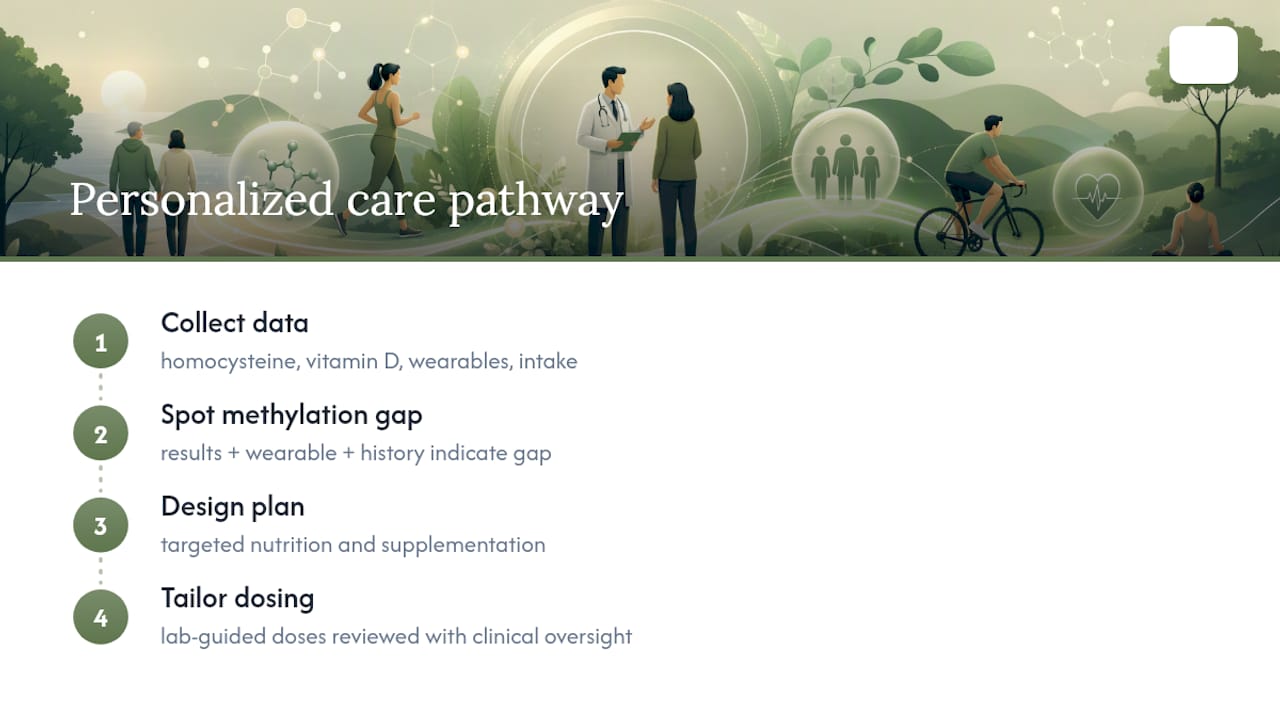
We rarely look at homocysteine in isolation. It’s one marker among several in a broader nutrient and metabolic panel, paired with tools like our vitamin D test to build a fuller picture of how your body is functioning. When your results, wearable data, and intake history point toward a methylation gap, our coaches work with you on targeted nutrition and supplementation, not guesswork. Any supplement dosing we recommend is tailored to your labs and reviewed with clinical oversight, because B-vitamin needs vary widely from person to person. You can read more about how we think about blood testing for prevention and monitoring across our diagnostic offerings.
A Clinician’s Note on Testing and Next Steps
We’d recommend testing whenever deficiency symptoms, restrictive diets, or an unexplained clotting event raise real questions, not as a routine add-on. Bring your full medication and supplement list to the appointment, and ask specifically about pairing MMA and folate testing with your results. That combination, discussed together with your clinician, turns one number into an actual plan.
— Chris
Explore Healthspan Holistic’s Testing and Supplement Options
If your homocysteine result comes back elevated, the real question is what’s driving it, and that usually means looking beyond a single number. Healthspan Holistic’s Vitamin D, Omega 3, & Magnesium Test and Omega 3 & 6 Fatty Acids Test round out a metabolic picture that homocysteine alone can’t provide, giving your coach and clinician the context to build a plan specific to your biology rather than a generic vitamin regimen.
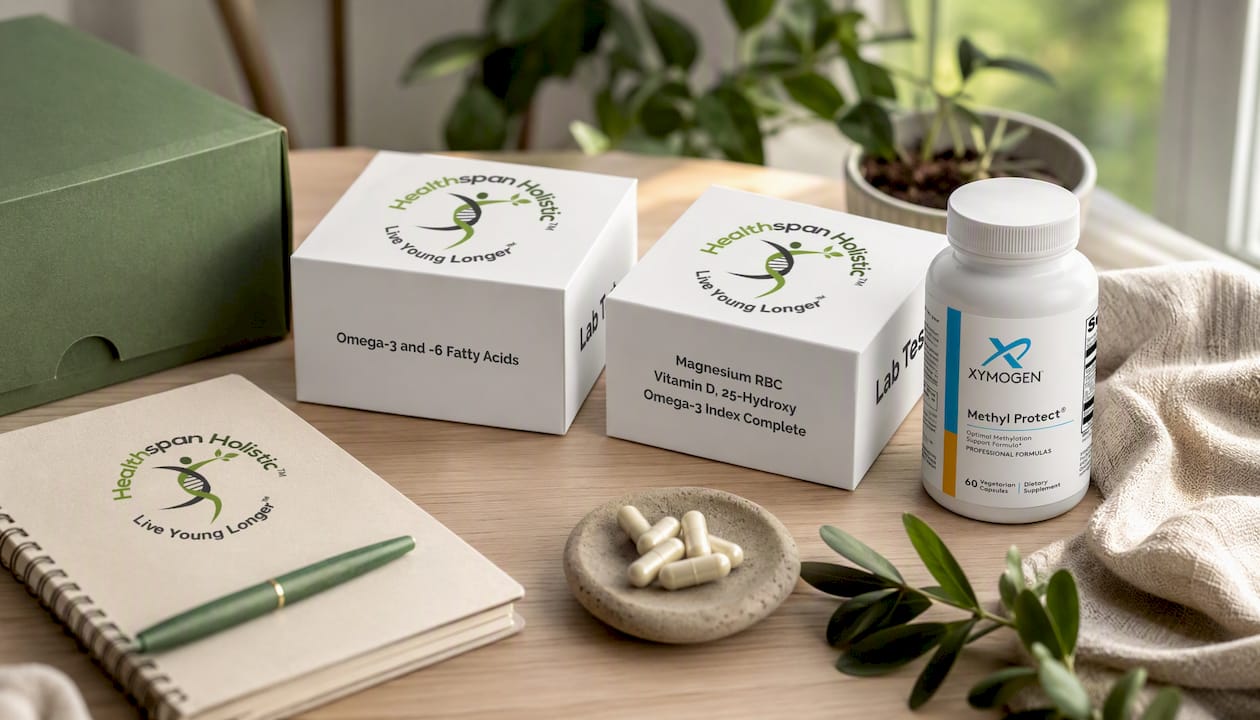
For methylation support specifically, our Methyl Protect® 60 Capsules deliver active forms of folate and B12 designed for people whose bodies struggle to convert the synthetic versions found in most standard multivitamins. 1st Time Customers can take advantage of our BUY 1 GET 1 50% OFF special offer on all supplements. Book a lab panel or a coaching consultation with Healthspan Holistic to see where your homocysteine and related markers actually stand, and build a supplement plan around real data instead of a guess.
Sources
For more clinical detail, see MedlinePlus on the homocysteine test, Cleveland Clinic’s homocysteine overview, the NCBI Bookshelf entry on hyperhomocysteinemia, Mayo Clinic Laboratories’ test catalog listing, and the NIH Office of Dietary Supplements B12 factsheet. For a clinical perspective on how nutrient deficiencies present physically, Dexterity Diagnostics’ overview of hand weakness and deficiency is worth a read.
This article is general information, not a substitute for advice from a qualified doctor. Consult a qualified healthcare professional about your own circumstances before acting on anything here.
- Homocysteine Test — MedlinePlus
- Homocysteine — Cleveland Clinic
- Hyperhomocysteinemia — NCBI Bookshelf
- HCYSP - Homocysteine, Total, Plasma — Mayo Clinic Laboratories
FAQ
What happens if homocysteine is high?
A high result usually points to an underlying vitamin B6, B12, or folate deficiency, or occasionally a kidney or genetic issue, and your clinician will order follow-up tests like MMA and plasma folate to find the cause.
What do homocysteine levels indicate?
Homocysteine levels reflect how efficiently your body is recycling this amino acid using B vitamins as cofactors; elevated levels signal a metabolic or nutritional issue rather than a disease on their own.
What are normal homocysteine levels by age?
Most labs use a general reference range of about 5 to 15 µmol/L for adults, though levels tend to run slightly higher in older adults and postmenopausal women.
Is homocysteine a marker for inflammation?
Homocysteine is not a direct inflammation marker; it’s a metabolic byproduct tied to B-vitamin status, though chronically elevated levels have been studied for their association with vascular changes.
Dejar un comentario: