

TL;DR:
- Collagen and glycine complement each other, supporting skin, joints, and connective tissue with different mechanisms. Taking collagen peptides in the morning and glycine before bed maximizes their respective benefits for structural repair and metabolic health. Both supplements are safe, effective, and best used alongside lifestyle factors like vitamin C and resistance training.
Collagen is the most abundant structural protein in the human body, and glycine is its primary amino acid building block, making collagen and glycine together the foundation of youthful skin, flexible joints, and resilient connective tissue. Collagen accounts for roughly 30% of total body protein, forming the scaffolding of your skin, bones, tendons, and ligaments. Glycine, the smallest amino acid, fills every third position in collagen’s triple helix structure. After age 40, your body produces less collagen each year and struggles to meet its glycine demands from diet alone. A 2025 clinical study published in npj Aging found that supplementing with a specific collagen amino acid ratio reduced biological age by 1.4 years in just six months. That result signals something worth paying attention to.
How collagen and glycine work together in your body
Glycine is not just a supporting player in collagen production. It is structurally irreplaceable. Every third amino acid in collagen’s triple helix must be glycine, because it is the only amino acid small enough to fit inside the tightly wound chain. Without adequate glycine, your body cannot assemble new collagen strands correctly.

The challenge is that your body makes glycine on its own, but not always in sufficient amounts. Endogenous glycine synthesis from serine falls short of the body’s theoretical demand, a gap that widens with age, injury, or low protein intake. Researchers now classify glycine as “conditionally essential,” meaning dietary or supplemental sources become necessary under these circumstances. For adults over 40, that condition is practically the norm.
Glycine also drives glutathione production, your body’s master antioxidant. It supports methylation, a process critical for gene expression and cellular repair. It regulates inflammation at the tissue level. These roles mean glycine deficiency does not just slow collagen synthesis. It quietly undermines multiple repair systems at once.
-
Collagen triple helix: Glycine occupies every third amino acid position, making it structurally non-negotiable.
-
Glutathione synthesis: Glycine is one of three amino acids that build this key antioxidant.
-
Inflammation regulation: Glycine modulates inflammatory signaling in connective tissue and the gut lining.
-
Methylation support: Adequate glycine keeps one-carbon metabolism running, which affects DNA repair and aging.
Pro Tip: Bone broth, skin-on poultry, and organ meats are among the richest dietary sources of glycine. If your diet is plant-heavy or calorie-restricted, your glycine intake is almost certainly below what aging tissue demands.
What do collagen peptide supplements actually do?
Collagen peptides, also called hydrolyzed collagen, are not simply a protein powder. They contain bioactive dipeptides such as Pro-Hyp and Hyp-Gly that survive digestion intact and signal fibroblasts to produce new collagen. This peptide signaling mechanism is what separates collagen supplements from plain glycine powder. You cannot replicate it by taking glycine alone.
The clinical evidence for collagen peptides is growing. A 2023 study published in the Journal of the International Society of Sports Nutrition found that adults supplementing with 10–20 grams of collagen peptides daily for 6–9 months showed significant improvement in joint pain, joint function, and mood. Skin benefits, including reduced wrinkles and improved hydration, appear at lower doses of 2.5–10 grams daily with consistent use over the same timeframe.
The Cleveland Clinic emphasizes that collagen peptides work best when combined with resistance training and adequate vitamin C intake. Vitamin C is required for the hydroxylation of proline and lysine, two steps that stabilize the collagen triple helix. Without it, even high-dose supplementation produces suboptimal results.
Key benefits supported by research:
-
Skin elasticity and hydration: Collagen peptides reduce visible wrinkles and improve moisture retention, particularly in adults over 45.
-
Joint flexibility: Supplementation reduces osteoarthritis symptoms and supports cartilage integrity.
-
Bone density: Collagen provides the protein matrix that calcium and phosphorus mineralize. Supporting collagen supports bone strength.
-
Muscle recovery: Combined with resistance training, collagen peptides accelerate connective tissue repair after exercise.
Pro Tip: Take collagen peptides in the morning, ideally within an hour before or after resistance exercise, with a source of vitamin C such as citrus juice or a vitamin C supplement. This timing aligns peptide availability with peak fibroblast activity.
What else does glycine do beyond building collagen?
Glycine’s benefits extend well past connective tissue. As an inhibitory neurotransmitter in the central nervous system, glycine calms neural activity and promotes deeper, more restorative sleep. Glycine doses of 3–5 grams taken before bedtime are linked to improved sleep quality and enhanced antioxidant capacity. For adults over 50 who frequently report fragmented sleep, this is a meaningful benefit.
Glycine also plays a central role in liver detoxification. It conjugates bile acids and binds toxins for excretion, reducing the metabolic burden on the liver. Epidemiological data shows that higher glycine intake is inversely associated with cardiovascular mortality, suggesting systemic protective effects that go beyond structural tissue support.
Here is a practical framework for using glycine’s broader benefits:
-
Sleep and recovery: Take 3–5 grams of glycine 30–60 minutes before bed. This dose is well-studied for sleep improvement and does not cause morning grogginess.
-
Antioxidant support: Glycine feeds glutathione synthesis. Pair it with N-acetylcysteine or whey protein to maximize glutathione output.
-
Liver health: Glycine supports bile acid conjugation. Adults with high alcohol intake, medication loads, or metabolic syndrome benefit most from consistent glycine intake.
-
Methionine balance: High methionine diets (common in meat-heavy eating patterns) increase homocysteine. Glycine helps buffer this effect, supporting cardiovascular health.
Pro Tip: If you already take collagen peptides in the morning, a separate glycine supplement at night gives you the best of both worlds. The two products serve different physiological windows and do not compete.
You can learn more about recognizing shortfalls in this nutrient by reading about glycine deficiency symptoms in adults.
Collagen peptides vs. glycine: Which one should you take?
Collagen peptides and glycine are complementary, not interchangeable. Understanding their distinct roles helps you build a supplement plan that actually matches your health goals.
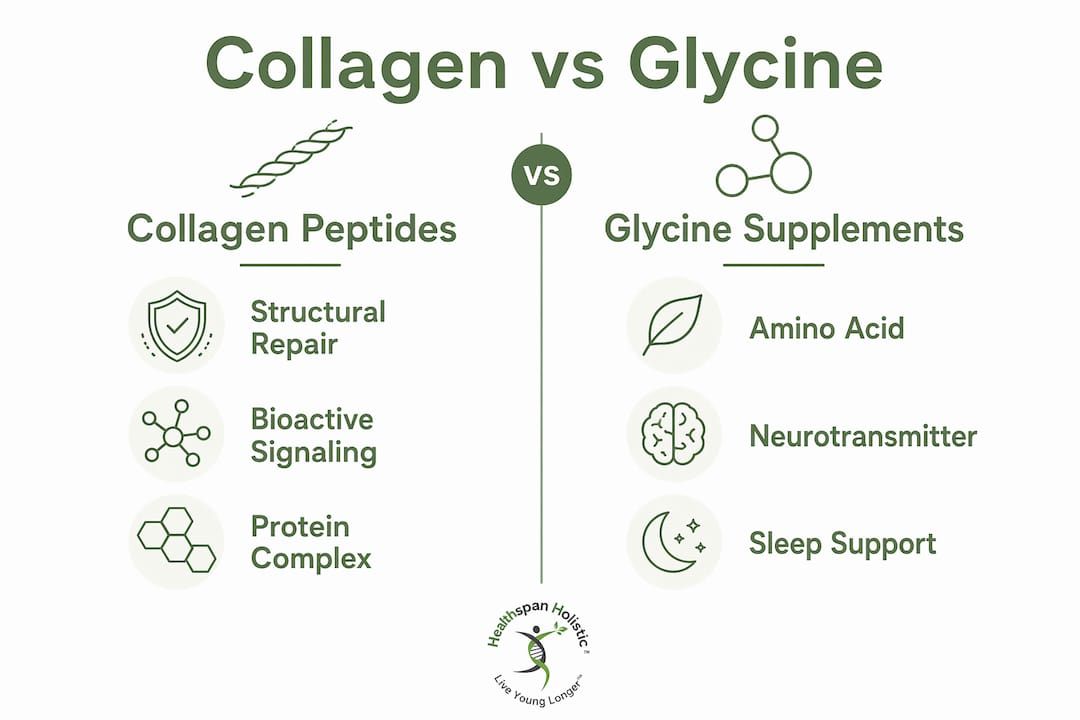
| Feature | Collagen peptides | Glycine supplement |
|---|---|---|
| Primary form | Hydrolyzed protein with bioactive peptides | Free-form amino acid |
| Main mechanism | Peptide signaling to fibroblasts | Metabolic and neurotransmitter functions |
| Best for | Skin, joints, bone, connective tissue | Sleep, detox, antioxidant support, longevity |
| Typical dose | 10–20g daily | 3–5g daily |
| Timing | Morning, around exercise | Evening, before bed |
| Taste | Mild, mixes easily | Slightly sweet, dissolves well |
The most common misconception is that taking extra glycine replaces the need for collagen peptides. It does not. Collagen peptides provide bioactive signaling that free glycine cannot replicate, regardless of dose. Conversely, collagen peptides alone do not deliver the sleep, detox, or cardiovascular benefits that isolated glycine provides at therapeutic doses.
For adults aged 40–75 focused on skin health and joint mobility, the evidence supports using both. A combined approach, collagen peptides in the morning and glycine at night, covers structural repair during the active day and metabolic restoration during sleep. This timing strategy is endorsed by practitioners who work with aging adults and is grounded in the distinct physiological windows each compound serves. You can explore professional-grade collagen peptides formulated for this purpose at Healthspan Holistic.
Both supplements are well tolerated. Side effects are rare and typically limited to mild gastrointestinal discomfort at high doses. Starting at the lower end of the dose range and building up over two to four weeks reduces this risk further.
Key Takeaways
Collagen and glycine work best together: collagen peptides drive structural tissue repair through bioactive peptide signaling, while glycine supports sleep, detoxification, and antioxidant production through distinct metabolic pathways.
| Point | Details |
|---|---|
| Glycine is structurally essential | Every third amino acid in collagen’s triple helix must be glycine, making it irreplaceable. |
| Peptide signaling matters | Collagen peptides trigger fibroblast activity in ways that free glycine alone cannot replicate. |
| Timing maximizes results | Take collagen peptides in the morning and glycine at night to cover both structural and metabolic needs. |
| Vitamin C is non-negotiable | Collagen synthesis requires vitamin C for proline hydroxylation; skip it and you limit your results. |
| Both are safe and well tolerated | Clinical studies report minimal side effects at standard doses for both collagen peptides and glycine. |
Why I think most people are only getting half the benefit
Most adults who start taking collagen supplements do so for their skin. That is a reasonable starting point, but it misses the bigger picture. After working with aging adults on supplementation strategies for years, I have seen the same pattern repeatedly: people take collagen peptides inconsistently, skip vitamin C, skip resistance training, and then conclude that collagen “doesn’t work.”
The research is clear. Collagen peptides work through peptide signaling, not just amino acid delivery. That signaling is amplified by exercise and vitamin C. Without those co-factors, you are leaving most of the benefit on the table. The 2023 Journal of the International Society of Sports Nutrition findings were not achieved with collagen alone. They came from consistent, dosed supplementation over months, paired with activity.
What surprises most people is the glycine side of the equation. Aging bodies face a real glycine deficit. That deficit does not just slow collagen production. It impairs sleep, weakens antioxidant defenses, and raises cardiovascular risk. Addressing it with 3–5 grams of glycine before bed is one of the simplest, lowest-cost interventions available for adults over 50. I have seen it improve sleep quality within two weeks in people who had struggled for years.
My honest recommendation: do not treat collagen and glycine as a single product decision. Treat them as two tools with different jobs. Use both, time them correctly, and pair them with the lifestyle factors the research actually supports. Results take 6–9 months to fully show up in joints and skin. Patience, consistency, and the right co-factors are what separate people who see results from those who give up too soon.
— Chris
Support your skin and joints with Healthspan Holistic
Healthspan Holistic offers professional-grade supplements designed specifically for adults focused on long-term wellness, including collagen peptides and glycine formulated for absorption and efficacy.
The 90 Day Journey to Longevity program provides a structured, science-backed path to better skin, stronger joints, and improved metabolic health. It pairs targeted supplementation with coaching and tracking tools built for adults over 40. 1st Time Customers can take advantage of our BUY 1 GET 1 50% OFF special offer on all supplements. All featured products are available at Healthspanholistic.com.
FAQ
What is the difference between collagen and glycine supplements?
Collagen peptides are hydrolyzed proteins containing bioactive dipeptides that signal fibroblasts to produce new collagen. Glycine is a free-form amino acid that supports sleep, glutathione production, and detoxification. They serve different biological functions and work best when used together.
How much glycine do you need daily for collagen support?
Research supports 3–5 grams of glycine daily for metabolic and sleep benefits, while collagen peptide supplements typically provide 10–20 grams daily for joint and skin support. Adults over 40 often need supplemental glycine because endogenous production falls short of demand.
Can you take collagen and glycine at the same time?
You can, but timing them separately produces better results. Take collagen peptides in the morning around exercise, and take glycine at night before bed to support sleep and overnight tissue repair.
How long does it take to see results from collagen peptides?
Clinical studies show meaningful improvements in joint pain and skin elasticity after 6–9 months of consistent supplementation at 10–20 grams daily. Skin hydration improvements may appear earlier, within 8–12 weeks, at lower doses.
Are collagen and glycine supplements safe for older adults?
Both are well tolerated at standard doses, with rare and mild gastrointestinal side effects reported in clinical studies. Adults with specific health conditions should consult a physician before starting any new supplement regimen.
Leave a comment: