

TL;DR:
- Effective supplement stacking combines specific nutrients to enhance health through timing and synergy. Building a foundation with Vitamin D3 and K2, omega-3s, magnesium, and creatine addresses common deficiencies, while personalization and bloodwork optimize results. Proper timing, label auditing, and gradual addition prevent mistakes and support long-term wellness.
Supplement stacking is defined as the purposeful combination of specific supplements to maximize health benefits through nutrient synergy and timed intake. A well-built stack does more than fill gaps. It creates compounding effects where each nutrient amplifies the next. This guide walks you through the foundational supplements every adult should consider, how to personalize your stack using bloodwork, the best timing and absorption techniques, and the most common mistakes that quietly undermine your results. Whether you are new to layering nutrients or ready to refine an existing routine, this supplement stacking guide gives you a clear, evidence-based path forward.
What supplements form the foundational stack and why?
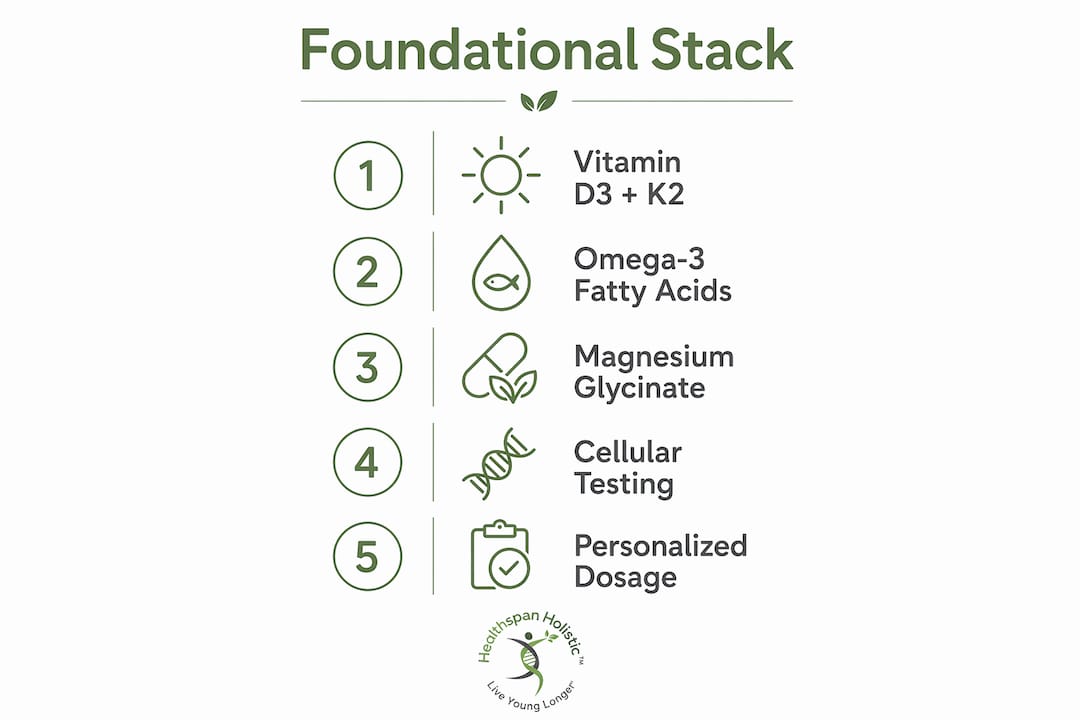
A foundational supplement stack is the non-negotiable base that corrects widespread nutritional gaps before any goal-specific layering begins. Think of it the way a mechanic thinks about an oil change. Taking performance supplements without fixing core deficiencies first is like tuning a car engine that has never had its oil changed. The four pillars of an evidence-based foundation are Vitamin D3 with K2, omega-3 fatty acids, magnesium glycinate, and creatine.
Vitamin D3 and K2 work as a team. Vitamin D3 raises calcium absorption, but without K2 in the MK-7 form at 100–200mcg daily, that calcium can deposit in arteries instead of bones. Maintaining serum Vitamin D levels between 40–60 ng/mL supports both immune function and bone density. You can read more about the evidence behind this pairing in Healthspan Holistic’s deep dive on Vitamin D benefits.
Omega-3 fatty acids (EPA and DHA) reduce systemic inflammation and support cardiovascular health. Most adults eating a standard American diet are chronically low in these fats.
Magnesium glycinate is the most bioavailable form of magnesium and acts as a cofactor for Vitamin D activation. Without adequate magnesium, your body cannot properly convert Vitamin D into its active form, making it one of the most overlooked supplements in any stack.
Creatine monohydrate rounds out the foundation. At 3–5 grams daily, it supports muscle energy, cognitive function, and physical performance. The monthly cost for this full foundational stack runs approximately $45–$60, making it one of the most cost-effective investments in your health.
-
Vitamin D3 (2,000–5,000 IU) paired with K2 (100–200mcg MK-7)
-
Omega-3 fatty acids (1–3g EPA/DHA combined)
-
Magnesium glycinate (300–400mg)
-
Creatine monohydrate (3–5g)
Pro Tip: Get your Vitamin D serum level and magnesium RBC tested before you start. Dosing without knowing your baseline is guesswork that can lead to either underdosing or unnecessary excess.
How to personalize your supplement stack using goals and bloodwork
Effective supplement stacking is an engineering problem. You build a solid foundation first, then layer goal-specific nutrients on top based on what your body actually needs. Bloodwork is the only reliable way to know where your gaps are. Without it, you are making educated guesses at best.
Start with these steps to build a stack that fits you:
-
Run baseline bloodwork. Test for Vitamin D, magnesium RBC, ferritin, B12, and a full metabolic panel. This tells you which foundational supplements you actually need and at what dose.
-
Define your primary wellness goal. Are you targeting energy, sleep quality, joint health, cardiovascular support, or muscle performance? Each goal has a different set of supporting nutrients.
-
Layer one goal-specific supplement at a time. For energy and endurance, beta-alanine or CoQ10 may apply. For stress and adrenal support, adaptogens like ashwagandha are worth considering. For joint health, curcumin with piperine is a strong evidence-backed choice.
-
Check for nutrient overlap. Combining a multivitamin with individual supplements often means you are doubling doses of nutrients like zinc, niacin, or Vitamin A without realizing it. Audit every label before adding anything new.
-
Wait 1–2 weeks before adding the next supplement. This window lets you observe how your body responds and isolates any reactions clearly.
The personalized supplementation approach that Healthspan Holistic advocates is built on exactly this framework. Your stack should reflect your biology, not a generic protocol from a fitness magazine.
Pro Tip: Keep a simple daily log of energy, sleep, digestion, and mood. After two weeks on a new supplement, review your notes. Patterns become obvious when you write them down.
What are the best supplement stacking techniques for absorption and synergy?
Timing and food pairing are where most people leave results on the table. You can take the right supplements at the wrong time and absorb a fraction of what you paid for. The best supplement stacking techniques center on three principles: fat-soluble vitamins need dietary fat, competing minerals need spacing, and synergistic pairs should always be taken together.
Fat-soluble vitamins (A, D, E, and K) require a meal containing fat for proper absorption. Taking your D3/K2 combo with breakfast that includes eggs, avocado, or olive oil makes a measurable difference. Magnesium is best taken in the evening. Its calming effect on the nervous system supports sleep quality and aligns with your body’s natural wind-down cycle.
Competing minerals need separation. Calcium can block non-heme iron absorption by up to 60% when taken together. Space calcium and iron supplements by at least two hours. Magnesium and zinc at high doses also compete for the same absorption pathway, so stagger them across the day.
Synergistic pairs are where smart stacking really shines. Piperine, the active compound in black pepper, boosts curcumin absorption by up to 2,000%. That is not a minor improvement. It is the difference between curcumin working and curcumin doing almost nothing. Always take curcumin with a piperine-containing formula. For more on how nutrients interact and support each other, Healthspan Holistic’s guide on functional supplement types is worth reading.
| Supplement | Best timing | Take with |
|---|---|---|
| Vitamin D3 + K2 | Morning | Fatty meal |
| Omega-3 fatty acids | Morning or lunch | Any meal with fat |
| Magnesium glycinate | Evening | Water or light snack |
| Creatine monohydrate | Any time | Water |
| Curcumin + piperine | With meals | Fatty meal |
| Iron | Morning, away from calcium | Vitamin C for absorption |
Pro Tip: Set phone reminders for your morning and evening supplement windows. Consistency in timing matters more than perfection in dosing.
What common mistakes derail effective supplement stacking?
The most common stacking mistake is adding too many supplements at once. When you introduce five new products in a week and then feel off, you have no way to know which one caused it. Introducing supplements one at a time and waiting 1–2 weeks between additions is the only way to build a stack you can actually trust.
Here are the pitfalls that most often undermine results:
-
Skipping label audits. Many people combine a multivitamin with individual supplements and unknowingly exceed safe levels of fat-soluble vitamins or minerals. Vitamin A toxicity, for example, builds silently over weeks.
-
Chasing trends over foundations. Collagen peptides and nootropic blends are popular, but they do nothing meaningful if your Vitamin D is at 18 ng/mL and your magnesium is depleted.
-
Ignoring contraindications. Certain supplements interact with medications. Fish oil at high doses affects clotting. St. John’s Wort affects drug metabolism. Always review interactions with a healthcare provider.
-
Never reassessing the stack. Your needs change. A stack that made sense at 40 may need adjustment at 55. Periodic bloodwork keeps your stack aligned with your current biology.
“The goal is not to take more supplements. The goal is to take the right ones, at the right time, for your specific biology.”
Healthspan Holistic’s blood testing resources explain exactly why regular testing is the foundation of any effective supplement strategy.
How to track and adjust your supplement stack for ongoing results
Tracking turns your supplement routine from a habit into a feedback system. Without data, you are flying blind. With it, you can make confident adjustments that actually move the needle on your health.
Follow this process for ongoing stack management:
-
Log daily. Record your supplement intake alongside notes on energy, sleep quality, digestion, and mood. A simple notes app works fine. You are looking for patterns, not perfection.
-
Retest bloodwork every 3–6 months. Nutrient levels shift with seasons, stress, and diet. A Cellular Micronutrient Test gives you an inside look at what your cells are actually absorbing, not just what is circulating in your blood.
-
Remove what is not working. If a supplement has been in your stack for three months with no noticeable effect and your bloodwork shows no deficiency, cut it. Simplicity is a feature, not a compromise.
-
Consult a healthcare provider for complex issues. Hormonal imbalances, cardiovascular concerns, and autoimmune conditions require professional guidance before you layer supplements on top.
-
Review your budget quarterly. A well-designed stack does not need to be expensive. The evidence-based supplements for longevity that deliver the most return are often the most affordable ones.
The goal is a lean, effective stack that you can sustain for years, not a cabinet full of bottles you rotate through without a plan.
Key takeaways
Effective supplement stacking requires a solid nutritional foundation, timed intake for absorption, and regular bloodwork to personalize and adjust your stack over time.
| Point | Details |
|---|---|
| Build the foundation first | Start with Vitamin D3/K2, omega-3s, magnesium glycinate, and creatine before adding anything else. |
| Use bloodwork to personalize | Test nutrient levels before stacking to avoid dosing blind and identify real deficiencies. |
| Time supplements for absorption | Take fat-soluble vitamins with fatty meals and magnesium in the evening for best results. |
| Introduce one supplement at a time | Wait 1–2 weeks between new additions to isolate effects and catch any reactions early. |
| Audit labels to prevent overlap | Check all products for shared nutrients to avoid accidental overdosing from combined sources. |
Why I think most people are overcomplicating their supplement stacks
After years of working with adults who want to feel better and perform at their best, the pattern I see most often is this: people reach for the exciting supplements before they have fixed the boring ones. They buy lion’s mane and NMN while their Vitamin D sits at 22 ng/mL and their magnesium has been depleted for years from chronic stress.
The shift that changes everything is moving from quantity to quality. A stack of four well-chosen, properly timed supplements will outperform a cabinet of fifteen random ones every single time. I have seen people cut their supplement spend in half, simplify their morning routine, and feel noticeably better within six weeks, just by getting bloodwork done and removing what was not needed.
Testing is not optional if you want real results. It is the starting point. The functional nutrition checklist from Healthspan Holistic is a great first step for adults 45 and older who want to assess where they actually stand before spending another dollar on supplements.
Patience matters too. Building a stack progressively, one supplement at a time, feels slow. But it is the only method that gives you reliable information about what is working. Rushing the process means you never really know what is helping and what is just adding cost and complexity.
— Chris
How Healthspan Holistic can support your supplement stack
Healthspan Holistic takes the guesswork out of building a stack that actually works for your body. The platform combines professional-grade supplements with diagnostic testing so you know exactly what you need before you spend a dollar on it.
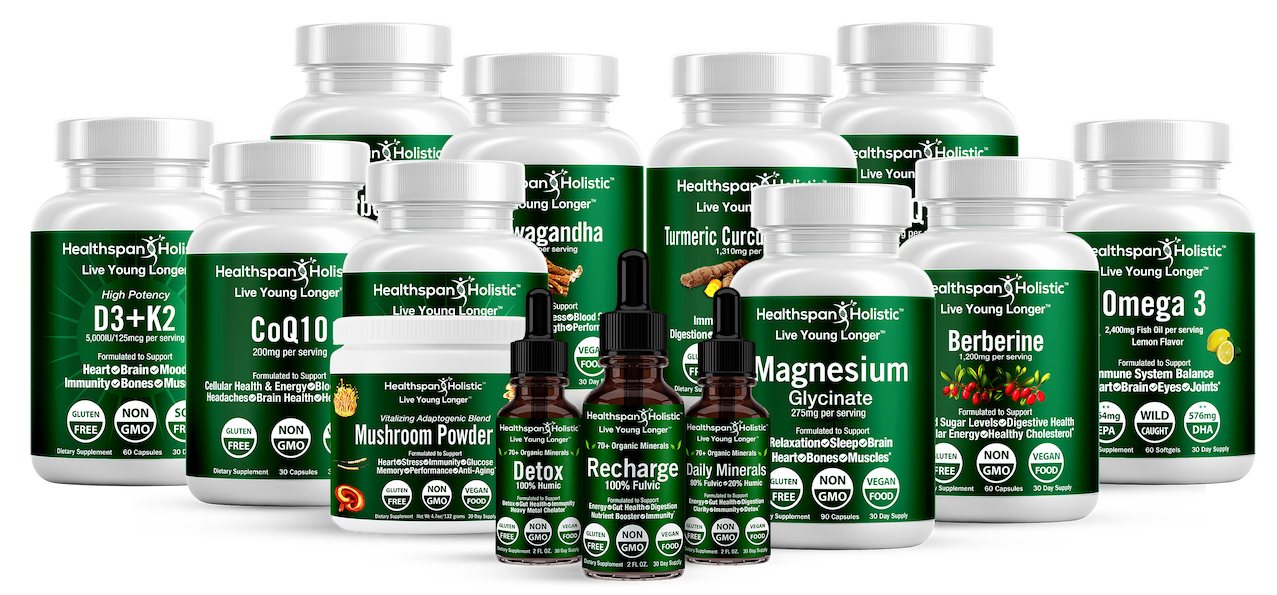
Start with a Cellular Micronutrient Test or a Magnesium RBC Test to identify your real deficiencies. Then explore the curated supplement collection at Healthspanholistic.com to build your foundation with professional-grade products. For a fully guided approach, the 90 Day Journey to Longevity program combines testing, coaching, and supplementation into one structured plan designed for adults who are serious about long-term wellness.
1st Time Customers can take advantage of our BUY 1 GET 1 50% OFF special offer on all supplements.
FAQ
What is supplement stacking?
Supplement stacking is the practice of combining specific supplements to create synergistic health benefits that individual supplements cannot achieve alone. The goal is to address nutritional gaps and support targeted wellness outcomes through purposeful layering.
What are the best supplements to stack together?
The most evidence-backed foundational stack includes Vitamin D3 with K2, omega-3 fatty acids, magnesium glycinate, and creatine monohydrate. These four address the most common nutritional gaps in adults and support bone, cardiovascular, and metabolic health.
How do I know which supplements I actually need?
Bloodwork is the most reliable answer. A Cellular Micronutrient Test or standard blood panel reveals real deficiencies so you can build a stack based on your biology rather than general recommendations.
Can you take too many supplements at once?
Yes. Combining a multivitamin with individual supplements often leads to unintentional double-dosing of nutrients like zinc, Vitamin A, or iron. Always audit every label and introduce one new supplement at a time to avoid toxicity or absorption conflicts.
How long does it take to see results from a supplement stack?
Most people notice meaningful changes in energy, sleep, and mood within four to eight weeks of consistent use. Fat-soluble vitamins like Vitamin D may take longer to shift serum levels, which is why retesting at three to six months is recommended.
Leave a comment: